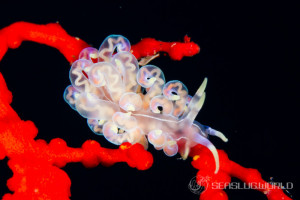
Phyllodesmium parangatum Ortiz & Gosliner, 2003
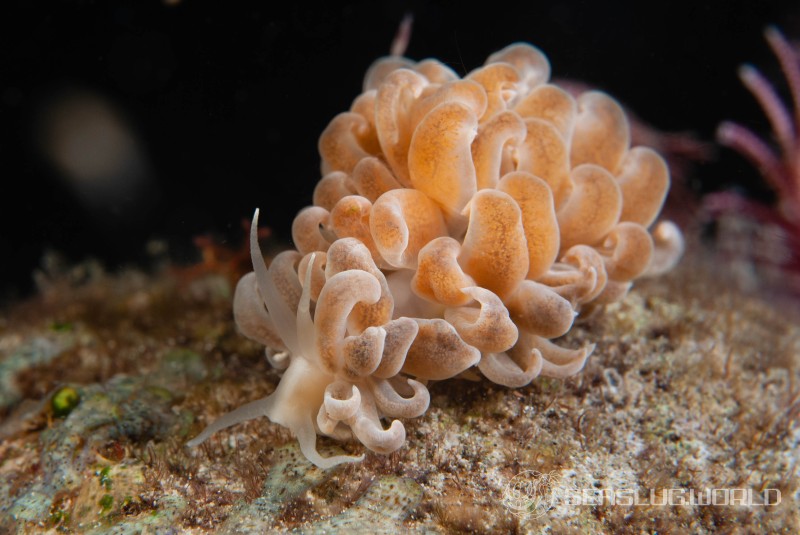
- Location
- Anilao, Philippines
- Date
- 2006/01/07
- Length
- ??mm
- Depth
- ??m
- Water temperature
- ??℃
Description
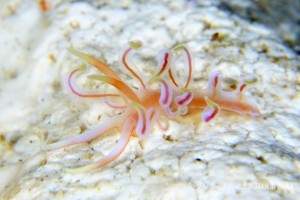
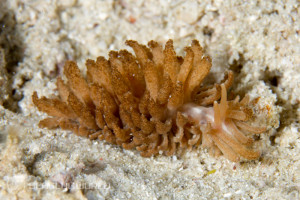
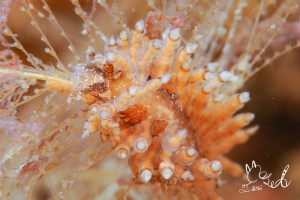
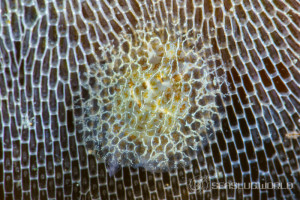
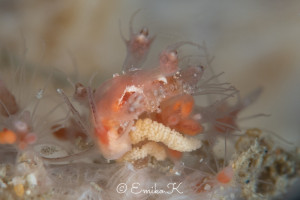
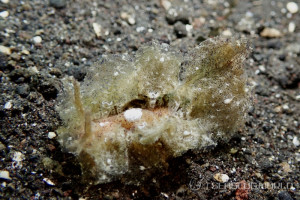
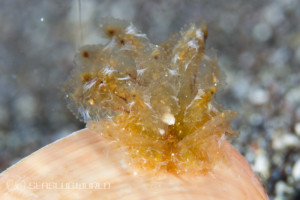
A small aeolid nudibranch reaching about 20 mm, with a translucent, milky-white to pale-yellow body. Flattened, leaf-like cerata line the back; these contain zooxanthellae, symbiotic algae taken up from its food.Distribution
Western Pacific. The species was originally described from Twin Rocks, Anilao, Batangas Province, on southern Luzon Island, the Philippines.Etymology
The specific epithet parangatum comes from the Filipino phrase parang gatas (“like milk”; gatas means “milk”), after the animal’s milky-white colour.Remarks
Thought to feed on a soft coral (octocoral). It is a “solar-powered” sea slug, retaining zooxanthellae from its prey and using the sugars they produce by photosynthesis.References
- Phyllodesmium parangatum sp. nov., Ortiz D.M. & Gosliner T.M. (2003). A new species of Phyllodesmium Ehrenberg, 1831 (Mollusca, Nudibranchia) from the tropical Indo-Pacific. Proceedings of the California Academy of Sciences. 54(9): 161-168.
- Phyllodesmium parangatum, Terrence Gosliner, Ángel Valdés and David Behrens. (2018). Nudibranch and Sea Slug Identification Indo-Pacific 2nd Edition. New World Pubns Inc.
Featured in this book
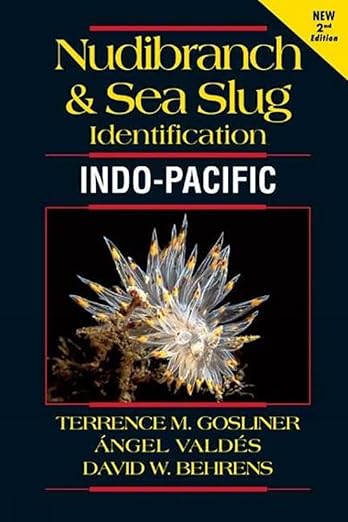
Terrence Gosliner, Ángel Valdés and David Behrens. (2018). Nudibranch and Sea Slug Identification Indo-Pacific 2nd Edition. New World Pubns Inc.
New World Publications
This species, Phyllodesmium parangatum, is included in the book.
View on Amazon PR (Amazon Associates)Seasonality
Shooting Locations
Loading shooting locations...
Photos of Phyllodesmium parangatum

Same Genus Nudibranchs

Similar Colors Nudibranchs

Academic Database
Sea slug observation data is available in international marine biodiversity databases.