Runcinida elioti (Baba, 1937)
Description
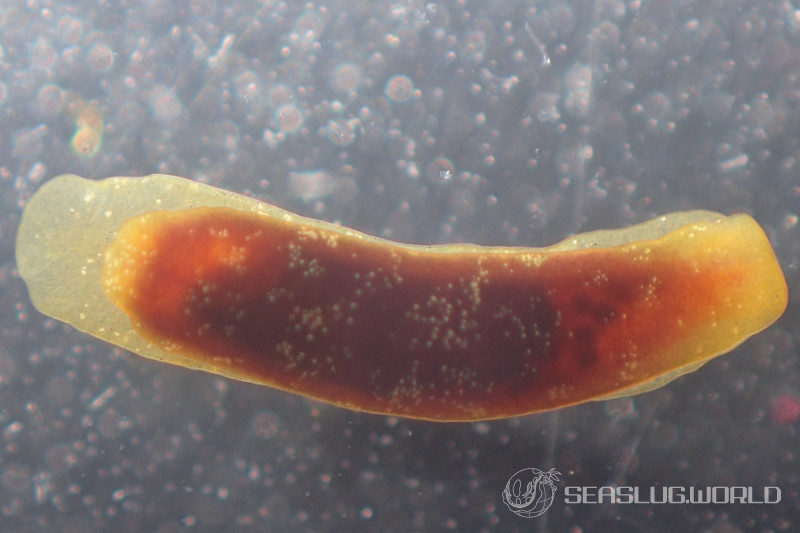
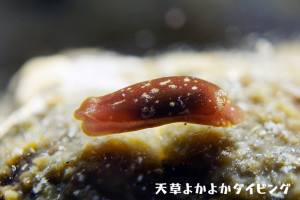
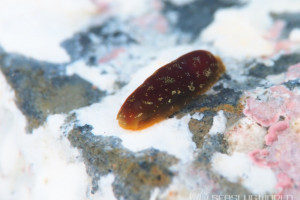
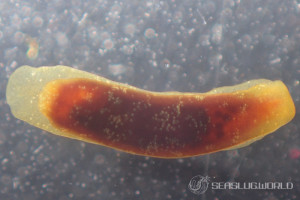
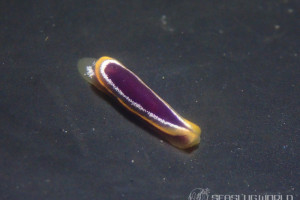
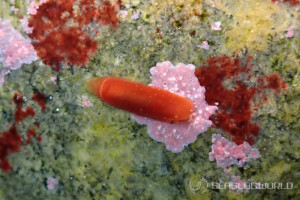
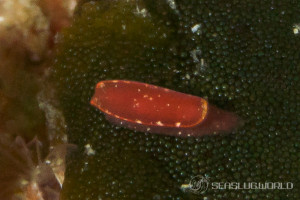
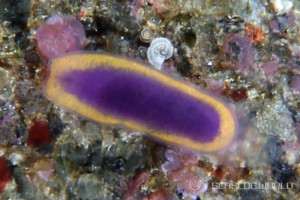
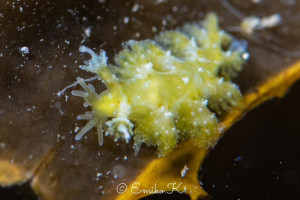
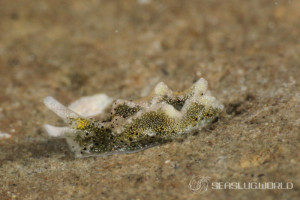
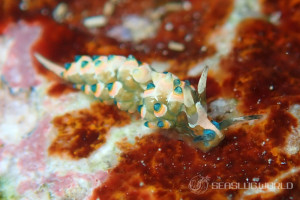
A small species, about 8 mm in length when alive. The body is elongated and limaciform. The head is simple, lacking tentacles, and is sharply truncated in front; it passes back into the mantle without a clear line of demarcation. The mantle is quite smooth and extends beyond the foot all around except at the rounded posterior end where the tail protrudes during locomotion. The ctenidium consists of several plumes arranged in a semicircle, lying in the median line beneath the posterior end of the mantle. The foot is flat and well-developed, rounded in front and tapering into a short tail behind.Coloration
Ground colour of the back dark brown, becoming yellowish-green toward the margin, sparsely sprinkled with white dots. The ctenidium is yellow; the foot yellowish-green.Distribution
Type locality: Oniike, Amakusa, Japan (March 1935). The species was the first record of the genus Runcina from the Pacific Ocean.Etymology
The original description (Baba, 1937) states: "It is described here with the name R. elioti after the late Sir Charles Eliot, who has contributed so much to our knowledge of the Japanese Nudibranchia." Sir Charles Eliot (1862–1931) was a British diplomat and opisthobranch worker. Baba acknowledges in Part I that he was permitted to consult Eliot's extensive collection and literature, and the dedication reflects gratitude for that material.Remarks
Originally described in the genus Runcina; later transferred to Runcinida (the parenthetical authority reflects this generic change). In the family Runcinidae (Cephalaspidea).References
A Kindle field guide by the site author

Kimoto N. (2026). Sea Slugs of Japan & the Indo-Pacific, 2nd Edition.
Kindle Edition
View on Amazon PR (Amazon Associates)Seasonality
Shooting Locations
Loading shooting locations...
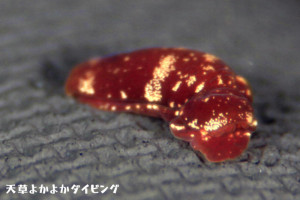
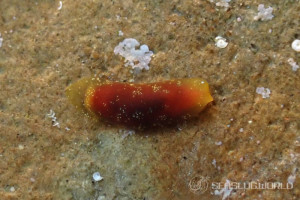
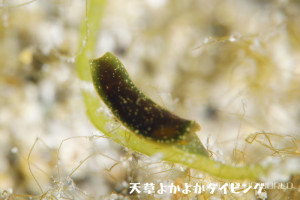
Photos of Runcinida elioti




Same Genus Nudibranchs

Similar Colors Nudibranchs

Academic Database
Sea slug observation data is available in international marine biodiversity databases.