Umbraculum umbraculum ([Lightfoot], 1786)
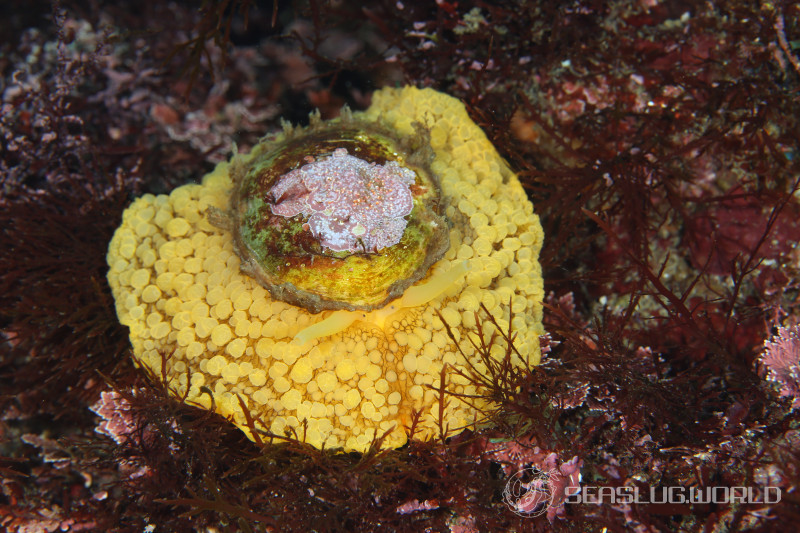
- Location
- Akinohama, Izu Oshima, Tokyo, Japan
- Date
- 2015/02/12
- Length
- 150mm
- Depth
- 6.0m
- Water temperature
- 16.0℃
Description
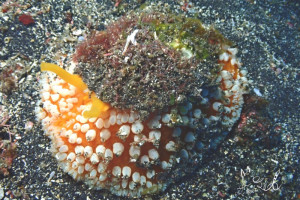
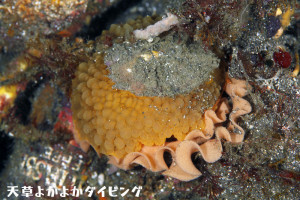
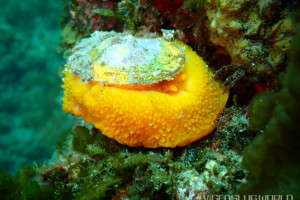
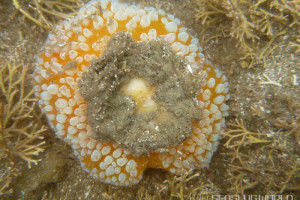
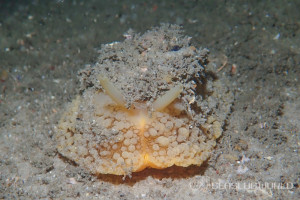
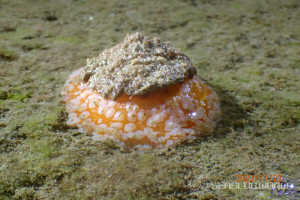
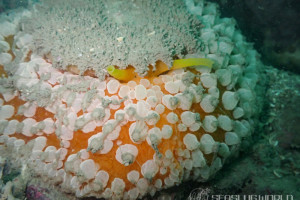
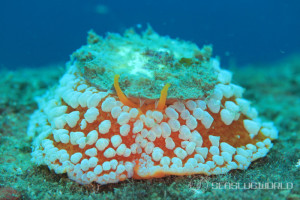
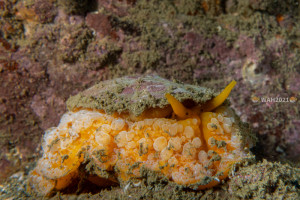
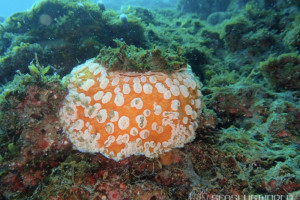
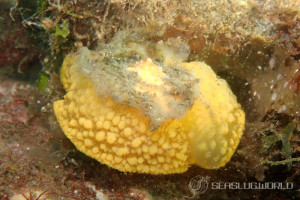
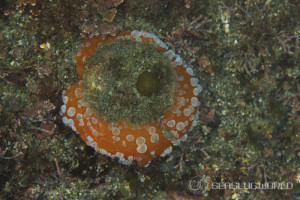
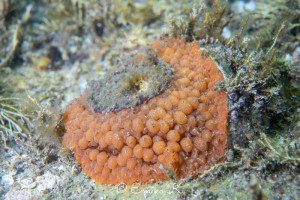
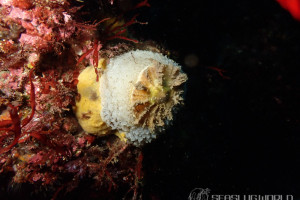
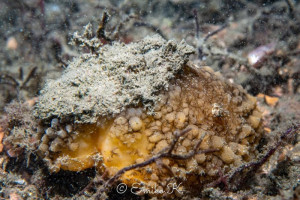
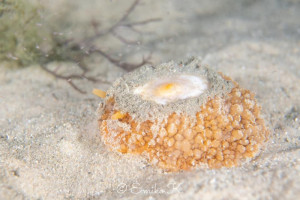
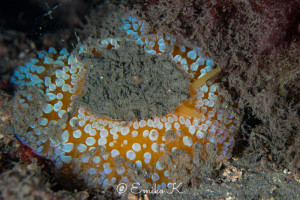
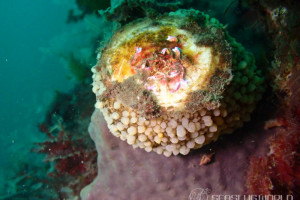
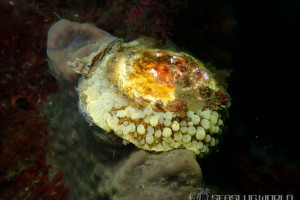
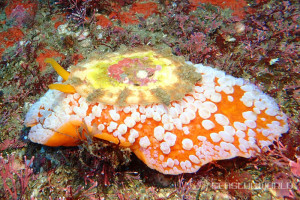
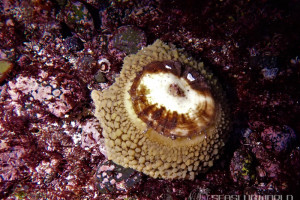
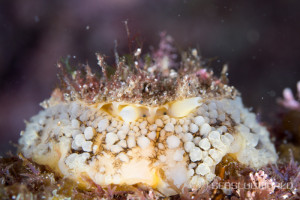
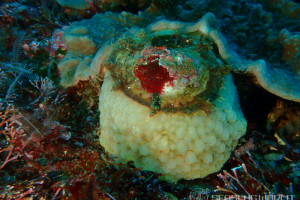
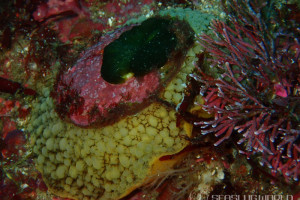
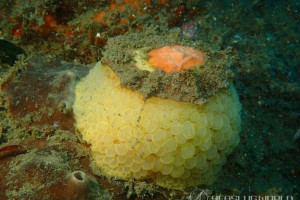
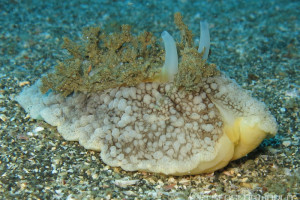
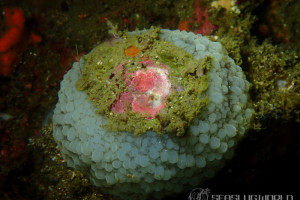
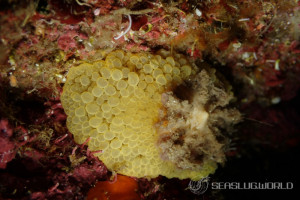
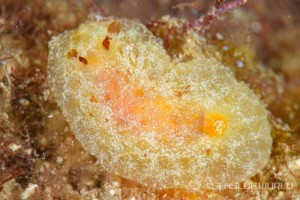
A large pleurobranchomorph reaching about 280 mm in length, with a flat parasol-like external shell sitting on top of the dorsum. Body colour highly variable through reddish brown, brown and orange, sometimes green. The fleshy mantle is decorated with low pale yellow to greyish-white wart-like tubercles. The pair of short rhinophores sits between the soft body and the shell. Lives on rocky substrates and feeds on sponges; produces a yellow to red defensive secretion when disturbed.Distribution
Circumtropical and warm-temperate, occurring across the Indian Ocean, the entire Pacific (including Hawaii) and the Mediterranean. Records include South Africa, Tanzania, Madagascar, Aldabra, Japan, Hawaii, Central America and the Mediterranean. The Portland Catalogue 1786 listed the type material as "from China", citing Humphrey's Conchology pl. 5 fig. 5.Etymology
The specific epithet umbraculum is the Latin for "small parasol" or "sunshade", in reference to the conspicuous external shell that resembles a flat parasol — the basis of the English vernacular "umbrella slug".Remarks
Originally described as Patella umbraculum in lot 3830 of the [Lightfoot] (1786) Catalogue of the Portland Museum. The species is the type of the genus Umbraculum Schumacher, 1817, leading to the curious tautonym now in use. The 1786 Portland Catalogue is anonymous; ICZN attributes authorship to the Rev. John Lightfoot with the year in brackets to indicate inferred authorship.References
- Patella umbraculum, [Lightfoot J.] (1786). A Catalogue of the Portland Museum, lately the Property of the Duchess Dowager of Portland, deceased: which will be sold by auction, by Mr. Skinner and Co. London. viii + 194 pp. (Anonymously published auction catalogue; authorship attributed by ICZN convention to Rev. John Lightfoot)
- ヒトエガイ, 吉良哲明. (1954). 原色日本貝類図鑑. 保育社.
- ヒトエガイ, 益田一ほか. (1996). 海岸動物 (フィールド図鑑). 補訂版第2版. 東海大学出版会.
A Kindle field guide by the site author
Kimoto N. (2026). Sea Slugs of Japan & the Indo-Pacific, 2nd Edition.
Kindle Edition
View on Amazon PR (Amazon Associates)Seasonality
Shooting Locations
Loading shooting locations...
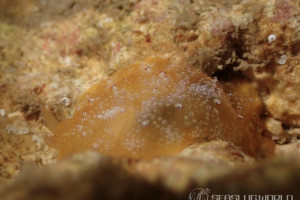
Photos of Umbraculum umbraculum
Tag:
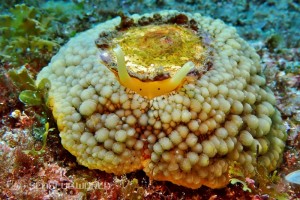

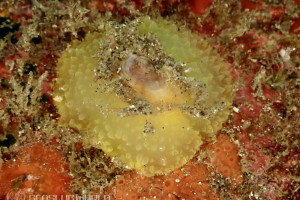






















Similar Colors Nudibranchs

Academic Database
Sea slug observation data is available in international marine biodiversity databases.