Baeolidia australis (Rudman, 1982)
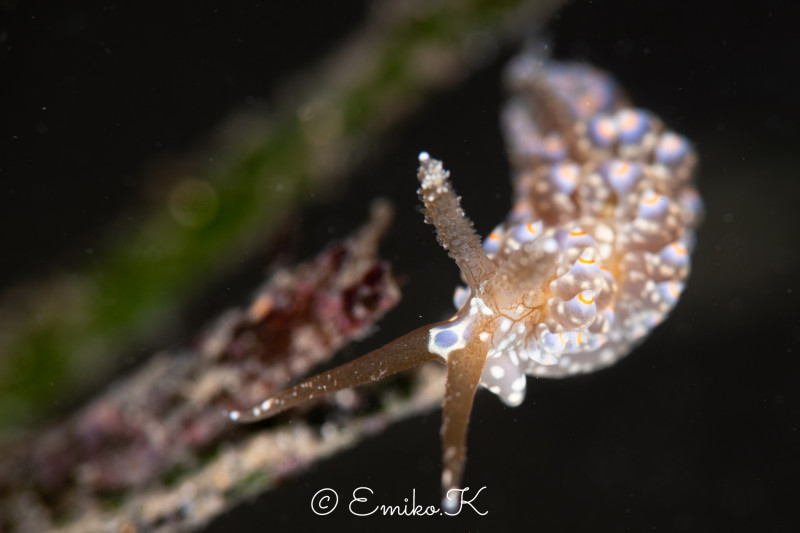
- Location
- Chowder Bay, New South Wales, Australia
- Date
- 2021/06/30
- Length
- 20mm
- Depth
- 5.0m
- Water temperature
- 16.0℃
Description
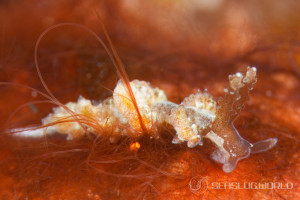
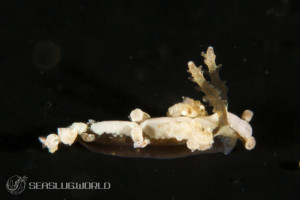
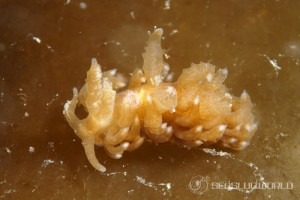
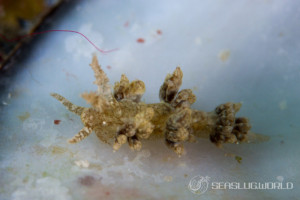
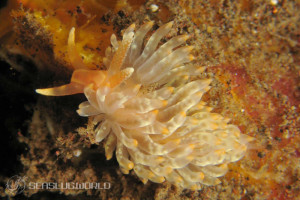
Body broad and elongate, 27-34 mm alive. Oral tentacles taper to a rounded point. Rhinophores large, with papillae on both anterior and posterior sides of the club. The foot is broad with tentacular anterior corners; the leading edge is divided into two lamellae, the upper split in the midline. Cerata are flattened and leaf-like, lying close to the body and held vertically tucked against it; the upper cerata in each cluster cover parts of the dorsum. In front of the pericardium the cerata form a single sloping arch with the apex pointing posteriorly. Behind the pericardium each side has three single-rowed arches plus up to six rows; the most posterior of the three post-pericardial arches has only a short posterior limb of three cerata. The anus opens in the first post-pericardial arch on the right.Body brown with white patches behind the rhinophores, in the inter-hepatic space, and on the sides below the rhinophores. On the head, in front of the rhinophores, are small white patches and a large white patch (anterior border at the head edge in the midline) bearing a bluish rounded spot in its centre; the white patches consist of aggregations of white granules. Oral tentacles reddish-brown. Rhinophore stalk watery brown; club translucent with brown papillae; brown ducts run up the stalk and branch into the papillae. Foot translucent with white patches. Cerata generally brown, slightly darker than the body. The broad part of each ceras has large white patches on the outer side; in the upper fifth the ceras tapers rapidly to a tubercle-like tip; below the tip is a thin bright orange band (outer side only), and below this a broad blue band that completely encircles the ceras, its lower edge irregular and diffusing into the brown. Pale specimens lacking most brown pigment also occur.
Symbiotic zooxanthellae are present in cells of the digestive gland, immediately below the cnidosac and along the anterior edge of each ceras — regions least likely to be shaded by other cerata. Zooxanthellae also pack the rhinophore papillae, dorsal body wall tubules, and the body wall and oral tentacles. The flattened, vertically-held cerata are interpreted as a structural adaptation for exposing the symbionts to light.
Distribution
Type locality: Pilot Beach, near Laurieton, northern NSW, Australia. Recorded from northern NSW (Long Reef Sydney, Newport, Seal Rocks, Pilot Beach). Northern New Zealand specimens previously listed as a variety of Spurilla major are regarded as close to, or possibly the same as, this species on grounds of colour and anatomy.Etymology
The specific epithet australis is Latin for "southern", a reference to the species as the Australian (southern-hemisphere) representative of the group.Remarks
Feeds on sea anemones. Originally described in Spurilla; subsequently transferred to Baeolidia, and currently accepted on WoRMS as Baeolidia australis. Some authors have questioned the validity of this species relative to Baeolidia moebii.References
A Kindle field guide by the site author
Kimoto N. (2026). Sea Slugs of Japan & the Indo-Pacific, 2nd Edition.
Kindle Edition
View on Amazon PR (Amazon Associates)Seasonality
Shooting Locations
Loading shooting locations...
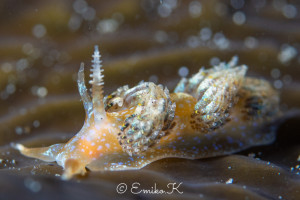
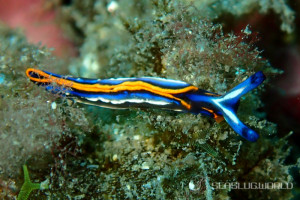
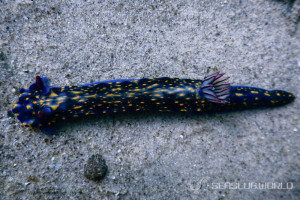
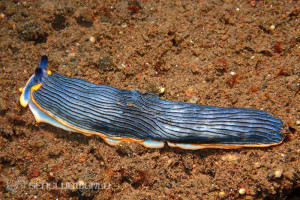
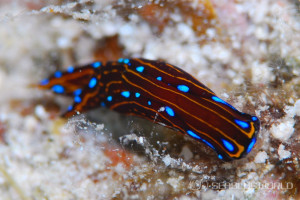
Photos of Baeolidia australis

Same Genus Nudibranchs

Similar Colors Nudibranchs

Academic Database
Sea slug observation data is available in international marine biodiversity databases.