Baeolidia variabilis Carmona, Pola, Gosliner & Cervera, 2014
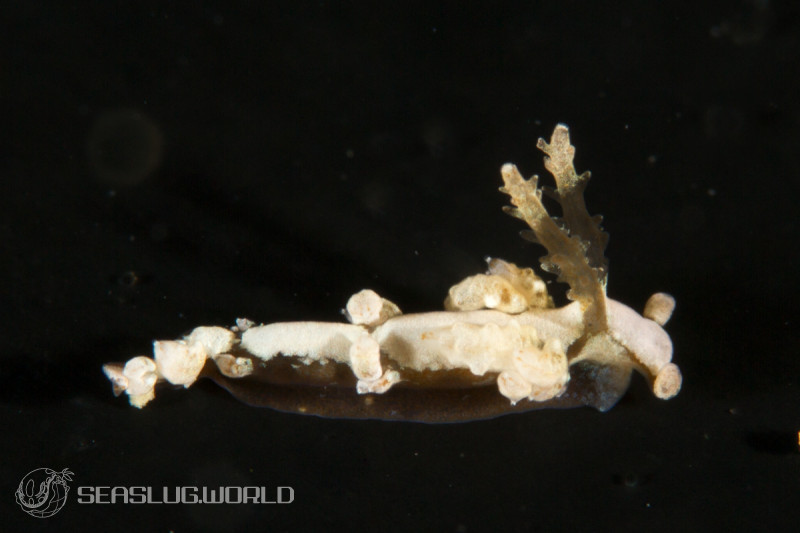
- Location
- Red Beach, Okinawa Island (East coast), Okinawa, Japan
- Date
- 2016/06/11
- Length
- 4mm
- Depth
- 2.0m
- Water temperature
- 28.4℃
Description
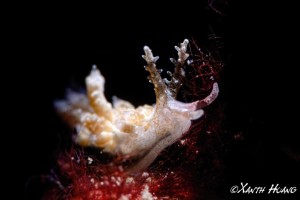
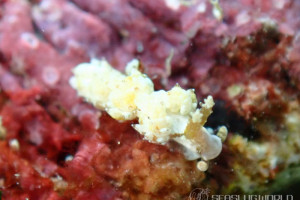
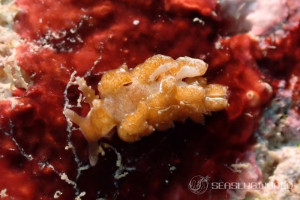
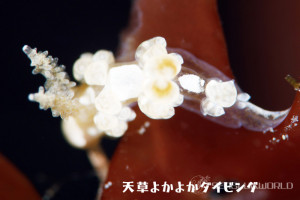
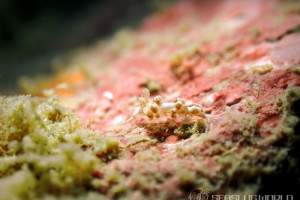
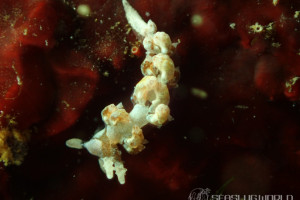
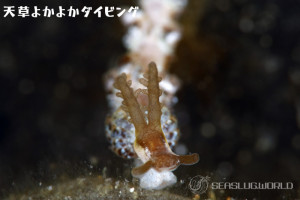
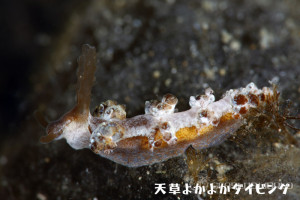
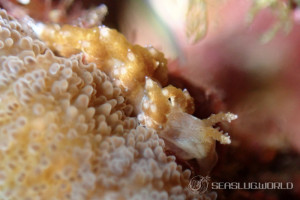
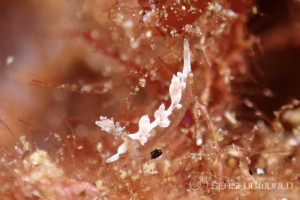
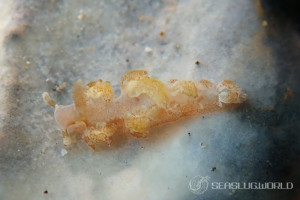
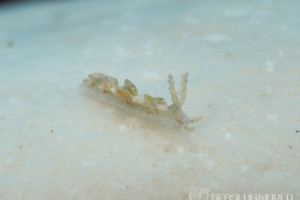
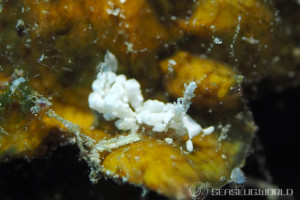
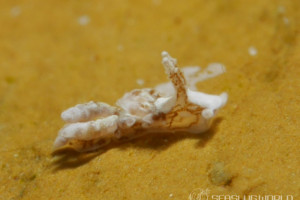
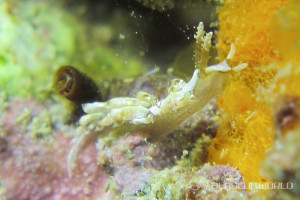
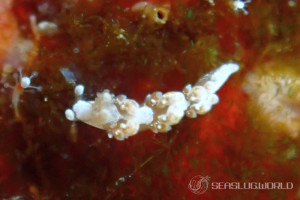
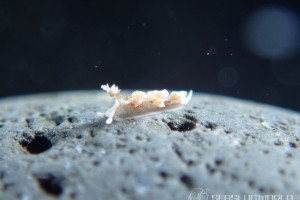
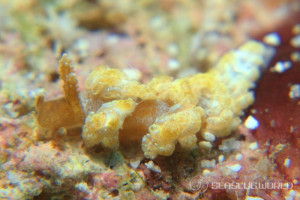
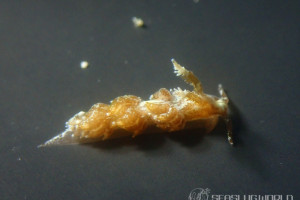
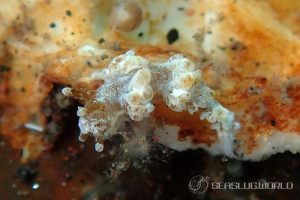
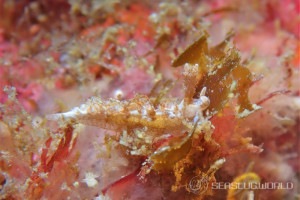
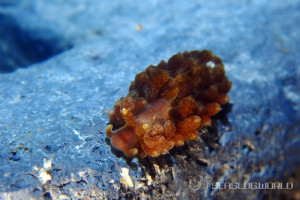
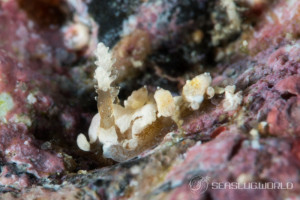
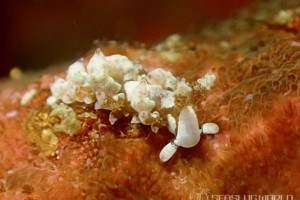
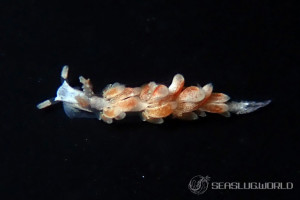
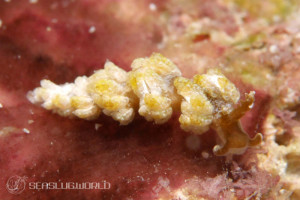
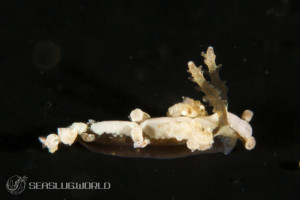
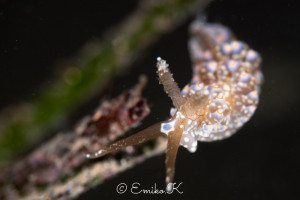
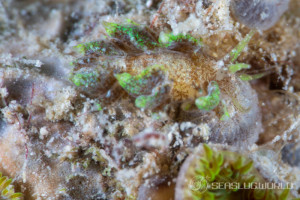
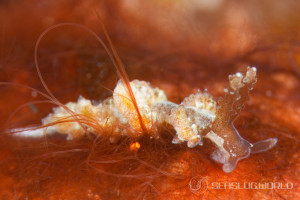
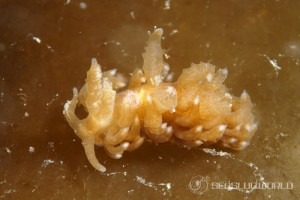
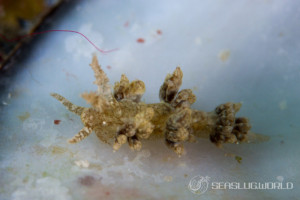
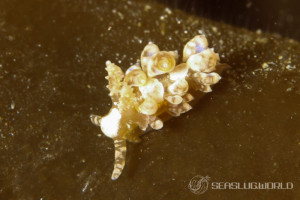
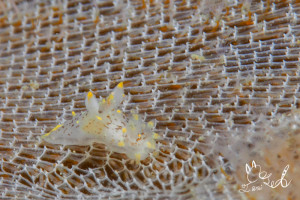
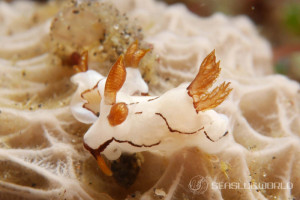
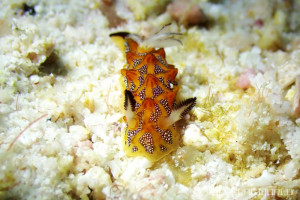
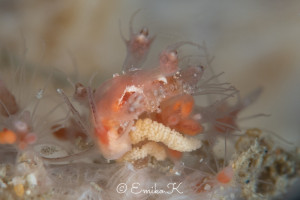
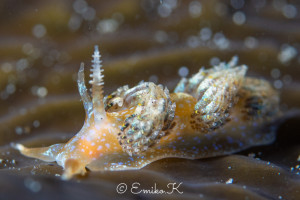
Body short and broad, tapering near the posterior end of the foot, with short, rounded foot corners. Body colour translucent with two different colour patterns. The first one has opaque white patches on the head (its density varies) and notum, and light ochre reticulate on both sides of the body. The second one has small light ochre spots all over the body. Rhinophores approximately equal in length to oral tentacles, densely covered by elongate papillae; rhinophores translucent with ochre pigment and white apex. Oral tentacles short, slender, tapering near apices, same colour as ground colour with white tips. Cerata flattened, almost leaf-like. In the first colour pattern, cerata are ochre with white pigmentation on the posterior side of the basal portion and some cerata noticeably longer than others. In the second colour pattern, cerata are recurved inwardly with some papillae or bulbs, completely white, usually with bright yellow pigment on the posterior side of their distal area. Cerata in two or three arches followed by a couple of rows, with a distinct gap between pre- and post-pericardial groups. Each group with 1-5 cerata, decreasing in size towards the foot.Distribution
Known from the Philippines, the Marshall Islands and Papua New Guinea (present study). Type locality: Medio Island, Mindoro, Philippines (shallow reefs under coral rubble).Etymology
Verbatim from the original description (Carmona et al. 2014, Zootaxa 3802 (4): 497):In Latin the word 'variabilis' means variable. The specific name refers to the two colour types of this species.
Remarks
Described as a new species in Carmona, Pola, Gosliner & a 2014 revision Zootaxa 3802 (4): 477-514, in their revision of Baeolidia. The author noted:This particular species highlights how variable the colouration can be within the same species. Gosliner et al. 2008 identified both colour patterns as separate species but the molecular analyses undertaken by Carmona et al. 2013 showed that they are conspecific(p.497). Both colour morphs differ consistently from other Baeolidia species; B. salaamica is completely translucent including the cerata and bears an orange band on the anterior side of the cerata, neither of which occurs in B. variabilis.
References
- Baeolidia variabilis sp. nov., Carmona L., Pola M., Gosliner T.M. & Cervera J.L. 2014. Review of Baeolidia, the largest genus of Aeolidiidae (Mollusca: Nudibranchia), with the description of five new species. Zootaxa, 3802 (4): 477–514.
- Baeolidia variabilis, Terrence Gosliner, Ángel Valdés and David Behrens. (2015). Nudibranch and Sea Slug Identification Indo-Pacific. New World Pubns Inc.
- チャカミノモドキ* (新称), 中野理枝, 朝倉知子, 池田紫, 石川雅教, 今本淳, 岩瀬南美, 西田和記, 堀江諒, 山田久子 & 渡井久美. (2017). 奄美大島北部海域における後鰓類相の調査報告. Kuroshio Biosphere. 13: 1-18 + 6 pls.
Featured in this book
Terrence Gosliner, Ángel Valdés and David Behrens. (2018). Nudibranch and Sea Slug Identification Indo-Pacific 2nd Edition. New World Pubns Inc.
New World Publications
This species, Baeolidia variabilis, is included in the book.
View on Amazon PR (Amazon Associates)Seasonality
Shooting Locations
Loading shooting locations...
Photos of Baeolidia variabilis


















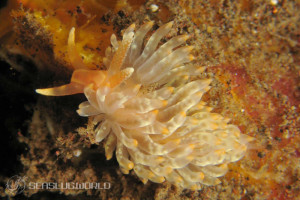
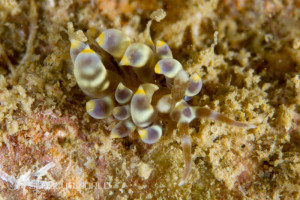
Same Genus Nudibranchs

Similar Colors Nudibranchs
Academic Database
Sea slug observation data is available in international marine biodiversity databases.