Baeolidia moebii Bergh, 1888
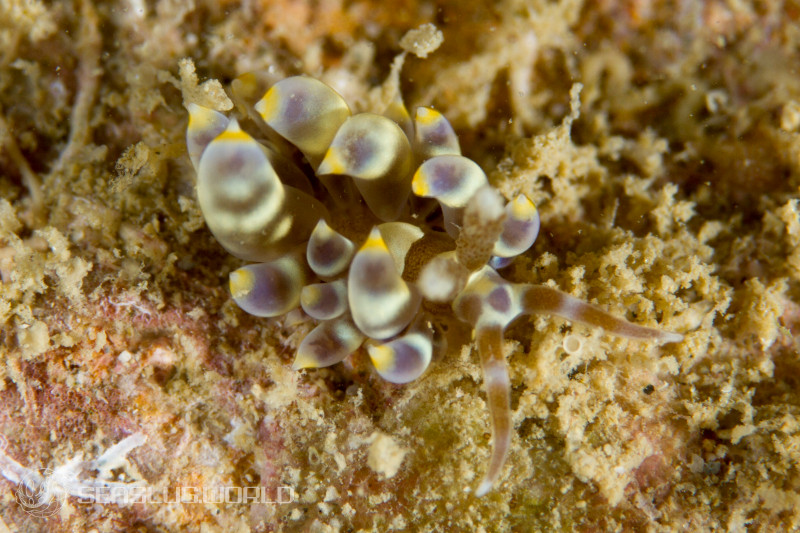
- Location
- Red Beach, Okinawa Island (East coast), Okinawa, Japan
- Date
- 2016/02/15
- Length
- 10mm
- Depth
- 12.0m
- Water temperature
- 21.2℃
Description
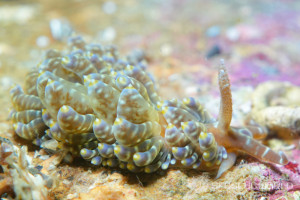
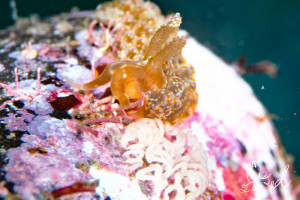
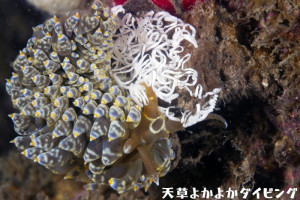
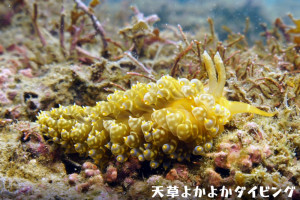
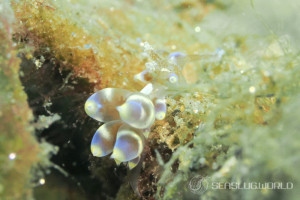
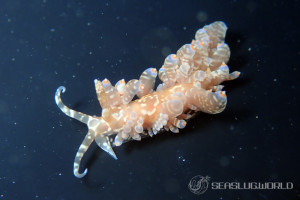
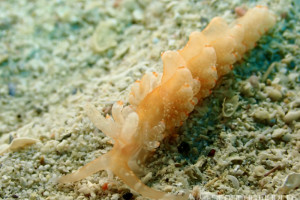
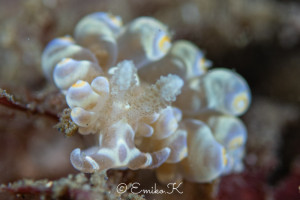
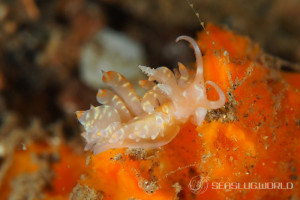
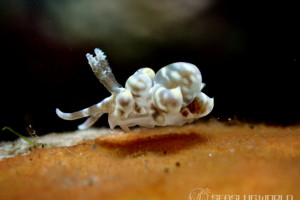
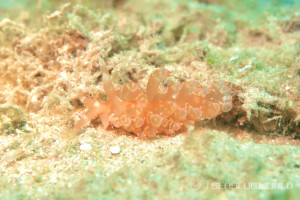
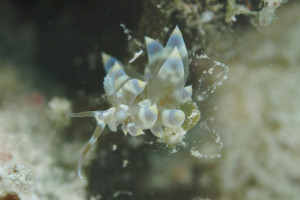
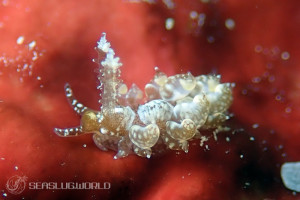
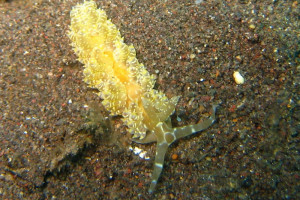
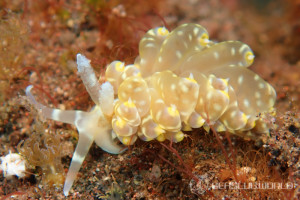
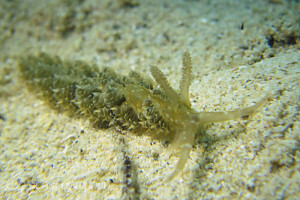
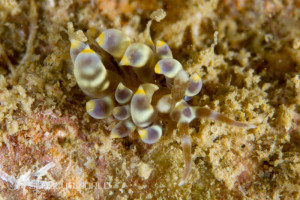
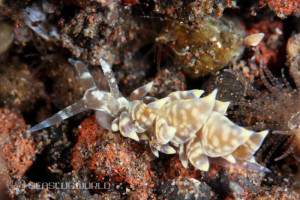
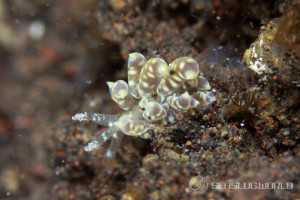
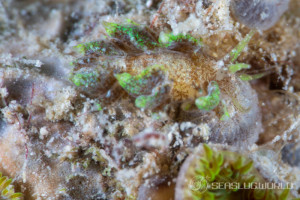
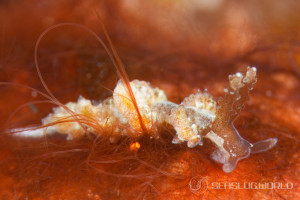
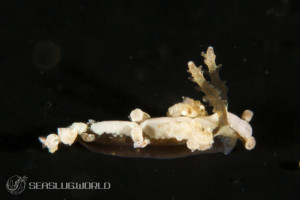
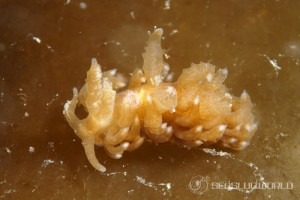
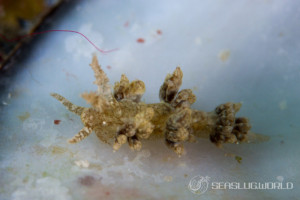
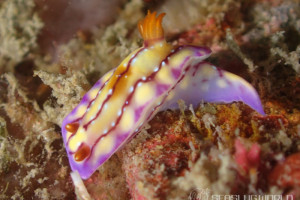
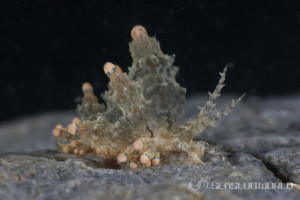
A small aeolid; the alcohol-preserved type was 8 mm long, up to 3.6 mm wide and about 3 mm high. Body yellowish-white, the rhinophores spotted with brown. Body form not very elongate. The rhinophores are short fusiform with annuli running all around (more clearly separated above), covered with small rounded knobs almost as in Berghia. The oral tentacles are flattened and finger-shaped. The dorsum is rather broad, the papilla-bearing flanks narrow. The cerata occur in 10 rows on each side, usually with 5 cerata per row (3-4 anteriorly and posteriorly), increasing strongly in size from the outside inwards. The cerata are strongly flattened but still rather thick, with rounded edges; each cnidosac forms a projecting tip on the upper edge. The anterior foot bears a deep marginal groove and the upper lip is split.Distribution
Type locality: Grande Baie, Mauritius (north-east of Madagascar), on white sandy bottom. A member of the Aeolidiidae, the species feeds on cnidarians (especially anemones) on coral reefs.Etymology
The specific epithet moebii honours the German zoologist Karl August Möbius (1825-1908), who collected the single type specimen on his expedition to Mauritius and the Seychelles in 1874-1875 and supplied his rich material to the original describer.Remarks
Described as the type species of the new genus Baeolidia, which is intermediate in body form between typical Aeolidia and the genera around Berghia. A member of the family Aeolidiidae.References
- Baeolidia Moebii, Bgh. n. sp., Bergh R. (1888). Nudibranchien vom Meere der Insel Mauritius. In: Semper C. (ed.), Reisen im Archipel der Philippinen. II. Wissenschaftliche Resultate. Bd. II, Abt. II (Malacologische Untersuchungen Bd. III), Heft XVI: 755-814. Wiesbaden: C.W. Kreidel's Verlag.
- ワグシミノウミウシ(新稱), 生物學御研究所編. (1955). 相模湾産後鰓類図譜〈補遺〉. 岩波書店.
- ワグシミノウミウシ, 小野篤司. (1999). ウミウシガイドブック. TBSブリタニカ.
- スプリラ・マヨル, 殿塚孝昌. (2003). ウミウシガイドブック〈3〉. TBSブリタニカ.
- ワグシミノウミウシ, 小野篤司. (2004). 沖縄のウミウシ. ラトルズ.
- ワグシミノウミウシ, 中野理枝. (2004). 本州のウミウシ. ラトルズ.
- Carmona L., Pola M., Gosliner T.M. & Cervera J.L. 2014. Review of Baeolidia, the largest genus of Aeolidiidae (Mollusca: Nudibranchia), with the description of five new species. Zootaxa, 3802 (4): 477–514.
A Kindle field guide by the site author
Kimoto N. (2026). Sea Slugs of Japan & the Indo-Pacific, 2nd Edition.
Kindle Edition
View on Amazon PR (Amazon Associates)Seasonality
Shooting Locations
Loading shooting locations...
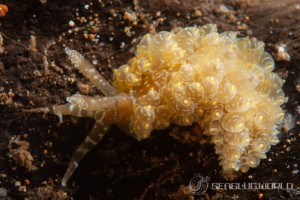
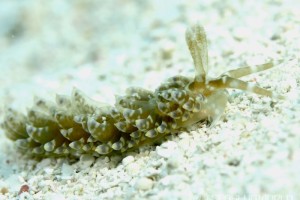
Photos of Baeolidia moebii
















Same Genus Nudibranchs

Similar Colors Nudibranchs


Academic Database
Sea slug observation data is available in international marine biodiversity databases.