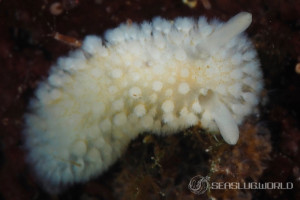
Baeolidia salaamica (Rudman, 1982)
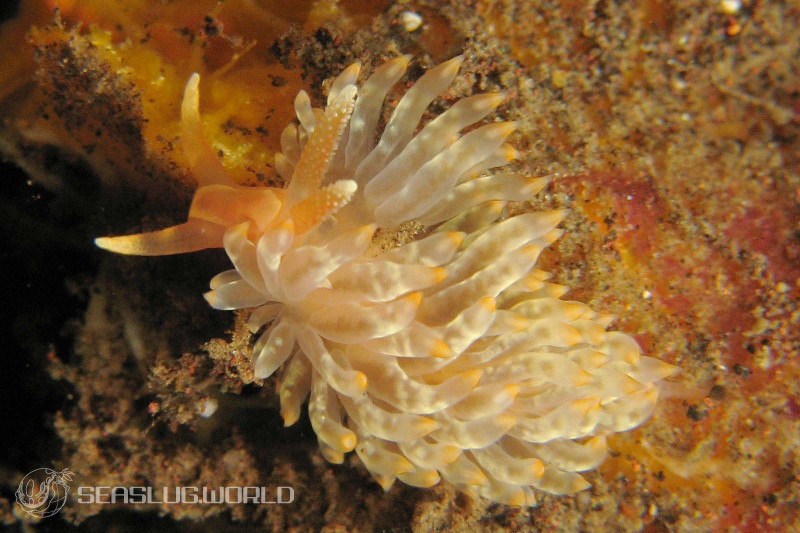
- Location
- Seraya, Tulamben, Pulau Bali, Indonesia
- Date
- 2008/02/10
- Length
- 15mm
- Depth
- 18.0m
- Water temperature
- 27.0℃
Description
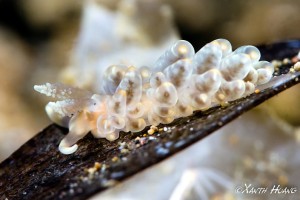
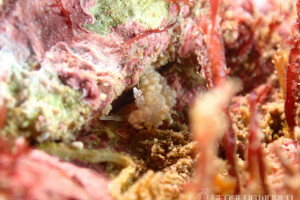
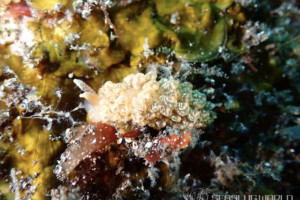
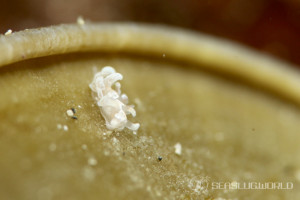
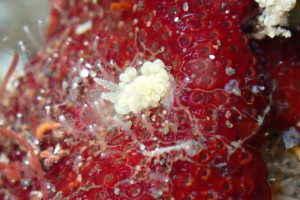
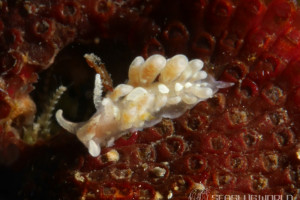
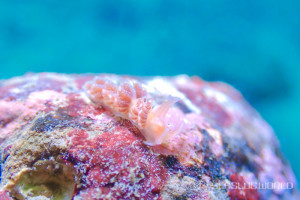
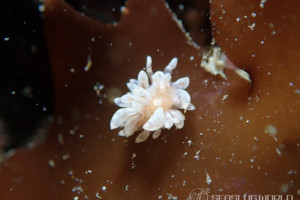
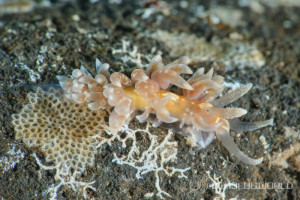
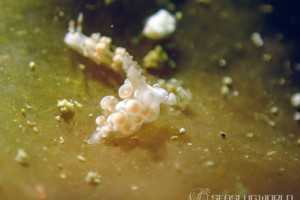
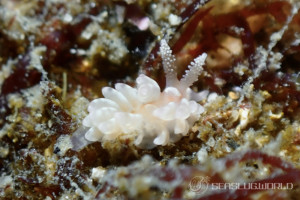
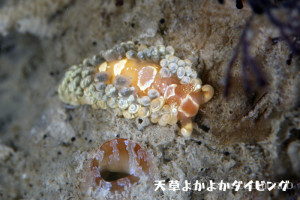
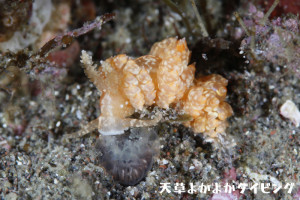
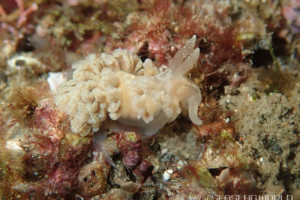
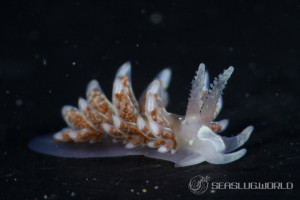
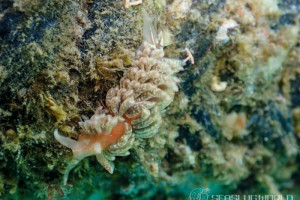
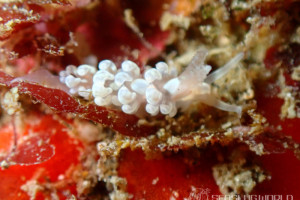
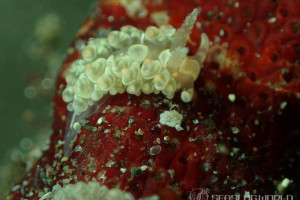
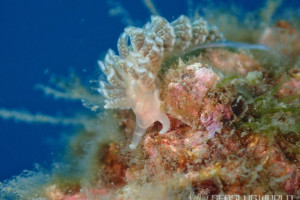
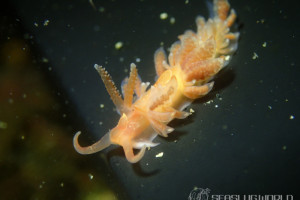
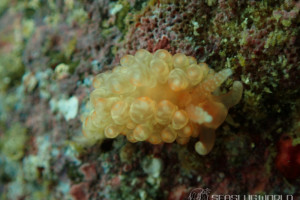
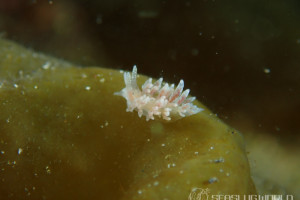
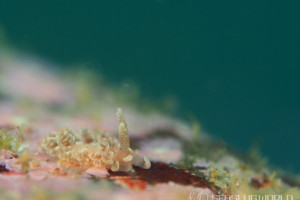
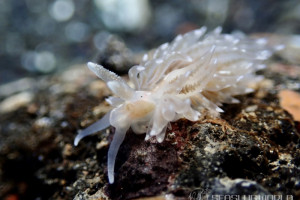
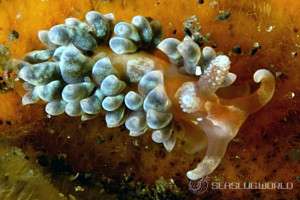
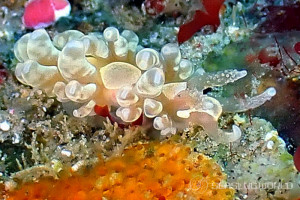
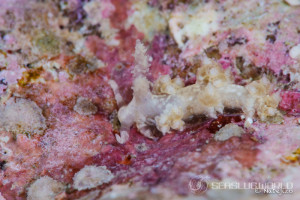
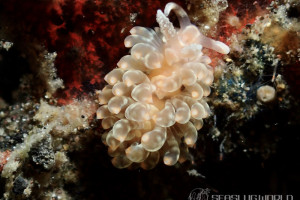
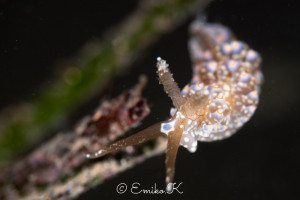
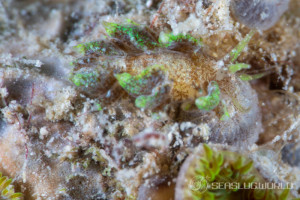
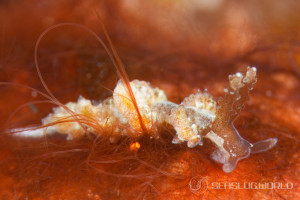
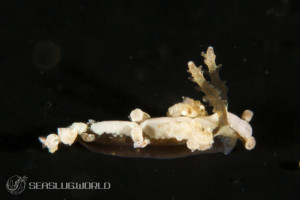
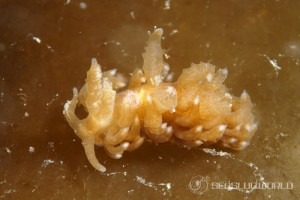
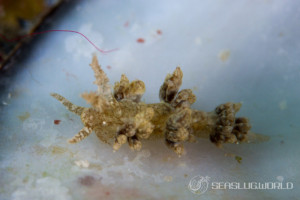
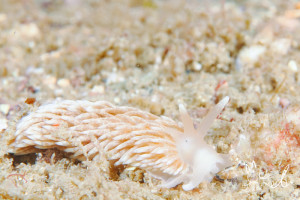
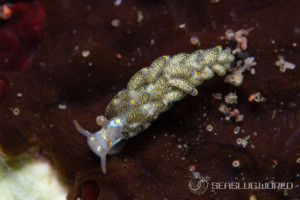
Body broad and elongate. Oral tentacles long, tapering to a rounded point. Rhinophores about two-thirds the length of the oral tentacles, with rounded papillae on the posterior side and sparsely spaced lateral papillae but none anteriorly. Anterior foot corners angular, with the leading edge split into upper and lower lamellae. Cerata long, cylindrical, slightly flattened dorsoventrally — distinct from the flattened, leaf-like cerata of Baeolidia major and Baeolidia australis. Cerata arranged in a single pre-pericardial arch, plus a post-pericardial arch and 4-5 sloping single rows. Body and foot translucent whitish; the body has a pale orange-yellow tinge from the internal organs, with the orange of the buccal bulb showing through below the rhinophores. Pigmented white head patches and a diamond mark behind the rhinophores. Rhinophores pale orange basally, white in the upper third. Cerata translucent with whitish patches outside, often with an orange tinge near the cnidosac; the digestive gland inside is greyish-green to dark brown. Body length 9-20 mm alive.Distribution
Type locality is North Reef at the entrance to Dar es Salaam Harbour, Tanzania (July 1974, on wooden piles supporting a sewer pipe). The original description (Rudman, 1982) is based on five years of records from the single Dar es Salaam locality. Subsequent records extend to Papua New Guinea, the Philippines, Japan, and Hawaii, although molecular confirmation is desirable.Etymology
The specific epithet salaamica refers to Dar es Salaam, Tanzania, where the specimens were collected (verbatim from the original description).Remarks
Originally described as Spurilla salaamica and later transferred to Baeolidia (Spurilla salaamica and Berghia salaamica are synonyms). Resembles Spurilla chromosoma (California and western Mexico) in colour but is distinguished by the long oral tentacles, semi-cylindrical cerata, and details of the oral tube, paired oral glands, ovate jaw plates, and denticulate radular cutting edge. Importantly, this is a non-zooxanthellate species, included in Rudman's 1982 paper as a contrast to the symbiont-bearing relatives.References
- スプリラ・サラアミカ, 中野理枝. (2004). 本州のウミウシ. ラトルズ.
- ベルギア・サラアミカ, 小野篤司 & 加藤昌一. (2009). ウミウシ. 誠文堂新光社.
- Carmona L., Pola M., Gosliner T.M. & Cervera J.L. 2014. Review of Baeolidia, the largest genus of Aeolidiidae (Mollusca: Nudibranchia), with the description of five new species. Zootaxa, 3802 (4): 477–514.
- Baeolidia salaamica, Terrence Gosliner, Ángel Valdés and David Behrens. (2015). Nudibranch and Sea Slug Identification Indo-Pacific. New World Pubns Inc.
- サラームミノウミウシ(新称), 中野理枝. (2018). 日本のウミウシ. 文一総合出版.
Featured in this book
Terrence Gosliner, Ángel Valdés and David Behrens. (2018). Nudibranch and Sea Slug Identification Indo-Pacific 2nd Edition. New World Pubns Inc.
New World Publications
This species, Baeolidia salaamica, is included in the book.
View on Amazon PR (Amazon Associates)Seasonality
Shooting Locations
Loading shooting locations...
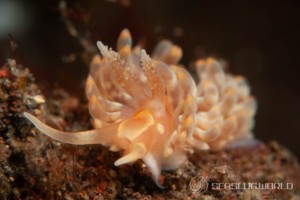
Photos of Baeolidia salaamica






















Same Genus Nudibranchs

Similar Colors Nudibranchs

Academic Database
Sea slug observation data is available in international marine biodiversity databases.