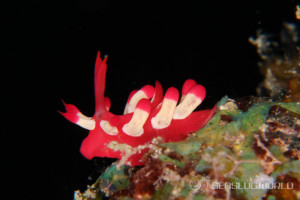
Ceratodoris nakamotoensis (Hamatani, 2001)
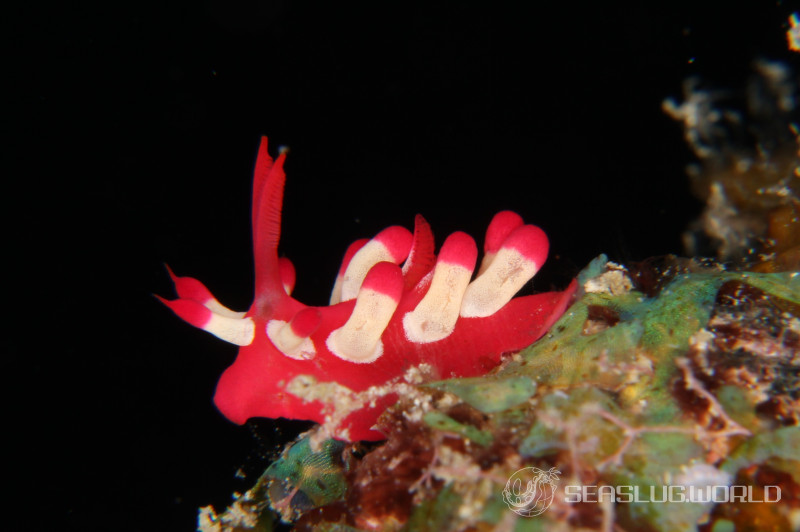
- Location
- Kuroshima V-Point, Ishigaki and Yaeyama, Okinawa, Japan
- Date
- 2011/10/16
- Length
- 8mm
- Depth
- 15.0m
- Water temperature
- 28.0℃
Description
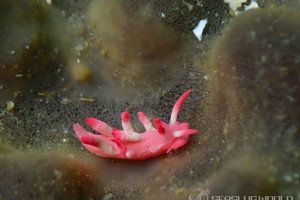
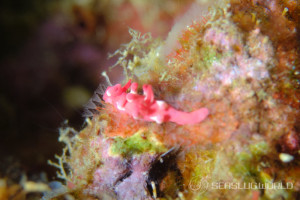
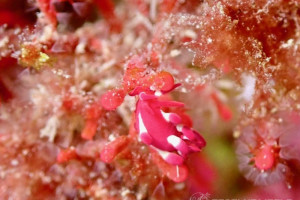
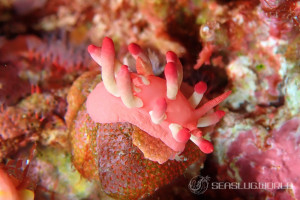
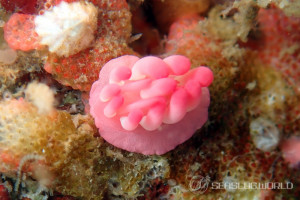
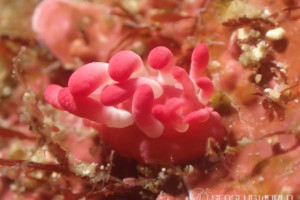
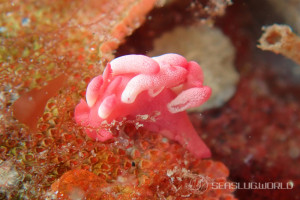
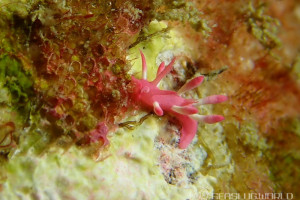
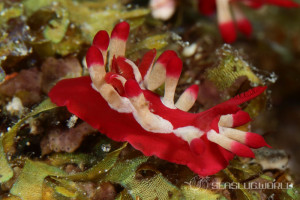
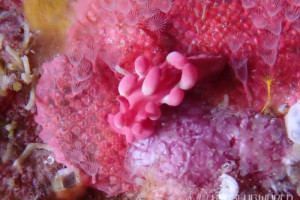
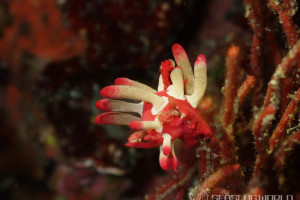
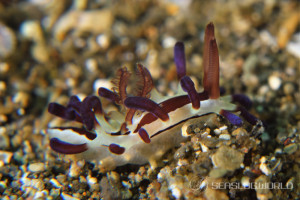
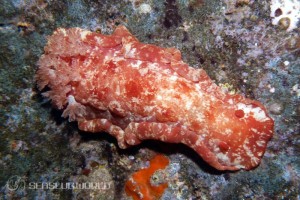
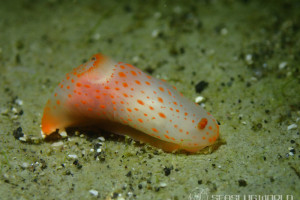
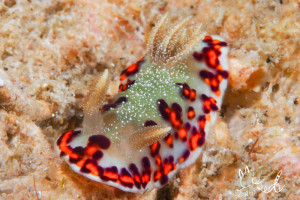
The body is elongate and wide, lacking a distinct notal border. Body color is uniformly red except for the gill rachises and the bases and apices of the notal papillae, which are pinkish white. There are five pairs of elongate notal papillae along the body sides, with two pairs situated anterior to the rhinophores. A single medial papilla is present anterior to the gill. The gill consists of 3–4 unipinnate branches. The rhinophores are elongate with 13–20 congested lamellae. The anterior end of the foot is rounded and forms a projection in front of the mouth. The oral tentacles are fused to form an oral veil. Living animals reach 20 mm; preserved specimens 3–13 mm.Distribution
Originally described from the Nakamoto coast of Kuroshima Island, Okinawa, Japan. Also recorded from Indonesia (Banda Sea), the Philippines (Bohol and Cebu Islands), and the Marshall Islands (Enewetak and Kwajalein Atolls).Etymology
The specific epithet nakamotoensis refers to the type locality, the Nakamoto coast of Kuroshima Island, where the type material was collected.Remarks
Found on outer reef faces at 10–30 m depth, where it feeds on the bright red bryozoan Tropidozoum cellariforme. Unlike Ceratodoris kondoi, which has only four pairs of notal papillae, this species has five pairs. The original genus Hopkinsia was synonymized with Okenia; the subsequent transfer to Ceratodoris follows post-2004 phylogenetic work.References
- Hopkinsia nakamotoensis n.sp., Hamatani, I., 2001. Two new species of Goniodorididae (Opisthobranchia; Nudibranchia) with a new genus from Kuroshima Island, Okinawa, Japan. Venus, Jap. Jour. Malac., 60(3): 151-156.
- Okenia nakamotoensis (Hamatani, 2001) comb. nov., Gosliner T. M. (2004). Phylogenetic Systematics of Okenia, Sakishmaia, Hopkinsiella and Hopkinsia (Nudibranchia: Goniodorididae) with descriptions of new species from the tropical Indo-Pacific". Proceedings of the California Academy of Sciences 55(5): 125-161.
A Kindle field guide by the site author
Kimoto N. (2026). Sea Slugs of Japan & the Indo-Pacific, 2nd Edition.
Kindle Edition
View on Amazon PR (Amazon Associates)Seasonality
Shooting Locations
Loading shooting locations...
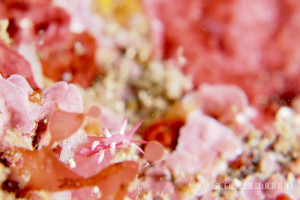
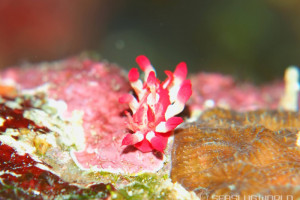
Photos of Ceratodoris nakamotoensis






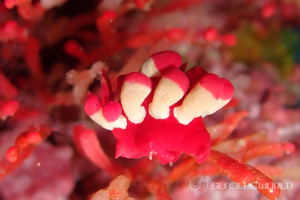
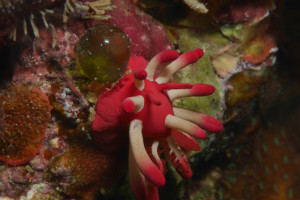

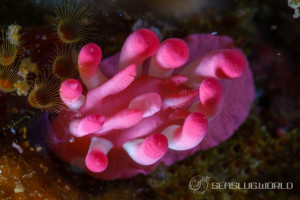

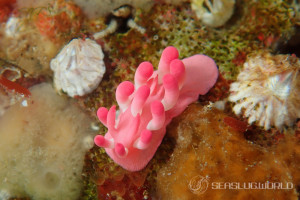





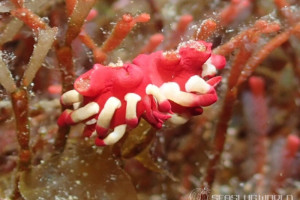
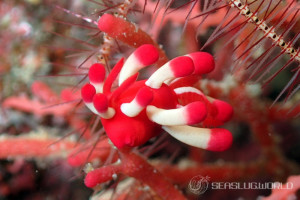

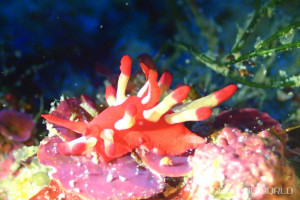
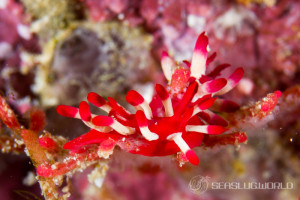

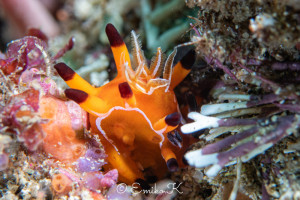
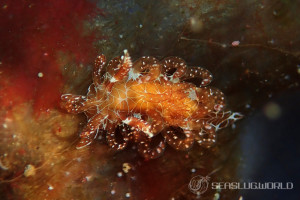
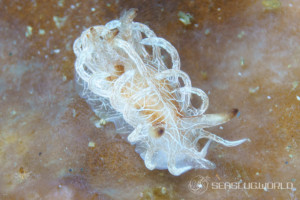
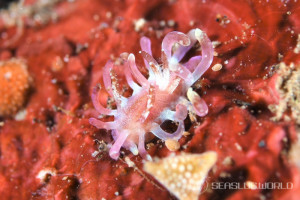
Same Genus Nudibranchs
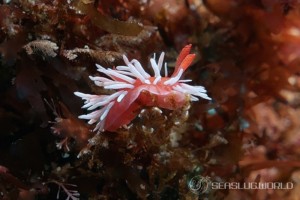
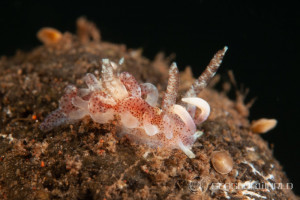
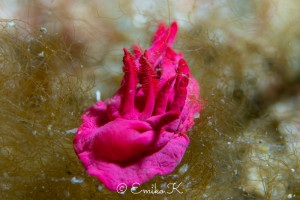
Similar Colors Nudibranchs
Academic Database
Sea slug observation data is available in international marine biodiversity databases.