Ceratodoris rosacea (MacFarland, 1905)
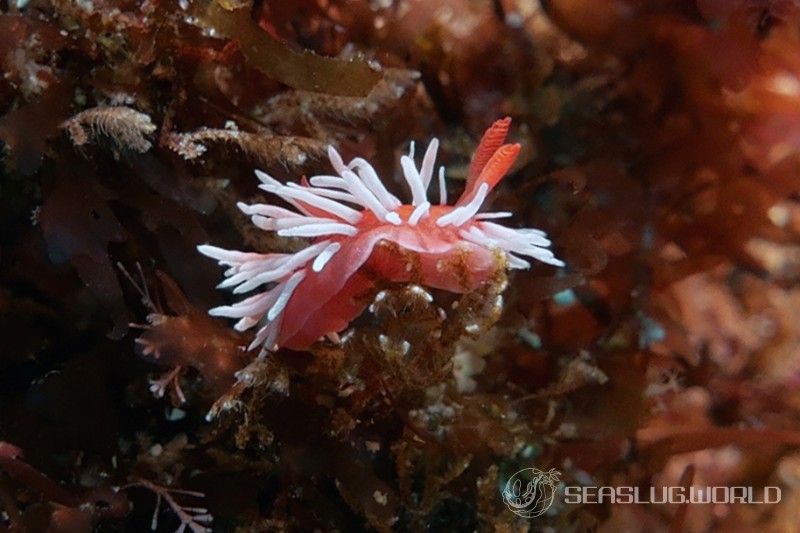
- Location
- Keyhole, Coronado Islands, Baja California, Mexico
- Date
- 2019/11/01
- Length
- ??mm
- Depth
- ??m
- Water temperature
- ??℃
Description
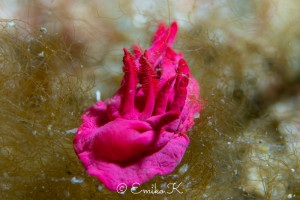
A flattened, entirely rose-pink nudibranch whose dorsum is densely covered with long, soft pink papillae. It grows to about 30 mm. The vivid pink comes from a pigment (hopkinsiaxanthin) obtained from its food, and the animal is popularly known as the “Hopkins’ rose.”Distribution
Eastern Pacific along the west coast of North America, from Oregon south to Baja California, Mexico. The type locality is Monterey Bay, California. During warm-water years its numbers increase and its range expands markedly northward.Etymology
The specific epithet rosacea is Latin for “rose-coloured,” after the animal’s brilliant pink colour.Remarks
A bryozoan feeder that grazes exclusively on the encrusting bryozoan Integripelta bilabiata; the prey carries the same pink pigment, which is why the slug matches its food so closely. It also lacks oral tentacles.References
- Hopkinsia rosacea n.sp., MacFarland F.M. (1905). A preliminary account of the Dorididae of Monterey Bay, California. Proceedings of the Biological Society of Washington. 18: 35-54.
- Okenia rosacea, Helmut Debelius, Rudie H. Kuiter. (2007). Nudibranchs of the World.
- Ceratodoris rosacea comb. nov., Paz-Sedano S., Moles J., Smirnoff D., Gosliner T.M. & Pola M. (2024). A combined phylogenetic strategy illuminates the evolution of Goniodorididae nudibranchs (Mollusca, Gastropoda, Heterobranchia). Molecular Phylogenetics and Evolution. 192: 107990. https://doi.org/10.1016/j.ympev.2023.107990
Featured in this book
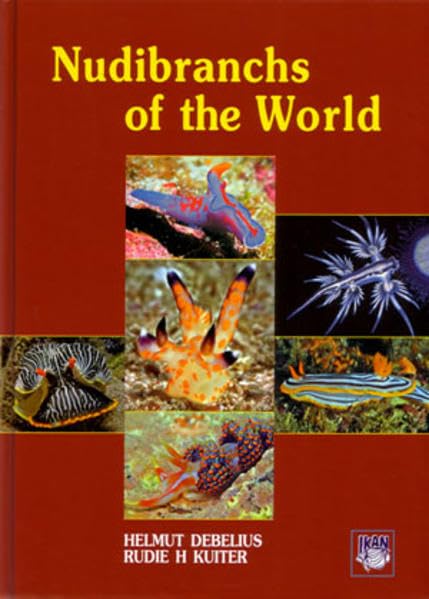
Helmut Debelius, Rudie H. Kuiter. (2007). Nudibranchs of the World.
IKAN-Unterwasserarchiv
This species, Ceratodoris rosacea, is included in the book.
View on Amazon PR (Amazon Associates)Seasonality
Shooting Locations
Loading shooting locations...
Photos of Ceratodoris rosacea

Same Genus Nudibranchs
Similar Colors Nudibranchs
Academic Database
Sea slug observation data is available in international marine biodiversity databases.