Cratena affinis (Baba, 1949)
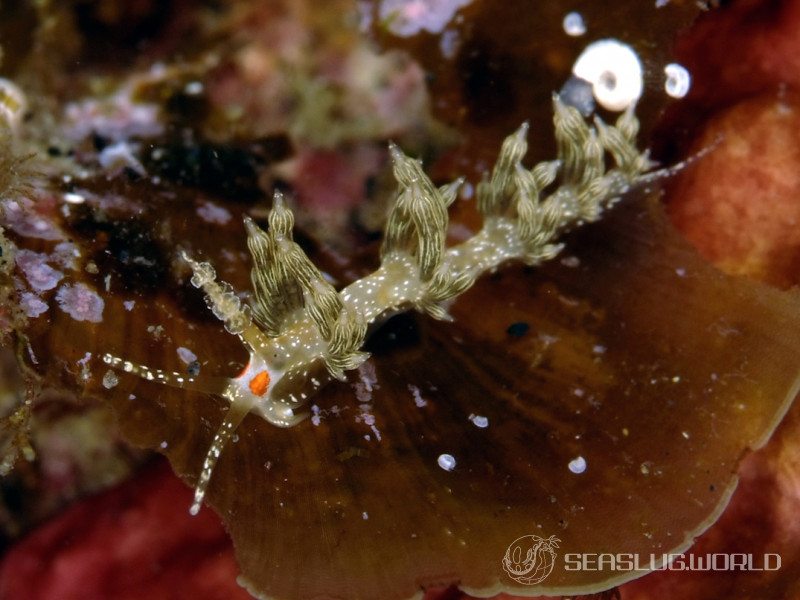
- Location
- Keikai, Izu Oshima, Tokyo, Japan
- Date
- 2010/09/21
- Length
- 10mm
- Depth
- 8.0m
- Water temperature
- 24.0℃
Description
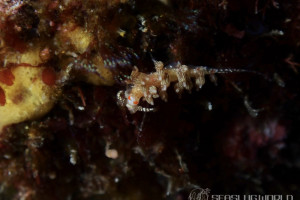
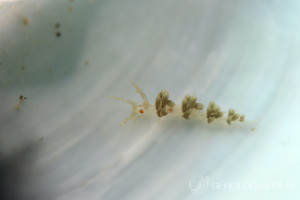
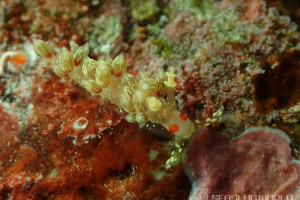
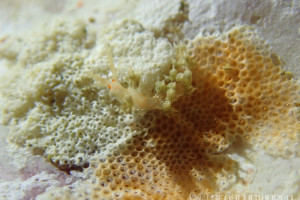
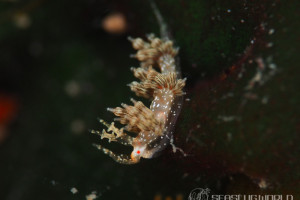
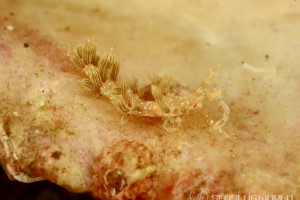
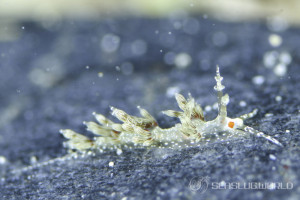
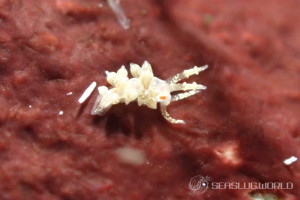
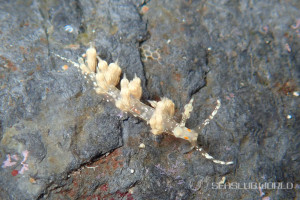
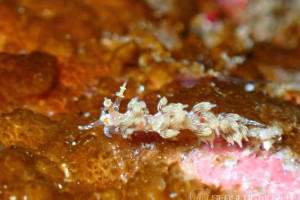
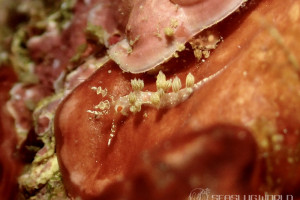
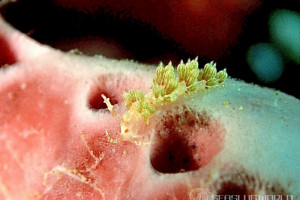
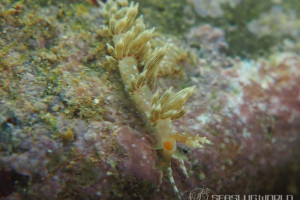
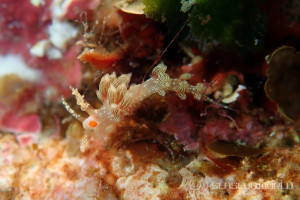
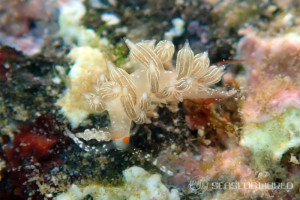
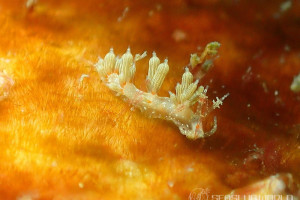
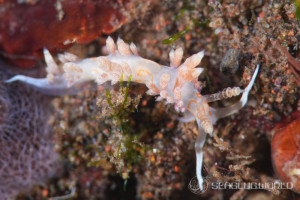
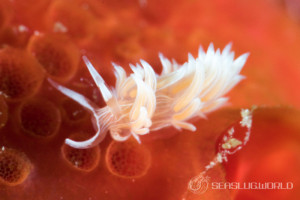
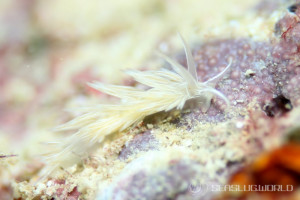
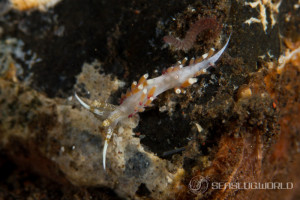
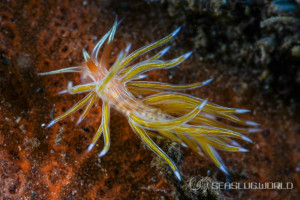
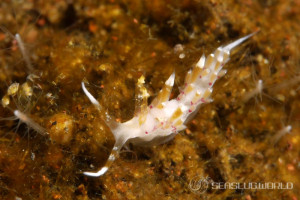
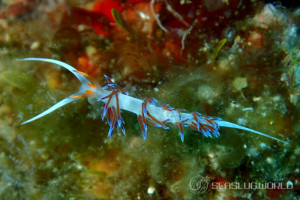
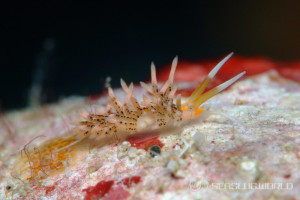
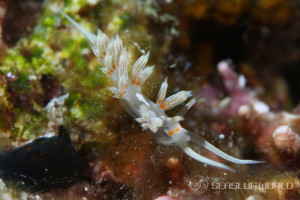
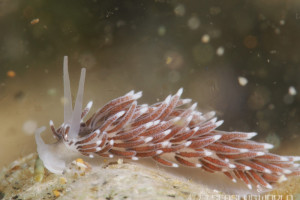
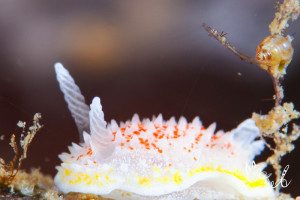
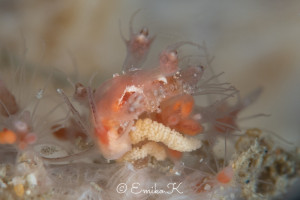
A small Aeolidacea, body length about 1 cm. The rhinophores bear two distinctive rings at mid-length. Cerata are arranged in 5 groups per side: 1st group single-rowed with 8 cerata, 2nd 7-8, 3rd 6, 4th 4, 5th 1. The first three groups are mounted on horseshoe ridges; the remaining two groups in oblique rows. The genital orifice opens in the centre and below the first right horseshoe; the anus opens just behind the second right horseshoe. Anterior foot corners tentaculiform. Ground colour yellow-white with many albuminous fine dots; two red eye-spots on the dorsal head (the source of the Japanese name "Akame", red-eyed). Cerata yellow at the tip, with a dark central axis and some albuminous longitudinal lines on the surface. The masticatory edge of the jaw plate bears a single row of 18-30 denticles. Radula formula 16×0.1.0. The central tooth is broadly V-shaped, with 9-12 denticles on each side of the median cusp.Distribution
Type locality is Hayama-Najima-Hiraiwa, Sagami Bay (intertidal, August 1939, single specimen). The original description (Baba, 1949) records the species only from the type locality.Etymology
The specific epithet affinis is Latin for related or akin. The original description does not give an explicit etymology paragraph; the descriptive sense reflects an external similarity to Hervia lineata. The Japanese name "Akame-mino-umiushi" (red-eyed aeolid) refers to the two red eye-spots on the dorsal head.Remarks
Originally described as Hervia affinis and later transferred to Cratena. Baba notes that the species superficially resembles Hervia lineata but differs clearly in rhinophore form, body colour, and other details.References
A Kindle field guide by the site author
Kimoto N. (2026). Sea Slugs of Japan & the Indo-Pacific, 2nd Edition.
Kindle Edition
View on Amazon PR (Amazon Associates)Seasonality
Shooting Locations
Loading shooting locations...
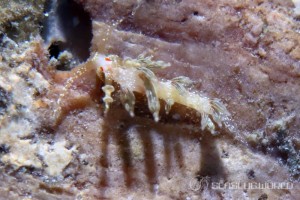
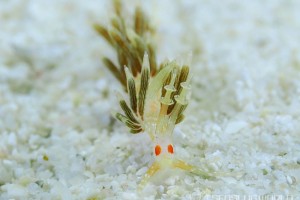
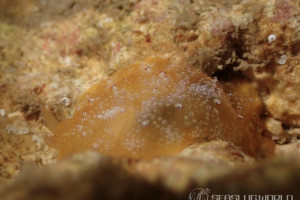
Photos of Cratena affinis


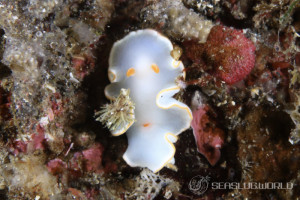

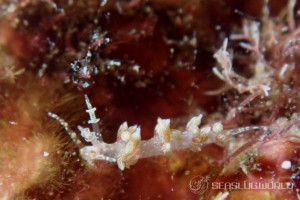

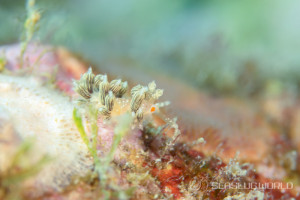
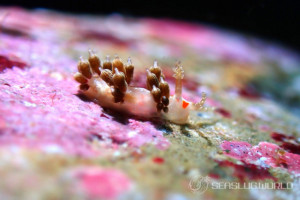



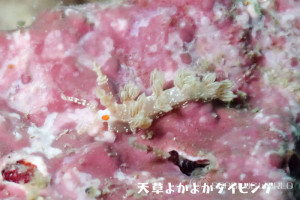

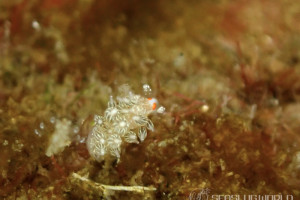

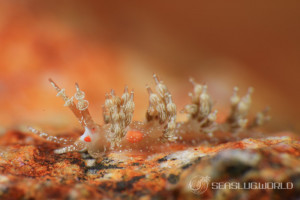

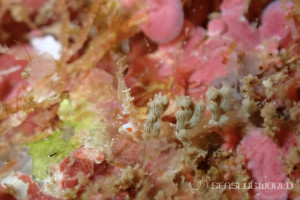

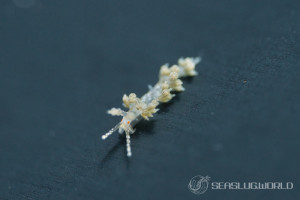

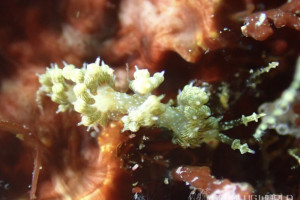

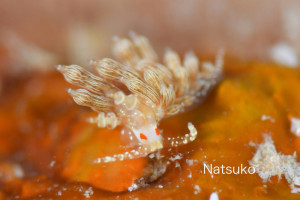

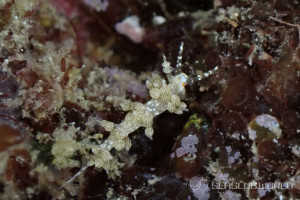









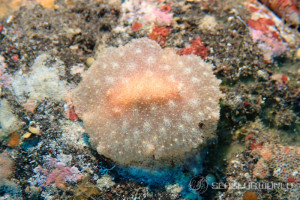
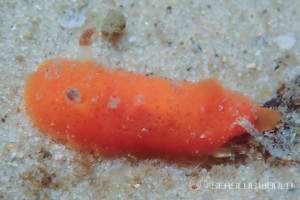
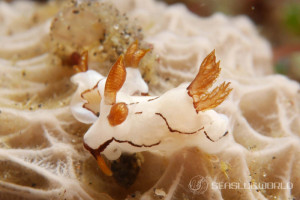
Same Genus Nudibranchs
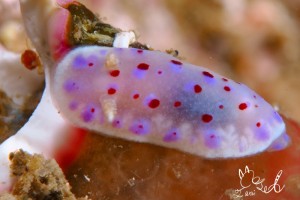
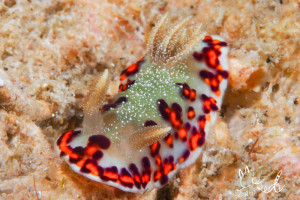
Similar Colors Nudibranchs
Academic Database
Sea slug observation data is available in international marine biodiversity databases.