Cyerce blackburnae K. Moreno, Gosliner, N. G. Wilson, Krug & Á. Valdés, 2025
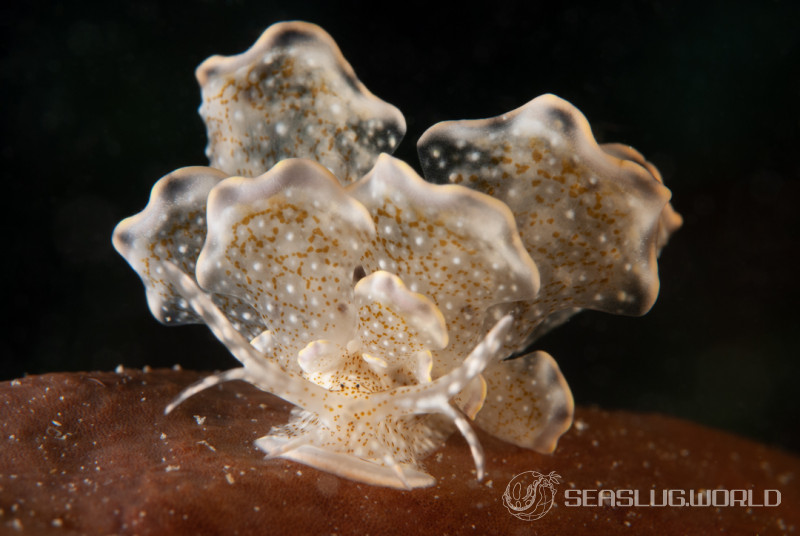
- Location
- Romblon Island, Philippines
- Date
- 2006/01/17
- Length
- 20mm
- Depth
- 14.0m
- Water temperature
- 26.0℃
Description
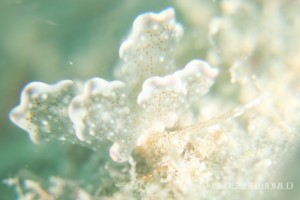
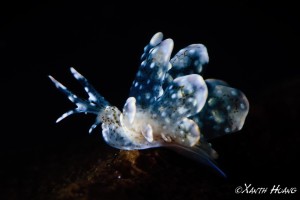
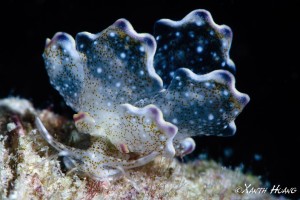
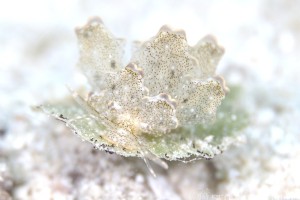
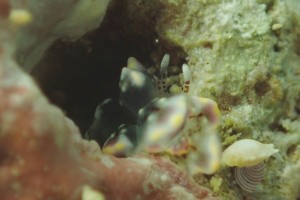
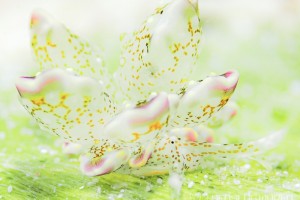
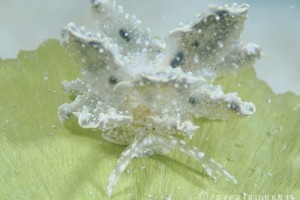
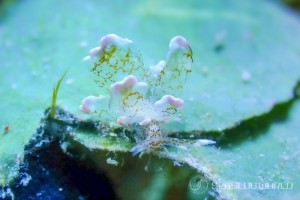
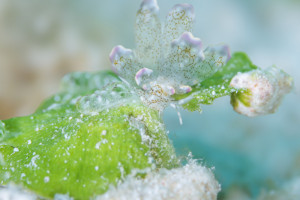
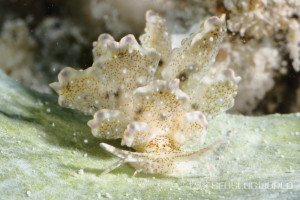
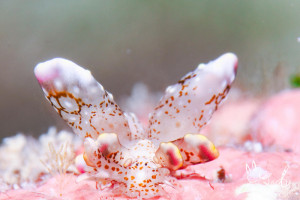
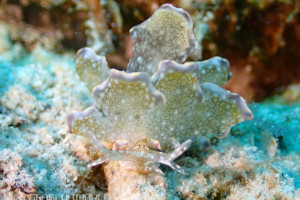
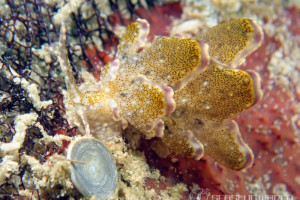
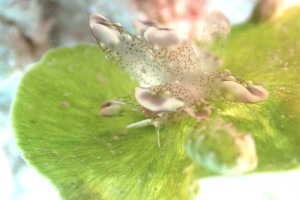
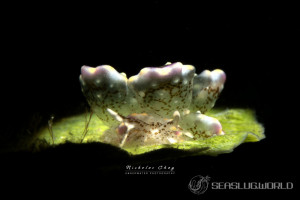
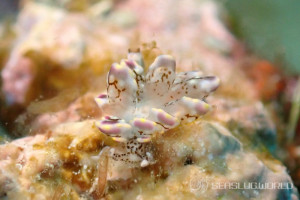
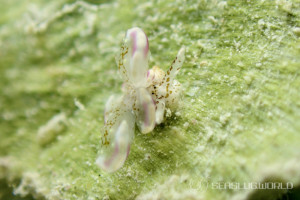
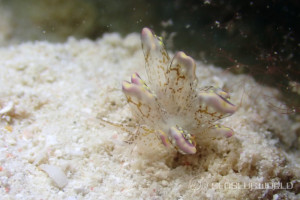
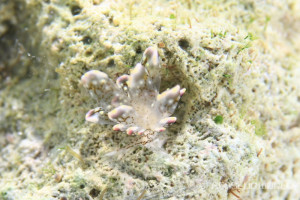
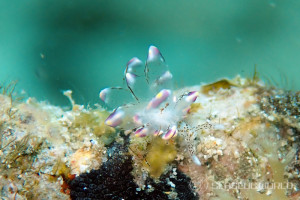
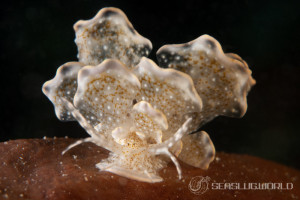
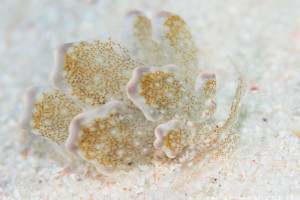
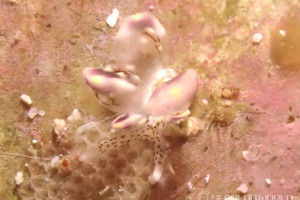
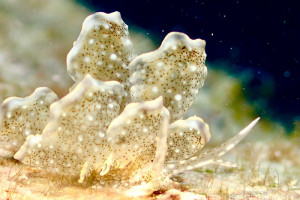
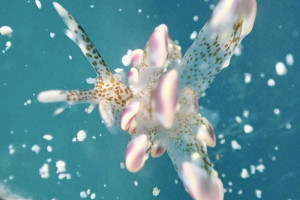
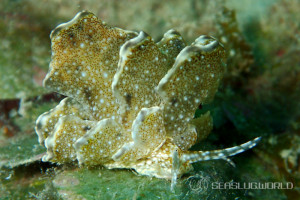
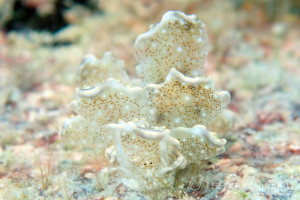
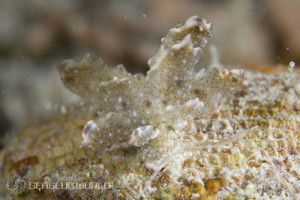
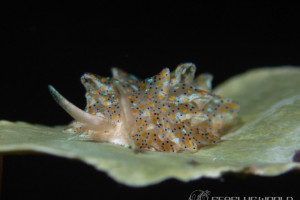
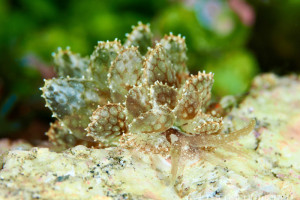
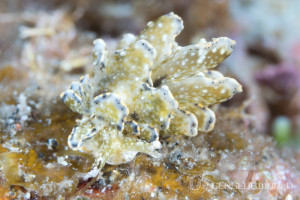
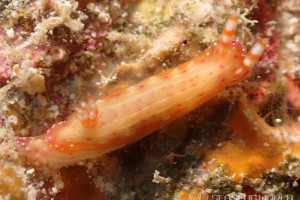
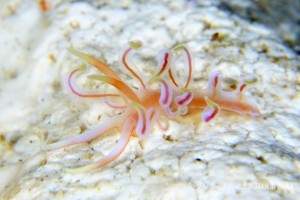
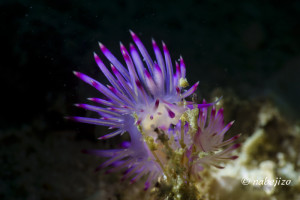
Body colour cream white to greyish. The head is cream white with reticulated dark brown striations and dark brown spots outlining the head margin. Rhinophores are long and translucent white, marked with two longitudinal rows of reticulated dark brown striations. Cerata are bulbous and oblong, beige to translucent white at the ground colour, overlaid with reticulated dark brown striations. Small white papillose structures and circular clusters of elevated spots (whitish, tan, to bright yellow) are scattered across the cerata. Whitish-fuchsia patches with fine white specks lie just inside the ceratal margin, while the wavy margin itself is outlined with a band of pale yellow spots. The foot is cream white dorsally, with a few scattered brown dots, bordered by a pale yellow marginal band. Preserved length reaches up to about 20 mm. When disturbed, living animals show a striking swimming behaviour, contracting the cerata on alternating sides of the body to create a rowing motion that propels them through the water.Distribution
At the time of the original description recorded from the tropical western Pacific. Type locality: Barracuda Point, Madang, Papua New Guinea. Also recorded from Guam and the Philippines (Romblon, Siquijor and Visayas).Etymology
Named in honour of Christine Blackburn, a marine policy specialist who worked on ocean science and climate policy and contributed to the development of marine protected areas during her tenure as Assistant Secretary at the United States National Oceanic and Atmospheric Administration. The dedication also acknowledges her support of the fieldwork trips of her colleague and co-author Patrick Krug.Remarks
Specimens have been collected feeding on the green alga Udotea geppiorum in Guam. Development is planktotrophic. Molecular phylogenetic analyses by Moreno et al. recovered Cyerce tutela, described in the same paper, as the sister species. The two species share a fuchsia infra-marginal band and reticulated dark brown striations on the cerata, but Cyerce blackburnae can be separated by its noticeably longer rhinophores and by a single fuchsia infra-marginal band on the cerata, whereas C. tutela carries three separate bands (black, fuchsia and orange) along the ceratal margin.References
- ハナビラウミウシ(仮称), 小野篤司. (1999). ウミウシガイドブック. TBSブリタニカ.
- ハナビラウミウシ, 小野篤司. (2004). 沖縄のウミウシ. ラトルズ.
- ハナビラウロコウミウシ, 中野理枝. (2018). 日本のウミウシ. 文一総合出版.
- ハナビラウミウシ, 小野篤司 & 加藤昌一. (2020). 新版 ウミウシ. 誠文堂新光社.
- Cyerce blackburnae sp. nov., Moreno K., Medrano S., Gosliner T.M., Wilson N.G., Krug P.J. & Valdés Á. (2025). Phylogenetic systematics of the genus Cyerce (Mollusca: Heterobranchia: Sacoglossa: Caliphyllidae) from the Pacific and Indian oceans with descriptions of nine new species. Zoological Journal of the Linnean Society. 204(1): zlaf030. https://doi.org/10.1093/zoolinnean/zlaf030
Featured in this book
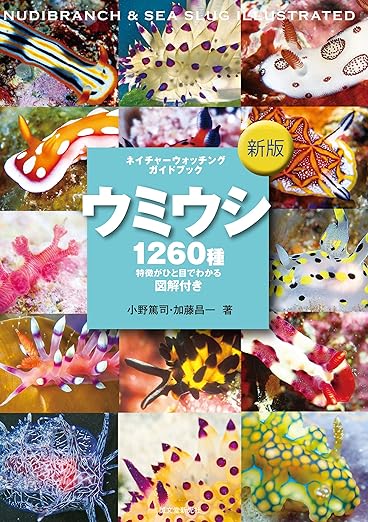
小野篤司 & 加藤昌一. (2020). 新版 ウミウシ. 誠文堂新光社.
誠文堂新光社
This species, Cyerce blackburnae, is included in the book.
View on Amazon PR (Amazon Associates)Seasonality
Shooting Locations
Loading shooting locations...
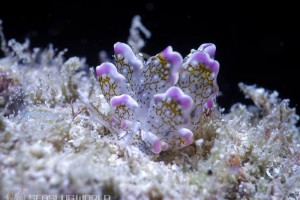
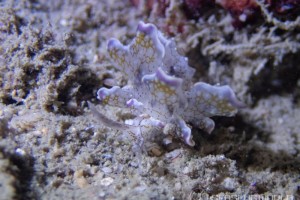
Photos of Cyerce blackburnae























Same Genus Nudibranchs

Similar Colors Nudibranchs

Academic Database
Sea slug observation data is available in international marine biodiversity databases.