Dermatobranchus fortunatus (Bergh, 1888)
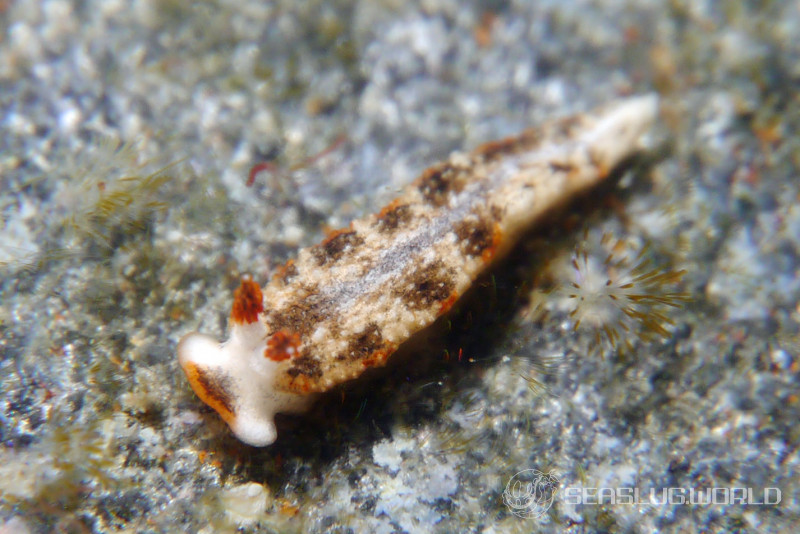
- Location
- Kuroshima Kita Twin Rock, Kerama(Kuro・Tokashiki・Gisippu・Mae), Okinawa, Japan
- Date
- 2014/05/17
- Length
- 5mm
- Depth
- 10.0m
- Water temperature
- 23.0℃
Description
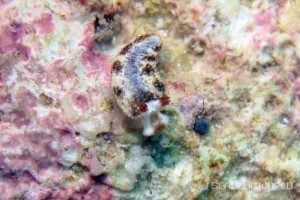
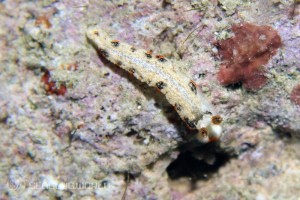
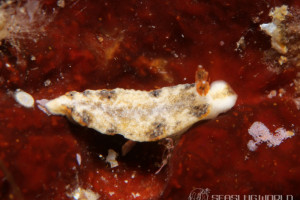
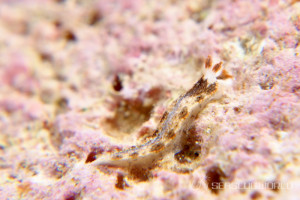
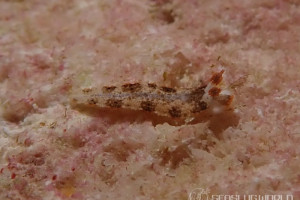
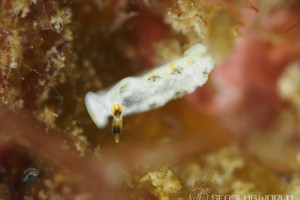
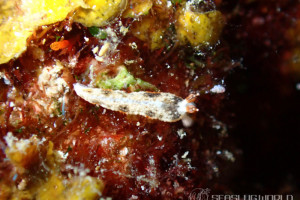
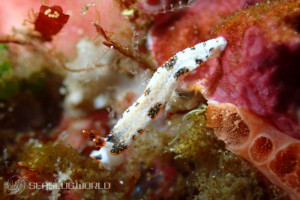
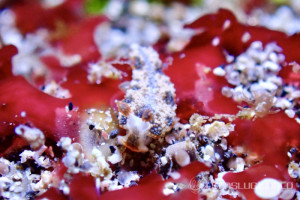
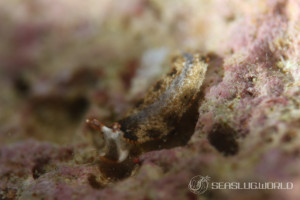
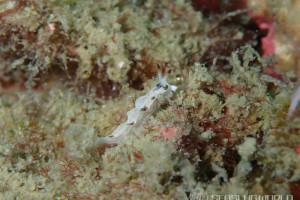
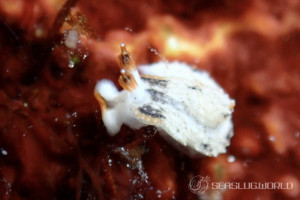
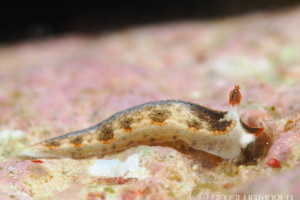
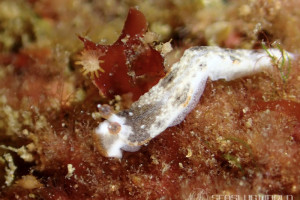
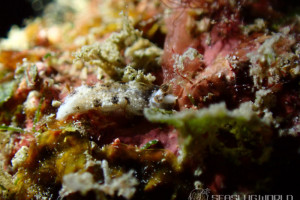
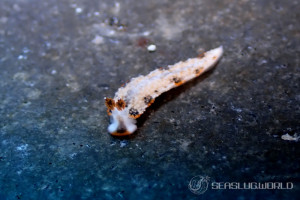
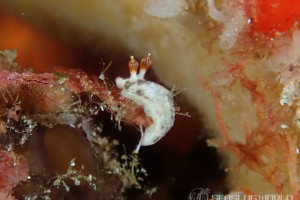
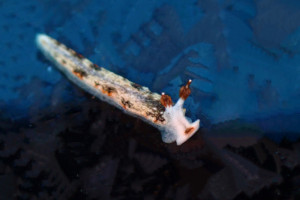
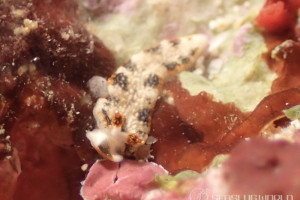
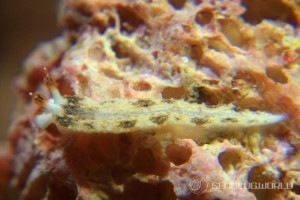
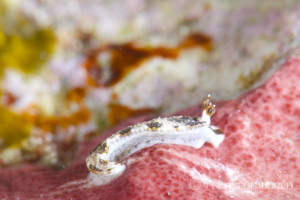
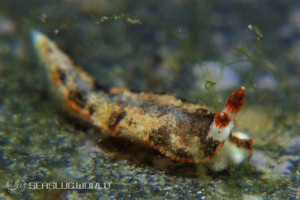
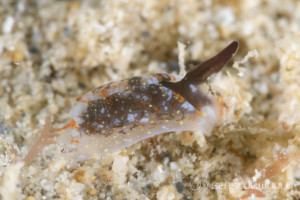
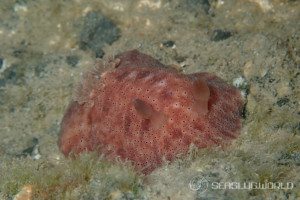
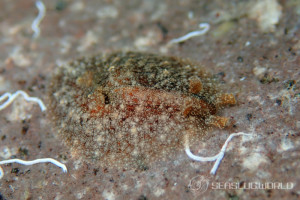
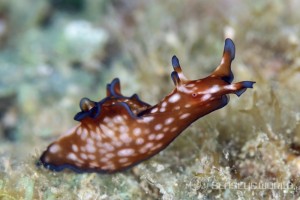
A small armininid reaching about 12 mm in body length. In life the ground colour is yellowish-white and the dorsum lacks the longitudinal ridges seen in other Dermatobranchus. An interrupted orange line runs along the outer edge of the mantle and oral veil, with irregular brownish blotches inside it. A faint black median longitudinal line runs along the dorsum but is inconspicuous. The rhinophores are yellowish-white at the base, black distally, with orange lamellae and a papilliform white tip; a brownish blotch on the front of the oral veil gives the species its Japanese name. In Bergh's original (alcohol-preserved) material the type was much smaller — 6 mm long, 2 mm wide and 1.5 mm high — with a median dense black-grey-dotted band, 7–9 discrete black blotches along each side of the mantle margin, one or two chalk-white oblique bands on the dorsum, a median large black spot on the forehead, and whitish rhinophore tips.Distribution
Indo-West Pacific. Type locality: Edam, a small coral islet in the roadstead of Batavia (modern Pulau Damar Besar, Jakarta Bay, Indonesia), based on two specimens collected by Brock on 13 July 1885. Subsequently recorded from the Seychelles, Australia, Papua New Guinea, Malaysia, the Philippines and Japan.Etymology
The specific epithet derives from Latin fortunatus ("fortunate, blessed"). Bergh's original description does not give an explicit etymology.Remarks
Originally described by Bergh as Pleuroleura fortunata Bgh. n. sp. Bergh had erected Pleuroleura in 1874 with one species, but in June 1887 he rediscovered van Hasselt's 1824 type material of Dermatobranchus at the Leiden Museum and confirmed that the two genera were synonyms. By priority the valid name became Dermatobranchus, and the species was later transferred accordingly; the parentheses in the author citation reflect this generic transfer. The genus name Dermatobranchus reflects the absence of the lateral lamellae seen on the underside of the mantle in Pleurophyllidia, leaving the body sides smooth and skin-like.References
A Kindle field guide by the site author
Kimoto N. (2026). Sea Slugs of Japan & the Indo-Pacific, 2nd Edition.
Kindle Edition
View on Amazon PR (Amazon Associates)Seasonality
Shooting Locations
Loading shooting locations...
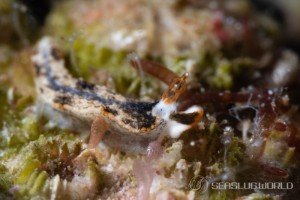
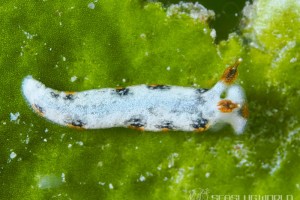
Photos of Dermatobranchus fortunatus



















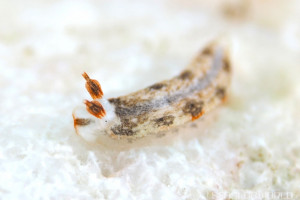

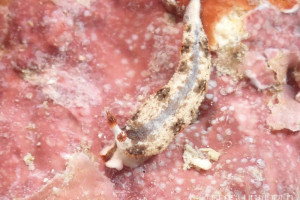

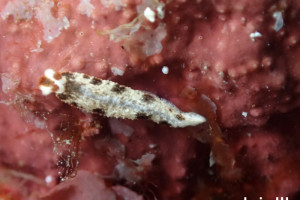

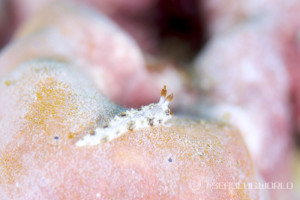



Same Genus Nudibranchs
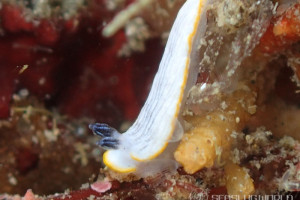
Dermatobranchus sp. 6
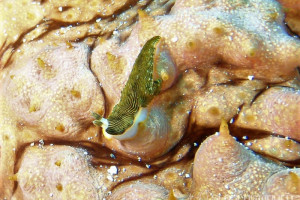
Dermatobranchus sp. 5

Dermatobranchus dendronephthyphagus
Dermatobranchus albineus
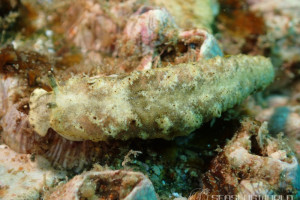
Dermatobranchus phyllodes
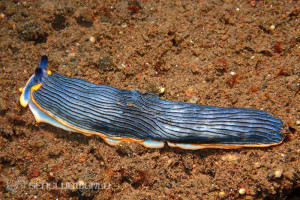
Dermatobranchus sp. 4
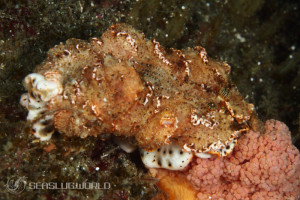
Dermatobranchus sp. 3
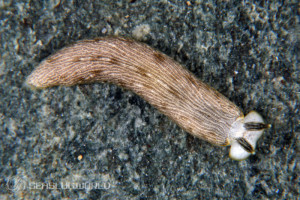
Dermatobranchus diagonalis
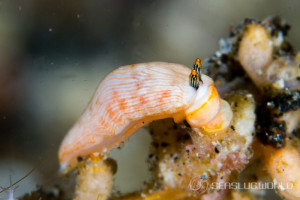
Dermatobranchus spp.
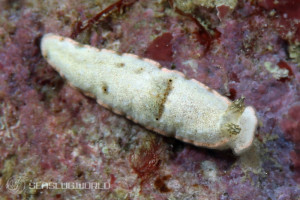
Dermatobranchus rodmani
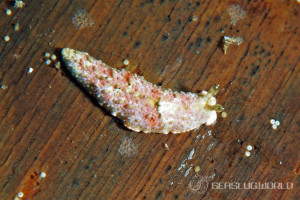
Dermatobranchus tuberculatus
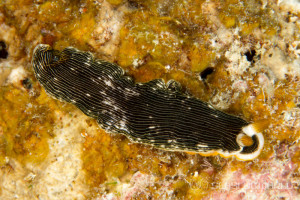
Dermatobranchus striatus
Similar Colors Nudibranchs
Academic Database
Sea slug observation data is available in international marine biodiversity databases.