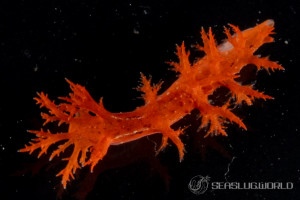
Facelina bilineata Y. Hirano & M. Ito, 1998
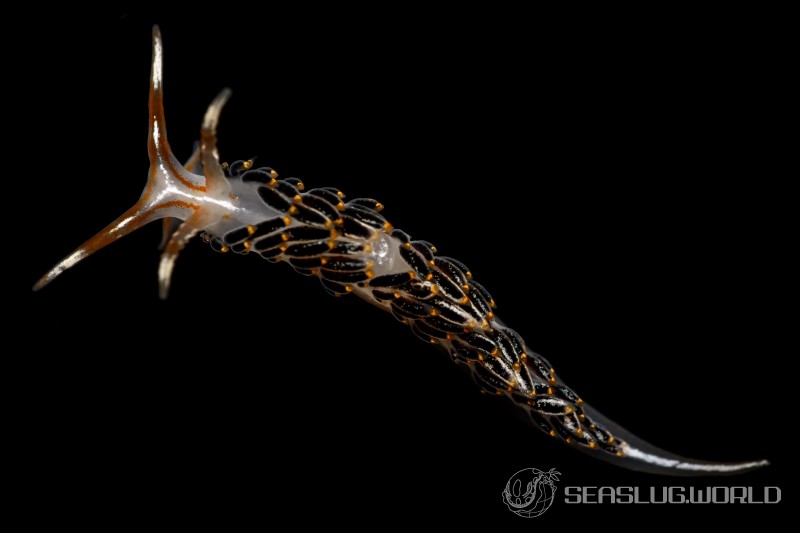
- Location
- Kashiwajima, Kouchi, Japan
- Date
- 2026/03/29
- Length
- ??mm
- Depth
- 0.3m
- Water temperature
- ??℃
Description
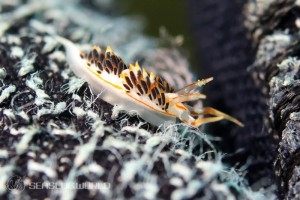
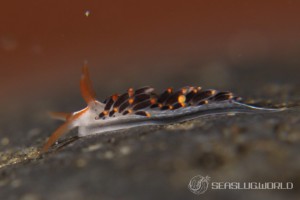
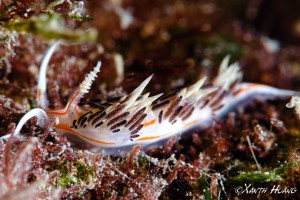
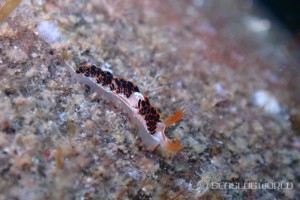
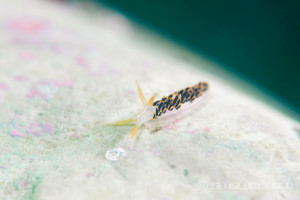
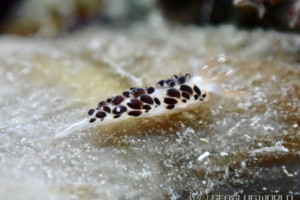
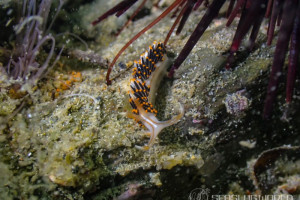
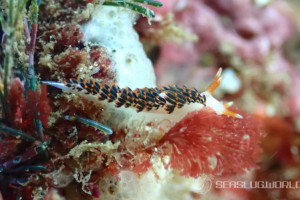
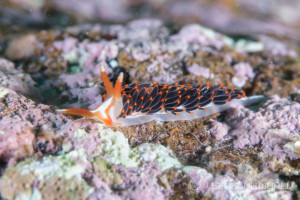
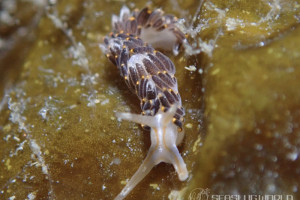
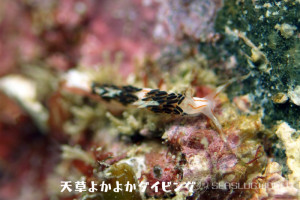
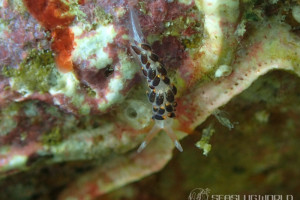
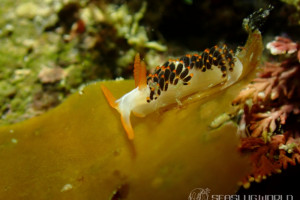
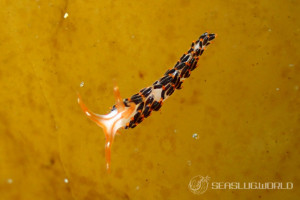
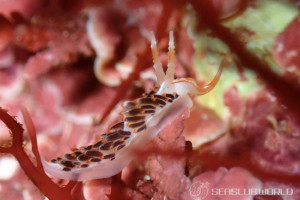
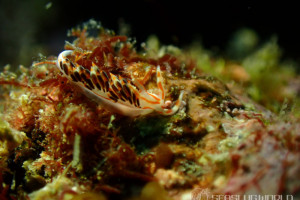
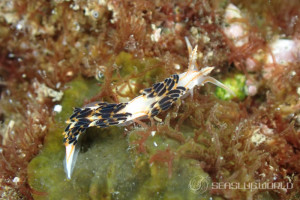
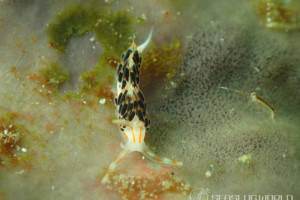
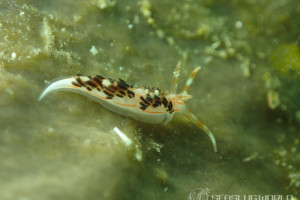
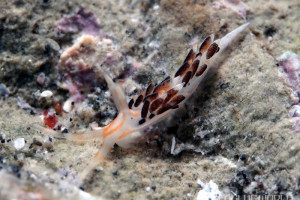
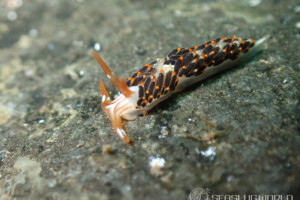
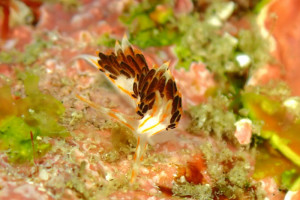
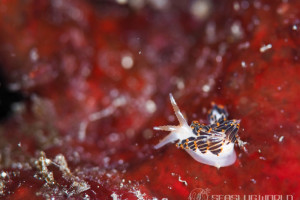
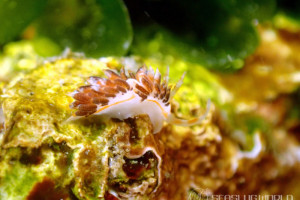
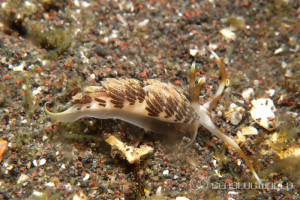
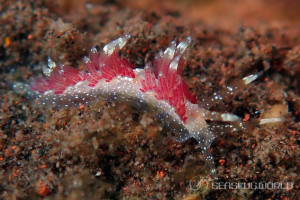
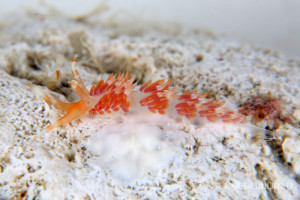
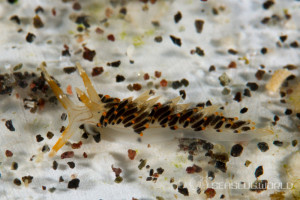
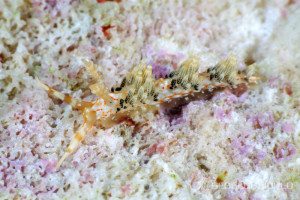
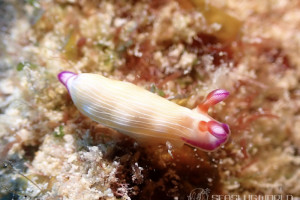
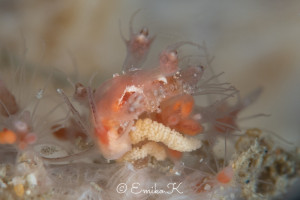
The body is elongate and slender, with a translucent white ground colour. The rhinophores are translucent orange and either verrucose or weakly annulated, with the distal third opaque white. The smooth oral tentacles are noticeably larger than the rhinophores and bear a thick orange streak running along the dorsal surface to the base of the rhinophores; the distal third is also opaque white. The anterior margins of the head, oral tentacles and foot are thickly edged with orange, and a small Y-shaped opaque white mark is present on the head. Two orange longitudinal lines run along each flank, the upper line detouring downward around the gonopore and the lower line running straight along the edge of the foot. A thick opaque white band runs between the cerata area and the upper orange line on each flank, the two bands uniting mid-dorsally to form a single line on the tail. The cerata are arranged in oblique rows, up to 16-19 rows per side, with 7-9 rows forming a single large precardial cluster and 9-10 rows subdivided into 3-4 postcardial clusters; most cerata are tipped with orange and bear scattered opaque white dots that may align into longitudinal streaks. Living specimens reach approximately 20 mm in length, with some up to 28 mm.Distribution
Known from the coasts of Honshu, Japan: Mutsu Bay at the northern tip of Honshu, Sugashima off the Shima Peninsula, and Kominato and Choshi on the Boso Peninsula. The type locality is Kominato, Boso Peninsula.Etymology
From Latin "bi-" (two) and "lineata" (lined), referring to the two orange streaks on the head (Hirano & Ito, 1998). The Japanese name Futasuji-minoumiushi was coined in the same paper and likewise alludes to the two head stripes.Remarks
Facelina bilineata had long been treated as a colour variety of Facelinella quadrilineata (Baba, 1930) until a 1998 study showed that the two forms differ consistently in penial structure and described the present species as new. The two are a pair of cryptic species: F. bilineata bears two orange head stripes and two flank stripes per side, whereas F. quadrilineata has four head stripes and one flank stripe. In the same paper Facelinella Baba, 1949 was synonymised with Facelina Alder & Hancock, 1855, generating the new combinations Facelina quadrilineata and Facelina semidecora. The species inhabits boulders and algae from the low-intertidal to the shallow subtidal zone and feeds on hydroids; field observations recorded close association with the athecate hydroid Eudendrium, and in the laboratory Hydrocoryne miurensis, Coryne, Sarsia, Obelia, Campanularia and Eudendrium were all ingested.References
A Kindle field guide by the site author
Kimoto N. (2026). Sea Slugs of Japan & the Indo-Pacific, 2nd Edition.
Kindle Edition
View on Amazon PR (Amazon Associates)Seasonality
Shooting Locations
Loading shooting locations...
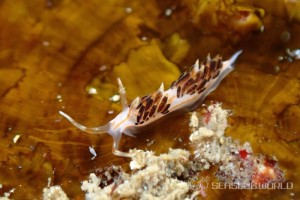
Photos of Facelina bilineata

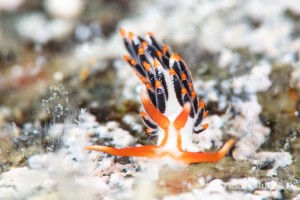





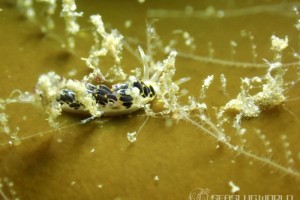

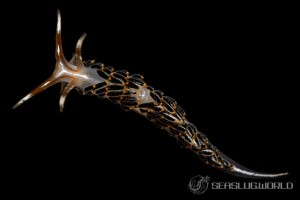

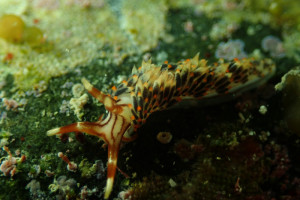

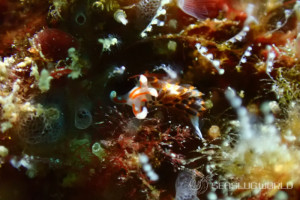












Same Genus Nudibranchs
Similar Colors Nudibranchs
Academic Database
Sea slug observation data is available in international marine biodiversity databases.