Goniobranchus tumuliferus (Collingwood, 1881)
Description
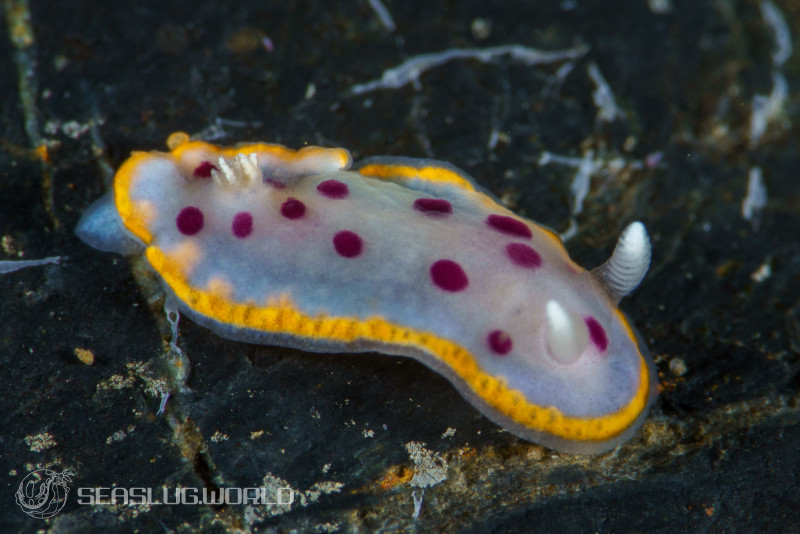
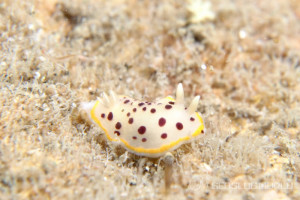
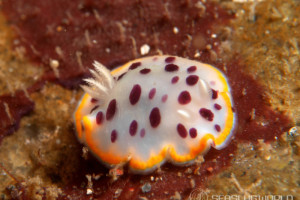
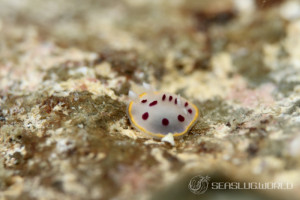
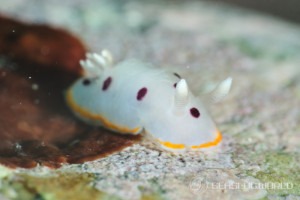
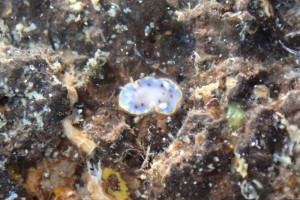
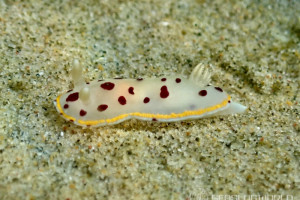
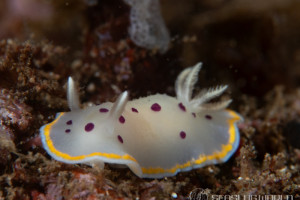
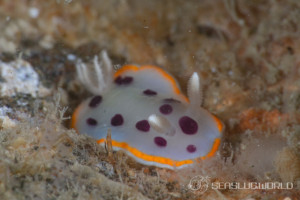
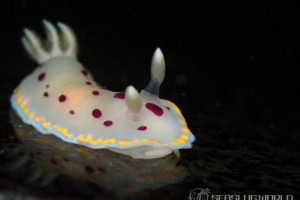
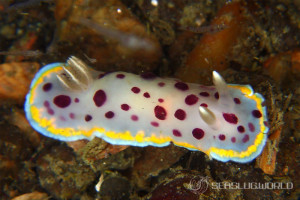
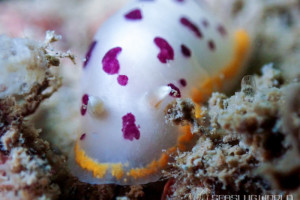
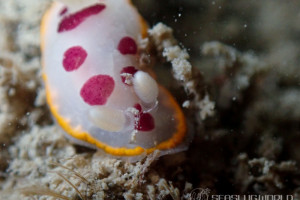
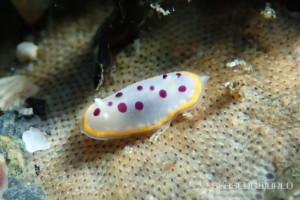
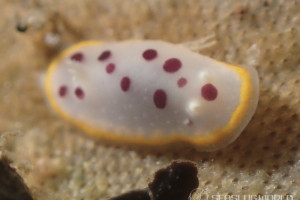
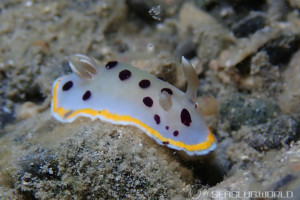
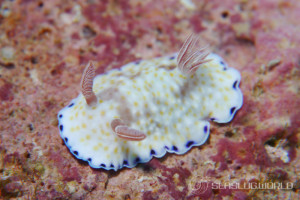
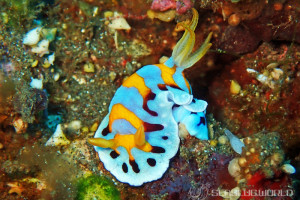
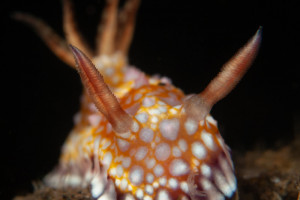
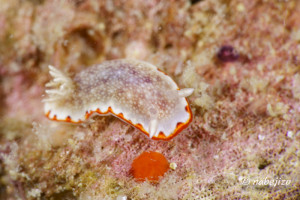
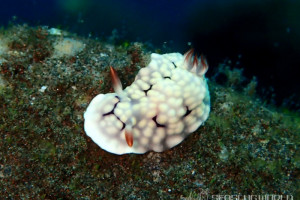
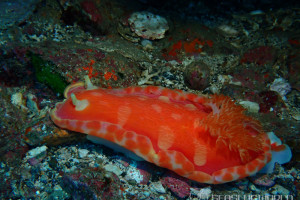
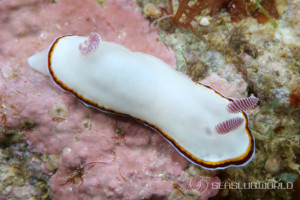
Ground colour translucent white, the dorsum very finely tuberculated. The back is scattered with purple spots that may extend onto the underside of the mantle. An intramarginal yellow band runs just inside the mantle edge; this band may be interrupted by white and is typically marked by tooth-like indentations on its inner side. Rhinophores and gills are white. Recorded length 10 to 40 mm.Distribution
Widespread in the western and southern Pacific, with records from Hong Kong, Thailand, the Philippines, New Caledonia, Australia and Japan. In Japan it has been recorded from the Kii Peninsula, Sagami Bay and Toyama Bay.Etymology
The specific epithet tumuliferus combines Latin tumulus (mound, swelling) with the suffix -fer (bearing), meaning "tubercle-bearing", in reference to the finely tuberculate dorsum. The species was originally described by Collingwood 1881 as Chromodoris tumulifera from the eastern seas, and transferred to Goniobranchus in a molecular revision on the basis of molecular phylogenetic analyses.Remarks
Glossodoris shirarae Baba, 1953, described from Seto (Kii), Toyama Bay and Sagami Bay, is a junior synonym. The Japanese name "Shirara-iroumiushi" was proposed in that paper, referring to "Shirara", the local name of Seto on the Kii Peninsula.References
- Glossodoris shirarae BABA n. sp. Shirara-iroumiushi (new name), Baba K. (1953). THREE NEW SPECIES AND TWO NEW RECORDS OF THE GENUS GLOSSODORIS FROM JAPAN. Publications of the Seto Marine Biological Laboratory. 3(2): 205-211. https://doi.org/10.5134/174468
- シラライロウミウシ, 生物學御研究所編. (1955). 相模湾産後鰓類図譜〈補遺〉. 岩波書店.
- 高岡生物研究会. (2002). 日本海のウミウシ. 第2版.
- シラライロウミウシ, 中野理枝. (2004). 本州のウミウシ. ラトルズ.
- Goniobranchus tumuliferus, Johnson R.F. & Gosliner T.M. (2012). Traditional taxonomic groupings mask evolutionary history: a molecular phylogeny and new classification of the chromodorid nudibranchs. PLoS ONE 7(4): e33479.
- Goniobranchus tumuliferus, Terrence Gosliner, Ángel Valdés and David Behrens. (2015). Nudibranch and Sea Slug Identification Indo-Pacific. New World Pubns Inc.
Featured in this book

Terrence Gosliner, Ángel Valdés and David Behrens. (2018). Nudibranch and Sea Slug Identification Indo-Pacific 2nd Edition. New World Pubns Inc.
New World Publications
This species, Goniobranchus tumuliferus, is included in the book.
View on Amazon PR (Amazon Associates)Seasonality
Shooting Locations
Loading shooting locations...
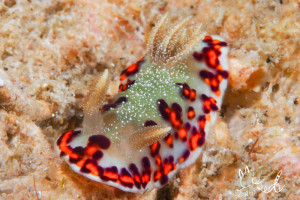
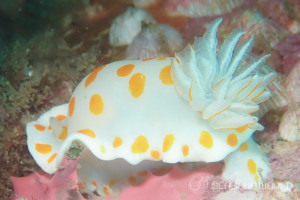
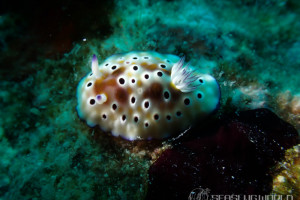
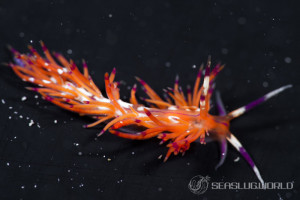
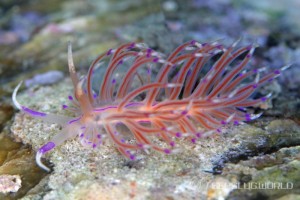
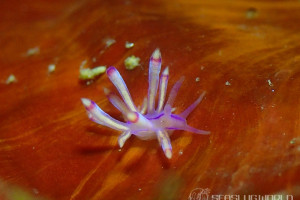
Photos of Goniobranchus tumuliferus










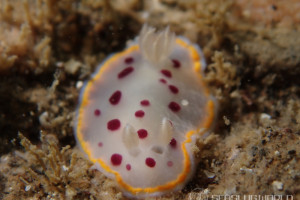

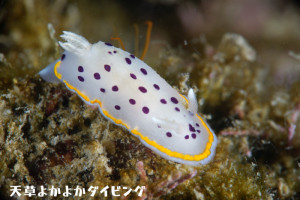

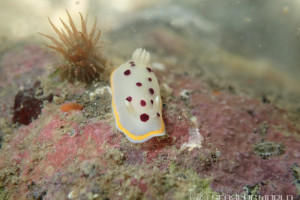
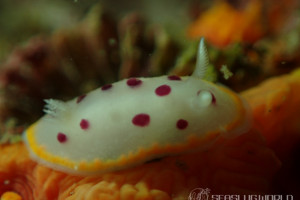

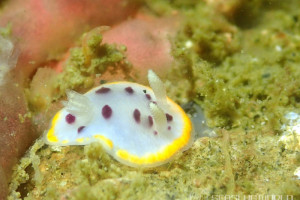

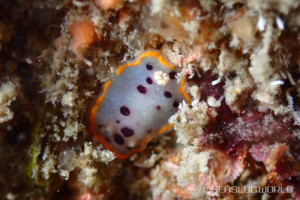

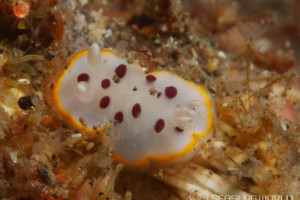

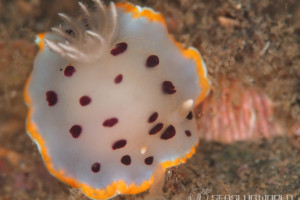

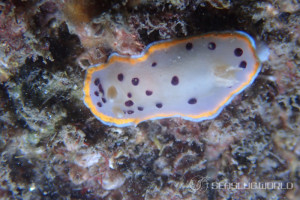
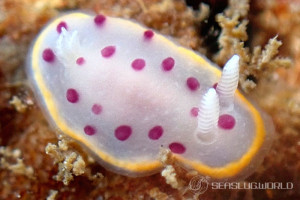

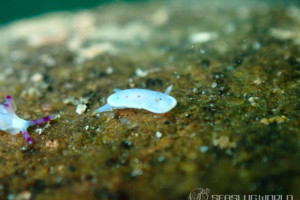

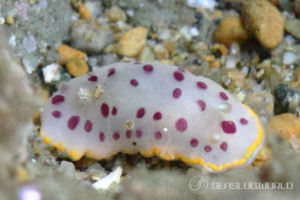





Same Genus Nudibranchs
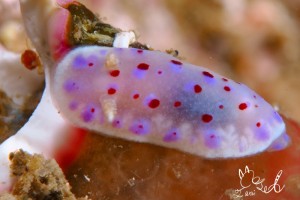

Similar Colors Nudibranchs
Academic Database
Sea slug observation data is available in international marine biodiversity databases.