Halgerda bacalusia Fahey & Gosliner, 1999
Description
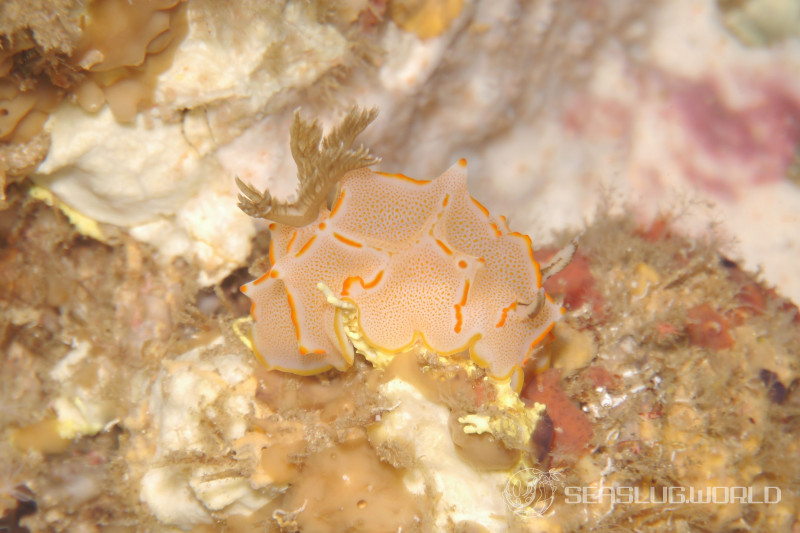
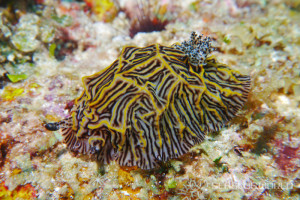
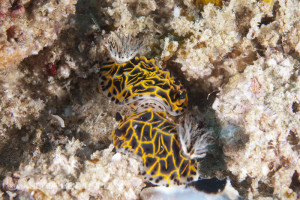
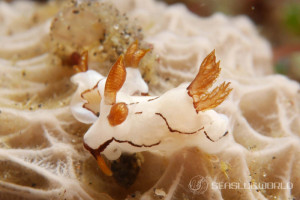
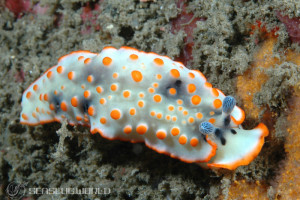
Reaches 40 mm in length. Body firm, smooth, and rigid with a high body profile. Dorsum bears a reticulate network of orange ridges with conical, orange-tipped tubercles at the ridge junctions. The largest tubercles have a faint yellow ring just below the orange tip. Ground color of the dorsum and foot is whitish with a gray tinge, densely sprinkled with small orange dots that extend toward but not to the mantle margin. The mantle is bordered by a bright yellow marginal band, and the foot has the same bright yellow margin. Oral tentacles short and digitiform. Rhinophores long, tapering, and angled posteriorly, translucent with 17–19 transverse lamellae; the upper half has a yellow background and a black longitudinal line runs along the posterior face from base to tip. Gill consists of four highly pinnate branchial leaves with black pigment along the margins and posterior sides; tips of the branches are white.Distribution
Known from the Andaman Sea, Thailand, and from Mindanao, the Philippines. Type locality: Richelieu Rock, Andaman Sea, Thailand, 28 m depth. The holotype was collected in November 1997 by Mark Strickland.Etymology
Verbatim from the original description (Fahey & Gosliner, 1999, p.41):The trivial name bacalusia is Latin for a kind of confection or sweet, which this animal resembles with its bright, candylike colors.
Remarks
Originally placed in Halgerdidae, which has since been synonymized with Discodorididae. The morphological phylogeny of a 1999 revision recovered Halgerda bacalusia as the sister species of Halgerda stricklandi, with both closely related to Halgerda aurantiomaculata. H. bacalusia was not included in the molecular reassessment of Halgerda by a 2023 study, as no DNA data were available. The holotype was recorded on coral rubble.References
- Halgerda bacalusia sp. nov., Fahey S.J. & Gosliner T.M. 1999. Preliminary phylogeny of Halgerda (Nudibranchia: Halgerdidae) from the tropical Indo-Pacific, with descriptions of three new species. Proceedings of the California Academy of Sciences, (4) 51(11): 425-448.
- Halgerda bacalusia, Helmut Debelius, Rudie H. Kuiter. (2007). Nudibranchs of the World.
- Halgerda bacalusia, Terrence Gosliner, Ángel Valdés and David Behrens. (2018). Nudibranch and Sea Slug Identification Indo-Pacific 2nd Edition. New World Pubns Inc.
- Halgerda bacalusia, Donohoo S.A., Villalobos S.G., Hallas J.M. & Gosliner T.M. (2023). Hyperdiversity of the genus Halgerda Bergh, 1880 (Nudibranchia: Discodorididae) with descriptions of fourteen new species. Marine Biodiversity. 53(3): 42. https://doi.org/10.1007/s12526-022-01334-9
Featured in this book
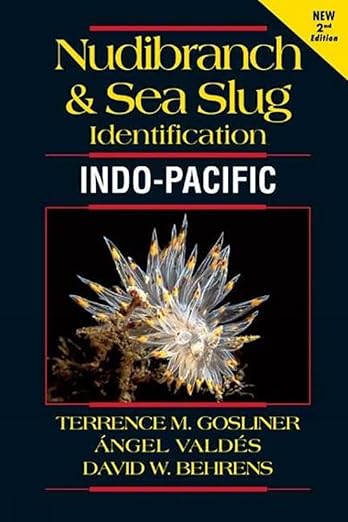
Terrence Gosliner, Ángel Valdés and David Behrens. (2018). Nudibranch and Sea Slug Identification Indo-Pacific 2nd Edition. New World Pubns Inc.
New World Publications
This species, Halgerda bacalusia, is included in the book.
View on Amazon PR (Amazon Associates)Seasonality
Shooting Locations
Loading shooting locations...
Photos of Halgerda bacalusia

Same Genus Nudibranchs
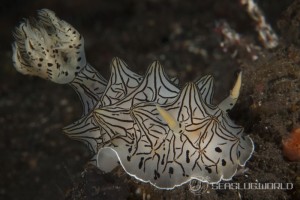
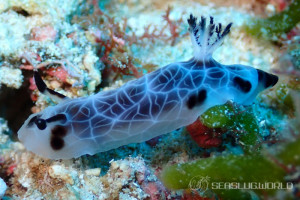
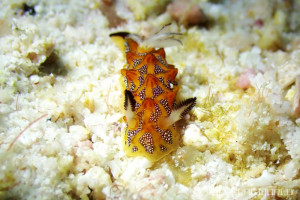
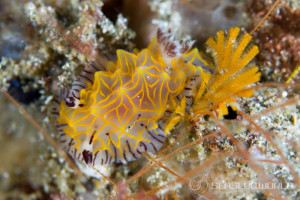
Similar Colors Nudibranchs


Academic Database
Sea slug observation data is available in international marine biodiversity databases.