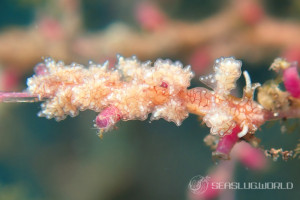
Kabeiro phasmida Shipman & Gosliner, 2015
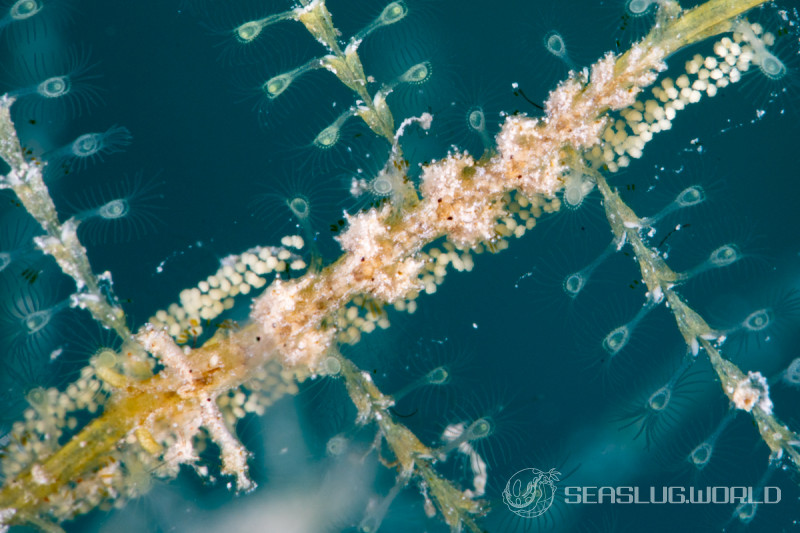
- Location
- Gorilla Chop, Okinawa Island (Motobu and Northern area), Okinawa, Japan
- Date
- 2019/04/12
- Length
- 4mm
- Depth
- 10.0m
- Water temperature
- 22.0℃
Description
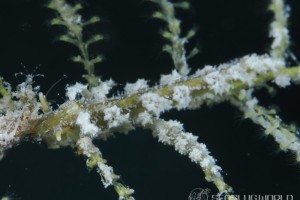
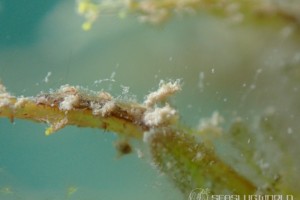
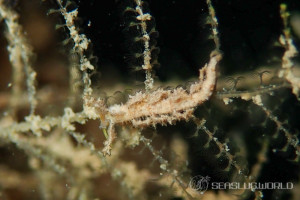
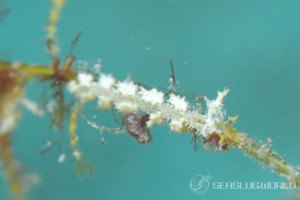
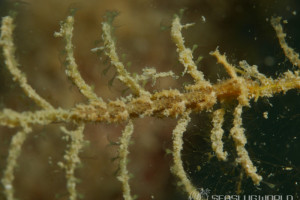
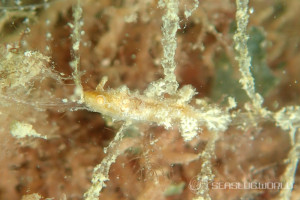
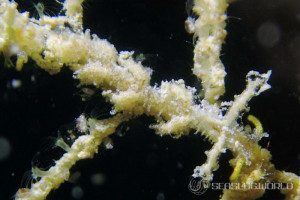
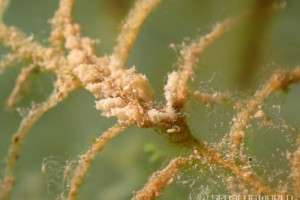
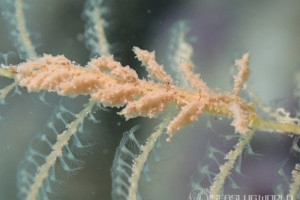
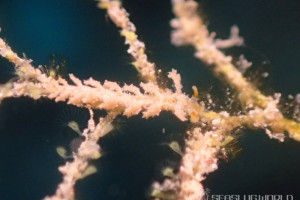
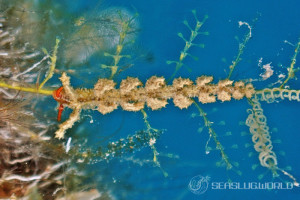
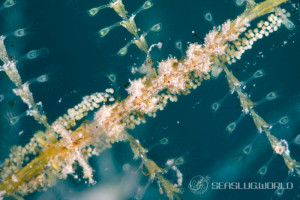
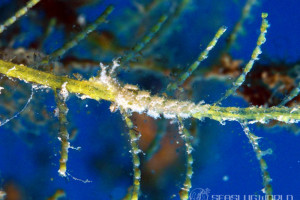
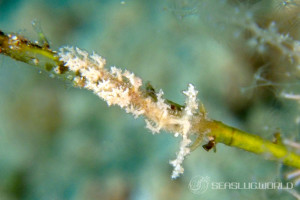
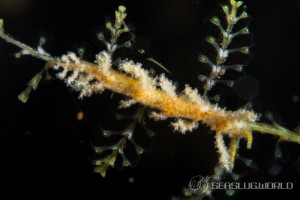
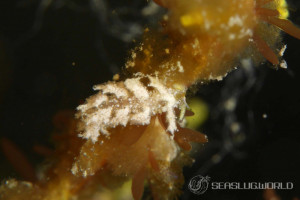
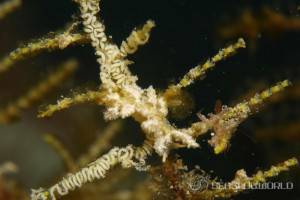
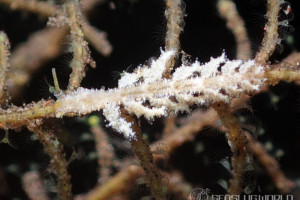
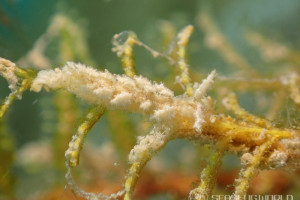
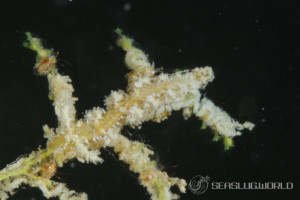
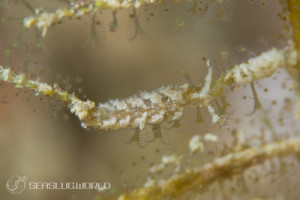
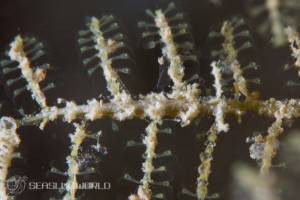
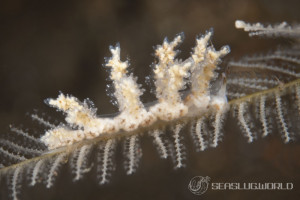
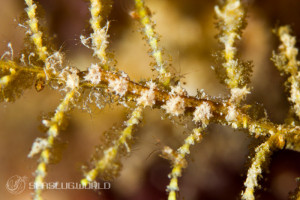
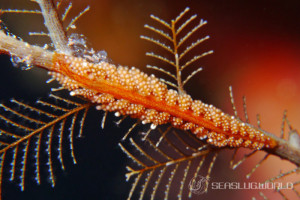
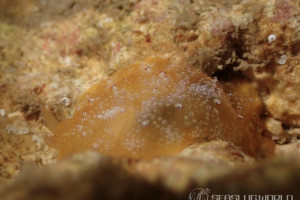
An elongate Kabeiro reaching up to 20 mm in length (preserved specimens ~12 mm). The body is yellow-cream to tan, blending with the stalks of the hydroid on which it feeds. Opaque white conical tubercles run along the margin of the notum. The animal bears ten pairs of elongate yellow-cream to tan cerata covered in numerous acutely pointed conical tubercles that are irregularly arranged; these tubercles are themselves covered in smaller round masses, producing a holly-leaf-like texture. Pseudobranchs are absent. Brown pigmentation marks the base of each ceras where it joins the body. The narrow rhinophoral sheaths are mottled in opaque white. The rhinophores are much longer than the sheaths, yellow-cream to tan, mottled in opaque white and tipped white. The pericardium is situated anteriorly on the dorsum and is covered in opaque white conical tubercles. The tubular digestive gland posterior to the pericardium runs medially along the dorsum and is itself covered in conical tubercles. The head and lateral side are somewhat translucent, with the internal organs visible through the body wall as small tightly packed circular patches. The genital pore lies directly below the first ceras on the right side; the anal papilla is adjacent to the pericardium between the first and second right cerata. The radular formula is 50 × 0.1.0.Distribution
Philippines (Luzon, Batangas Province, Calumpan Peninsula, Mainit Point, 0–22.7 m depth). Feeds on pinnate thecate hydroids found on mixed and sand-rubble slopes. Egg masses are cream-colored and tightly coiled, laid along the edges of the primary branches of the hydroid host.Etymology
Verbatim from the original description (Shipman & Gosliner, 2015):Named after the order of walking stick insects, Phasmida, due to its walking stick-like appearance.
Remarks
Originally figured as Doto sp. 15 in a 2008 reference work. One of the founding members of the new genus Kabeiro, sharing the diagnostic elongate body, enlarged elevated pericardium, and pocketed prostate (penial gland). K. phasmida is immediately distinguished from Kabeiro rubroreticulata by the absence of red reticulations, the presence of small conical tubercles along the margin of the notum, and the absence of pseudobranchs. Its ampulla is far more elongate than in K. rubroreticulata, while the penial gland and vaginal duct are shorter; its radular teeth bear fewer denticles than those of K. rubroreticulata, and the denticles do not extend onto the central cusp. The Japanese vernacular name "Nanafushi-umiushi" was proposed by Nakano et al. 2017 in their opisthobranch survey of northern Amami-Oshima.References
- Kabeiro phasmida n. sp., Shipman C. & Gosliner T.M. (2015). Molecular and morphological systematics of Doto Oken, 1851 (Gastropoda: Heterobranchia), with descriptions of five new species and a new genus. Zootaxa. 3973(1): 1-49. https://doi.org/10.11646/zootaxa.3973.1.1
- ナナフシウミウシ* (新称), 中野理枝, 朝倉知子, 池田紫, 石川雅教, 今本淳, 岩瀬南美, 西田和記, 堀江諒, 山田久子 & 渡井久美. (2017). 奄美大島北部海域における後鰓類相の調査報告. Kuroshio Biosphere. 13: 1-18 + 6 pls.
A Kindle field guide by the site author
Kimoto N. (2026). Sea Slugs of Japan & the Indo-Pacific, 2nd Edition.
Kindle Edition
View on Amazon PR (Amazon Associates)Seasonality
Shooting Locations
Loading shooting locations...
Photos of Kabeiro phasmida
Tag:















Same Genus Nudibranchs
Similar Colors Nudibranchs
Academic Database
Sea slug observation data is available in international marine biodiversity databases.