Pelagella longicornis Paz-Sedano, Smirnoff, Gosliner & Pola, 2023
- Location
- Ishikiri(Awa), Okinawa Island (Motobu and Northern area), Okinawa, Japan
- Date
- 2013/04/11
- Length
- 5mm
- Depth
- 15.0m
- Water temperature
- 22.0℃
Description
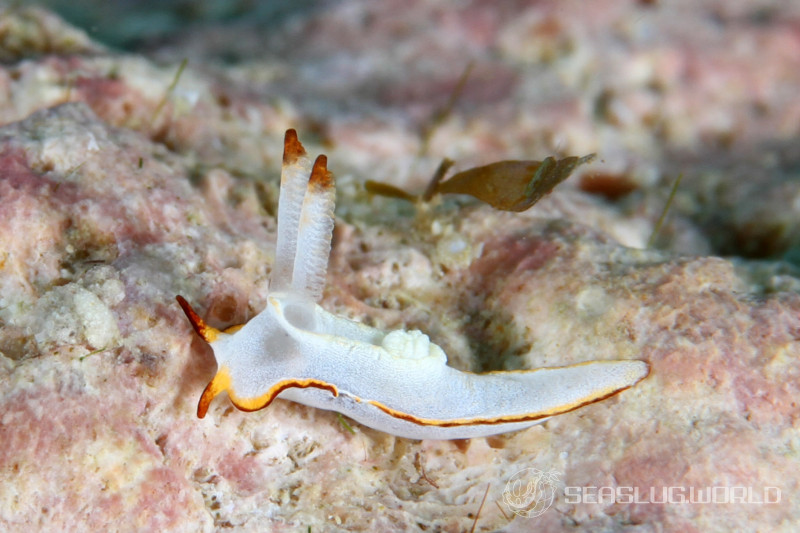
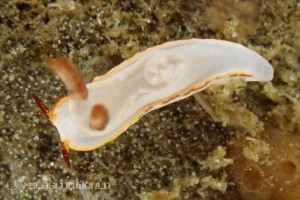
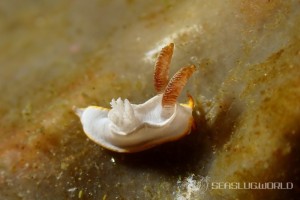
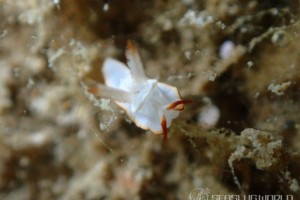
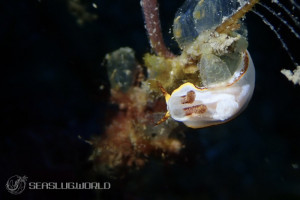
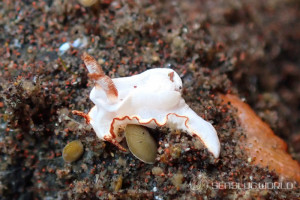
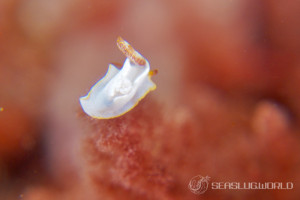
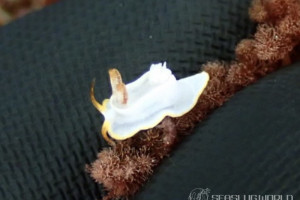
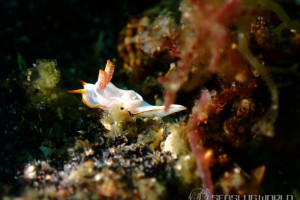
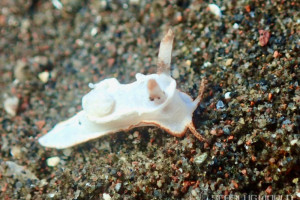
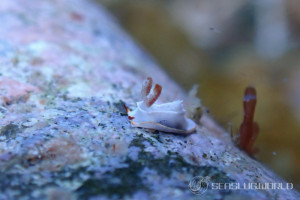
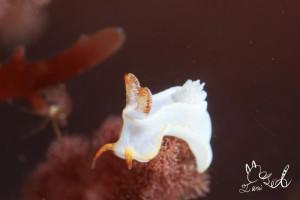
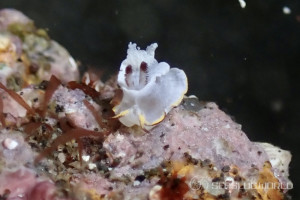
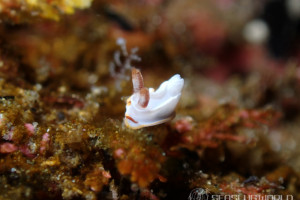
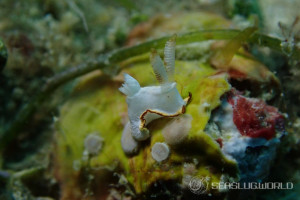
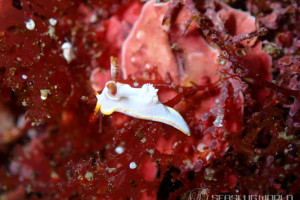
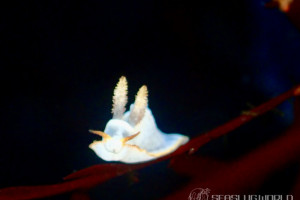
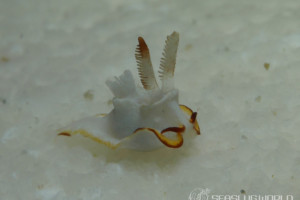
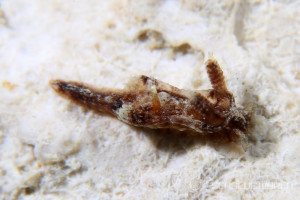
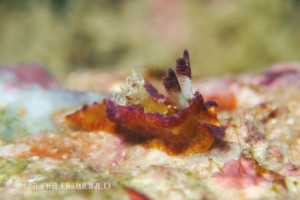
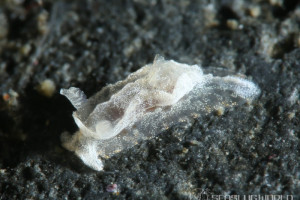
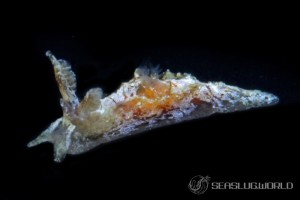
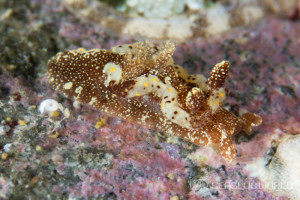
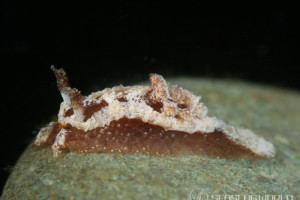
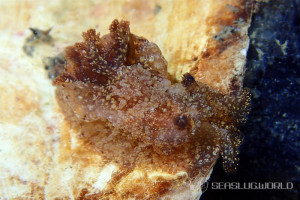
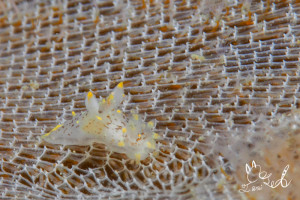
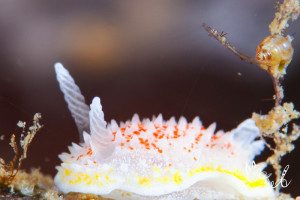
A small species, 3–4 mm in preserved length. Body elongated with a rounded posterior end of the foot. Mantle edge well-developed, short, thickened and protruding beyond the body, with a distinctly raised rim; mantle is truncated behind the gill. The body lacks dorsal and lateral papillae. Rhinophores are non-retractile, slender and remarkably long, bearing 17–19 lamellae oriented posteriorly, with a smooth apex; rhinophoral sheaths are absent. The gill consists of three tripinnate branches arranged in a star around the anus. The oral veil extends in front of the head and ends in two long, flattened, pointed oral tentacles. The foot is wide and flat, broader than the mantle edge; a middorsal or caudal crest is not evident. A few spicules are scattered along the body.Coloration
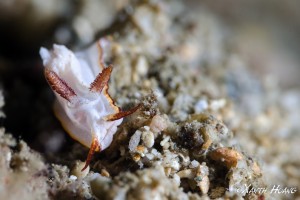
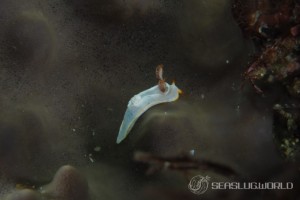
Background colour, notal edge and gill are opaque white. Oral tentacles are dark reddish-brown. A thin reddish-brown line runs along the edge of the foot, with a thin internal yellow line parallel to it. Rhinophores are reddish-brown with white pigmentation. The defining feature of this species is the strikingly long rhinophores and oral tentacles (the source of the specific epithet).Distribution
Widespread in the Indo-West Pacific. Type locality: Nelson Bay, New South Wales, Australia, at 8 m depth. Also recorded from South Africa (Sodwana Bay National Park), Mozambique (Pemba Bay), the Philippines (Verde Island, Batangas) and Japan. Inhabits tropical coral reefs.Etymology
The specific epithet longicornis is Latin for "long horns", referring to the remarkably long rhinophores and oral tentacles of this species.Remarks
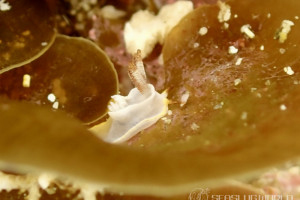
The Japanese vernacular name "ケラマコネコウミウシ (Kerama-koneko-umiushi)" honours the Kerama Islands, where the species was first recorded in Japan. Before the resurrection of Pelagella by Paz-Sedano et al. (2023), this species was placed in Goniodoris and had long been figured as an undescribed species in regional field guides and Indo-Pacific monographs. Specimens have been observed crawling on sandy substrate on a steep slope.References
- ネコジタウミウシ属の1種 1, 中野理枝. (2004). 本州のウミウシ. ラトルズ.
- ネコジタウミウシ属の1種 2, 小野篤司. (2004). 沖縄のウミウシ. ラトルズ.
- ケラマコネコウミウシ(新称), 中野理枝 & 小谷光. (2016). 高知県大月町樫西海域及び一切海域から記録された後鰓類. Kuroshio Biosphere. 12: 21-43.
- Pelagella longicornis n. sp., Paz-Sedano S., Smirnoff D., Gosliner T.M. & Pola M. (2023). When a genus must become two: resurrection of Pelagella Gray, 1850 with the description of six new species. Journal of Molluscan Studies. 89(2): eyad008. https://doi.org/10.1093/mollus/eyad008
- Paz-Sedano S., Moles J., Smirnoff D., Gosliner T.M. & Pola M. (2024). A combined phylogenetic strategy illuminates the evolution of Goniodorididae nudibranchs (Mollusca, Gastropoda, Heterobranchia). Molecular Phylogenetics and Evolution. 192: 107990. https://doi.org/10.1016/j.ympev.2023.107990
A Kindle field guide by the site author
Kimoto N. (2026). Sea Slugs of Japan & the Indo-Pacific, 2nd Edition.
Kindle Edition
View on Amazon PR (Amazon Associates)Seasonality
Shooting Locations
Loading shooting locations...
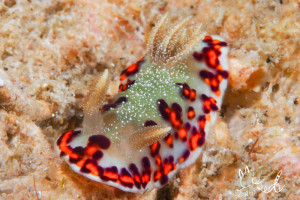
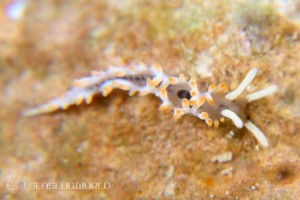
Photos of Pelagella longicornis


















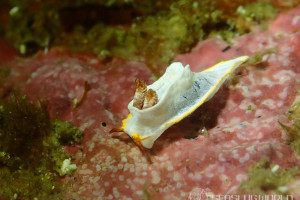

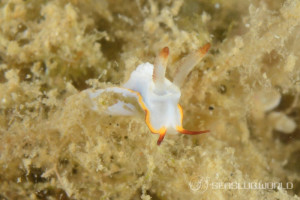

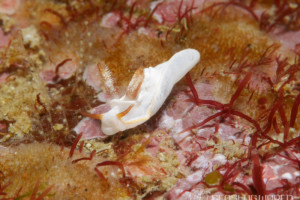

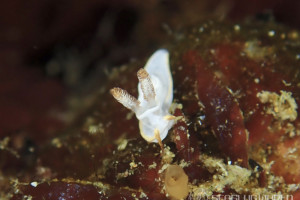



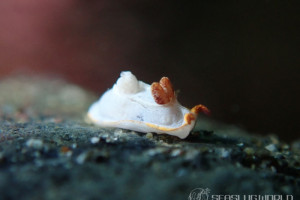

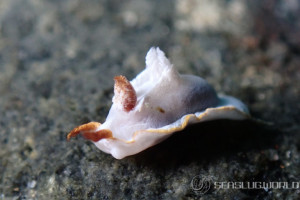

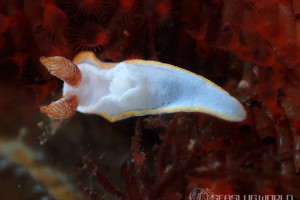

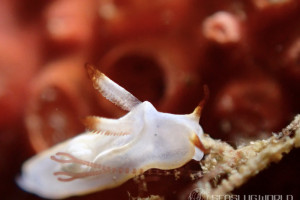

Same Genus Nudibranchs
Similar Colors Nudibranchs

Academic Database
Sea slug observation data is available in international marine biodiversity databases.