Phyllodesmium crypticum Rudman, 1981
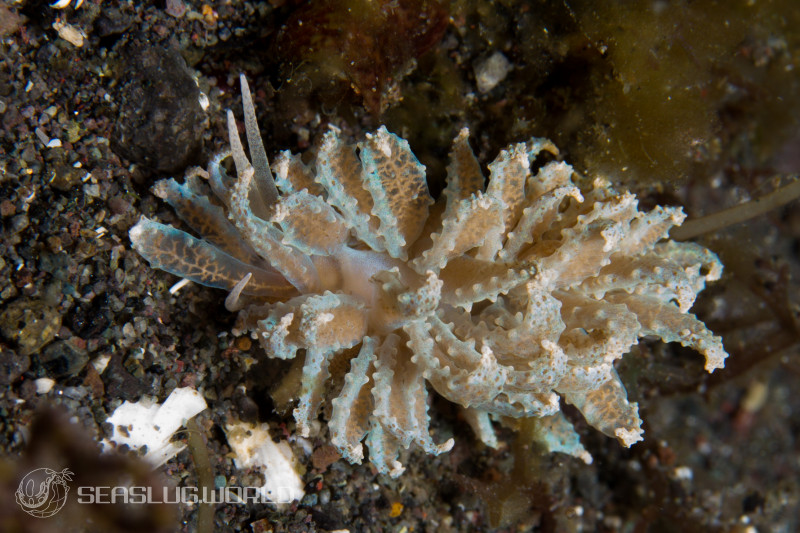
- Location
- Torpedo Alley, Komodo, Indonesia
- Date
- 2014/09/08
- Length
- 10mm
- Depth
- 6.0m
- Water temperature
- 26.5℃
Description
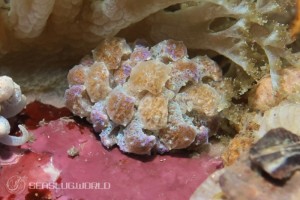
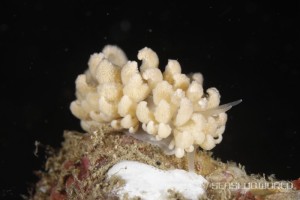
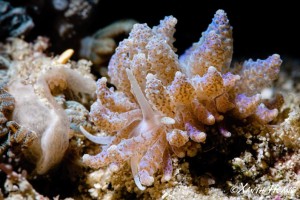
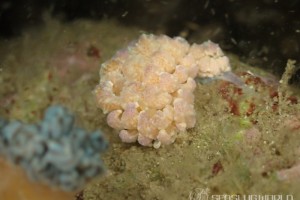
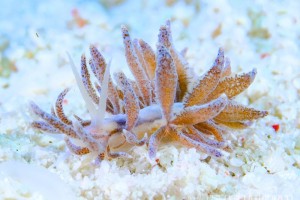
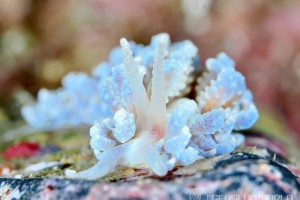
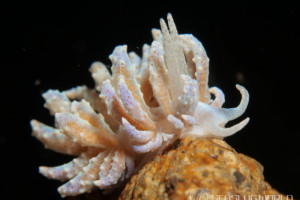
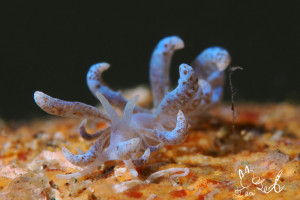
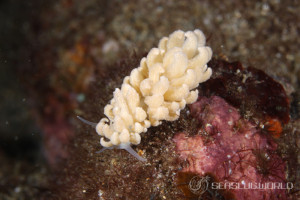
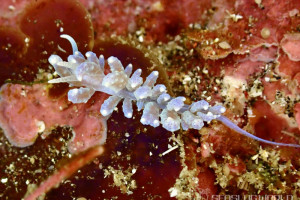
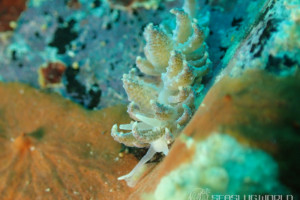
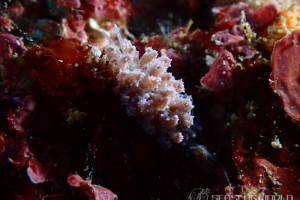
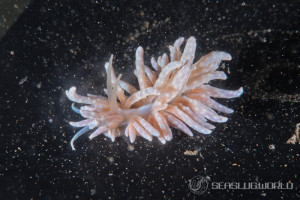
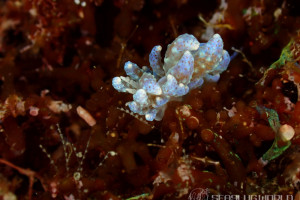
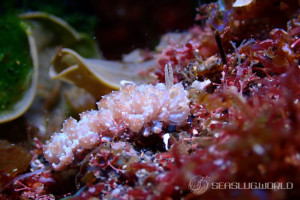
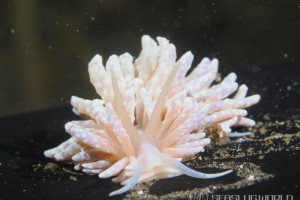
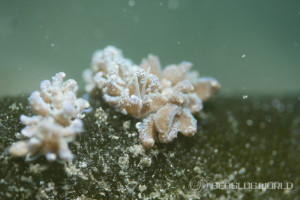
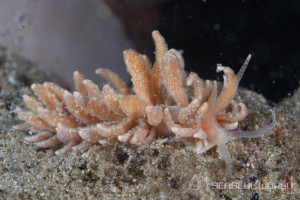
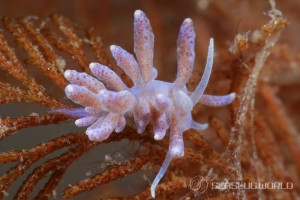
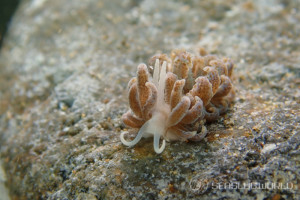
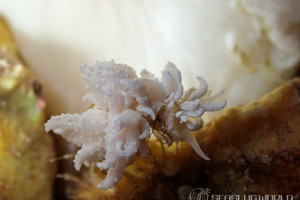
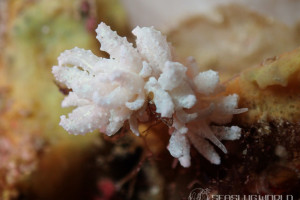
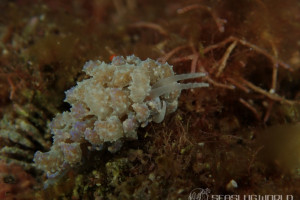
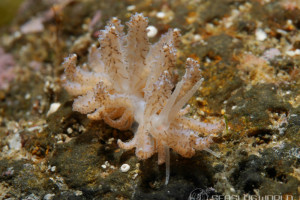
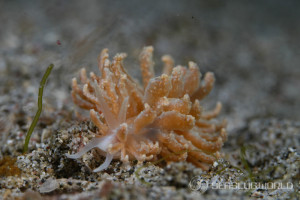
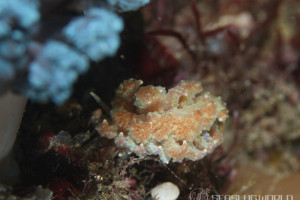
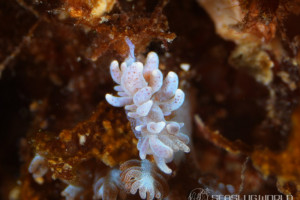
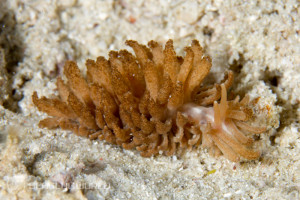
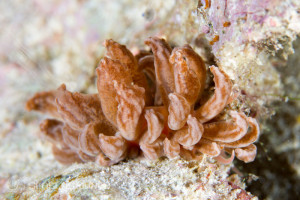
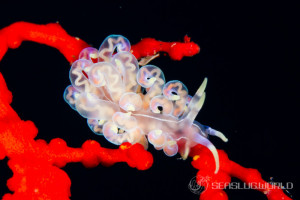
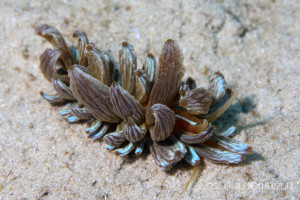
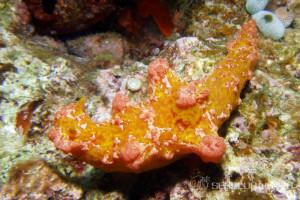
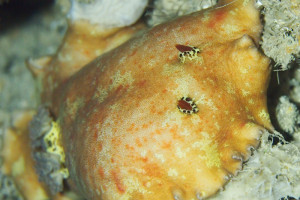
A relatively large Phyllodesmium with the body almost completely obscured by closely packed large cerata. Oral tentacles long and tapering; rhinophores smooth, about two-thirds the length of the oral tentacles. The foot is wide, with paired recurved tapering anterior corners and a narrow tapering tail. Cerata occur in up to eight clusters per side: a single pre-cardiac arch, then a post-pericardial arch (double-rowed on the limbs and single mid-dorsally), with three single-rowed posterior arches and three reduced posterior groups. The cerata are dorsoventrally flattened and quadrangular in cross section, with rows of nodules along the four edges and scattered nodules on the flat sides — a unique form that mimics the tentacles of the Xenia colonies on which the species feeds. Body whitish translucent with pale orange to yellow-brown viscera; the upper third of the oral tentacles and most of the rhinophores are white-pigmented. Digestive gland branching shows through the dorsum as a brown midline. Ceras edges and tips are whitish, sometimes tinged blue or brown to match the host Xenia. Reaches 60 mm in body length (holotype 45 mm). Radula 0.1.0, with 36 teeth in a 45 mm specimen; bluntly pointed central cusp with paired ventral limbs and flanges bearing up to 30 large denticles. Jaw plates bilobed with coarsely serrated cutting edges.Distribution
Type locality is a large rock pool at Angourie, northern New South Wales, Australia (October 1979, near Xenia colonies). Originally known only from northern NSW (Angourie, Broomes Head, Minnie Waters, Woolgoolga Headland). Subsequent records extend more widely across Australia and into the Red Sea, Indonesia, the Philippines, and Japan, although the identity of all extralimital records may not be fully resolved.Etymology
The specific epithet crypticum (originally spelled cryptica) is Latin for hidden or cryptic, referring to the remarkable resemblance of the cerata to the tentacles of the host Xenia on which the animal feeds (verbatim from the original description).Remarks
Feeds on the alcyonarian soft-coral genus Xenia (a bluish form). The animal crawls on or near the colony and, unlike Phyllodesmium hyalinum, does not nestle in basal cavities. Symbiotic with zooxanthellae: TEM observation confirms intact zooxanthellae (with cell walls, chloroplasts, and starch granules) inside digestive-gland cells, and the stomach, digestive-gland ducts, and lumen are full of zooxanthellae. The species, with Phyllodesmium hyalinum and Phyllodesmium pecten, retains zooxanthellae in digestive-gland cells in a symbiotic relationship, with rapid turnover replenished from Xenia. When disturbed, the animal autotomises its cerata; detached cerata exude a sticky secretion and wriggle. Japanese specimens that have been called "Kusenia-umiushi" by some authors are referable to Phyllodesmium orientale rather than to Phyllodesmium crypticum, following Baba 1991, which distinguishes the two species on radular and reproductive characters.References
- Phyllodesmium crypticum, Baba, K. 1991. Taxonomical study on some species of the genus Phyllodesmium from Cape Muroto-misaki, Shikoku, and Okinawa Province, southern Japan (Nudibranchia: Facelinidae). Venus 50(2):109-124.
- フィロデスミウム・クリプティクム, 小野篤司. (2004). 沖縄のウミウシ. ラトルズ.
- クセニアウミウシ?, 中野理枝. (2018). 日本のウミウシ. 文一総合出版.
- Phyllodesmium crypticum, Terrence Gosliner, Ángel Valdés and David Behrens. (2018). Nudibranch and Sea Slug Identification Indo-Pacific 2nd Edition. New World Pubns Inc.
Featured in this book

Terrence Gosliner, Ángel Valdés and David Behrens. (2018). Nudibranch and Sea Slug Identification Indo-Pacific 2nd Edition. New World Pubns Inc.
New World Publications
This species, Phyllodesmium crypticum, is included in the book.
View on Amazon PR (Amazon Associates)Seasonality
Shooting Locations
Loading shooting locations...
Photos of Phyllodesmium crypticum
Tag:


















Same Genus Nudibranchs

Similar Colors Nudibranchs
Academic Database
Sea slug observation data is available in international marine biodiversity databases.