Phyllodesmium kabiranum Baba, 1991
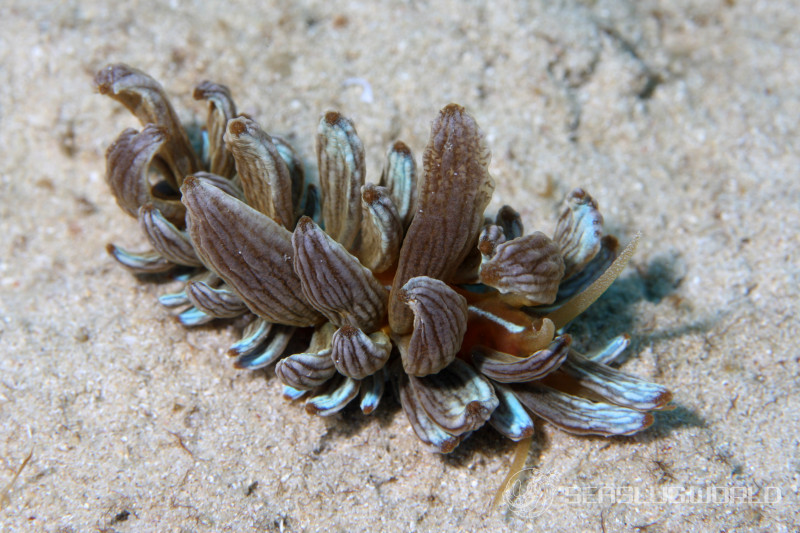
- Location
- Sunabe No.1, Okinawa Island (Chatan and Southern area), Okinawa, Japan
- Date
- 2008/06/14
- Length
- 20mm
- Depth
- 20.0m
- Water temperature
- 25.0℃
Description
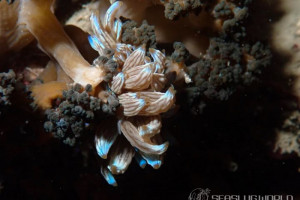
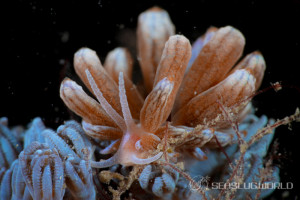
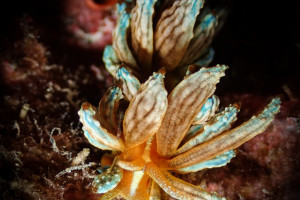
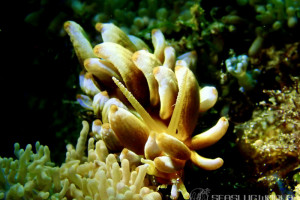
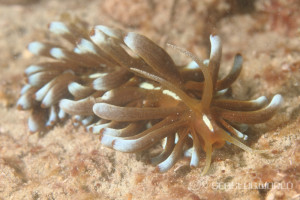
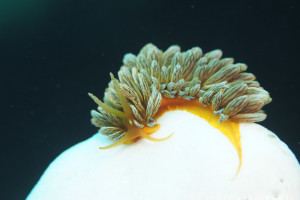
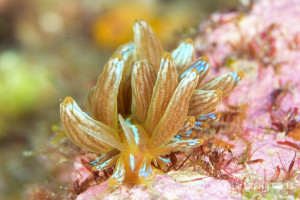
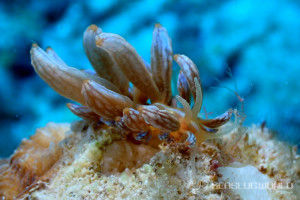
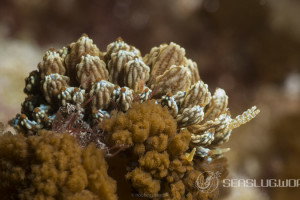
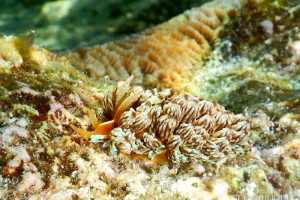
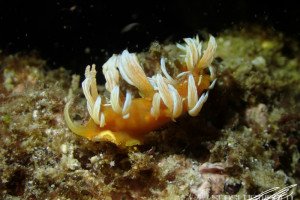
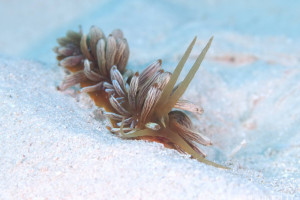
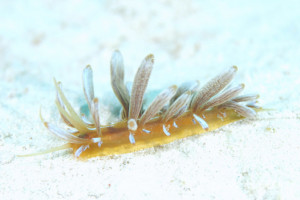
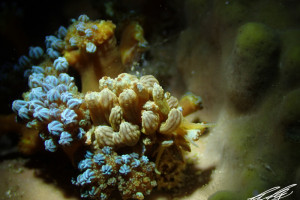
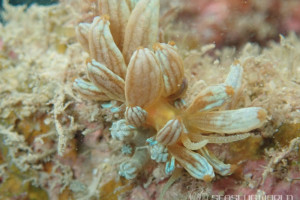
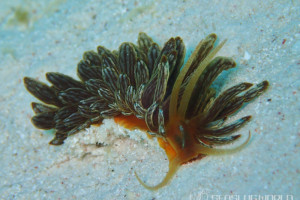
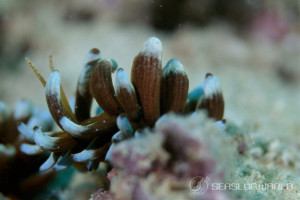
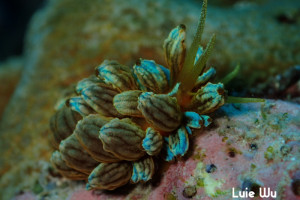
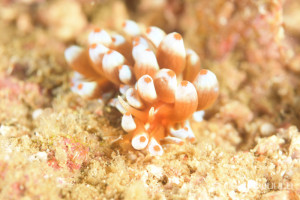
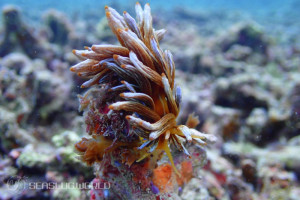
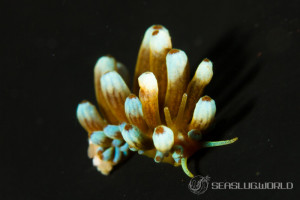
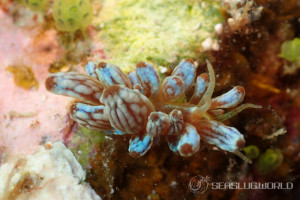
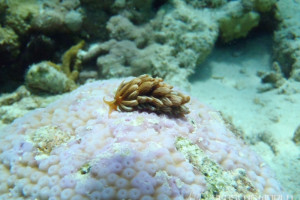
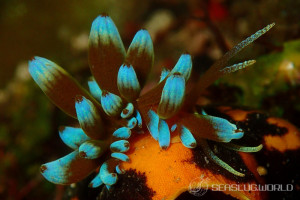
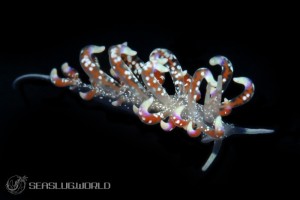
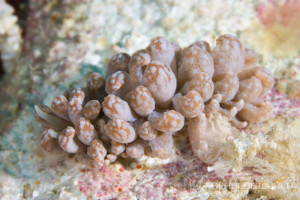
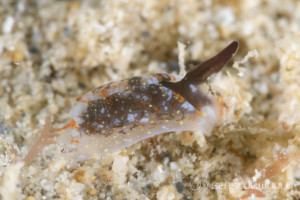
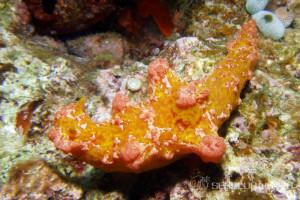
A Phyllodesmium with body form approximately as in P. orientale. The oral tentacles are slender; the rhinophores are faintly wrinkled on the upper half; the foot corners are obtuse. The cerata are flattened, sometimes curved at the tips, and sparsely nodulose (with a few low nodules on the convex side) — distinguishing this species from P. orientale, in which the cerata are not nodulose. The first and second ceratal arches on the right side are single-rowed. The general body integument is deep orange-yellow (saffron-yellow), with a narrow opaque-white band running mid-dorsally from the head to about the end of the ceratal clusters. The oral tentacles and rhinophores are opaque white on their upper halves. The distal halves of the cerata are opaque white on two faces, their proximal halves orange-yellow, and the tips of the cerata are capped with orange-yellow. The liver diverticula within the cerata are dark brown and contain zooxanthellae. A conspicuous additional feature is 2-5 longitudinal chocolate-brown lines that run along the convex face of each ceras from base to tip, sometimes anastomosing. The foot sole is pale orange-yellow.Distribution
Type locality: Kabira, Ishigaki-jima, Okinawa, southern Japan; holotype 35 mm alive.Etymology
The specific epithet kabiranum is a toponymic adjective derived from the type locality, Kabira on Ishigaki-jima, with the neuter ending -anum agreeing with the neuter genus Phyllodesmium.Remarks
The predominantly orange coloration contrasts sharply with the bluish Phyllodesmium species group (P. hyalinum, P. crypticum, P. orientale). Like other members of the genus, this species feeds on octocorals and retains zooxanthellae from its prey within the liver diverticula of the cerata, supporting a photosymbiotic lifestyle.References
A Kindle field guide by the site author
Kimoto N. (2026). Sea Slugs of Japan & the Indo-Pacific, 2nd Edition.
Kindle Edition
View on Amazon PR (Amazon Associates)Seasonality
Shooting Locations
Loading shooting locations...
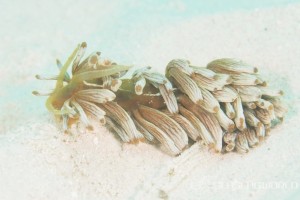
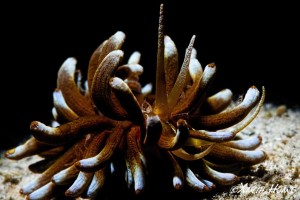
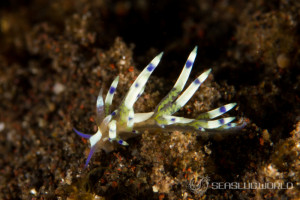
Photos of Phyllodesmium kabiranum


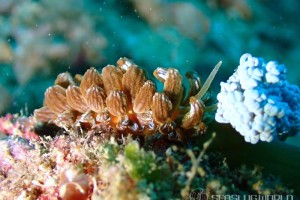
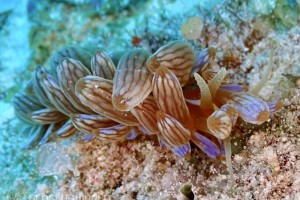

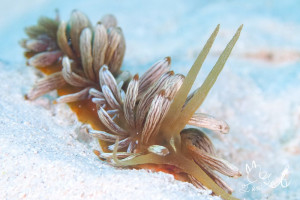

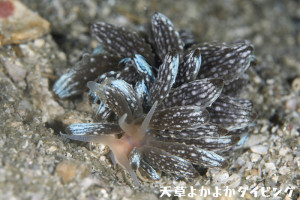




















Same Genus Nudibranchs

Similar Colors Nudibranchs
Academic Database
Sea slug observation data is available in international marine biodiversity databases.