Placida babai Ev. Marcus, 1982
Description
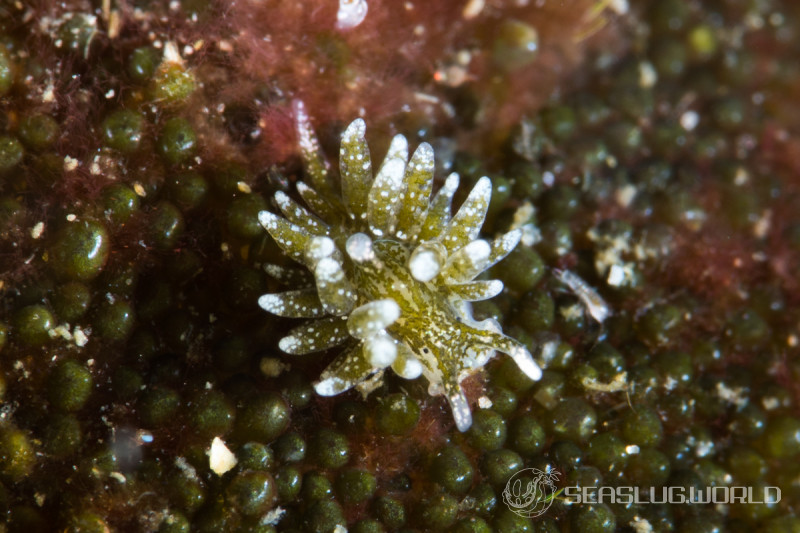
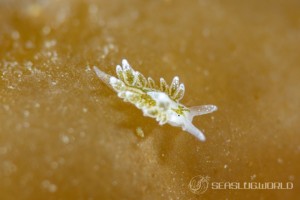
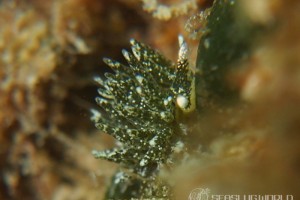
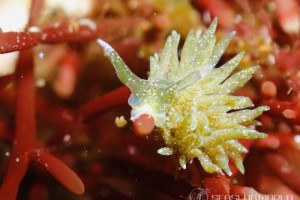
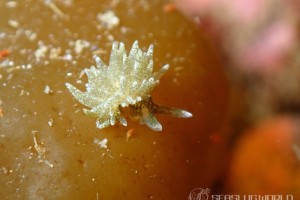
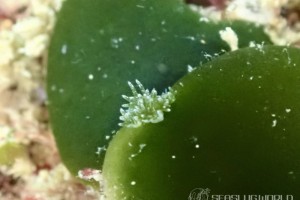
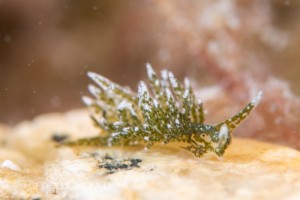
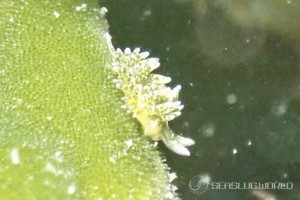
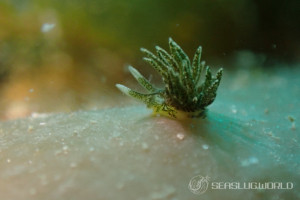
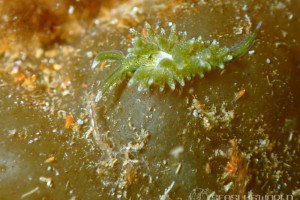
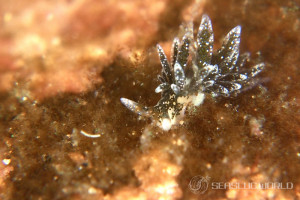
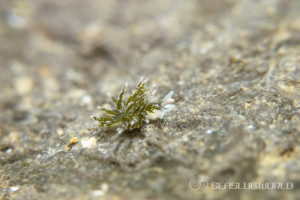
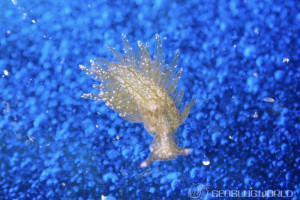
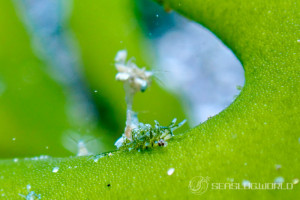
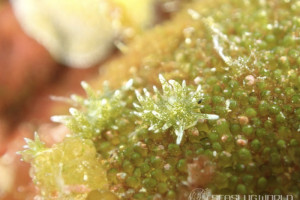
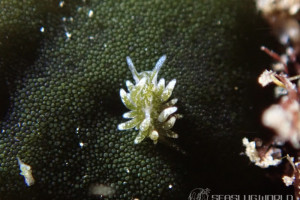
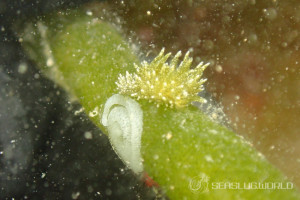
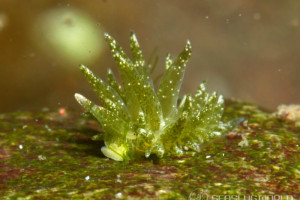
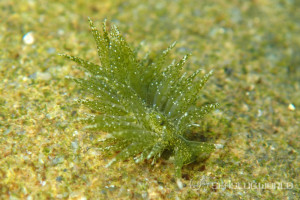
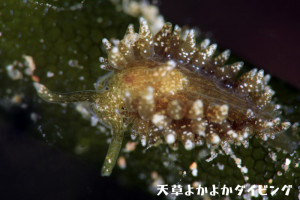
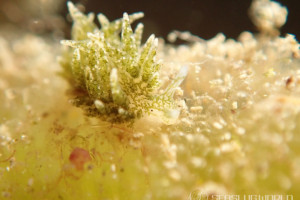
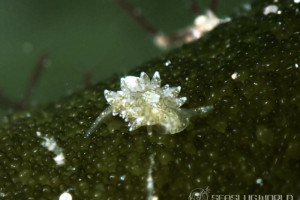
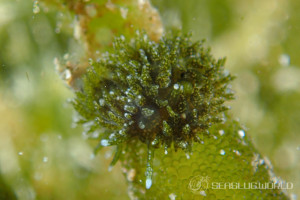
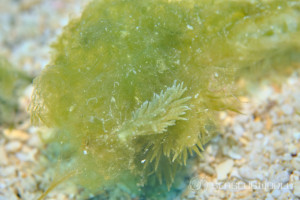
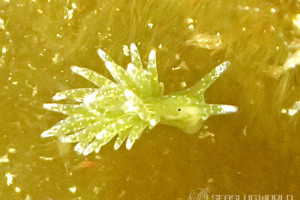
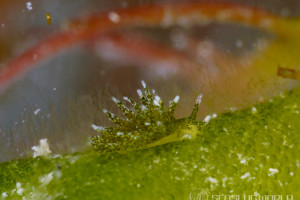
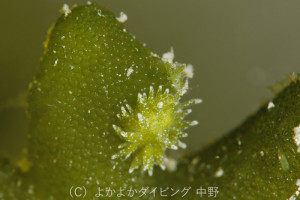
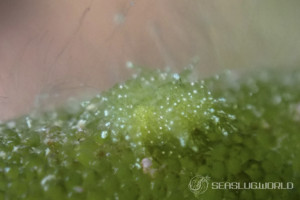
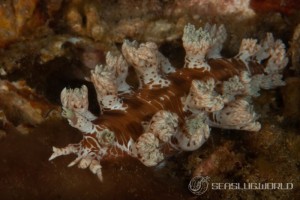
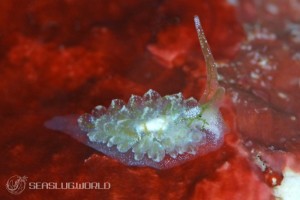
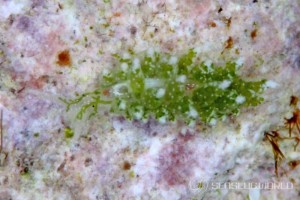
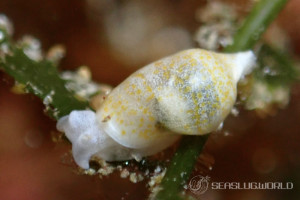
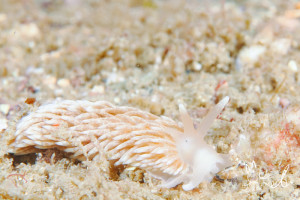
A small sacoglossan with a translucent green body. The internal digestive gland branches throughout the body, giving the entire animal a green appearance. The cerata are slender and spindle-shaped, with white pinpoint spots concentrated near the tips. Rhinophores are long and slender, each marked by a longitudinal outer groove. Reaches about 12 mm in length. Feeds on green algae of the genera Codium and Bryopsis, on which the animals are typically found.Distribution
Type locality: Japan. Recorded from coastal waters of Japan, Russian waters of the Sea of Japan, and the Yellow Sea.Etymology
The specific epithet babai is a patronym honouring Dr. Kikutaro Baba, the leading figure of Japanese opisthobranch research. Baba had long reported the Japanese material of this group as the North Atlantic Placida dendritica; Marcus, in his 1982 generic revision of the Ascoglossa, recognised the Pacific population as a distinct species and named it after Baba in recognition of his long-standing contributions.Remarks
Long confused with the North Atlantic Placida dendritica, the species was separated by Marcus 1982; Chichvarkhin et al. 2016 subsequently reassigned material from the Russian coast of the Sea of Japan to P. babai. The Placida dendritica complex is now considered to harbour several cryptic lineages worldwide, of which Placida daguilarensis is another segregate.References
- ミドリアマモウミウシ, 生物學御研究所編. (1955). 相模湾産後鰓類図譜〈補遺〉. 岩波書店.
- Hermaea dendritica (ALDER & HANCOCK, 1843). Midori-amamo-umiushi., Baba K. (1959). THE FAMILY STILIGERIDAE FROM JAPAN (OPISTHOBRANCHIA-SACOGLOSSA). Publications of the Seto Marine Biological Laboratory. 7(3): 327-334. https://doi.org/10.5134/174635
- ミドリアマモウミウシ, 小野篤司. (1999). ウミウシガイドブック. TBSブリタニカ.
- ミドリアマモウミウシ, 鈴木敬宇. (2000). ウミウシガイドブック〈2〉. TBSブリタニカ.
- 高岡生物研究会. (2002). 日本海のウミウシ. 第2版.
- ミドリアマモウミウシ, 小野篤司. (2004). 沖縄のウミウシ. ラトルズ.
- ミドリアマモウミウシ, 中野理枝. (2004). 本州のウミウシ. ラトルズ.
- ミドリアマモウミウシ, 小野篤司 & 加藤昌一. (2009). ウミウシ. 誠文堂新光社.
- Placida babai, Chichvarkhin A.Yu., Ekimova I.A., Chalenko K.P., Schepetov D., Chichvarkhina O.V. & Valdés Á.A. (2016). Placida babai (Mollusca: Gastropoda: Sacoglossa) from Russian waters of the Sea of Japan. The Bulletin of the Russian Far East Malacological Society. 20(1): 44-56.
A Kindle field guide by the site author
Kimoto N. (2026). Sea Slugs of Japan & the Indo-Pacific, 2nd Edition.
Kindle Edition
View on Amazon PR (Amazon Associates)Seasonality
Shooting Locations
Loading shooting locations...
Photos of Placida babai
Tag:






















Same Genus Nudibranchs

Similar Colors Nudibranchs
Academic Database
Sea slug observation data is available in international marine biodiversity databases.