Tayuva lilacina (A. A. Gould, 1852)
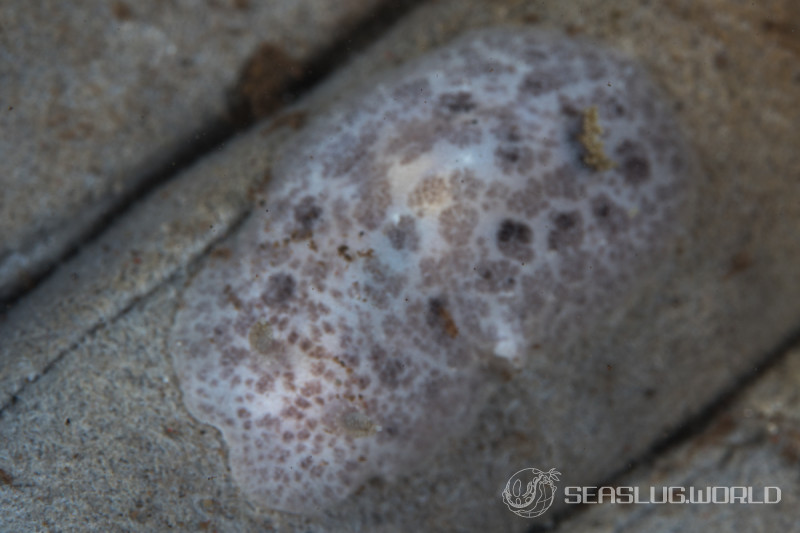
- Location
- Tulamben, Pulau Bali, Indonesia
- Date
- 2019/02/15
- Length
- 25mm
- Depth
- 15.0m
- Water temperature
- ??℃
Description
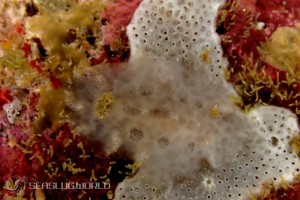
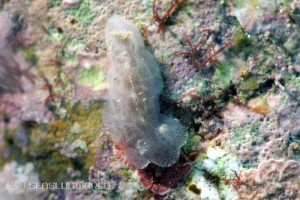
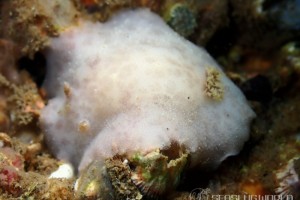
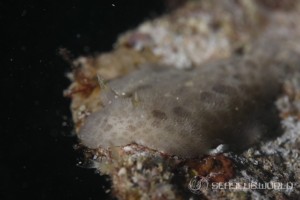
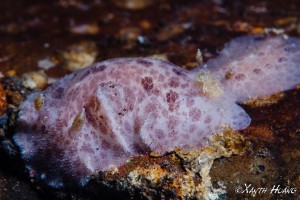
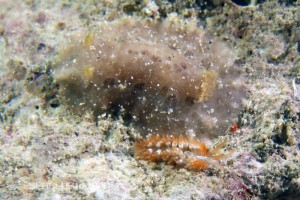
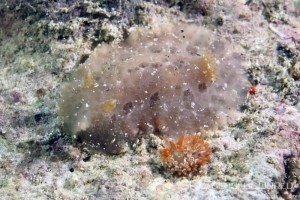
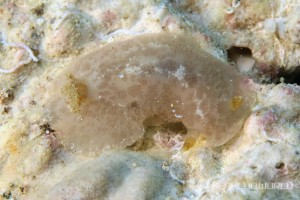
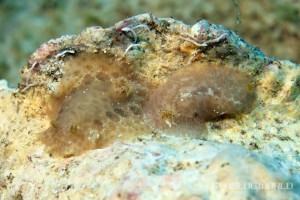
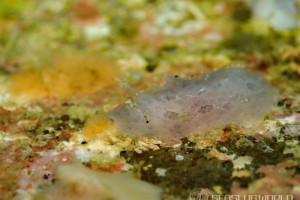
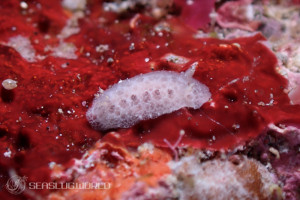
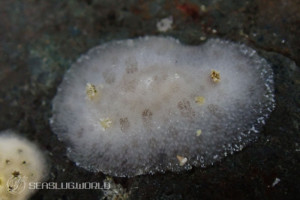
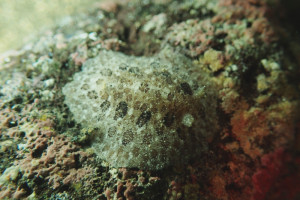
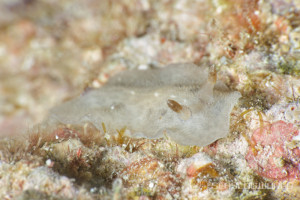
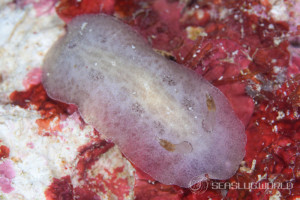
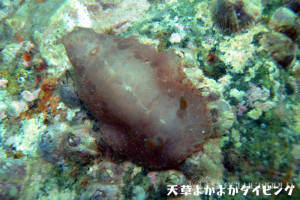
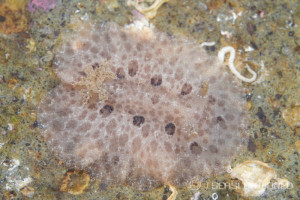
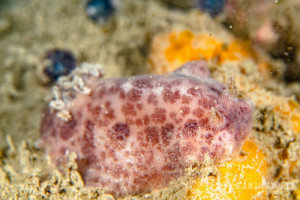
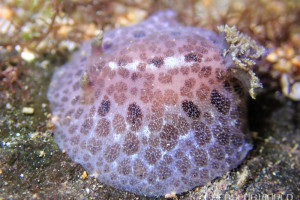
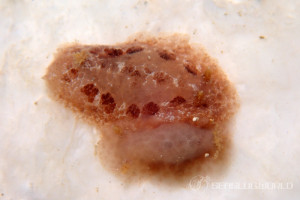
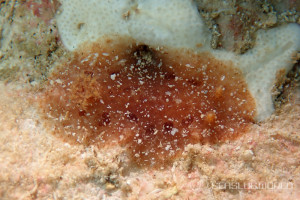
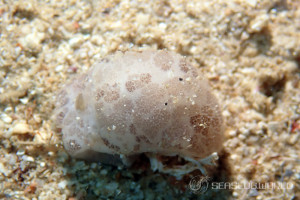
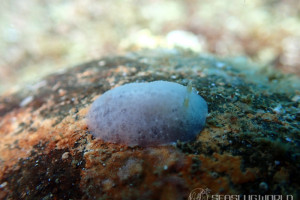
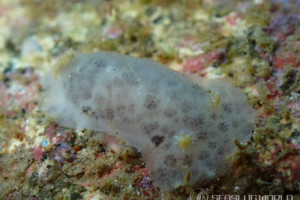
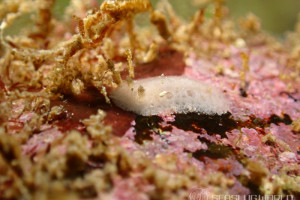
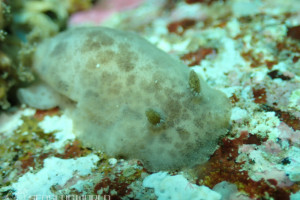
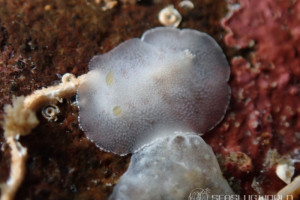
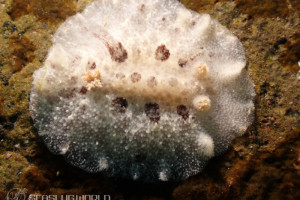
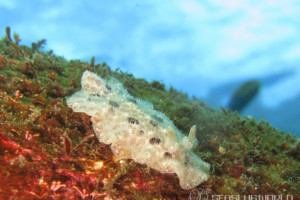
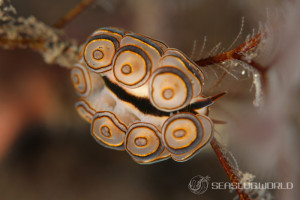
A dorid reaching 3 1/3 inches (ca. 8.5 cm) in length and 1 1/4 inches (ca. 3.2 cm) in breadth. The animal is rather large, somewhat prismatic, much elongated, obtuse in front, rather tapering behind. The colour is lilac, tinted roseate along the middle, and mottled with rather large darker spots; there is an angular dilatation at the sides opposite the tentacles; behind these a broad, ruffled, and ochreous margin. Cervical tentacles are small, ochreous, club-shaped, reflexed, lamellar. The branchial star is seated very far back, very large, wider than the body, composed of six large, trifoliate plumules, each of the folioles deeply and perhaps doubly sinuate; margin yellow. Beneath the body is yellowish, shaded and finely spotted with lilac; the foot is as long as the body and two-thirds as wide, rounded at tip, with anterior angles not dilated. The head is small, rounded, placed deep beneath the hood. Gould remarked that the species is "remarkable for the angular dilatations at the neck, like a trilobite, and for the ruffled margin posterior to them, and especially for the peculiar form of the plumules, like the leaves of Acanthus."Distribution
Type locality: Honolulu, Oahu, Sandwich Islands (Hawaii). Based on specimens collected by the U.S. Exploring Expedition (1838–1842) under the command of Charles Wilkes. The species is now widely recorded across the Indo-Pacific. In Japan, it is observed under stones.Etymology
The specific epithet lilacina is a Latinised adjective meaning "lilac-coloured, pale violet", as expressed in the original Latin diagnosis "lilacina maculis saturatioribus notata" — referring to the lilac ground colour with darker mottling. The original heading in Gould 1852 is "Doris Liacina" (sometimes rendered "Liactna" in OCR-derived text); the spelling lilacina is now established.Remarks
In the original description Gould placed the species in Doris. The species was subsequently transferred to Discodoris Bergh, and later to Tayuva Marcus & Marcus, 1970 (the parentheses in the author citation reflect this generic transfer). The species was once considered conspecific with the Japanese "ツヅレウミウシ" but is now treated as distinct. It closely resembles juvenile Sebadoris fragilis in dorsal view, and reliable identification requires examination of ventral markings.References
- Doris lilacina n. sp., Gould A.A. (1852). Mollusca and Shells. United States Exploring Expedition during the years 1838, 1839, 1840, 1841, 1842, under the command of Charles Wilkes, U.S.N. Vol. 12. Boston: Gould & Lincoln. xv + 510 pp.
- ツヅレウミウシ, 生物學御研究所編. (1955). 相模湾産後鰓類図譜〈補遺〉. 岩波書店.
- シミツキウミウシ(新称), 小野篤司. (2000). ウミウシガイドブック. 第2版. TBSブリタニカ.
- シミツキウミウシ(仮称) Discodoris lilacina, 鈴木敬宇. (2000). ウミウシガイドブック〈2〉. TBSブリタニカ.
- Discodoris sp.A, 殿塚孝昌. (2003). ウミウシガイドブック〈3〉. TBSブリタニカ.
- ツヅレウミウシ, 小野篤司. (2004). 沖縄のウミウシ. ラトルズ.
- DAYRAT B. (2006). A taxonomic revision of Paradoris sea slugs (Mollusca, Gastropoda, Nudibranchia, Doridina). Zoological Journal of the Linnean Society. 147(2): 125-238. https://doi.org/10.1111/j.1096-3642.2006.00219.x
- ツヅレウミウシ, 小野篤司 & 加藤昌一. (2009). ウミウシ. 誠文堂新光社.
- Discodoris lilacina, Terrence Gosliner, Ángel Valdés and David Behrens. (2015). Nudibranch and Sea Slug Identification Indo-Pacific. New World Pubns Inc.
- ツヅレウミウシ, 小野篤司 & 加藤昌一. (2020). 新版 ウミウシ. 誠文堂新光社.
Featured in this book
Terrence Gosliner, Ángel Valdés and David Behrens. (2018). Nudibranch and Sea Slug Identification Indo-Pacific 2nd Edition. New World Pubns Inc.
New World Publications
This species, Tayuva lilacina, is included in the book.
View on Amazon PR (Amazon Associates)Seasonality
Shooting Locations
Loading shooting locations...
Photos of Tayuva lilacina
Tag:
















Same Genus Nudibranchs
Similar Colors Nudibranchs

Academic Database
Sea slug observation data is available in international marine biodiversity databases.