Discodorididae sp. 1
Description
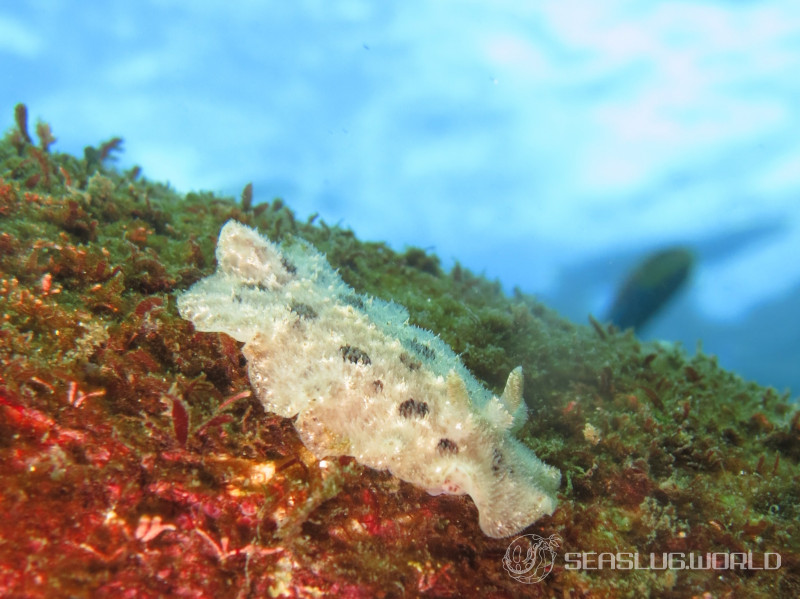
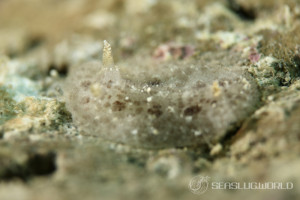
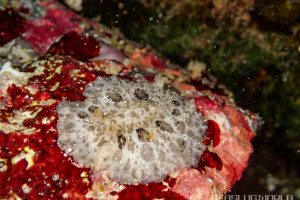
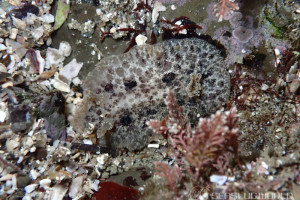
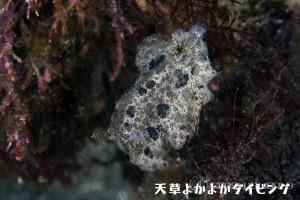
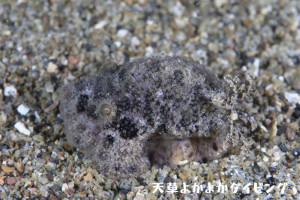
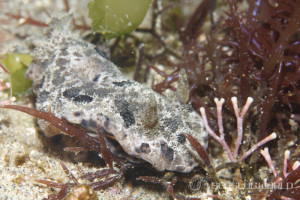
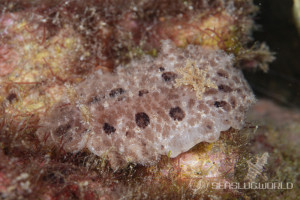
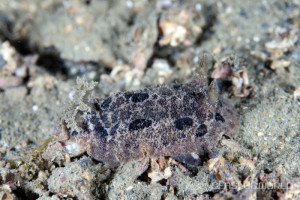
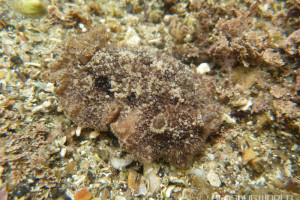
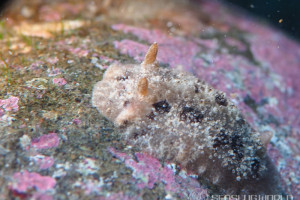
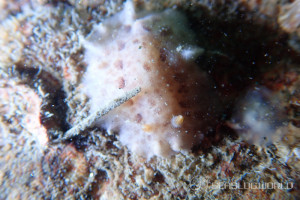
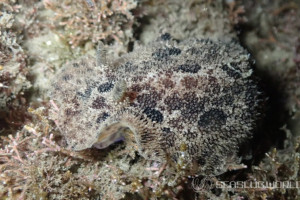
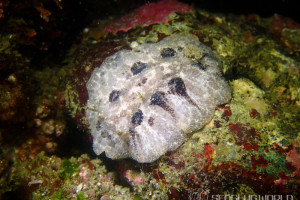
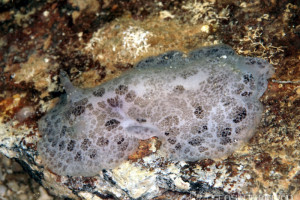
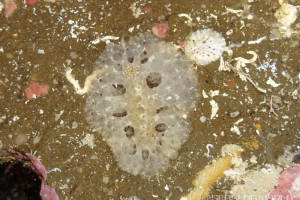
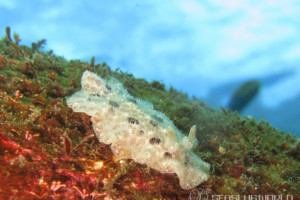
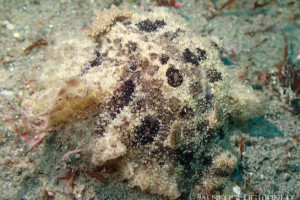
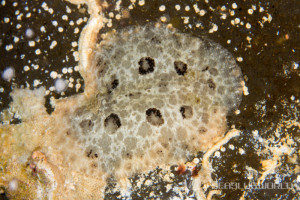
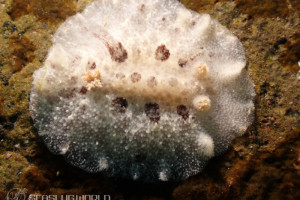
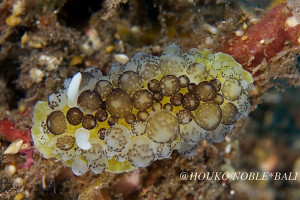
A medium-sized dorid of the family Discodorididae, reaching 40-70 mm in body length. The body is oval and slightly arched, with the dorsal notum densely covered by conical tubercles bearing internal spicules. The ground colour is greyish to chocolate brown, overlaid with irregular darker blotches that vary widely between individuals, although a series of oval dark patches arranged regularly on either side of the midline is consistent across the species. The rhinophores share the ground colour and bear fine brown speckling, with roughly 30 or more lamellae. The branchial tuft consists of six tripinnate plumes that match the ground colour and are dusted with brown dots. The underside (hyponotum and foot) is the same colour as the dorsum and bears numerous small dark spots; a dark ring running around the foot on the hyponotum is a key feature for identifying the species. When disturbed, the animal readily autotomises the mantle margin.Distribution
The type locality is Choshaga Saki in Sagami Bay, Honshu, Japan, based on a specimen collected in 1970. The species has so far been recorded along the warm-temperate coasts of Japan from Kyushu to central Honshu.Remarks
An undescribed species without a formal binomial. Dayrat 2006, in his major revision of the Discodorididae, treated it as Discodorididae sp. C (also referable to as "Metadiscodoris" sp. C). The penis carries a diagnostic series of four to five rings of conical hooks near its apex, an organ that distinguishes the species clearly from other discodorid dorids. Earlier Japanese guidebooks identified it as Discodoris concinna (Alder & Hancock, 1864), but that species is now considered restricted to the Indian Ocean. It is also distinct from Tayuva lilacina (Gould, 1852), which has much smaller dorsal tubercles.References
- Discodoris concinna, Baba, K. 1933b. Supplementary note on the Nudibranchia collected in the vicinity of the Amakusa Marine Biological Laboratory. Annotationes Zoologicae Japonenses 14(2):273-283.
- つづれうみうし, 内田清之助ほか. (1952). 改訂増補 日本動物図鑑. 北隆館.
- ツヅレウミウシ Discodoris concinna, 鈴木敬宇. (2000). ウミウシガイドブック〈2〉. TBSブリタニカ.
- 高岡生物研究会. (2002). 日本海のウミウシ. 第2版.
- Discodorididae sp. C, DAYRAT B. (2006). A taxonomic revision of Paradoris sea slugs (Mollusca, Gastropoda, Nudibranchia, Doridina). Zoological Journal of the Linnean Society. 147(2): 125-238. https://doi.org/10.1111/j.1096-3642.2006.00219.x
- ツヅレウミウシ Discodorididae gen. sp., 柏尾翔, 川瀬基弘, 鵜飼普, 大矢美紀, 西浩孝 & 浅田要. (2021). 愛知県南知多町の潮間帯に生息するウミウシ類 I(裸鰓目). なごやの生物多様性. 8: 1-22.
A Kindle field guide by the site author
Kimoto N. (2026). Sea Slugs of Japan & the Indo-Pacific, 2nd Edition.
Kindle Edition
View on Amazon PR (Amazon Associates)Seasonality
Shooting Locations
Loading shooting locations...
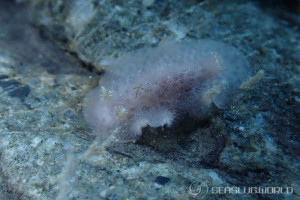
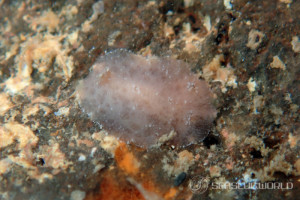
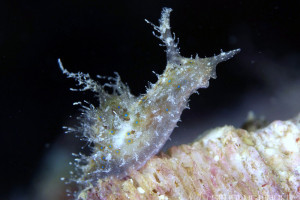
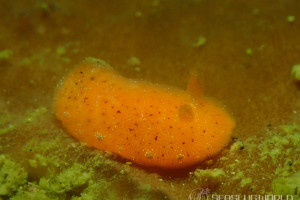
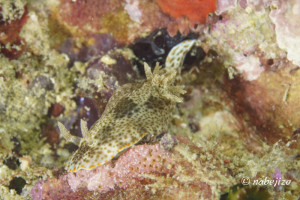
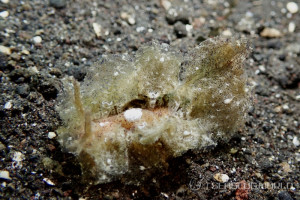
Photos of Discodorididae sp. 1

















Same Genus Nudibranchs
Similar Colors Nudibranchs

Academic Database
Sea slug observation data is available in international marine biodiversity databases.