Sebadoris fragilis (Alder & Hancock, 1864)
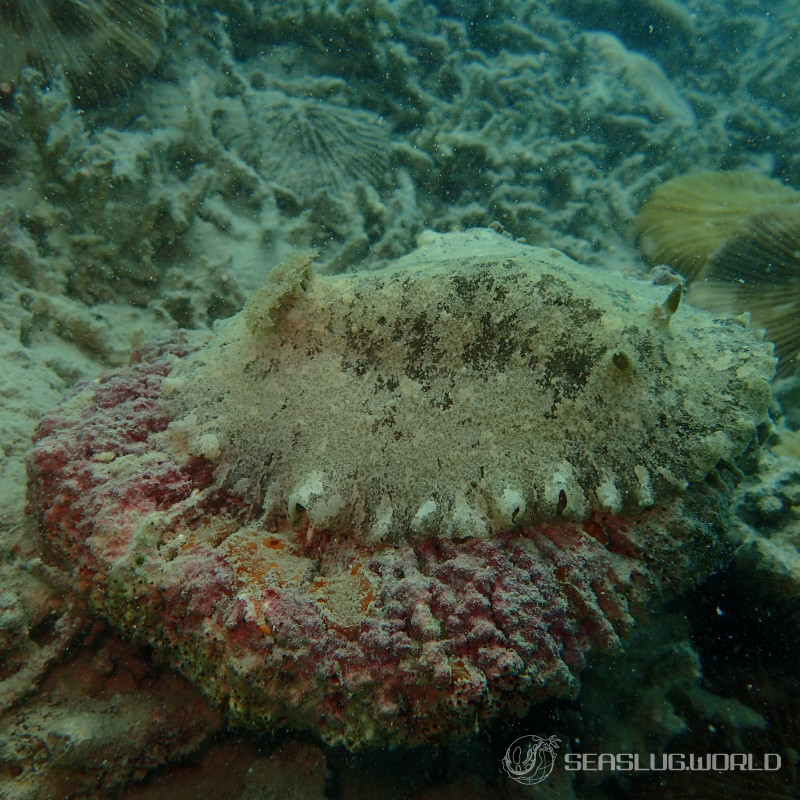
- Location
- Kabirawan, Ishigaki and Yaeyama, Okinawa, Japan
- Date
- 2018/04/27
- Length
- 200mm
- Depth
- 7.0m
- Water temperature
- 22.0℃
Description
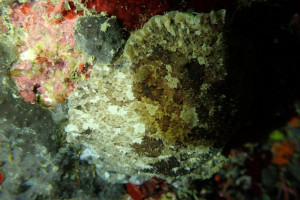
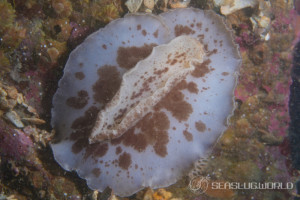
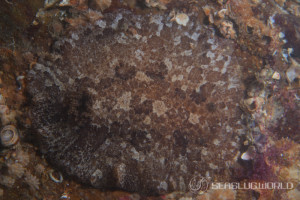
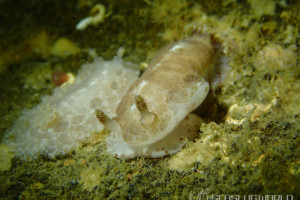
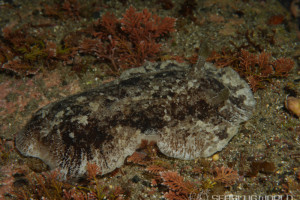
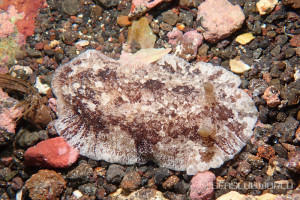
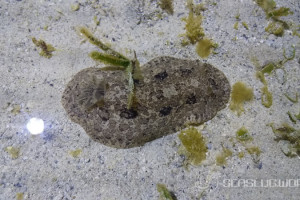
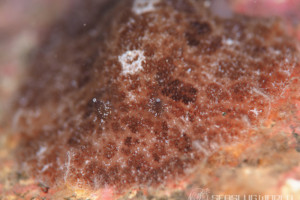
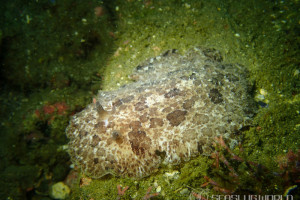
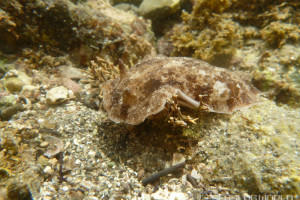
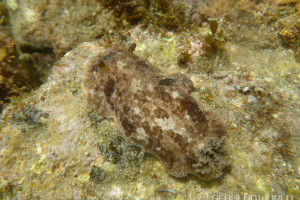
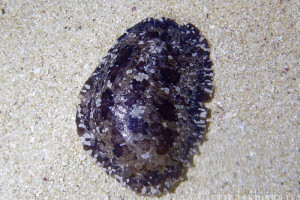
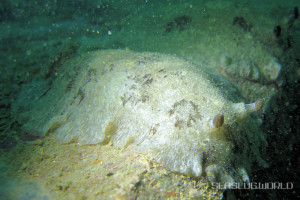
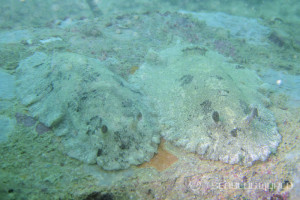
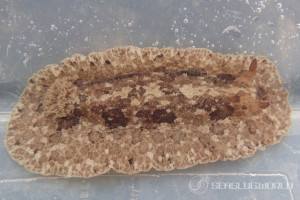
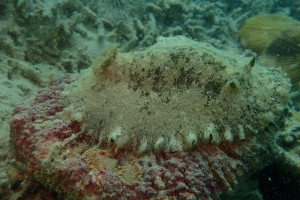
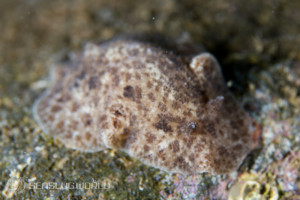
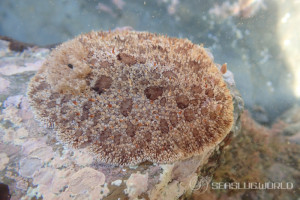
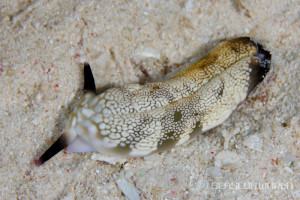
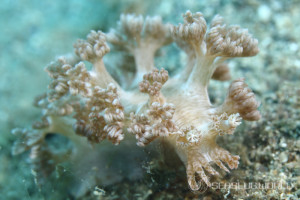
A large dorid reaching 5 to 6 inches (ca. 13–15 cm) in body length. The body is broadly oval, depressed, brownish. The mantle is ample, firm, covered with minute, somewhat scattered, spiculose, blunt tubercles of unequal sizes, rather paler than the ground — which is yellowish brown, beautifully marbled with darker brown and white, and covered with minute dark freckles. The under surface is strongly blotched with reddish brown, the blotches becoming confluent near the foot and fewer towards the margin, which is pale. The dorsal tentacles are conical, finely laminated on the upper part, the laminae meeting in front, dark yellowish, much and minutely freckled, especially below; retractile within short sheaths. The oral tentacles are linear, pointed. The branchial plumes are six, large, quadripinnate, minutely speckled with dark brown; the circle open behind; the anus large and tubular. The foot is broad, ovate, reddish brown, with darker blotches, and pale towards the margin; it is deeply grooved in front, but not notched, the posterior end short and rounded. The radula is as in Doris tuberculata, with a prehensile collar. Spicula are very numerous, small, and rather irregular in form, but usually bent in the centre, with the extremities obtuse, sometimes a little enlarged. Walter Elliot informed the authors that the species "is so brittle that it breaks to pieces even when alive" — hence the specific epithet. The two preserved specimens are much mutilated. The species resembles Doris bellicosa Kelaart in colouration but differs in size, colour, and the obtuse form of the tubercles. The spawn is white and forms a single irregular coil with the free margin much contorted.Distribution
Type locality: Waltair, near Vizagapatam, Coromandel coast, Madras Presidency, India (now Visakhapatnam, Andhra Pradesh). Based on specimens collected by Walter Elliot in 1853–1854. The species has subsequently been recorded from Madagascar, Tanzania, Japan, the Philippines, and Papua New Guinea.Etymology
The specific epithet fragilis is Latin for "fragile, brittle", reflecting Walter Elliot's report to the authors that the species "is so brittle that it breaks to pieces even when alive."Remarks
In the original description Alder & Hancock placed the species in Doris. The species was later transferred to Sebadoris Marcus & Marcus, 1960 (the parentheses in the author citation reflect this generic transfer). Discodoris concinna is a synonym. The species is often confused with Tayuva lilacina, but can be distinguished by examining the ventral (rather than dorsal) markings.References
- Doris Fragilis n. sp., Alder J. & Hancock A. (1864). Notice of a collection of nudibranchiate Mollusca made in India by Walter Elliot Esq., with descriptions of several new genera and species. Transactions of the Zoological Society of London. 5(3): 113-147.
- DAYRAT B. (2006). A taxonomic revision of Paradoris sea slugs (Mollusca, Gastropoda, Nudibranchia, Doridina). Zoological Journal of the Linnean Society. 147(2): 125-238. https://doi.org/10.1111/j.1096-3642.2006.00219.x
- Sebadoris fragilis, Terrence Gosliner, Ángel Valdés and David Behrens. (2015). Nudibranch and Sea Slug Identification Indo-Pacific. New World Pubns Inc.
- オオツヅレウミウシ(新称), 中野理枝. (2018). 日本のウミウシ. 文一総合出版.
- Sebadoris fragilis, Terrence Gosliner, Ángel Valdés and David Behrens. (2018). Nudibranch and Sea Slug Identification Indo-Pacific 2nd Edition. New World Pubns Inc.
Featured in this book
Terrence Gosliner, Ángel Valdés and David Behrens. (2018). Nudibranch and Sea Slug Identification Indo-Pacific 2nd Edition. New World Pubns Inc.
New World Publications
This species, Sebadoris fragilis, is included in the book.
View on Amazon PR (Amazon Associates)Seasonality
Shooting Locations
Loading shooting locations...
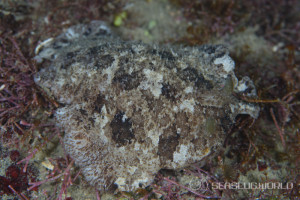
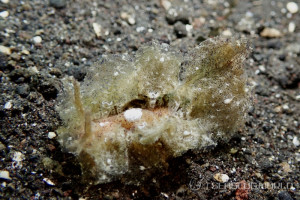
Photos of Sebadoris fragilis












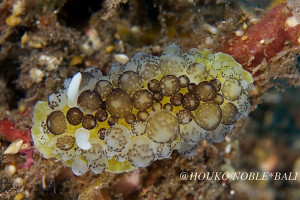
Same Genus Nudibranchs
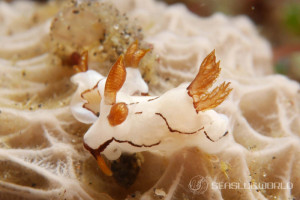
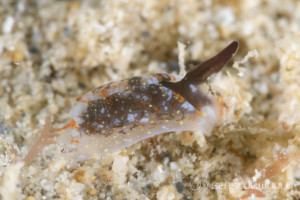
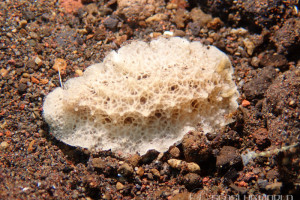
Similar Colors Nudibranchs
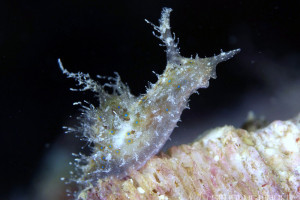

Academic Database
Sea slug observation data is available in international marine biodiversity databases.