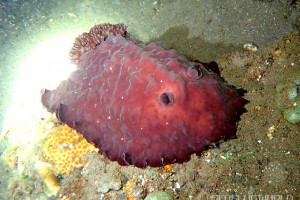
Asteronotus cespitosus (van Hasselt, 1824)
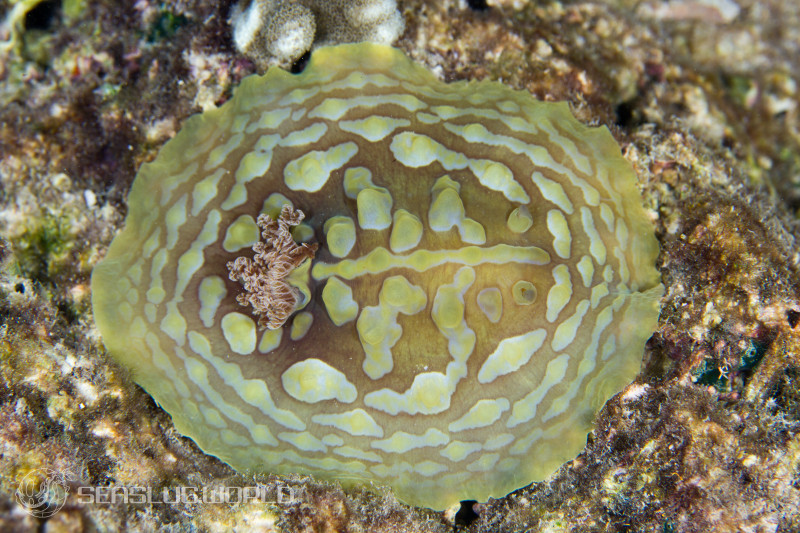
- Location
- Arborek Jetty, Raja Ampat, Indonesia
- Date
- 2016/01/12
- Length
- 250mm
- Depth
- 2.0m
- Water temperature
- 28.4℃
Description
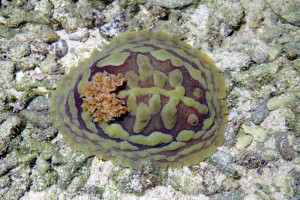
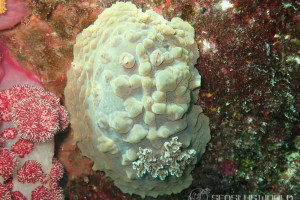
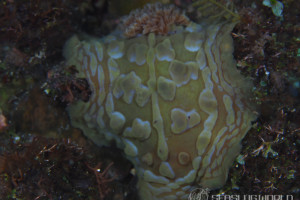
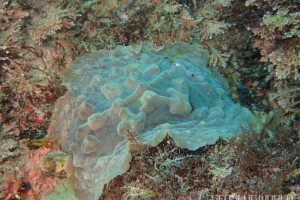
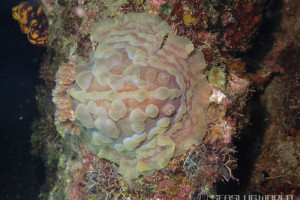
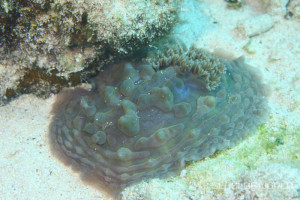
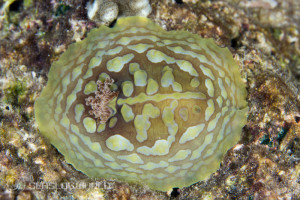
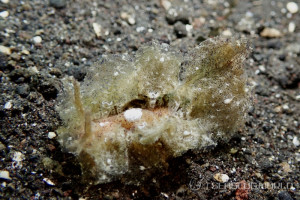
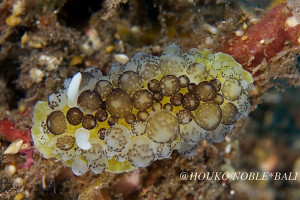
A large dorid reaching up to 400 mm in length. Body colour is highly variable, ranging from reddish brown, yellowish brown and dark brown to grey. The outermost mantle margin is often a slightly paler shade of yellowish brown than the ground colour. A single longitudinal ridge runs along the dorsal midline and is flanked by large knob-like tubercles. Slender elongate tubercles also occur on the mantle periphery, arranged in concentric rings centred on the dorsum; their colour matches the ground colour or is slightly paler. The rhinophores are dark brown or the same colour as the dorsal tubercles, and the gills are brown to dark brown.Distribution
Western Indian Ocean to the western and central Pacific. Records include Tanzania, Madagascar, Seychelles, Mauritius, Australia, Indonesia, Papua New Guinea, the Philippines, Japan and Hawaii. The type locality is Anyer Bay (Anjer-baai), west Java, in the Sunda Strait, Indonesia.Etymology
The specific epithet cespitosa is the Latin for "tufted" or "growing in tufts" (from caespes, "turf, sod"), echoing van Hasselt's diagnosis "ubique plagis aut cespitibus obtecto" — covered everywhere with patches or tufts.Remarks
Originally described as Doris cespitosa by van Hasselt in his Java mollusc letter (Bulletin des Sciences Naturelles et de Géologie, vol. 1: 238, 1824), based on material from Anyer Bay in the Sunda Strait. Van Hasselt noted the species as "satis vulgaris" (rather common) and observed spawning with orange eggs embedded in yellow mucus. Subsequently transferred to the genus Asteronotus Ehrenberg, 1831.References
A Kindle field guide by the site author
Kimoto N. (2026). Sea Slugs of Japan & the Indo-Pacific, 2nd Edition.
Kindle Edition
View on Amazon PR (Amazon Associates)Seasonality
Shooting Locations
Loading shooting locations...
Photos of Asteronotus cespitosus
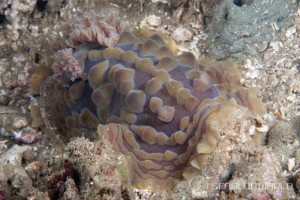

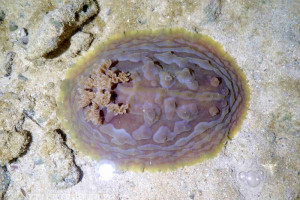




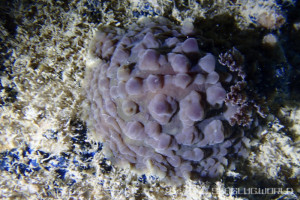

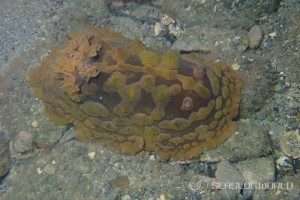

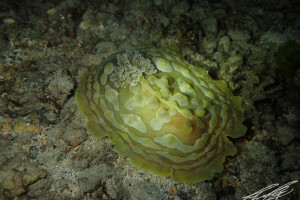

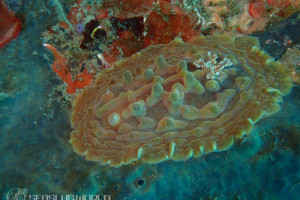



Same Genus Nudibranchs
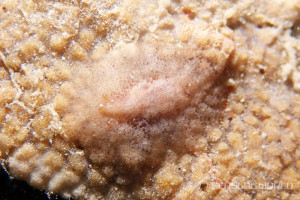
Similar Colors Nudibranchs

Academic Database
Sea slug observation data is available in international marine biodiversity databases.