Ceratodoris hiroi (Baba, 1938)
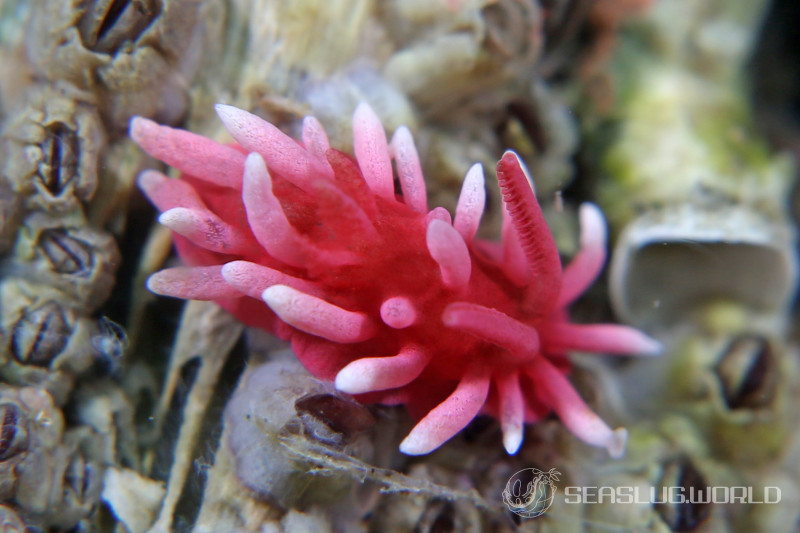
- Location
- Gontarou Rock, Hayama, Kanagawa, Japan
- Date
- 2014/06/10
- Length
- 5mm
- Depth
- 7.0m
- Water temperature
- 21.0℃
Description
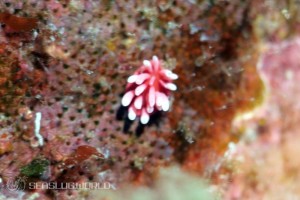
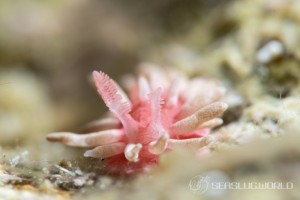
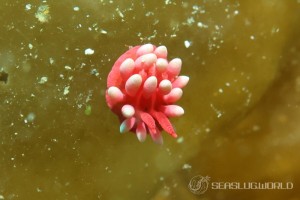
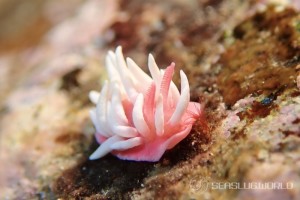
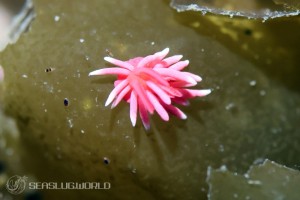
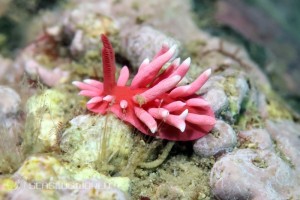
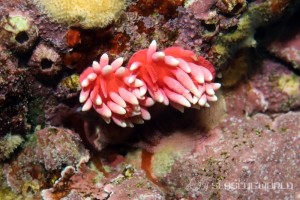
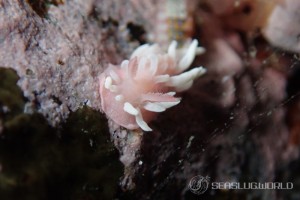
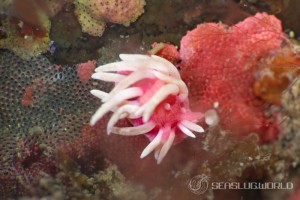
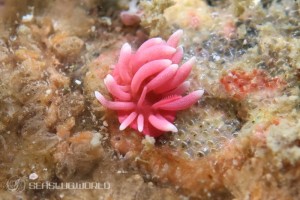
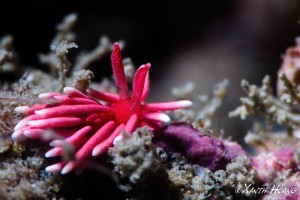
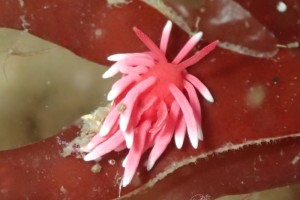
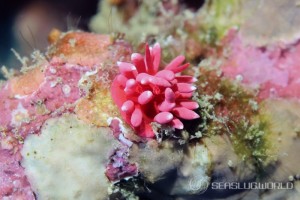
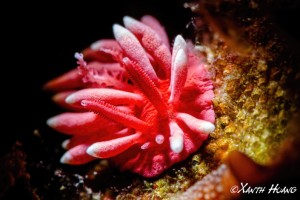
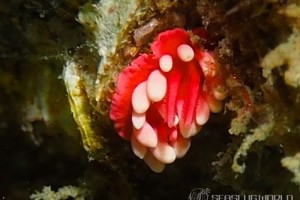
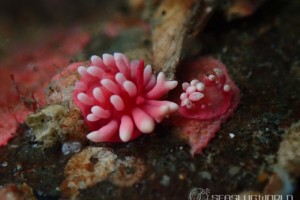
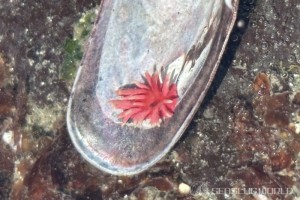
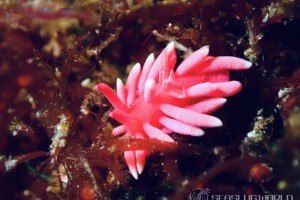
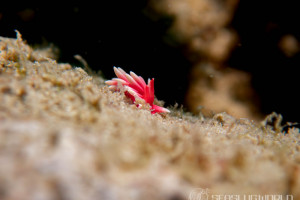
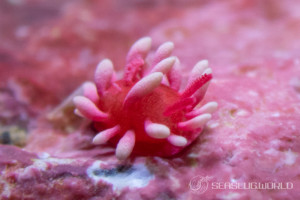
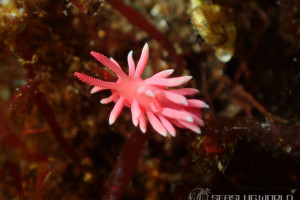
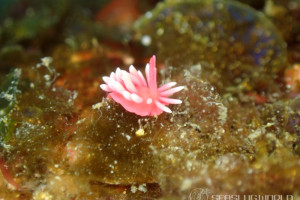
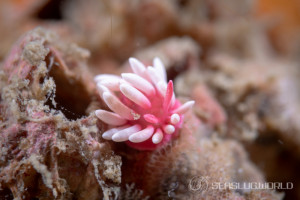
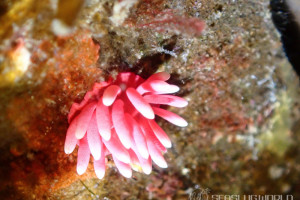
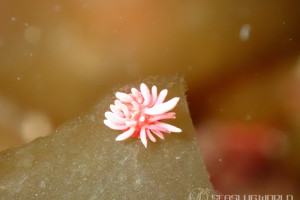
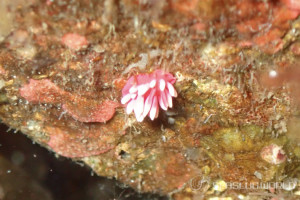
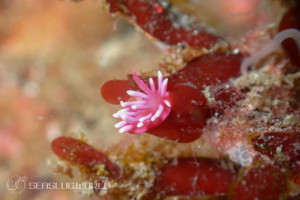
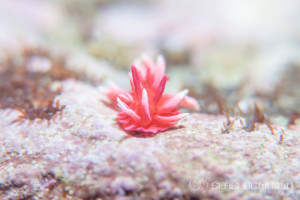
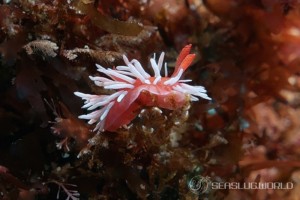
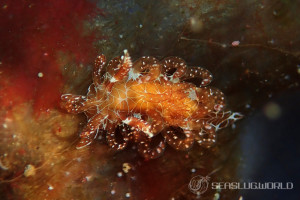
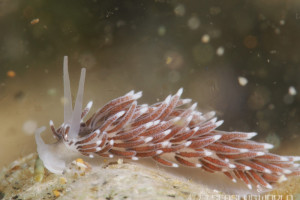
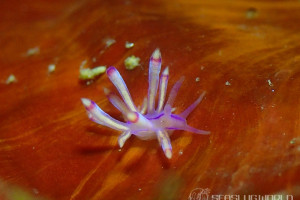
A small species, 5-7 mm in length. Body elongate-elliptical and strongly depressed, somewhat aeolidiform in general appearance. Mantle densely spiculate, gradually sloping to the foot margin, without a pallial flange. Head-veil broad and semicircular, marked off ventrally from the foot by a transverse groove. Rhinophores perfoliate, cylindro-conical, without sheaths. Three non-retractile, simply pinnate branchiae are arranged in a shallow arc. Long fusiform papillae stand on the dorsum: about 7-9 along each side of the pallial margin, and 5-6 around the branchial arc. Body colour is rose red almost everywhere, with the papilla tips slightly yellowish. The combination of rose-red ground colour and conspicuous fusiform dorsal papillae makes Ceratodoris hiroi easy to recognise in the field.Distribution
Type locality: Seto, Kii Peninsula, Wakayama Prefecture, Japan (near the Seto Marine Biological Laboratory). The original description reports two specimens from Seto in March 1937 and an additional specimen from Oniike, Amakusa, in April 1937. Subsequently recorded broadly from the western Pacific.Etymology
The species name hiroi honours Mr. F. Hiro, then a lecturer at the Seto Marine Biological Laboratory, who is thanked in the acknowledgements of the original paper for his cooperation in collecting material.Remarks
Type species of Hopkinsiella Baba, 1938 (now a junior synonym of Ceratodoris). A small and distinctively coloured goniodoridid; the combination of rose-red ground colour and prominent fusiform dorsal papillae makes field identification straightforward.References
- Hopkinsiella hiroi, Baba K. (1938). Opisthobranchia Of Kii, Middle Japan. Journal of the Faculty of Agriculture, Kyushu University. 6(1): 1-19. https://doi.org/10.5109/22587
- ヒロウミウシ(新稱), Baba K. (1949). Opisthobranchia of Sagami Bay collected by His Majesty the Emperor of Japan (相模湾産後鰓類図譜). Iwanami Shoten, Tokyo. 4+2+194+7 pp., pls. 1-50.
- ヒロウミウシ, 鈴木敬宇. (2000). ウミウシガイドブック〈2〉. TBSブリタニカ.
- 高岡生物研究会. (2002). 日本海のウミウシ. 第2版.
- ヒロウミウシ, 中野理枝. (2004). 本州のウミウシ. ラトルズ.
- ヒロウミウシ, 小野篤司 & 加藤昌一. (2009). ウミウシ. 誠文堂新光社.
- Ceratodoris hiroi (Baba, 1938) comb. nov., Paz-Sedano S., Moles J., Smirnoff D., Gosliner T.M. & Pola M. (2024). A combined phylogenetic strategy illuminates the evolution of Goniodorididae nudibranchs (Mollusca, Gastropoda, Heterobranchia). Molecular Phylogenetics and Evolution. 192: 107990. https://doi.org/10.1016/j.ympev.2023.107990
A Kindle field guide by the site author
Kimoto N. (2026). Sea Slugs of Japan & the Indo-Pacific, 2nd Edition.
Kindle Edition
View on Amazon PR (Amazon Associates)Seasonality
Shooting Locations
Loading shooting locations...
Photos of Ceratodoris hiroi
Tag:












Same Genus Nudibranchs
Similar Colors Nudibranchs



Academic Database
Sea slug observation data is available in international marine biodiversity databases.