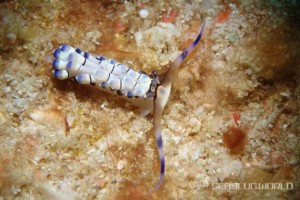
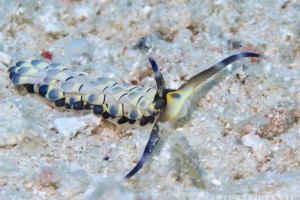
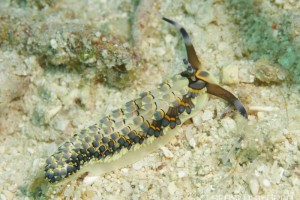
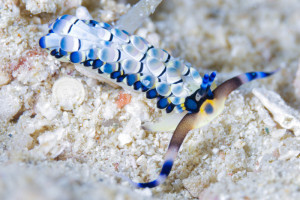
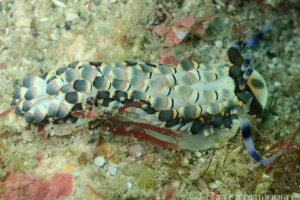
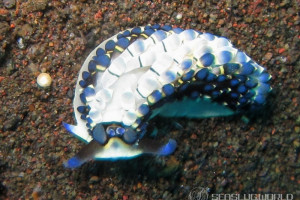
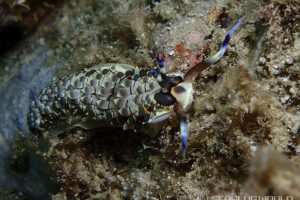
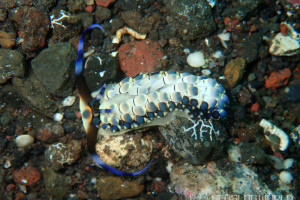
Cerberilla affinis Bergh, 1888
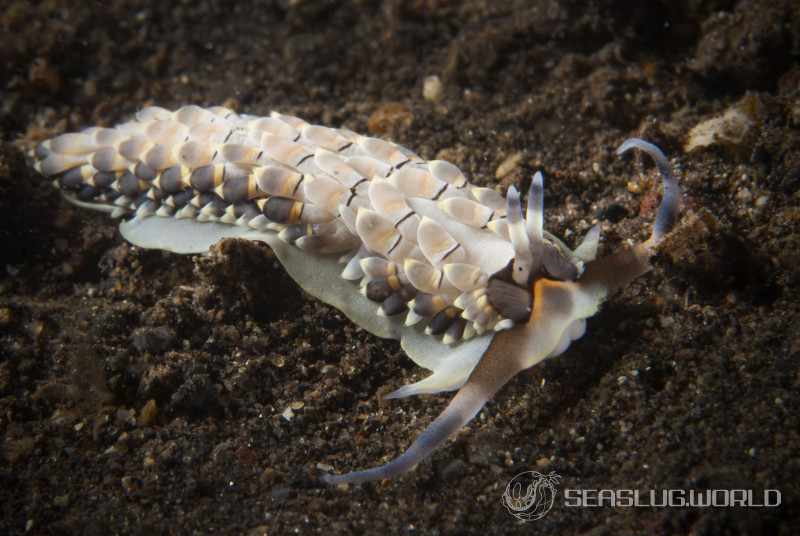
- Location
- Pulau Bali, Indonesia
- Date
- 2006/01/01
- Length
- 450mm
- Depth
- 17.0m
- Water temperature
- 28.0℃
Description
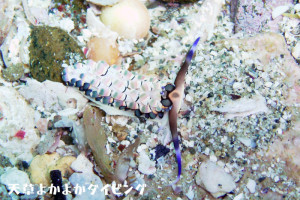
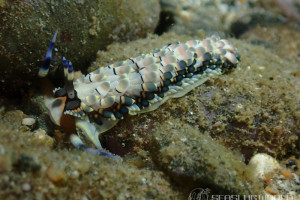
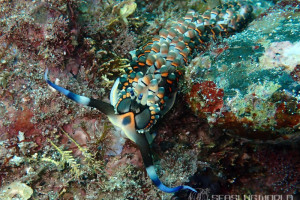
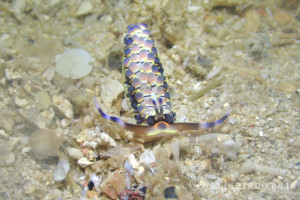
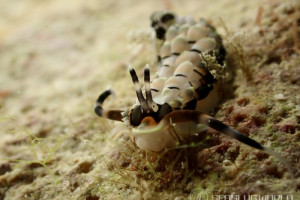
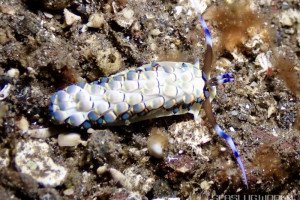
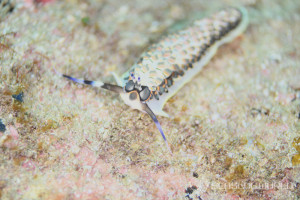
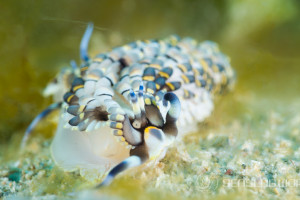
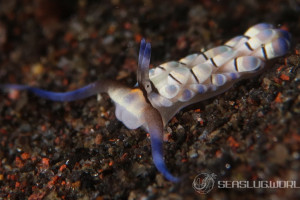
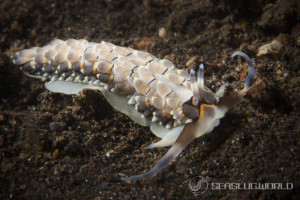
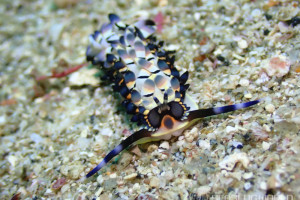
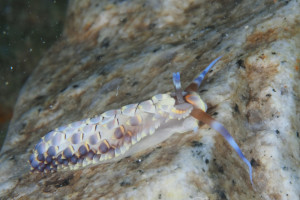
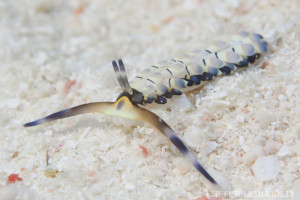
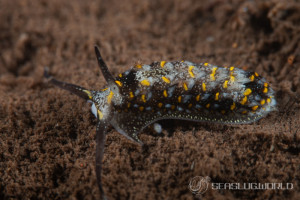
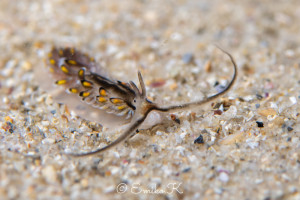
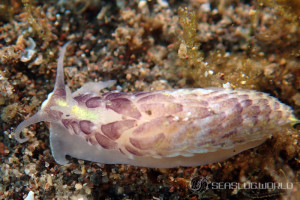
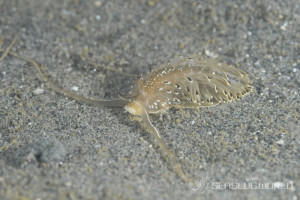
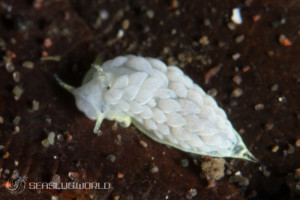
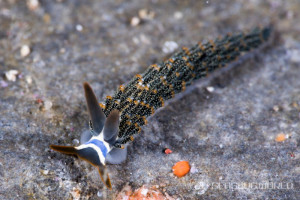
A large aeolid, body length up to 4.5 cm; rhinophores about 3.5 mm high, oral tentacles 7 mm, and cerata reaching 30-35 mm. The head is mostly formed by a frontal shield with rounded outer corners, from the base of which arise the rather long oral tentacles. The simple erect rhinophores stand close together on the neck. The dorsum is narrower than the foot; the dense lateral ceratal rows leave only a narrow median strip exposed on the front third of the back. Anteriorly, two ceratal groups are united horseshoe-shape on each side. About 23 transverse low pedestals follow, decreasing in length backwards; the longest cerata (33-35 mm) occur on the 9th-10th pedestal. The foot tentacles are long.Distribution
Type locality: Polo-Edam (Pulau Damar Besar), Jakarta Bay, Java Sea, Indonesia. The species now ranges across the Indo-West Pacific to the central Pacific.Etymology
The specific epithet affinis ("related, akin") refers to the close affinity with Cerberilla annulata, of which the form was originally described as a variety.Remarks
Originally proposed as a variety of Cerberilla annulata and later elevated to full species rank. The genus Cerberilla is distinguished by long oral tentacles, tentacle-like extensions of the anterior foot corners, robust dentition and a smooth jaw cutting edge — all associated with a burrowing lifestyle in soft substrata.References
- Cerberilla annulata (Quoy et Gaim.) var. affinis Bgh., Bergh R. (1888). Beiträge zur Kenntniss der Aeolidiaden. IX. Verhandlungen der kaiserlich-königlichen zoologisch-botanischen Gesellschaft in Wien. 38: 673-706, Taf. XVI-XX.
- リュウキュウカスミミノウミウシ, 中野理枝. (2004). 本州のウミウシ. ラトルズ.
A Kindle field guide by the site author
Kimoto N. (2026). Sea Slugs of Japan & the Indo-Pacific, 2nd Edition.
Kindle Edition
View on Amazon PR (Amazon Associates)Seasonality
Shooting Locations
Loading shooting locations...
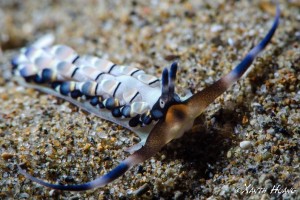
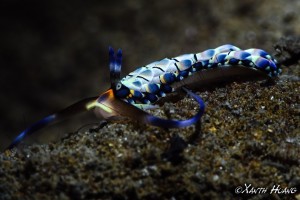
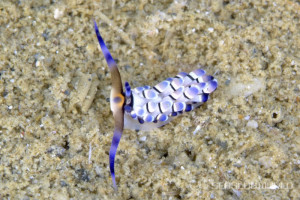
Photos of Cerberilla affinis





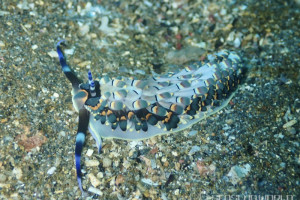

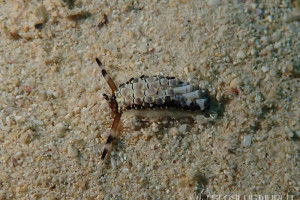

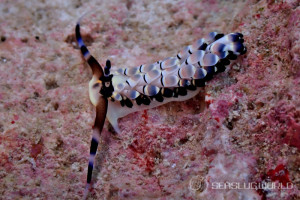

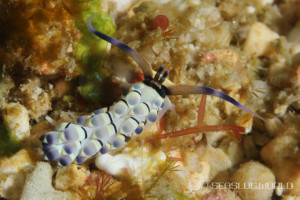














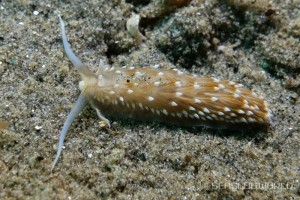
Same Genus Nudibranchs
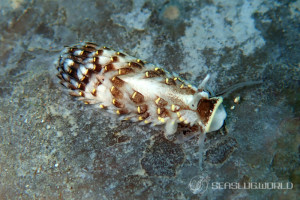
Similar Colors Nudibranchs


Academic Database
Sea slug observation data is available in international marine biodiversity databases.