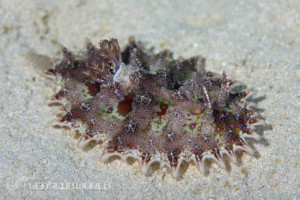
Doris viridis (Pease, 1861)
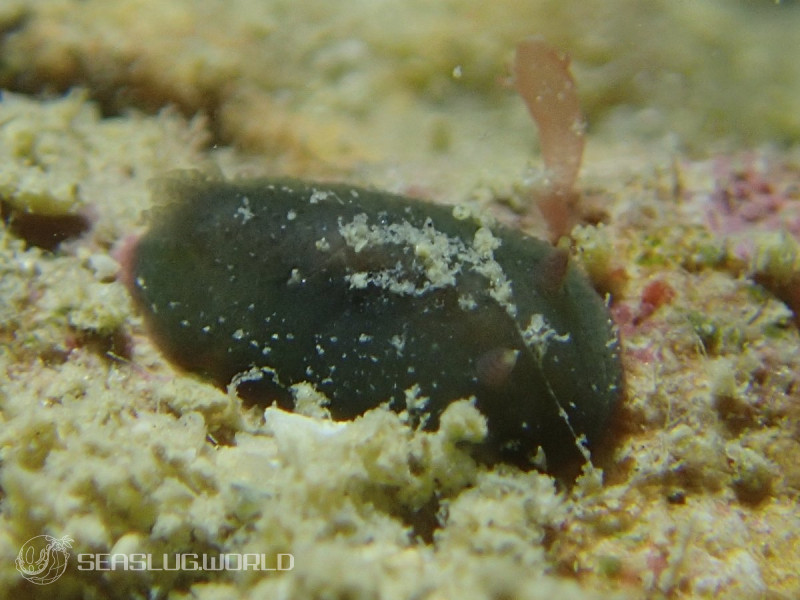
- Location
- Red Beach, Okinawa Island (East coast), Okinawa, Japan
- Date
- 2015/01/01
- Length
- 10mm
- Depth
- 10.0m
- Water temperature
- 20.0℃
Description
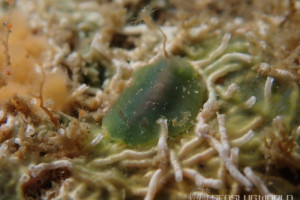
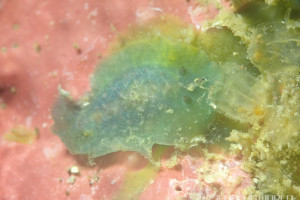
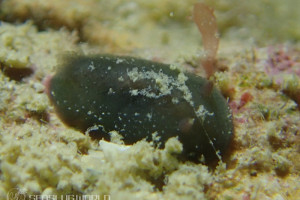
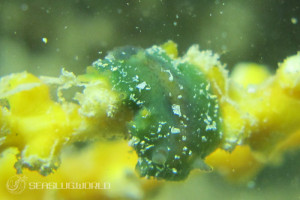
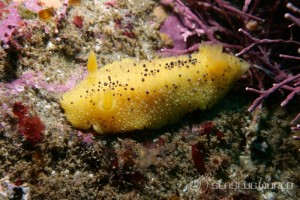
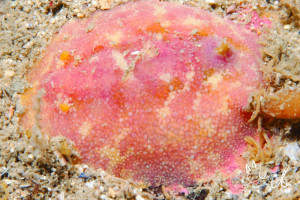
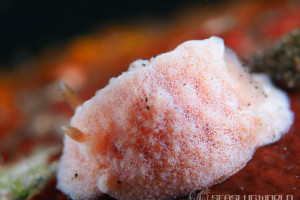
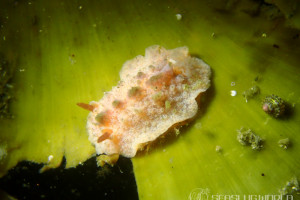
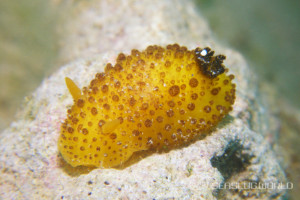
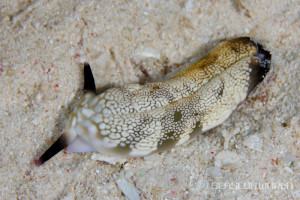
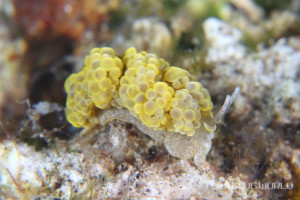
A small dorid reaching about 25 mm in body length. The body is small, somewhat rigid, oblong-oval, widest at the middle, rounded at both ends. The mantle is convex, covers the foot, has thin margins, and is minutely granulose. The rhinophores are small, ovate, mucronate, laminated, and retractile into large simple cavities; oral tentacles are absent. The gill plumules are small, not reaching the edge of the mantle, ten in number, pinnate with the middle ones the largest, retractile into a semicircular cavity. The foot is small, similar in shape to the mantle. In life the ground colour is dark green, the foot pale or yellowish, the rhinophores and gill plumules slate-coloured, and the dorsal papillae sometimes tipped with white. Pease's description does not state a length; the type-material was collected from under loose coral on a reef at Tahiti.Distribution
Central and western Pacific. Type locality: Tahiti, Society Islands, based on a specimen collected by Andrew Garrett and described by Pease. Subsequently recorded from the Hawaiian Islands, southern Japan, the Philippines, Indonesia, Guam and elsewhere.Etymology
The specific epithet viridis is the Latin adjective meaning "green", in reference to the dark green ground colour. Pease did not state an etymology, but the meaning is consistent with his "color dark green".Remarks
Originally placed by Pease in Doriopsis. Pease noted that the species "agrees in its generic characters with the first described by me, from the Sandwich Islands [referring to Doriopsis granulosa Pease, 1860], and confirms the genus as then established". Later transferred to Doris; the parentheses in the author citation reflect this generic transfer. The Japanese name "ミドリシタナシウミウシ" ("green tongue-less slug") refers to the dark green dorsal colour.References
- Doriopsis viridis Pease n. sp., Pease W.H. (1861). Descriptions of new species of Mollusca from the Pacific Islands. Proceedings of the Zoological Society of London. 1861: 242-247.
- ミドリシタナシウミウシ(仮称), 小野篤司. (1999). ウミウシガイドブック. TBSブリタニカ.
- ミドリシタナシウミウシ(新称), 小野篤司. (2000). ウミウシガイドブック. 第2版. TBSブリタニカ.
A Kindle field guide by the site author
Kimoto N. (2026). Sea Slugs of Japan & the Indo-Pacific, 2nd Edition.
Kindle Edition
View on Amazon PR (Amazon Associates)Seasonality
Shooting Locations
Loading shooting locations...
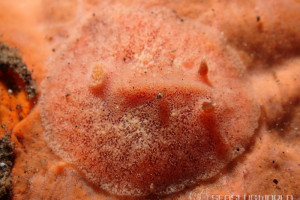
Photos of Doris viridis





Same Genus Nudibranchs


Similar Colors Nudibranchs
Academic Database
Sea slug observation data is available in international marine biodiversity databases.