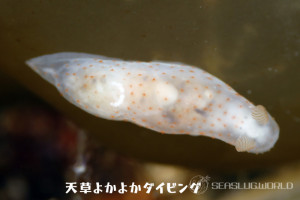
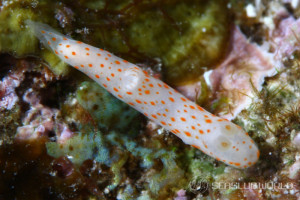
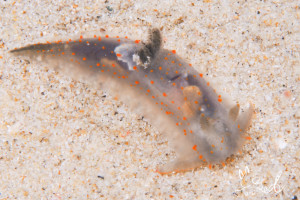
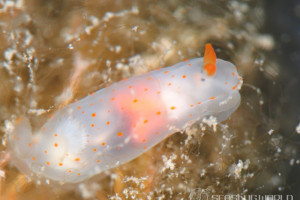
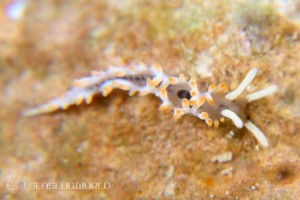
Gymnodoris feyae De Souza-Canal & Valdés, 2025
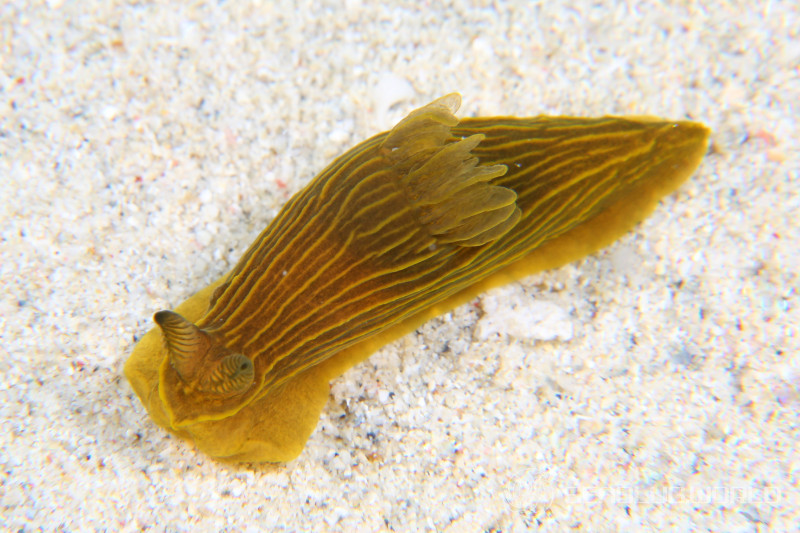
- Location
- Nakayukui, Okinawa Island (Onna and Yomitan area), Okinawa, Japan
- Date
- 2015/06/17
- Length
- 20mm
- Depth
- 12.0m
- Water temperature
- 26.0℃
Description
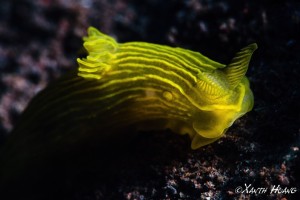
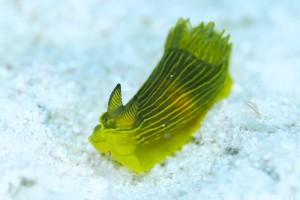
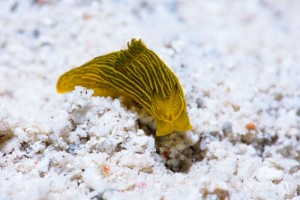
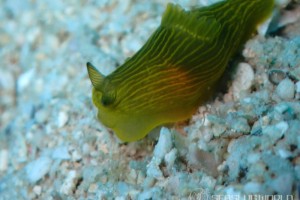
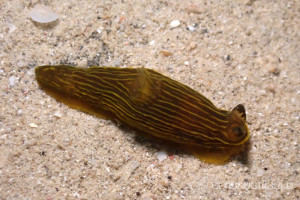
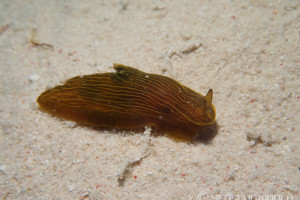
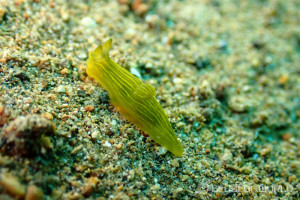
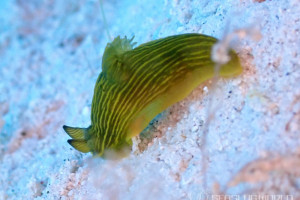
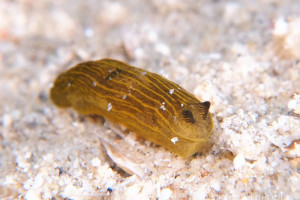
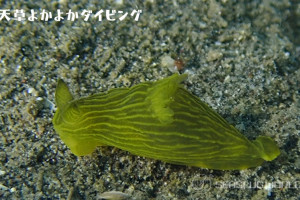
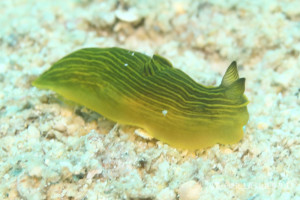
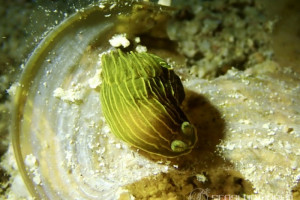
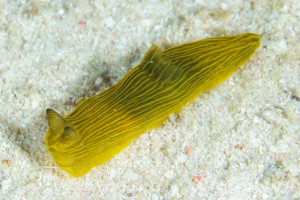
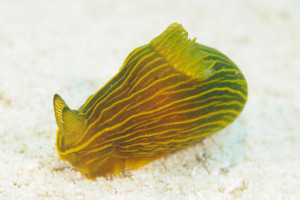
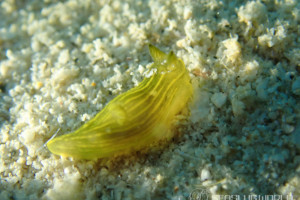
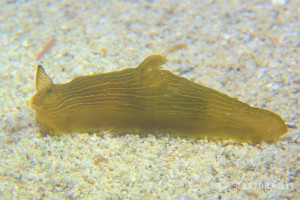
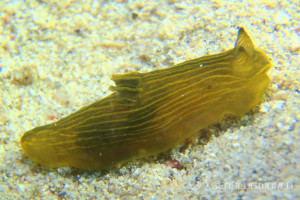
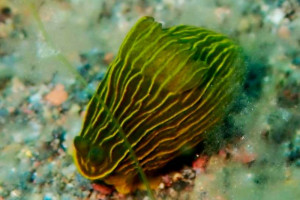
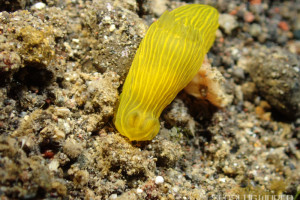
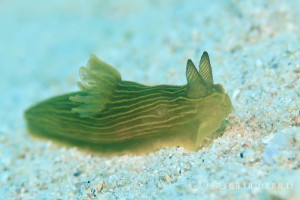
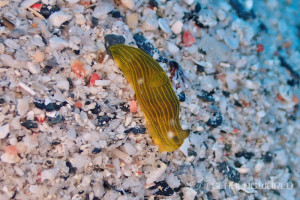
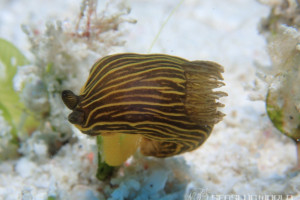
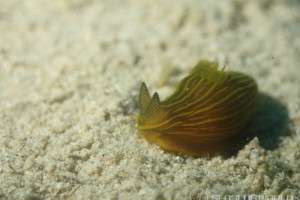
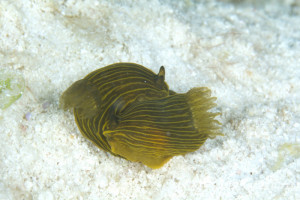
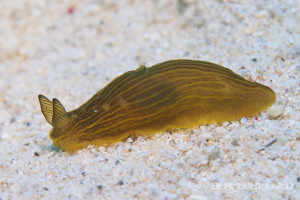
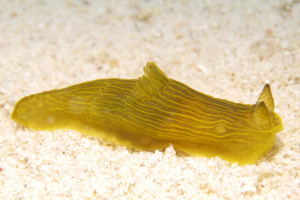
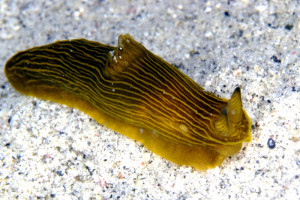
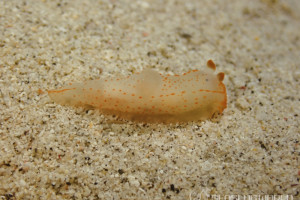
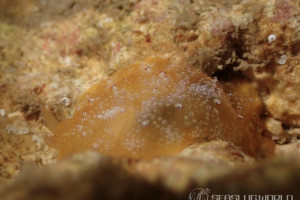
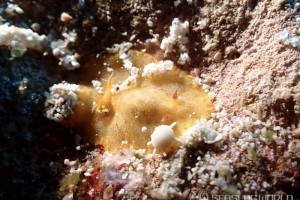
Body oval, with numerous longitudinal ridges and irregular tubercles arranged on the ridges. Velum distinct, with several irregular tubercles, continuing posteriorly into a distinct notal rim that also bears tubercles. Color yellowish-ochre to brown; ridges and tubercles pale brown to yellow. Internal organs not visible through the body wall. Rhinophores conical, with 10-12 lamellae, the same color as the body. Gill of 8-10 large bipinnate leaves arranged in a row anterior to the anus, the same color as the body. Foot wider than notum, greatly expanded laterally near the head, the same color as the body with a lighter edge. Oral tentacles small, blunt. Radular formula 10 × 11.0.11 in a 12 mm preserved specimen; innermost lateral teeth very small, hook-shaped, with curved smooth cusps and broad bases; other lateral teeth very elongate with broad rectangular bases and blunt, long, straight cusps. Reproductive system with an elongate, narrow, slightly curved ampulla; prostate large, flattened, curved around the bursa copulatrix. Penial spines triangular to elongate (about 100-150 µm) with relatively broad bases. Largest preserved specimen examined in this study was 14 mm long.Distribution
Apparently endemic to New Caledonia. Type locality: Rocher à la Voile, Nouméa, South Province, 2-10 m on sandy-muddy bottom. Also recorded from several sites in Koumac, North Province, at 3-10 m. The specimen reported as Analogium sp. from Nouméa by Hervé 2010 corresponds to this species.Etymology
Verbatim from De Souza-Canal & Valdés 2025:This species is name in honor of Pauline Fey, outstanding naturalist and sea slug photographer and collector, who provided most of the specimens from Nouméa of this species here examined as well as many other species.
Remarks
Externally very similar to Gymnodoris sp. 60 reported from the Philippines and Indonesia (Gosliner et al. 2018; Knutson & Gosliner 2022) but consistently recovered as a distinct species in the species delimitation analyses. Gymnodoris sp. 61 (Gosliner et al. 2018) is also similar but more reddish in color. A similar specimen from Japan reported in a 2018 book as Gymnodoris sp. 5 needs to be studied to determine its relationship with G. feyae sp. nov. Hervé 2010 illustrated this species from Nouméa under the name Analogium sp.References
- ギュンノドリス属の一種, 殿塚孝昌. (2003). ウミウシガイドブック〈3〉. TBSブリタニカ.
- Gymnodoris sp. 59, Terrence Gosliner, Ángel Valdés and David Behrens. (2015). Nudibranch and Sea Slug Identification Indo-Pacific. New World Pubns Inc.
- タスジキヌハダウミウシ(新称), 中野理枝. (2018). 日本のウミウシ. 文一総合出版.
- Gymnodoris feyae, Knutson V.L. & Gosliner T.M. (2022). The first phylogenetic and species delimitation study of the nudibranch genus Gymnodoris reveals high species diversity (Gastropoda: Nudibranchia). Molecular Phylogenetics and Evolution. 171: 107470. https://doi.org/10.1016/j.ympev.2022.107470
- Gymnodoris feyae De Souza-Canal & Valdés sp. nov., SOUZA-CANAL J.D. & VALDÉS Á. (2025). The genus Gymnodoris Stimpson, 1855 (Mollusca, Nudibranchia) in New Caledonia, with descriptions of eleven new species. Zootaxa. 5710(1): 1-73. https://doi.org/10.11646/zootaxa.5710.1.1
Featured in this book
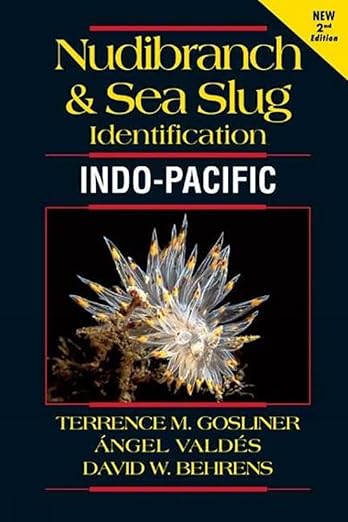
Terrence Gosliner, Ángel Valdés and David Behrens. (2018). Nudibranch and Sea Slug Identification Indo-Pacific 2nd Edition. New World Pubns Inc.
New World Publications
This species, Gymnodoris feyae, is included in the book.
View on Amazon PR (Amazon Associates)Seasonality
Shooting Locations
Loading shooting locations...
Photos of Gymnodoris feyae
Tag:



























Same Genus Nudibranchs

Similar Colors Nudibranchs
Academic Database
Sea slug observation data is available in international marine biodiversity databases.