Murphydoris puncticulata Paz-Sedano, Smirnoff, Candás, Gosliner & Pola, 2022
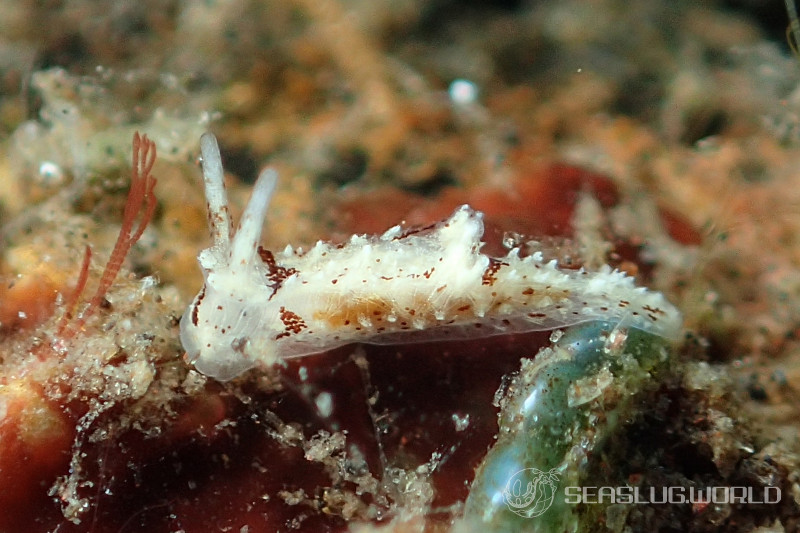
- Location
- MINA point, Tulamben, Pulau Bali, Indonesia
- Date
- 2017/03/09
- Length
- 7mm
- Depth
- 10.0m
- Water temperature
- 28.0℃
Description
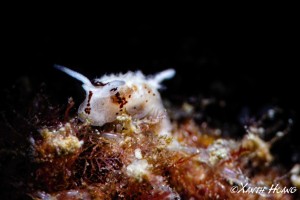
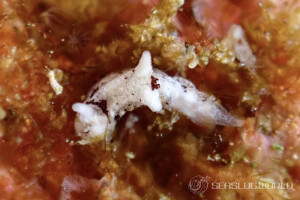
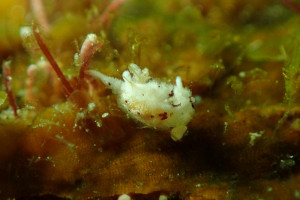
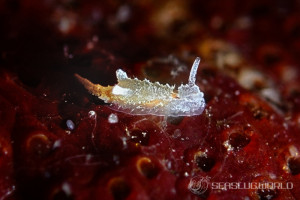
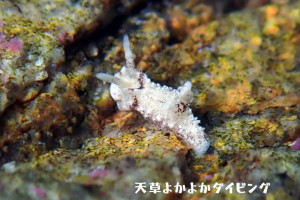
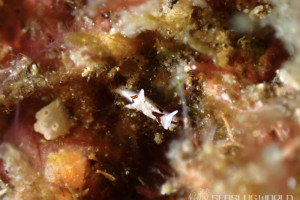
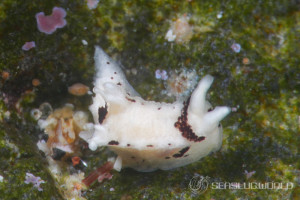
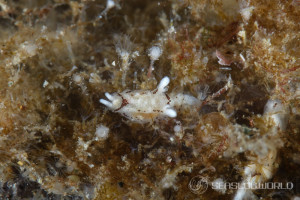
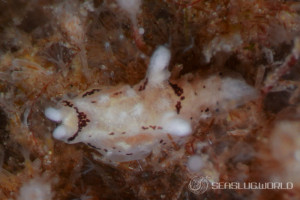
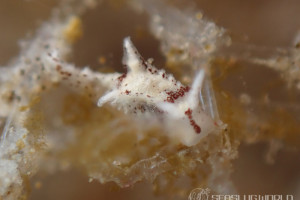
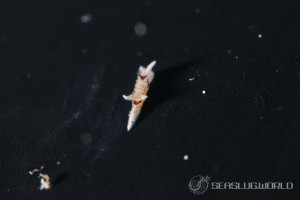
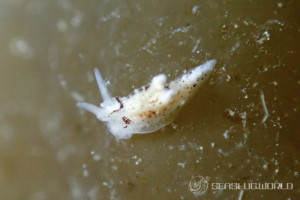
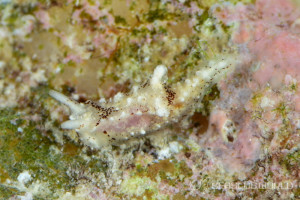
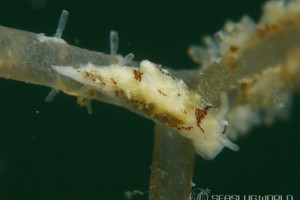
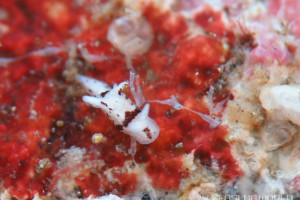
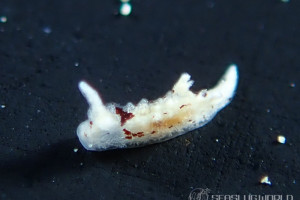
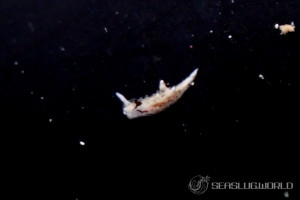
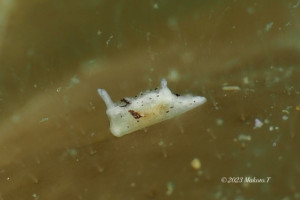
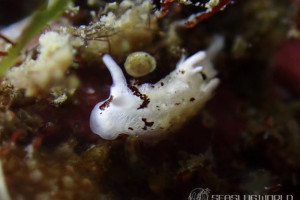
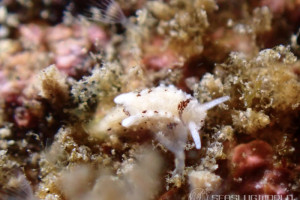
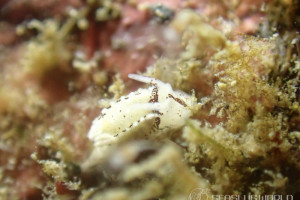
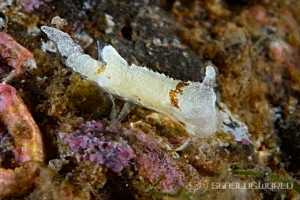
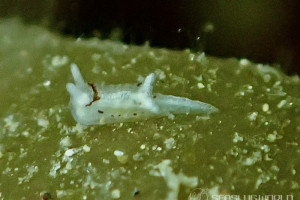
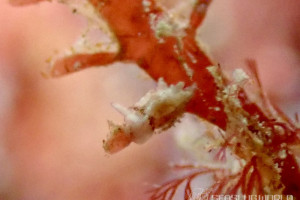
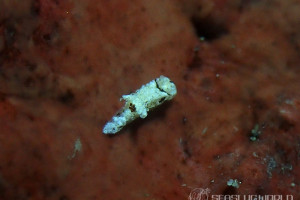
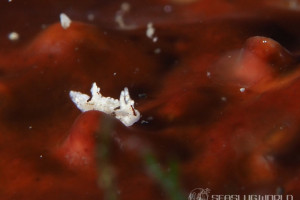
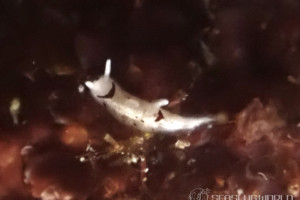
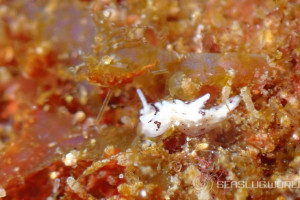
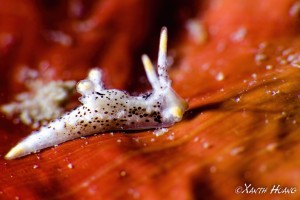
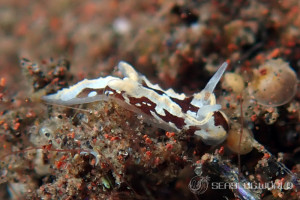
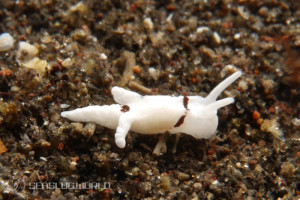
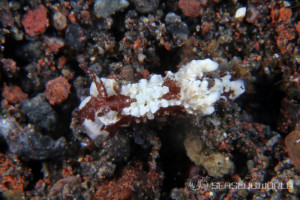
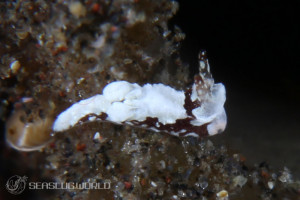
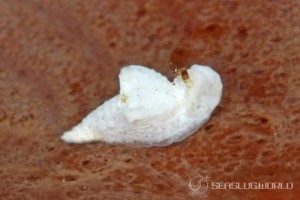
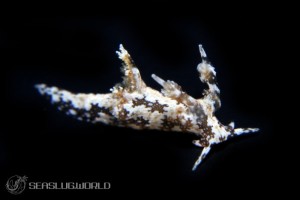
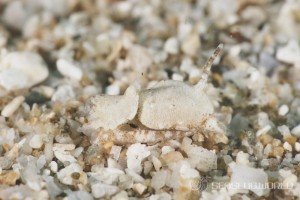
A small goniodoridid 2–7 mm in preserved length. The body is elongate and limaciform, with the foot acutely tapered posteriorly and slightly rounded anteriorly; the foot does not project beyond the sides of the notum. The notal margin is well developed but reduced, continuing posteriorly into a trilobate gill set at the same level as the anal opening.The body is white with small dark brown spots scattered all over. A triangular band of densely concentrated brown spots lies on the anterior portion of the dorsum, just behind the rhinophores, and a transverse dark brown patch crosses the head between the rhinophores. A third horizontal band of concentrated spots lies behind the gills. The rhinophores, gill branches, and foot are all whitish translucent. Small papillae are scattered along the lateral sides of the body.
Distribution
Widely distributed in the western and central Pacific Ocean. Type locality: La Balsa Park, Mooloolah River, Queensland, Australia, 3–6 m depth. Records also include Papua New Guinea, New Caledonia, the Philippines, the Hawaiian Islands, Japan (Shizuoka Prefecture and the Izu Islands), Indonesia (Bacan, Bali), and Australia (Queensland). The species is found under coral rubble on reefs from the intertidal down to about 10 m depth.Etymology
The specific epithet puncticulata is a Latin diminutive of punctum ("dot" or "spot"), meaning "finely speckled", in reference to the small dark-brown spots scattered over the body.Remarks
Among the white-bodied species of Murphydoris, this species is distinguished from M. cobbi and M. maracabranchia by the combination of widely scattered brown spots over the body, a triangular concentration of spots behind the rhinophores, a transverse head patch, and a third horizontal band behind the gill, together with small papillae along the lateral sides of the body. In M. cobbi the patch behind the rhinophores forms a continuous line, while M. maracabranchia has only a single line behind the rhinophores and lacks scattered body spots.References
- Goniodoridella sp. 1, Terrence Gosliner, Ángel Valdés and David Behrens. (2015). Nudibranch and Sea Slug Identification Indo-Pacific. New World Pubns Inc.
- Goniodoridella sp. 11, 中野理枝. (2018). 日本のウミウシ. 文一総合出版.
- Murphydoris puncticulata sp. nov., Paz-Sedano, S., Smirnoff, D., Candás, M., Gosliner, T.M. & Pola, M. (2022). Rediscovering the overlooked genus Murphydoris (Nudibranchia: Goniodorididae): the first phylogeny and addition of four new species. Zoological Journal of the Linnean Society. DOI: 10.1093/zoolinnean/zlab122., available online at https://doi.org/10.1093/zoolinnean/zlab122
- Murphydoris puncticulata (Clade E), Paz-Sedano S., Moles J., Smirnoff D., Gosliner T.M. & Pola M. (2024). A combined phylogenetic strategy illuminates the evolution of Goniodorididae nudibranchs (Mollusca, Gastropoda, Heterobranchia). Molecular Phylogenetics and Evolution. 192: 107990. https://doi.org/10.1016/j.ympev.2023.107990
- Murphydoris puncticulata, PAZ-SEDANO S., COBB G., GOSLINER T.M. & POLA M. (2024). Filling gaps in the knowledge of Goniodorididae taxa (Mollusca, Gastropoda, Nudibranchia) with description of seven new species. Zootaxa. 5443(4): 523-547. https://doi.org/10.11646/zootaxa.5443.4.3
Featured in this book
Terrence Gosliner, Ángel Valdés and David Behrens. (2018). Nudibranch and Sea Slug Identification Indo-Pacific 2nd Edition. New World Pubns Inc.
New World Publications
This species, Murphydoris puncticulata, is included in the book.
View on Amazon PR (Amazon Associates)Seasonality
Shooting Locations
Loading shooting locations...
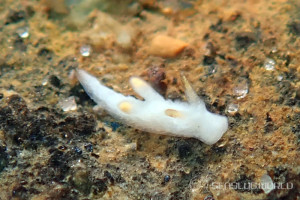
Photos of Murphydoris puncticulata





















Same Genus Nudibranchs
Similar Colors Nudibranchs

Academic Database
Sea slug observation data is available in international marine biodiversity databases.