Polycera hedgpethi Er. Marcus, 1964
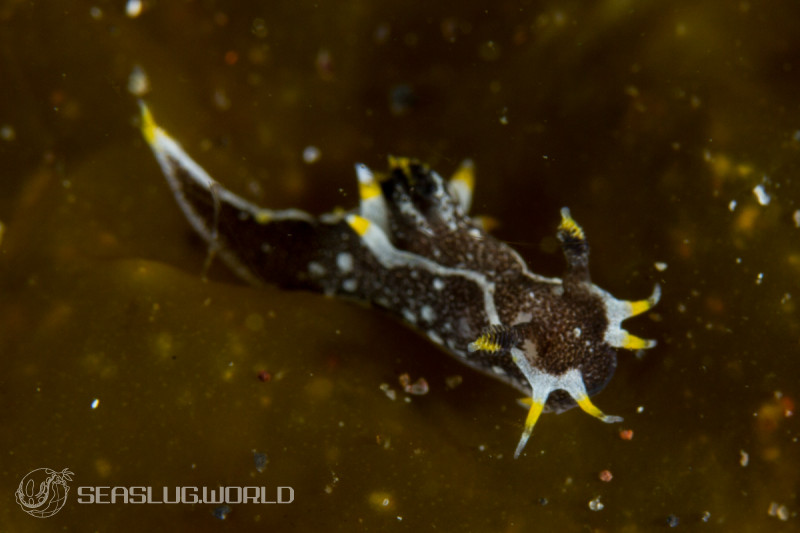
Description
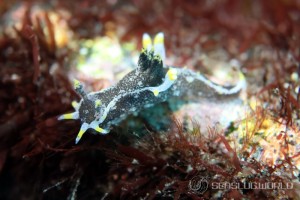
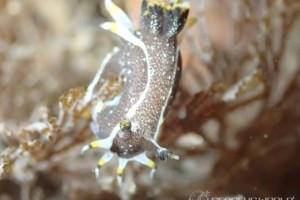
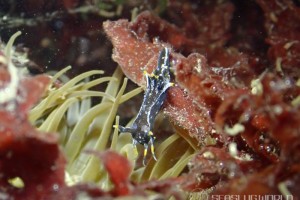
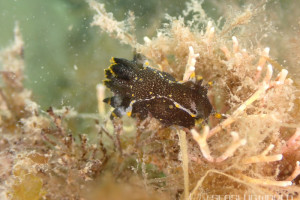
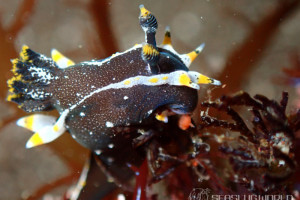
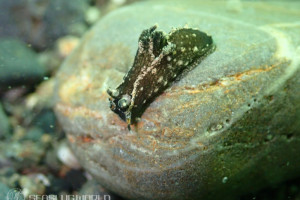
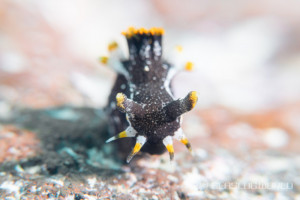
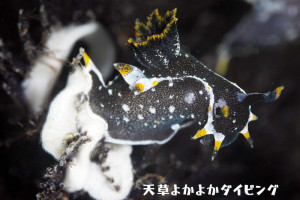
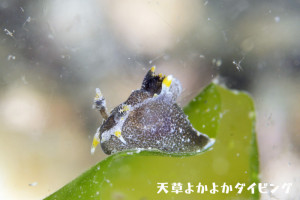
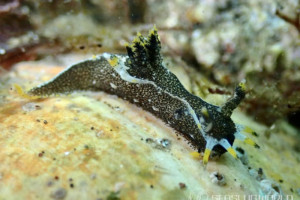
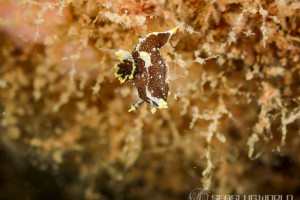
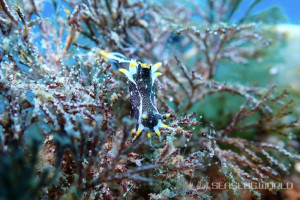
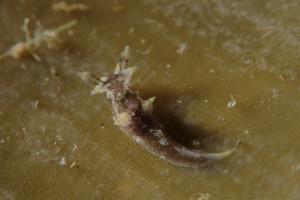
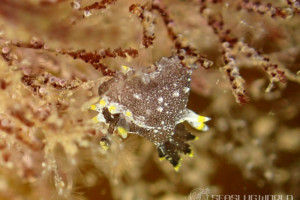
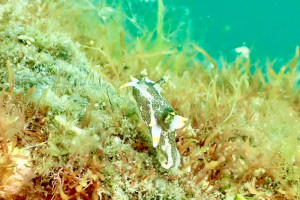
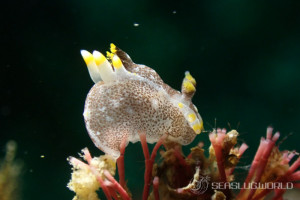
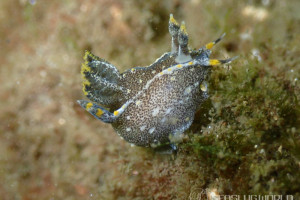
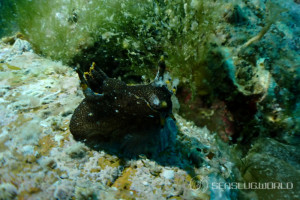
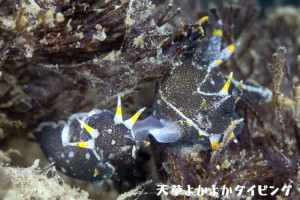
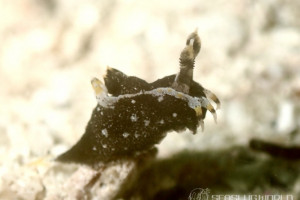
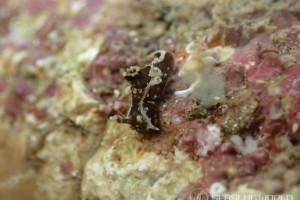
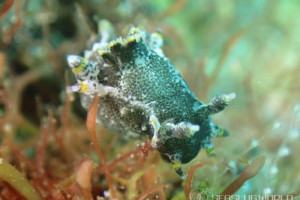
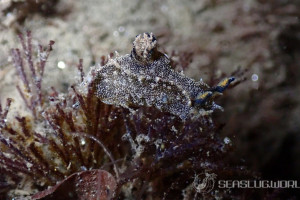
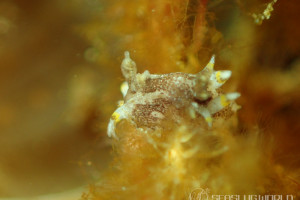
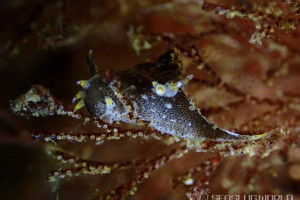
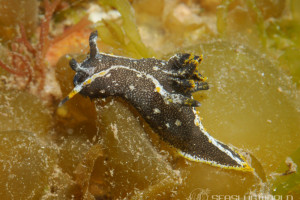
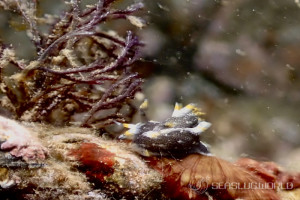
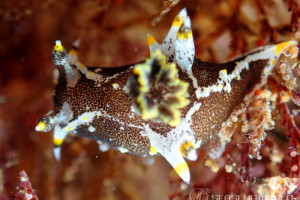
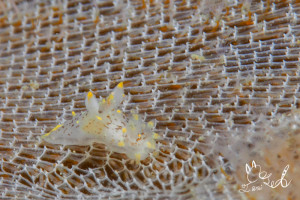
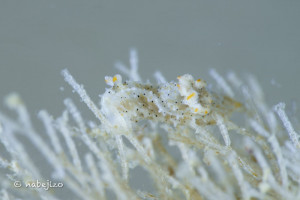
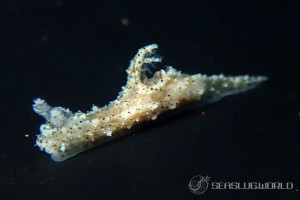
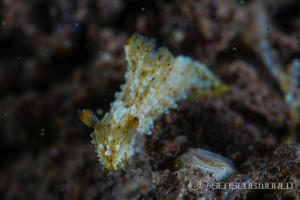
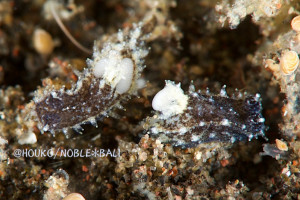
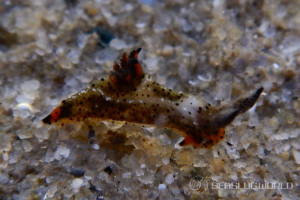
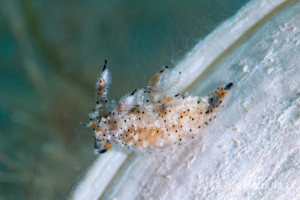
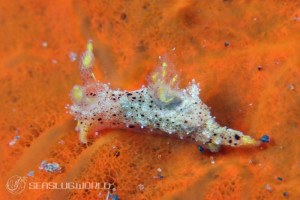
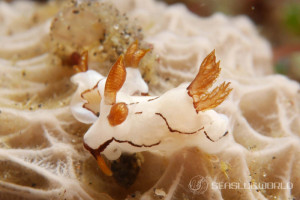
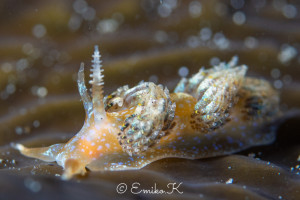
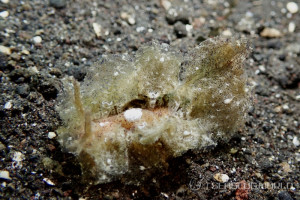
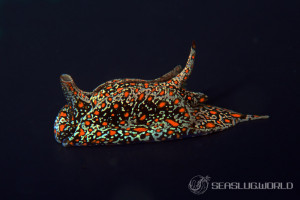
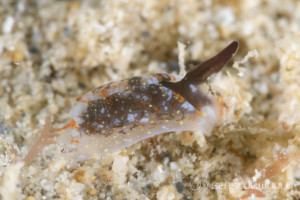
A small polycerid 15–35 mm in length, translucent white in ground colour but covered by countless minute dark-brown spots, giving the overall appearance an almost-black tone. Small whitish to pale tubercles are scattered over the dorsum, and the mantle margin, central tail, and foot margin are outlined in white. The anterior cephalic region bears about four slender finger-like processes that are white at the base and orange-yellow toward the tips; orange-yellow bands also appear at the tips of the rhinophores, gills, and lateral processes.The species feeds on encrusting bryozoans, in particular Bugula neritina and Zoobotryon verticillatum, and deposits its egg ribbons directly on these prey colonies. Development is planktotrophic, allowing long-distance natural dispersal.
Distribution
Originally described from Tomales Bay, California, USA, and native primarily to the north-eastern Pacific coast of North America. The species has subsequently been recorded from the Mediterranean (first reported from Fusaro Lake in 1988), the north-eastern Atlantic, the Iberian Peninsula, South Africa and the Indian Ocean, Australia, New Zealand, and Japan, giving it an essentially global distribution across the Pacific, Atlantic, Mediterranean and Indian Oceans.Its worldwide spread is attributed to anthropogenic transport via hull fouling and the trade in mussel and oyster spat carrying epibionts. However, evidence for self-maintaining, self-perpetuating populations outside its native range remains limited, and some authors regard many non-native records as pseudo-populations sustained by repeated external supply rather than genuine establishment.
Etymology
The specific epithet hedgpethi honours the American marine biologist Joel Walker Hedgpeth (1911–2006). Marcus (1964) explicitly stated the dedication in the original description.References
- Polycera hedgpethi sp. nov., Marcus Er. (1964). A new species of Polycera (Nudibranchia) from California. The Nautilus. 77(4): 128-131.
- Polycera hedgpethi, Gosliner T.M. (1982). A new record of the nudibranch gastropod Polycera hedgpethi Marcus, from the Indian Ocean of South Africa. Journal of Molluscan Studies. 48(1): 30-35.
- Polycera hedgpethi, Cervera J.L., García-Gómez J.C., Toscano F. & García F.J. (1988). Polycera hedgpethi Marcus, 1964 (Gastropoda: Nudibranchia), an Indo-Pacific species discovered in the Mediterranean Sea. Iberus. 8(2): 225-231.
- クロコソデウミウシ(馬場仮称), 泉治夫. (1991). ウミウシ新記録種紹介・その25 Polycera hedgpethi Marcus, 1964 クロコソデウミウシ(馬場仮称). Janolus. 81: 1.
- Polycera hedgpethi, Miller M.C. (2001). Descriptions of the dorid nudibranchs Polycera hedgpethi Marcus, 1964 and P. fujitai Baba, 1937 in New Zealand. Journal of Molluscan Studies. 67(4): 491-499.
- 高岡生物研究会. (2002). 日本海のウミウシ. 第2版.
- Polycera hedgpethi, Goddard J.H.R. (2004). Developmental mode in benthic opisthobranch molluscs from the northeast Pacific Ocean: feeding in a sea of plenty. Canadian Journal of Zoology. 82(12): 1954-1968.
- Polycera hedgpethi, Wilson N.G. (2006). New record of the nudibranch Polycera hedgpethi Er. Marcus, 1964, in South Australia, with a discussion on its occurrence in Australia. Records of the Western Australian Museum, Supplement. 69: 137-140.
- Polycera hedgpethi, Keppel E., Sigovini M. & Tagliapietra D. (2012). A new geographical record of Polycera hedgpethi Er. Marcus, 1964 (Nudibranchia: Polyceridae) and evidence of its established presence in the Mediterranean Sea, with a review of its geographical distribution. Marine Biology Research. 8(10): 969-981.
- Polycera hedgpethi, Giacobbe S. & De Matteo S. (2013). The potentially invasive opisthobranch Polycera hedgpethi Er. Marcus, 1964 (Gastropoda Nudibranchia), introduced in a Mediterranean coastal lagoon. Biodiversity Journal. 4(2): 359-364.
A Kindle field guide by the site author
Kimoto N. (2026). Sea Slugs of Japan & the Indo-Pacific, 2nd Edition.
Kindle Edition
View on Amazon PR (Amazon Associates)Seasonality
Shooting Locations
Loading shooting locations...
Photos of Polycera hedgpethi
Tag:





















Same Genus Nudibranchs
Similar Colors Nudibranchs


Academic Database
Sea slug observation data is available in international marine biodiversity databases.