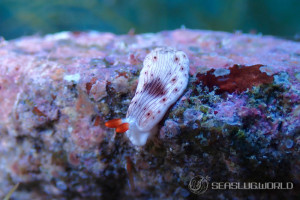
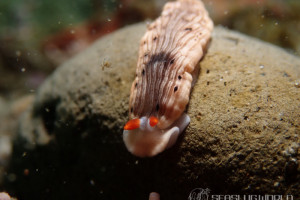
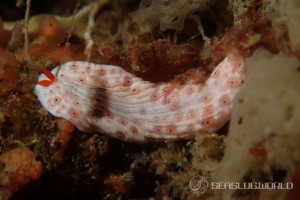
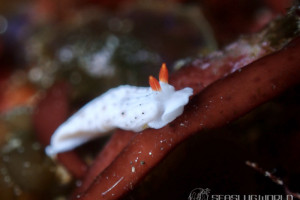
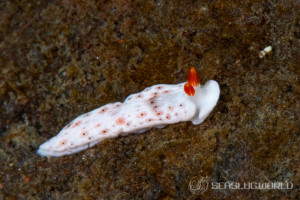
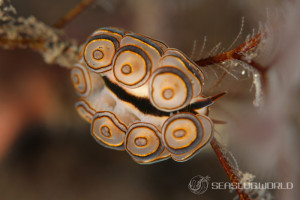
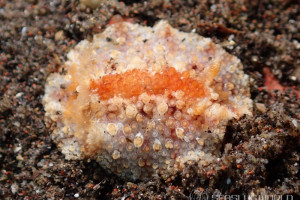
Dermatobranchus otome Baba, 1992
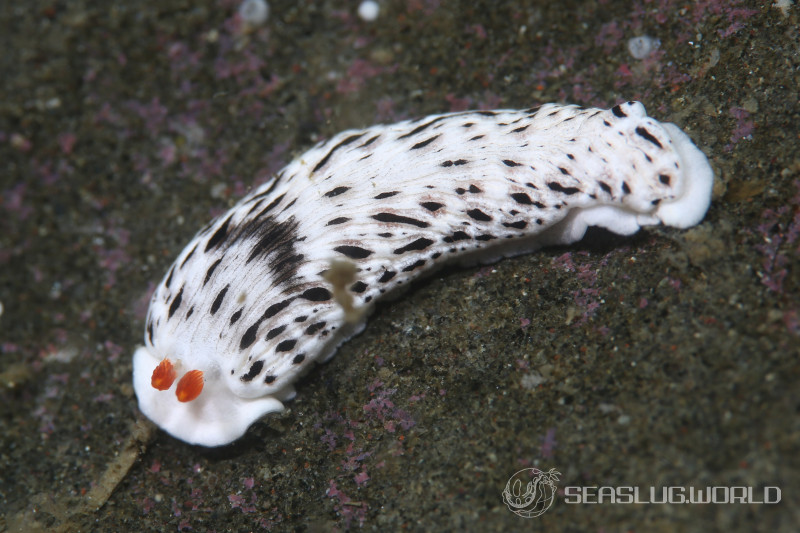
- Location
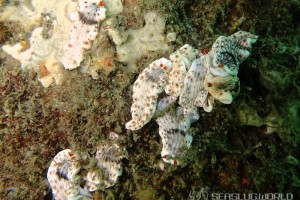
- Gontarou Rock, Hayama, Kanagawa, Japan
- Date
- 2014/06/10
- Length
- 10mm
- Depth
- 5.0m
- Water temperature
- 21.0℃
Description
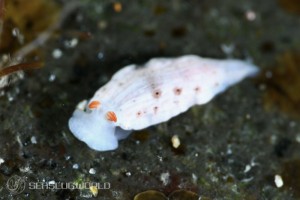
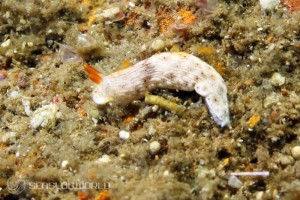
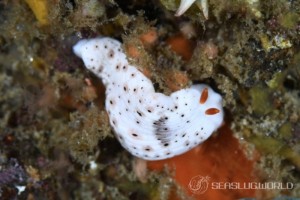
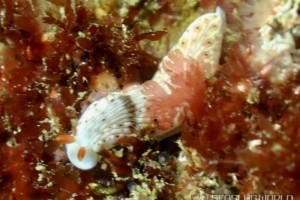
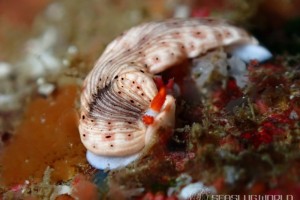
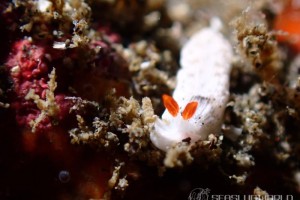
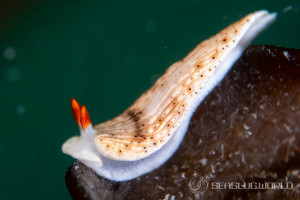
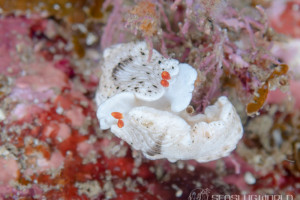
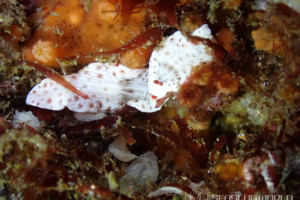
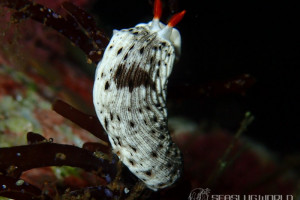
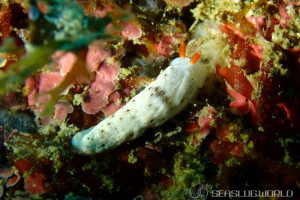
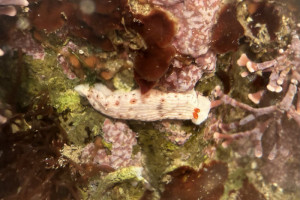
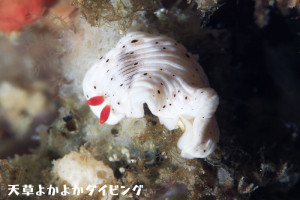
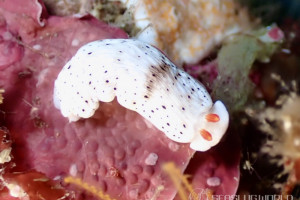
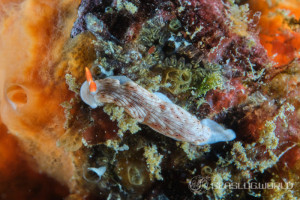
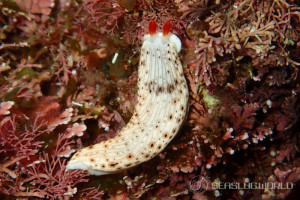
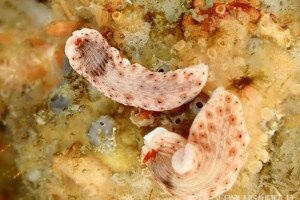
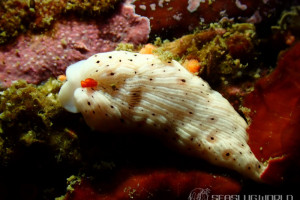
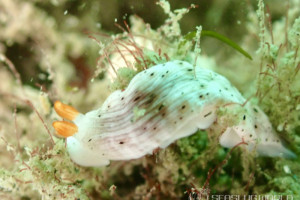
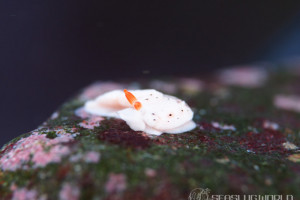
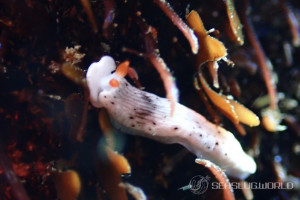
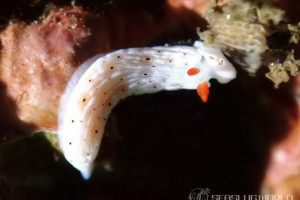
A small arminid reaching about 30 mm in length, with an elongate-oval, dorsoventrally flattened body. The dorsal ground colour is creamy white to pale flesh, traversed by numerous shallow longitudinal grooves whose interiors are darker than the surrounding surface. Scattered black spots, each haloed by a diffuse pale-brown ring, are distributed across the notum, and a curved dark band frequently crosses the anterior part of the mantle. The rhinophores are bright orange-red with white tips. The oral veil and foot are white and lack markings.Distribution
Type locality: Sagami Bay, Japan. Recorded from temperate Japanese coasts (including Sagami Bay and Suruga Bay) and from southern Korea, in shallow water from the intertidal down to about 5 m.Etymology
The specific epithet otome is a latinisation of the Japanese vernacular name "otome-umiushi" (オトメウミウシ, "maiden sea slug"). Japanese specimens had long been identified as Dermatobranchus striatus; in his 1992 critical review, Baba separated them as a distinct species and adopted the established Japanese name as the specific epithet.Remarks
Like other members of Dermatobranchus, the species is presumed to feed on octocorals. Externally it is closest to Dermatobranchus oculus, Dermatobranchus semistriatus and Dermatobranchus primus, which share the white ground colour, raised longitudinal ridges, and dark ocellated spots; Dermatobranchus otome is recognised by the combination of bright orange-red rhinophores and pale-brown haloed black spots on the dorsum.References
- オトメウミウシ, Baba K. (1949). Opisthobranchia of Sagami Bay collected by His Majesty the Emperor of Japan (相模湾産後鰓類図譜). Iwanami Shoten, Tokyo. 4+2+194+7 pp., pls. 1-50.
- Otome-umiushi, Baba, K. 1976. Two new species and five common or rare species of the genus Dermatobranchus from Japan (Nudibranchia: Arminoidea: Arminidae). Veliger 19(1):4-12.
- オトメウミウシ(新種), Baba, K. (1992) Critical review of Dermatobranchus striatus van Hasselt 1824 (Nudibranchia: Arminidae) with the description of a new species. Venus, The Japanese Journal of Malacology, 50(4): 239-248, 1pl.
- 高岡生物研究会. (2002). 日本海のウミウシ. 第2版.
A Kindle field guide by the site author
Kimoto N. (2026). Sea Slugs of Japan & the Indo-Pacific, 2nd Edition.
Kindle Edition
View on Amazon PR (Amazon Associates)Seasonality
Shooting Locations
Loading shooting locations...
Photos of Dermatobranchus otome
Tag:


























Same Genus Nudibranchs
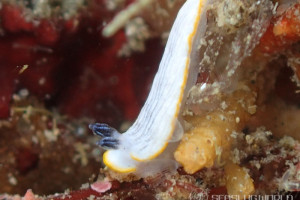
Dermatobranchus sp. 6
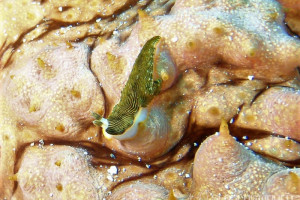
Dermatobranchus sp. 5

Dermatobranchus dendronephthyphagus
Dermatobranchus albineus
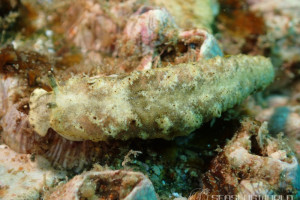
Dermatobranchus phyllodes
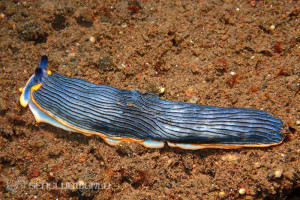
Dermatobranchus sp. 4
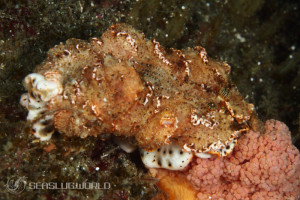
Dermatobranchus sp. 3
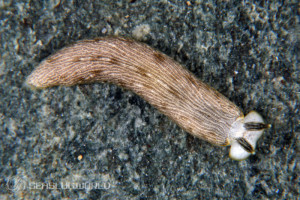
Dermatobranchus diagonalis
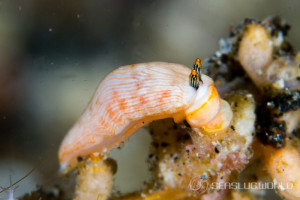
Dermatobranchus spp.
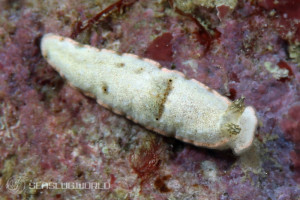
Dermatobranchus rodmani
Dermatobranchus tuberculatus
Dermatobranchus striatus
Similar Colors Nudibranchs

Academic Database
Sea slug observation data is available in international marine biodiversity databases.