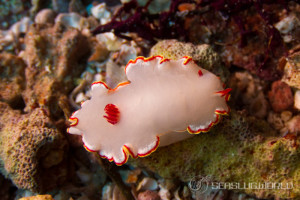
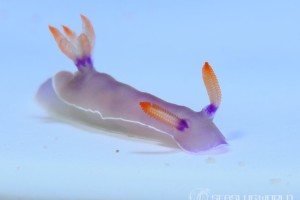
Diversidoris aurantionodulosa Rudman, 1987
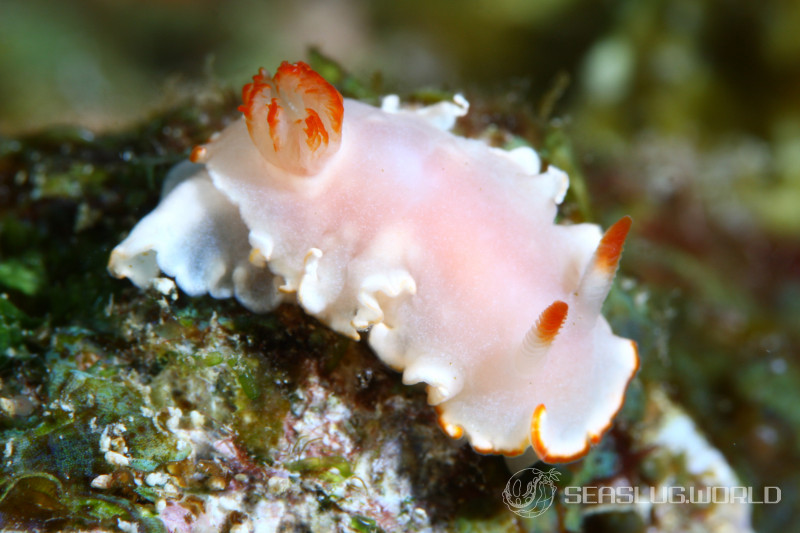
- Location
- Horse Shoes, Okinawa Island (Onna and Yomitan area), Okinawa, Japan
- Date
- 2011/01/14
- Length
- 12mm
- Depth
- 6.0m
- Water temperature
- 20.0℃
Description
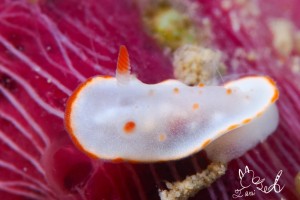
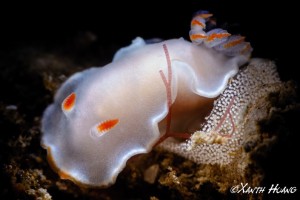
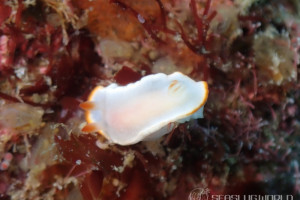
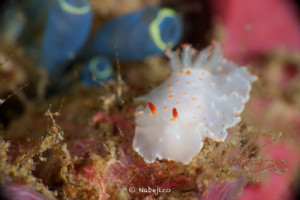
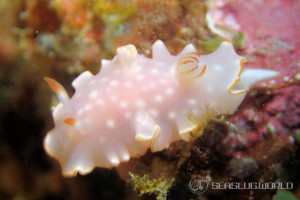
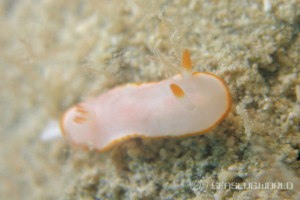
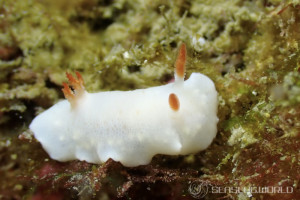
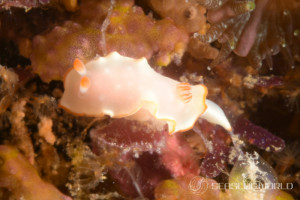
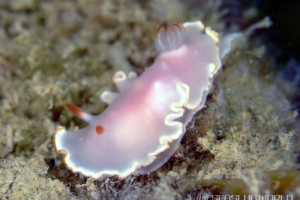
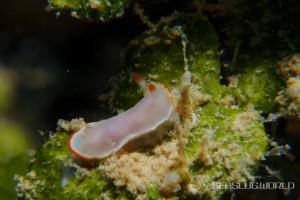
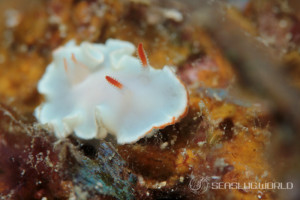
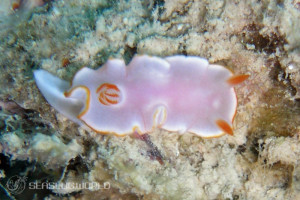
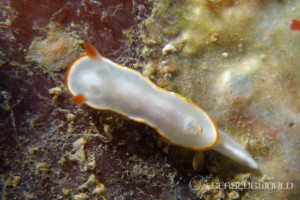
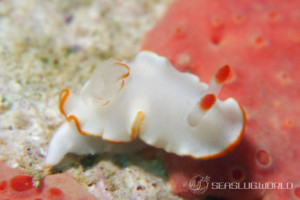
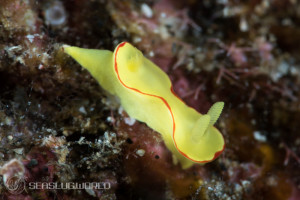
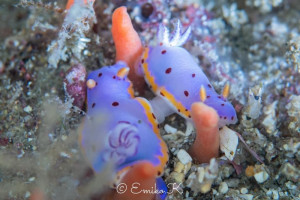
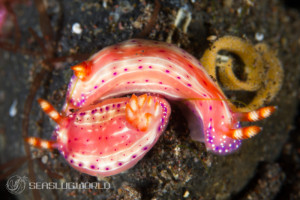
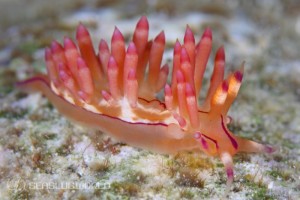
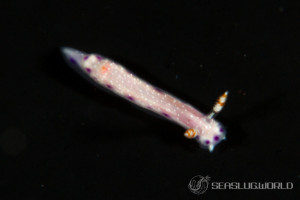
Mantle elongately ovate, with a wide skirt thrown into prominent vertical folds along each side. Ground colour translucent white, with orange spots of varying size scattered all over the mantle (except near the edge); each orange spot sits on a low rounded white tubercle and is surrounded by an opaque white ring. A thin orange marginal band runs along the mantle edge. Rhinophore stalks and the lower half of the clubs translucent white, the upper half orange. Simple gills translucent white, with an orange line running up the outer edge of the central axis and orange edging on the leaflets at the tip. Posterior foot tip orange. Eastern Australian specimens have a faint pinkish tinge in the central mantle, probably diet-related. Holotype 25 mm alive (Tanzania); Australian specimens 9-18 mm; Hong Kong juveniles 3.5-6 mm.Distribution
Type locality is Ocean Rd Beach, north side of the entrance to Dar es Salaam Harbour, Tanzania (intertidal, on a sponge, August 1973). A widely distributed species recorded from East Africa (Tanzania), eastern Australia (NSW: Julian Rocks; southern Queensland: Moreton Island, Pt Lookout), Hong Kong, Japan, and South Africa.Etymology
The specific epithet aurantionodulosa is a Latin compound of aurantium (orange) and nodulosus (with small tubercles), referring to the orange spots raised on low rounded tubercles (verbatim from the original description). The genus Diversidoris, established in the same paper with this species as its type, takes its name from the Latin diversus (different), reflecting the genus's distinctness from other Chromodorididae.Remarks
Feeds on a pink sponge. Among orange-spotted chromodorids, the combination of tubercle-mounted orange spots and a folded orange-edged mantle is unique to this species. The closest in colour is Noumea nivalis Baba, 1937, which differs in having orange only on the gill tips (not running up the outer edge of each gill axis) and a more elongate body shape.References
- Diversidoris aurantionodulosa, Johnson R.F. & Gosliner T.M. (2012). Traditional taxonomic groupings mask evolutionary history: a molecular phylogeny and new classification of the chromodorid nudibranchs. PLoS ONE 7(4): e33479.
- Diversidoris aurantionodulosa, Terrence Gosliner, Ángel Valdés and David Behrens. (2015). Nudibranch and Sea Slug Identification Indo-Pacific. New World Pubns Inc.
- アカツブイロウミウシ(新称), 中野理枝. (2018). 日本のウミウシ. 文一総合出版.
Featured in this book
Terrence Gosliner, Ángel Valdés and David Behrens. (2018). Nudibranch and Sea Slug Identification Indo-Pacific 2nd Edition. New World Pubns Inc.
New World Publications
This species, Diversidoris aurantionodulosa, is included in the book.
View on Amazon PR (Amazon Associates)Seasonality
Shooting Locations
Loading shooting locations...
Photos of Diversidoris aurantionodulosa
Tag:










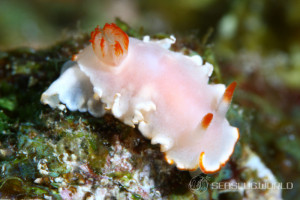
Same Genus Nudibranchs
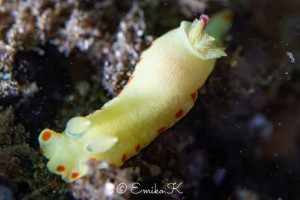
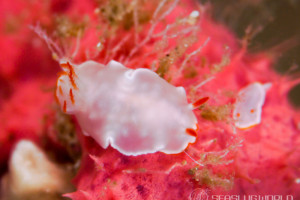
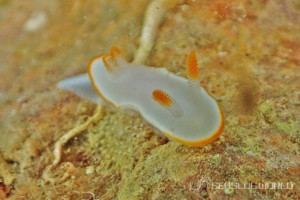
Similar Colors Nudibranchs

Academic Database
Sea slug observation data is available in international marine biodiversity databases.