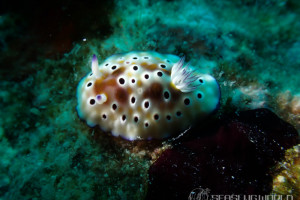
Goniobranchus leopardus (Rudman, 1987)
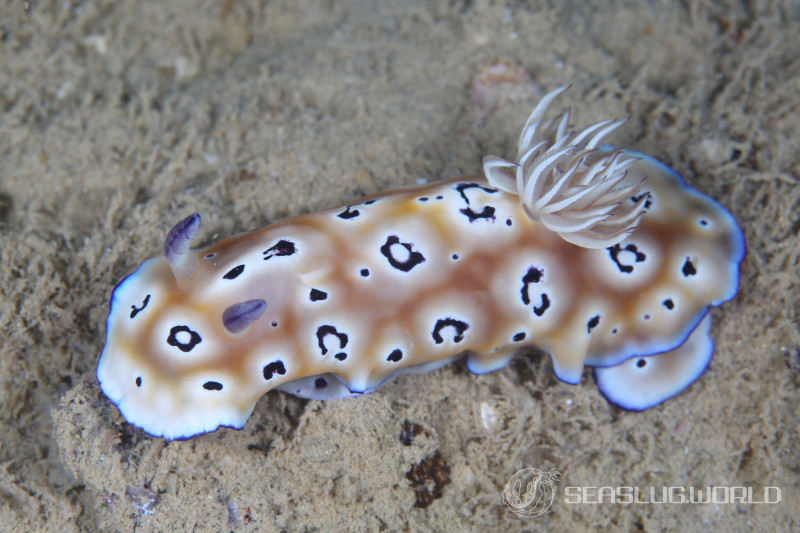
- Location
- Red Beach, Okinawa Island (East coast), Okinawa, Japan
- Date
- 2015/08/28
- Length
- 50mm
- Depth
- 10.0m
- Water temperature
- 28.0℃
Description
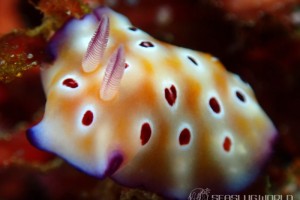
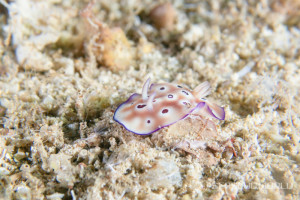
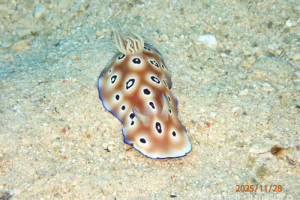
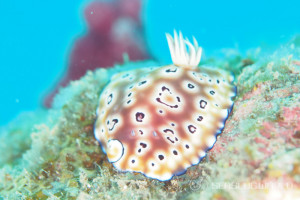
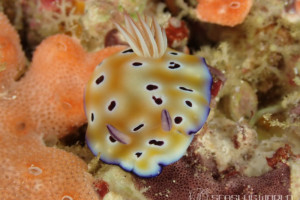
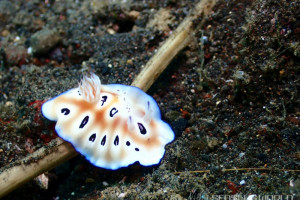
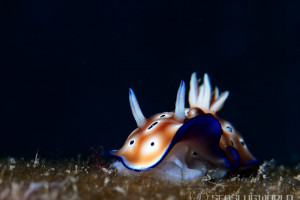
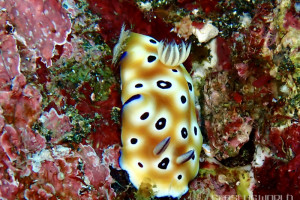
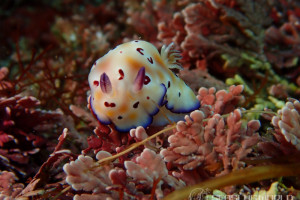
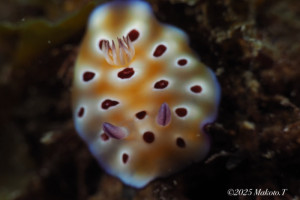
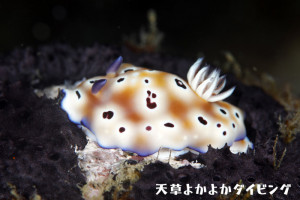
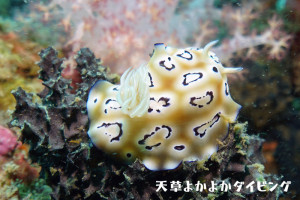
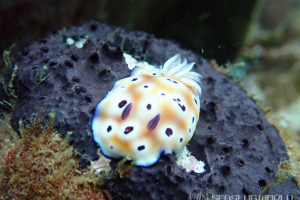
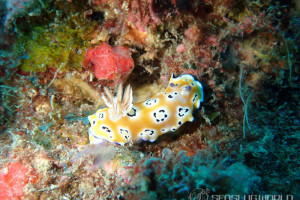
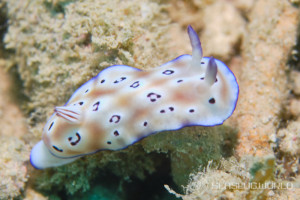
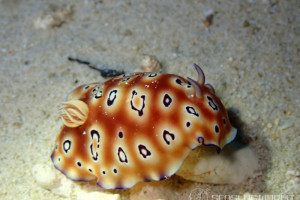
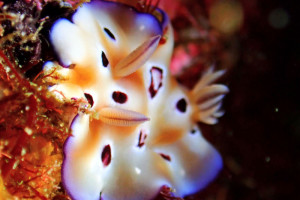
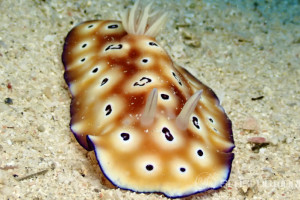
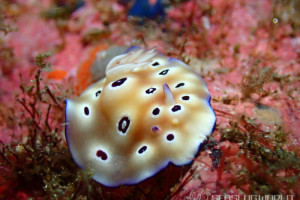
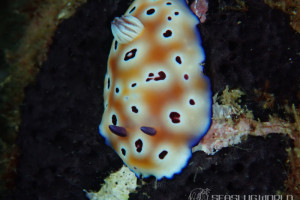
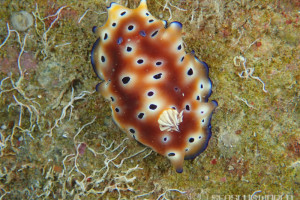
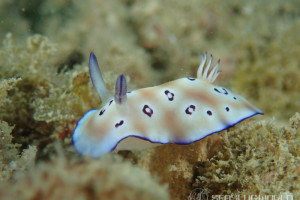
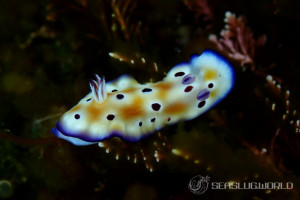
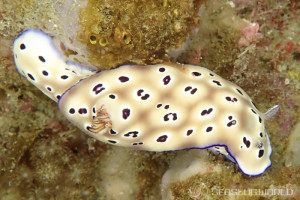
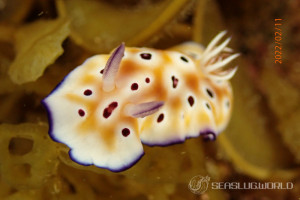
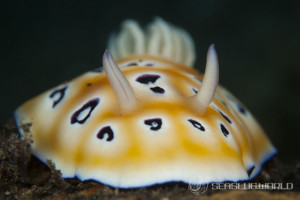
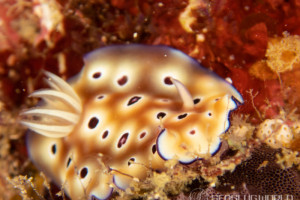
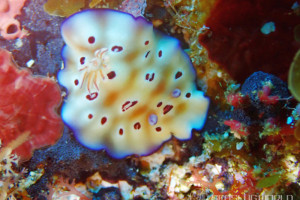
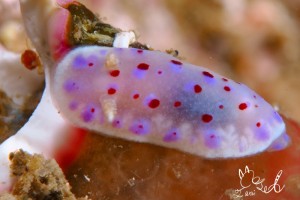
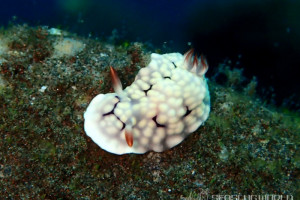
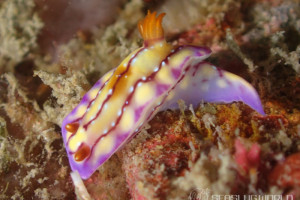
Mantle white to cream with a narrow purple marginal border (sometimes diffuse on the inside). The dorsum bears a diffuse reticulate pattern of reddish to yellowish brown, and within each cream space of the reticulation sits a series of dark purple to brown marks arranged in a hollow square — the "leopard spot" that gives the species its name. Rhinophore stalks translucent; clubs white, with purplish shading along the anterior midline and the anterior edge of each lamella. Gills triangular in section, mostly white with a translucent brown or purplish inner edge. The foot has a distinct purple border at the front and rear. The species can flap the anterior part of its mantle (similar to Goniobranchus annulatus) but does not rhythmically wave the entire mantle as Goniobranchus geminus and Goniobranchus kuniei do. Reaches 59 mm in body length.Distribution
Type locality is Myora, North Stradbroke Island, Moreton Bay, southern Queensland, Australia (4-5 m, October 1979). Originally recorded from Queensland (Moreton Bay, Heron Island) and the Philippines (Mactan Island, Cebu). Subsequent records extend to Indonesia, Papua New Guinea, Japan, and the Society Islands.Etymology
The specific epithet leopardus refers to the leopard-like spots — the hollow-square clusters of dark marks that form the most striking pattern on the mantle (verbatim from the original description).Remarks
Apparently related to Risbecia tryoni, Goniobranchus kuniei, and Goniobranchus geminus, but immediately recognisable by the leopard-spot pattern. Internally separated from Goniobranchus kuniei by the absence of denticles on the mid- and outer-lateral teeth (up to 14 are present in Goniobranchus kuniei).References
- ヒョウモンウミウシ(新称), Baba, K. 1989-06c. An identification of Chromodoris leopardus Rudman, 1987 from Japan (Nudibranchia: Chromodorididae). Venus 48(2):96-98, 2 figs.
- ヒョウモンウミウシ, 益田一. (1999). 海洋生物ガイドブック. 第2刷. 東海大学出版会.
- ヒョウモンイロウミウシ, 奥谷喬司. (2000). 日本近海産貝類図鑑. 東海大学出版会.
- クロモドリス・レオパルドゥス, 殿塚孝昌. (2003). ウミウシガイドブック〈3〉. TBSブリタニカ.
- ヒョウモンウミウシ, 小野篤司. (2004). 沖縄のウミウシ. ラトルズ.
- Goniobranchus leopardus, Johnson R.F. & Gosliner T.M. (2012). Traditional taxonomic groupings mask evolutionary history: a molecular phylogeny and new classification of the chromodorid nudibranchs. PLoS ONE 7(4): e33479.
A Kindle field guide by the site author
Kimoto N. (2026). Sea Slugs of Japan & the Indo-Pacific, 2nd Edition.
Kindle Edition
View on Amazon PR (Amazon Associates)Seasonality
Shooting Locations
Loading shooting locations...
Photos of Goniobranchus leopardus
Tag:






















Same Genus Nudibranchs

Similar Colors Nudibranchs


Academic Database
Sea slug observation data is available in international marine biodiversity databases.