Hypselodoris purpureomaculosa Hamatani, 1995
- Location
- Cape Maeda, Okinawa Island (Onna and Yomitan area), Okinawa, Japan
- Date
- 2014/08/05
- Length
- 40mm
- Depth
- 15.0m
- Water temperature
- 28.0℃
Morphology
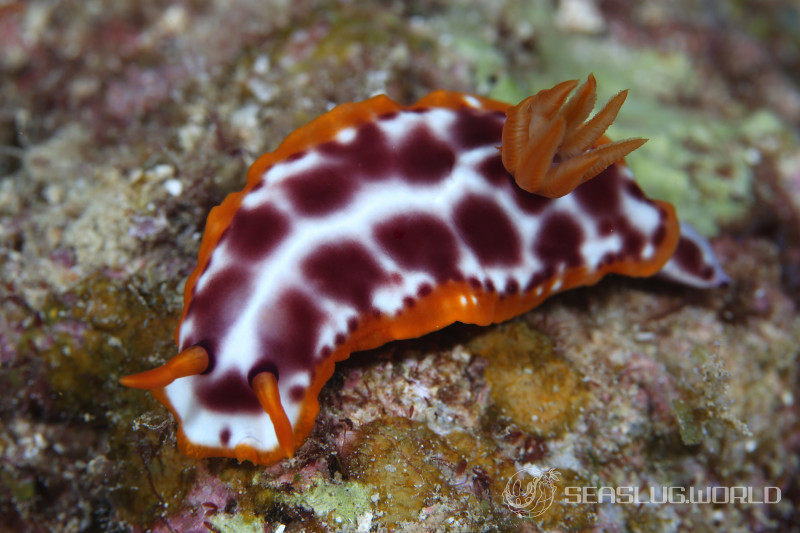
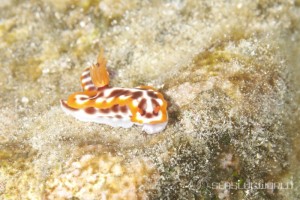
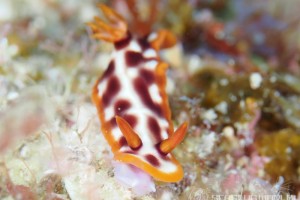
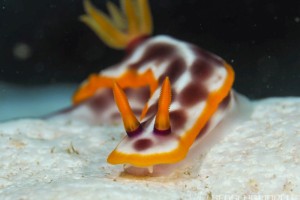
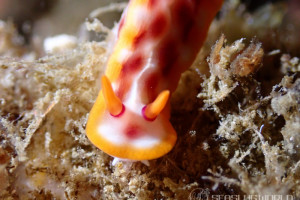
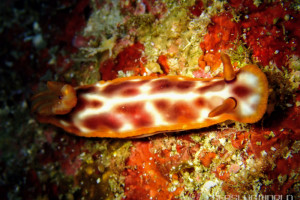
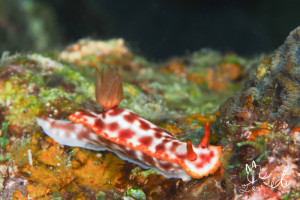
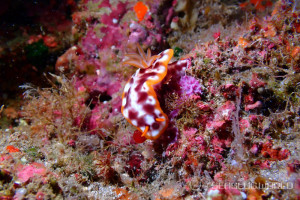
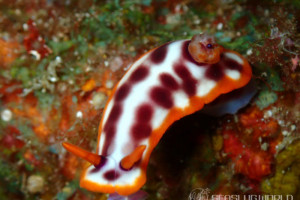
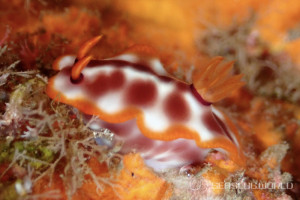
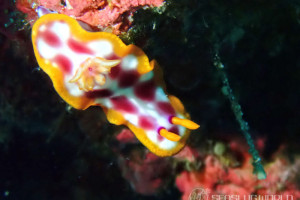
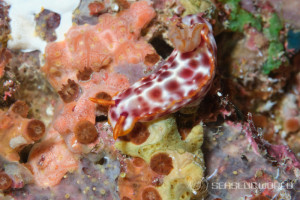
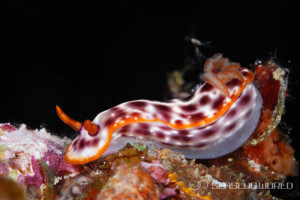
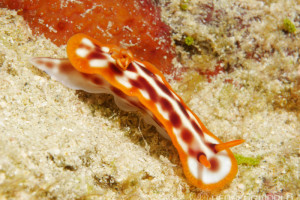
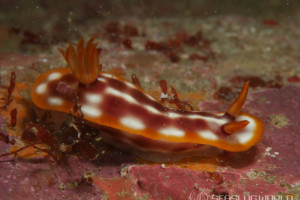
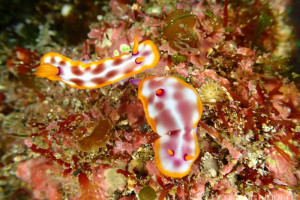
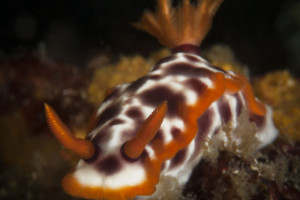
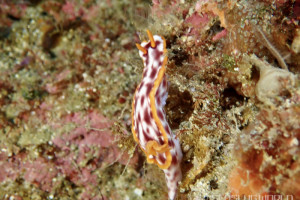
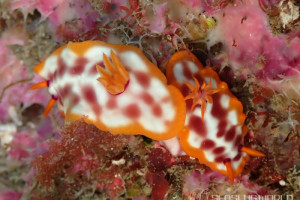
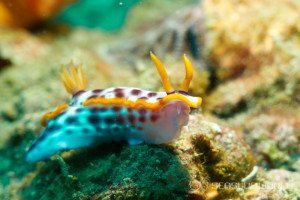
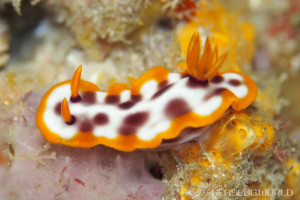
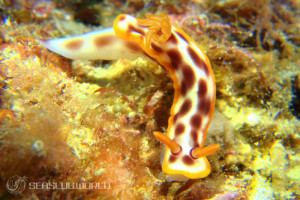
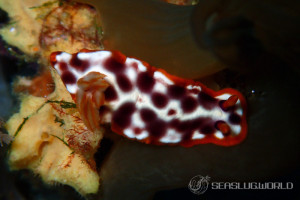
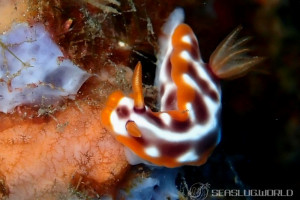
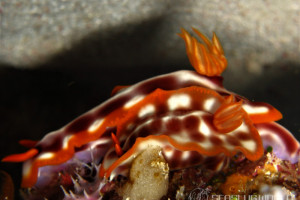
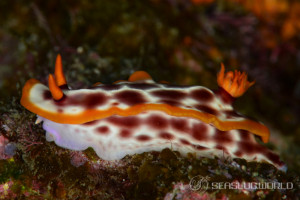
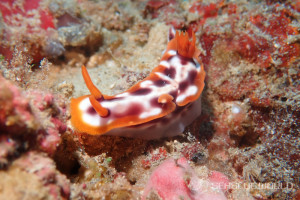
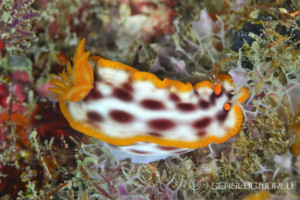
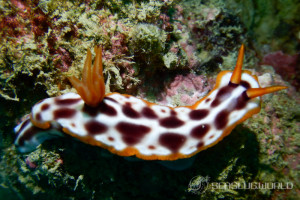
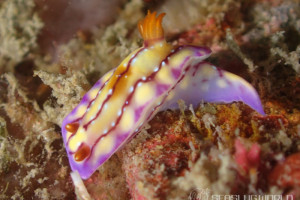
Body about 40 mm long, elongate. Ground colour faint bluish white. Mantle bordered with a broad yellowish orange band. An opaque white middorsal line, alternately narrowed and swollen along its length, runs from between the rhinophores and terminates posteriorly in a ring encircling the branchial pocket. A row of rather large, round to ovoid dark purple patches surrounds this white midline: one patch in front of the rhinophores and approximately six on either side between the rhinophores and the branchiae. Similar patches occur on the body sides. The rims of the rhinophore sheaths and the branchial pocket are margined with dark purple, as is the foot edge. Rhinophores and branchial plumes are yellowish orange; the seven branchial plumes are simply pinnate, and the oral tentacles are digitate.Distribution
Type locality: Andonohana, Kushimoto, Wakayama Prefecture, Japan (about 20 m deep). Described from a single holotype (Hamatani, 1995).Etymology
The specific epithet purpureomaculosa refers to the dark purple patches on the back and sides of the body.Notes
Within Hypselodoris, Hamatani 1995 distinguished this species from previously described congeners by the row of dark purple patches that runs around the opaque white middorsal line.References
- Hypselodoris purpureomaculosa n. sp.サピウライロウミウシ(新種・新称), 濱谷巌. (1995). 中部日本産イロウミウシ科(裸鰓類)の1新記録種・1新種. 貝類学雑誌. 54(2): 101-107. https://doi.org/10.18941/venusjjm.54.2_101
- Hypselodoris purpureomaculosa Hamatani, 1995, Gosliner T.M. & Johnson R.F. (1999). Phylogeny of Hypselodoris (Nudibranchia: Chromodorididae) with a review of the monophyletic clade of Indo-Pacific species, including descriptions of twelve new species. Zoological Journal of the Linnean Society. 125: 1-114. https://doi.org/10.1111/j.1096-3642.1999.tb00585.x
- Hypselodoris purpureomaculosa, Johnson R.F. & Gosliner T.M. (2012). Traditional taxonomic groupings mask evolutionary history: a molecular phylogeny and new classification of the chromodorid nudibranchs. PLoS ONE 7(4): e33479.
A Kindle field guide by the site author
Kimoto N. (2026). Sea Slugs of Japan & the Indo-Pacific, 2nd Edition.
Kindle Edition
View on Amazon PR (Amazon Associates)Seasonality
Shooting Locations
Loading shooting locations...
Photos of Hypselodoris purpureomaculosa
Tag:

























Same Genus Nudibranchs

Similar Colors Nudibranchs

Academic Database
Sea slug observation data is available in international marine biodiversity databases.