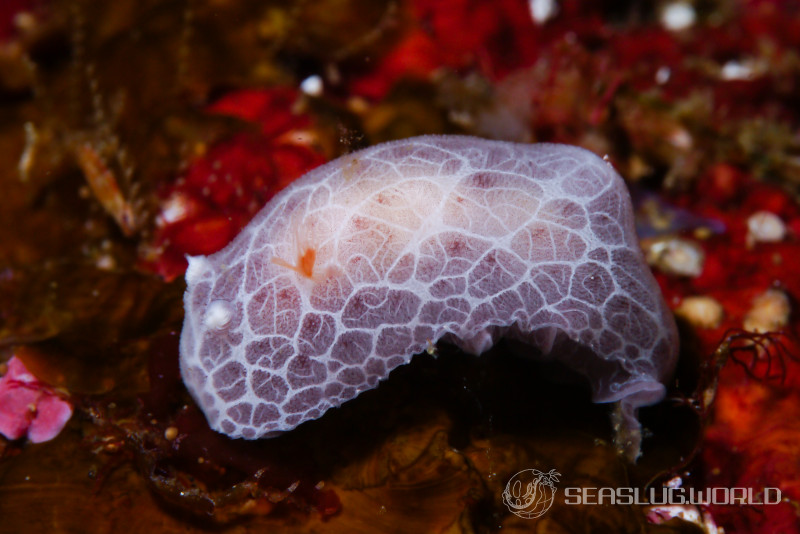
Jorunna daoulasi Innabi, Stout & Á. Valdés, 2023
- Location
- Hachijo Island, Tokyo, Japan
- Date
- 2015/10/06
- Length
- 10mm
- Depth
- 10.0m
- Water temperature
- 22.1℃
Description
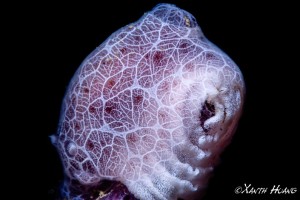
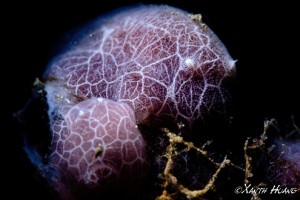
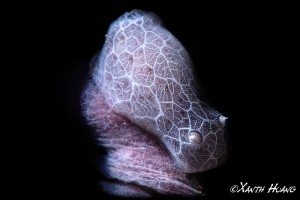
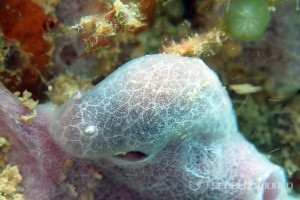
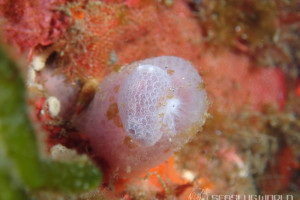
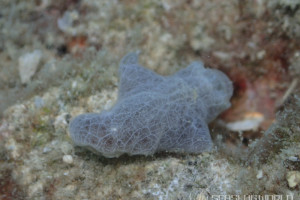
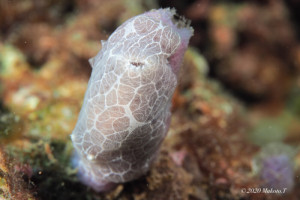
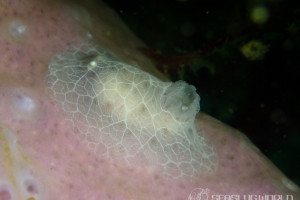
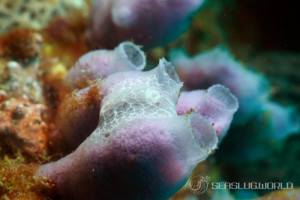
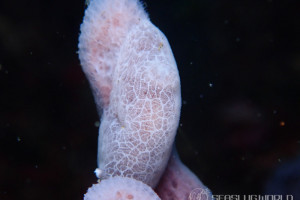
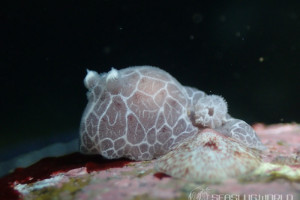
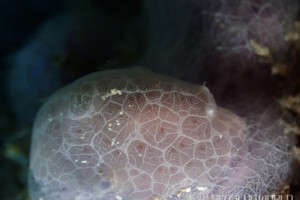
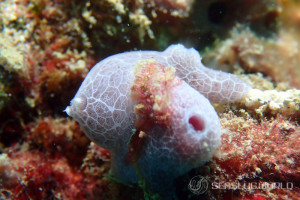
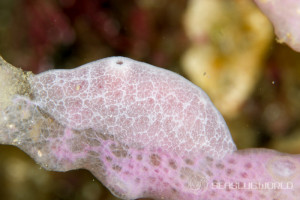
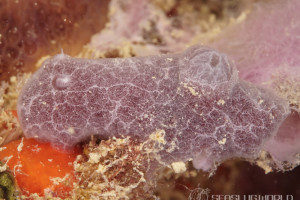
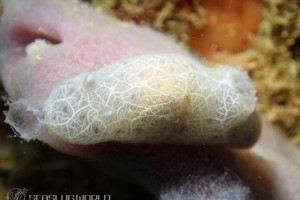
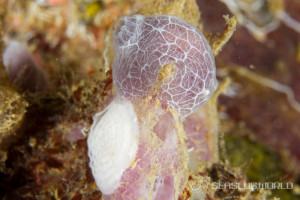
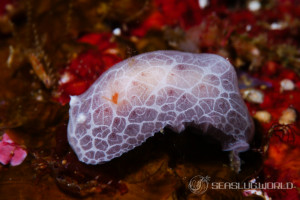
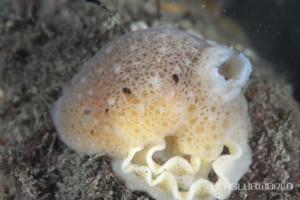
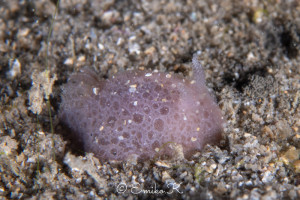
Body oval, narrow, elongate, completely covered with numerous caryophyllidia. Branchial and rhinophoral sheaths low, simple, circular; gill composed of nine short, tripinnate branchial leaves, imbricated, arranged upright, with the apices close to each other in the living animal. Rhinophores short, lamellated, with eight or nine lamellae. Body color grey, with a complex network of white lines of different thicknesses; in some specimens some of the lines are very thick and contain darker areas, whereas in others thicker lines form the main network and thinner lines form a secondary network and in others all lines are approximately the same thickness. Rhinophores and branchial leaves are the same color as the dorsum but the rhinophoral lamellae and in some cases the gill lamellae are white.Reproductive system with a long, narrow, curved ampulla that connects with the female gland complex and an elongate prostate. The prostate is as wide as the ampulla but narrows substantially before expanding into the short, curved, narrow deferent duct. The deferent duct is much narrower than the prostate. The penis is unarmed. The vagina is very elongate and wide distally, several times wider than the deferent duct, narrowing considerably proximally and connecting directly to the irregular bursa copulatrix. The oval seminal receptacle also connects to the bursa copulatrix next to the vaginal connection, and the short uterine duct that enters the female gland complex. The bursa copulatrix is ~ 3× as large as the seminal receptable. A large accessory gland connects to a narrow and convoluted duct that opens into the genital atrium, where a curved, sharp stylet is located.Biology
Range includes New Caledonia and possibly Papua New Guinea and Japan (see Remarks section below); uncommon, found at ~ 6 m depth on an unidentified grey sponge on which it is highly cryptic. All the specimens were found directly on the sponges while SCUBA diving.References
- 高岡生物研究会. (2002). 日本海のウミウシ. 第2版.
- ミナミヒョウモンウミウシ(新称), 小野篤司. (2004). 沖縄のウミウシ. ラトルズ.
- ムラサキアミメウミウシ, 中野理枝. (2018). 日本のウミウシ. 文一総合出版.
- Jorunna sp. 10, Terrence Gosliner, Ángel Valdés and David Behrens. (2018). Nudibranch and Sea Slug Identification Indo-Pacific 2nd Edition. New World Pubns Inc.
- ゴマフビロードウミウシ属の1種 4, 小野篤司 & 加藤昌一. (2020). 新版 ウミウシ. 誠文堂新光社.
- Jorunna daoulasi sp. nov., Innabi J., Stout C.C. & Valdés Á. (2023). Seven new “cryptic” species of Discodorididae (Mollusca, Gastropoda, Nudibranchia) from New Caledonia. ZooKeys. 1152: 45-95. https://doi.org/10.3897/zookeys.1152.98258
Featured in this book
Terrence Gosliner, Ángel Valdés and David Behrens. (2018). Nudibranch and Sea Slug Identification Indo-Pacific 2nd Edition. New World Pubns Inc.
New World Publications
This species, Jorunna daoulasi, is included in the book.
View on Amazon PR (Amazon Associates)Seasonality
Shooting Locations
Loading shooting locations...
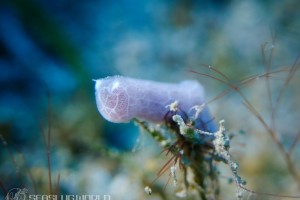
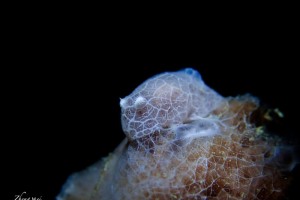
Photos of Jorunna daoulasi
Tag:












Same Genus Nudibranchs

Similar Colors Nudibranchs

Academic Database
Sea slug observation data is available in international marine biodiversity databases.