Kaloplocamus acutus Baba, 1949
Description
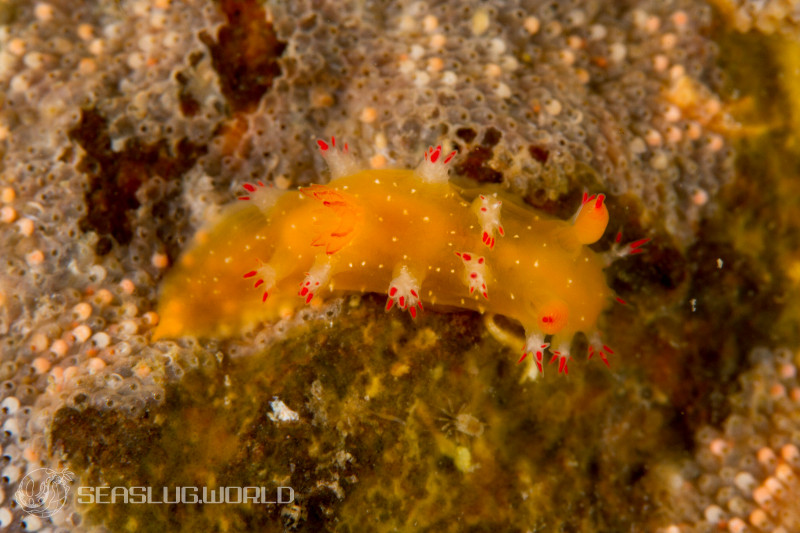
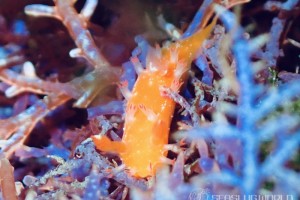
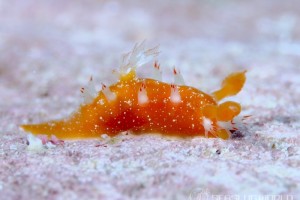
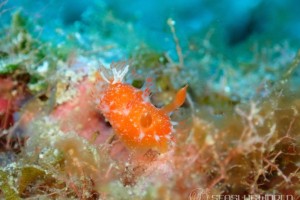
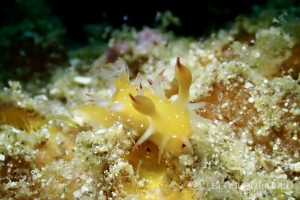
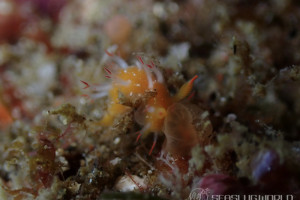
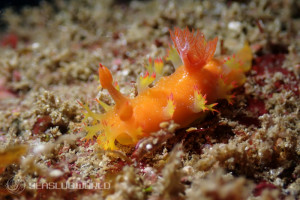
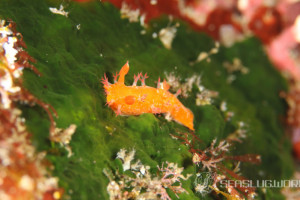
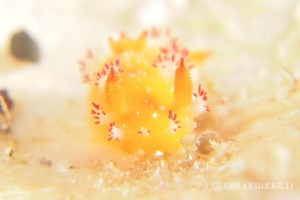
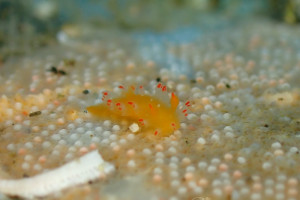
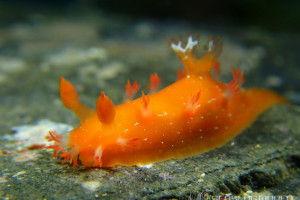
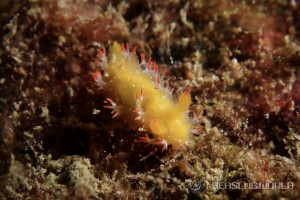
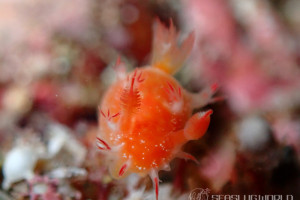
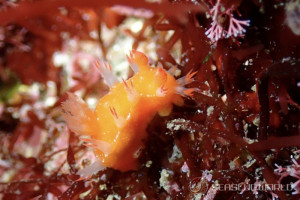
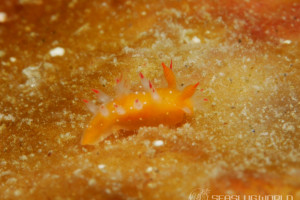
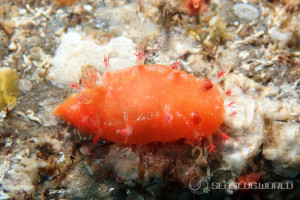
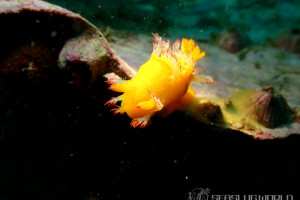
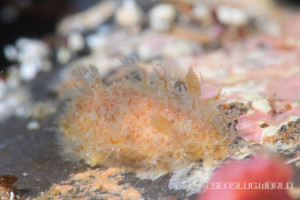
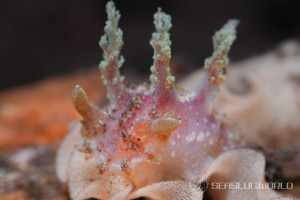
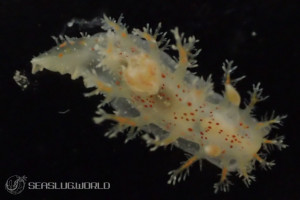
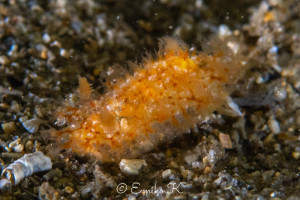
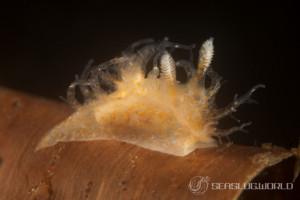
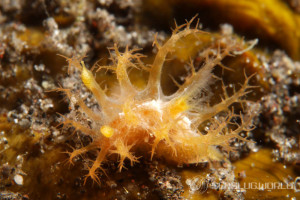
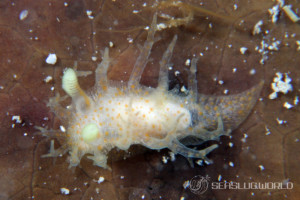
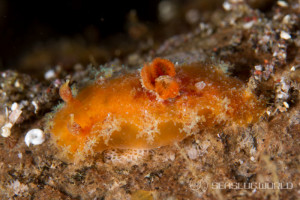
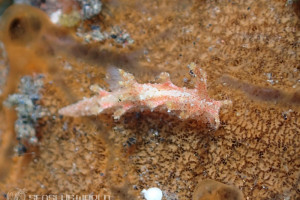
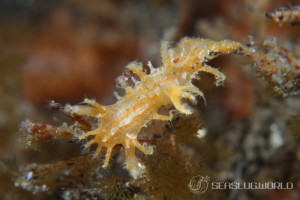
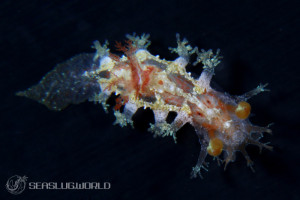
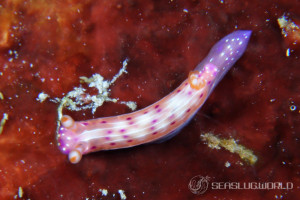
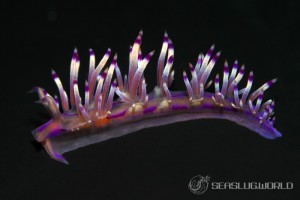
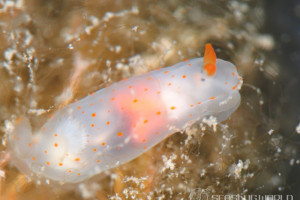
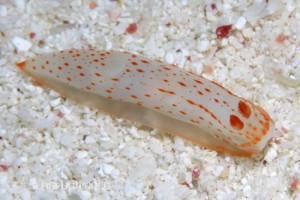
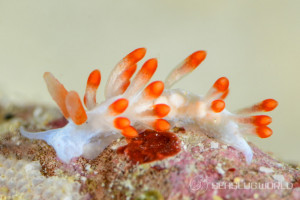
A small polycerid reaching up to 12 mm in preserved length. The body is elongate, with the anterior part somewhat wider than the rest. The body has a background coloration of orange-red, with opaque white dots scattered over the entire dorsum. The head bears six velar appendages that are semi-translucent, with opaque white coloration on the basal third and the remainder translucent. These appendages have acute, simple, and elongate ramifications, each of which is bright carmine red.The rhinophores are orange-red as the body, with a white line on the anterior part of the clavus. There are four pairs of lateral appendages along each side of the body, of similar color and shape to the velar appendages. The first three pairs are situated between the rhinophores and the branchial leaves, and the fourth pair is located just behind the branchial leaves. There are five bipinnate branchial leaves with opaque white coloration when viewed from an anterior angle, but the same coloration as the body when viewed from a posterior angle. The branchial leaves bear sharp and simple elongated ramifications that are carmine red in color. The posterior part of the foot is elongate, acutely pointed and red-orange in color, speckled with white dots.
The radular formula is 16 × (11·3·0·3·11). The three innermost teeth are hook-shaped with a secondary cusp developed in a lower position. The eleven outer lateral teeth are flat and rectangular in shape, decreasing in size toward the outer margins.
Distribution
Originally described from Sagami Bay, Japan. The species has been reported from the Indo-West Pacific tropics and temperate waters, including Japan, Taiwan, Hong Kong, the Philippines, Papua New Guinea and the Hawaiian Islands.Etymology
The specific epithet acutus is Latin for "sharp," referring to the sharp, simple and elongate ramifications on the velar and lateral appendages.Remarks
Originally described as Kaloplocamus acutus Baba, 1955 in the Opisthobranchia of Sagami Bay supplement. Vallès & a 2006 paper re-examined external differences from K. ramosus and K. pacificus (sharper and more concentrated ramifications, white coloration on branchial leaves, white line on anterior clavus) and confirmed it as a valid species.This species superficially resembles K. ramosus, but is distinguished by: (1) lateral appendages that are not as ramified at the apex but are sharper; (2) the white line on the anterior clavus of the rhinophores; (3) carmine red coloration on the branchial leaves.
References
- ヒメエダウミウシ(新稱), 生物學御研究所編. (1955). 相模湾産後鰓類図譜〈補遺〉. 岩波書店.
- 高岡生物研究会. (2002). 日本海のウミウシ. 第2版.
- ヒメエダウミウシ, 小野篤司. (2004). 沖縄のウミウシ. ラトルズ.
- ヒメエダウミウシ, 中野理枝. (2004). 本州のウミウシ. ラトルズ.
- Kaloplocamus acutus Baba, 1955, Vallès Y. & Gosliner T.M. 2006. Shedding light onto the genera (Mollusca: Nudibranchia) Kaloplocamus and Plocamopherus with description of new species belonging to these unique bioluminescent dorids . The Veliger 48(3): 178-205
- ヒメエダウミウシ, 小野篤司 & 加藤昌一. (2009). ウミウシ. 誠文堂新光社.
- Kaloplocamus acutus, Terrence Gosliner, Ángel Valdés and David Behrens. (2015). Nudibranch and Sea Slug Identification Indo-Pacific. New World Pubns Inc.
Featured in this book
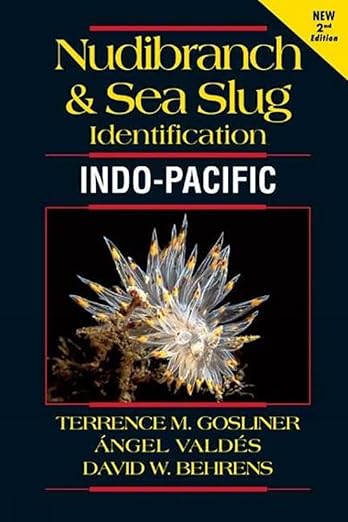
Terrence Gosliner, Ángel Valdés and David Behrens. (2018). Nudibranch and Sea Slug Identification Indo-Pacific 2nd Edition. New World Pubns Inc.
New World Publications
This species, Kaloplocamus acutus, is included in the book.
View on Amazon PR (Amazon Associates)Seasonality
Shooting Locations
Loading shooting locations...
Photos of Kaloplocamus acutus


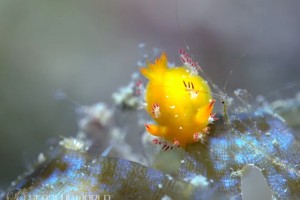

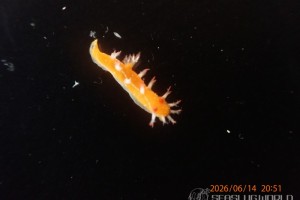

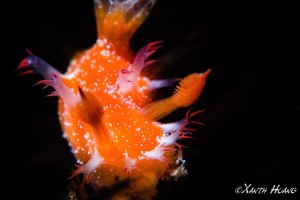

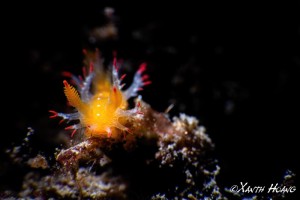



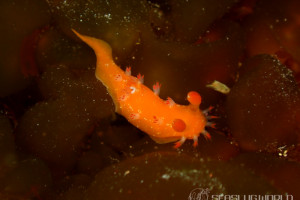

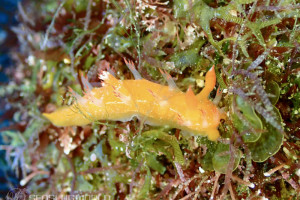

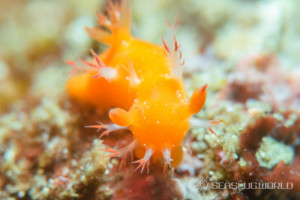
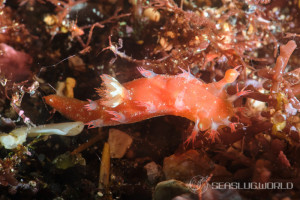





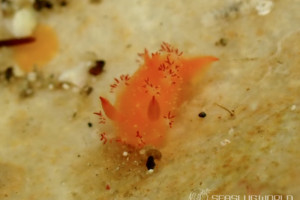
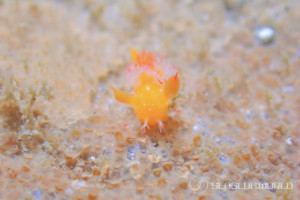

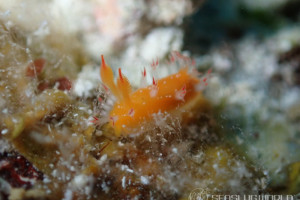

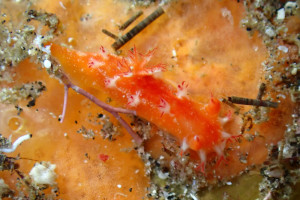









Same Genus Nudibranchs

Similar Colors Nudibranchs
Academic Database
Sea slug observation data is available in international marine biodiversity databases.