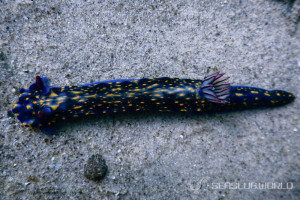
Kaloplocamus peludo Vallès & Gosliner, 2006
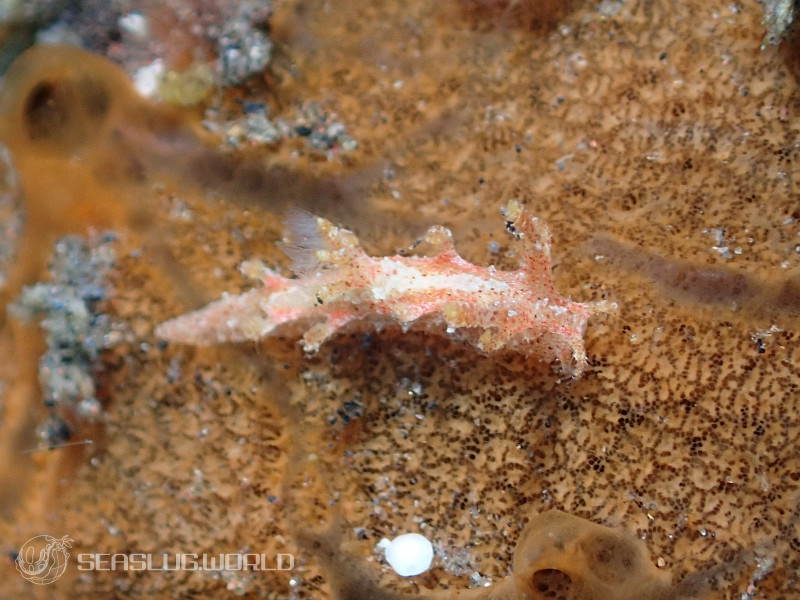
- Location
- USAT Liberty Shipwreck, Tulamben, Pulau Bali, Indonesia
- Date
- 2016/11/16
- Length
- 7mm
- Depth
- 18.0m
- Water temperature
- 28.0℃
Description
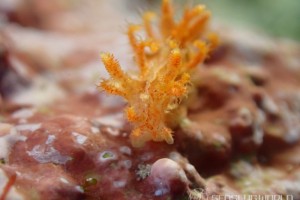
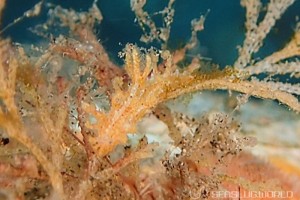
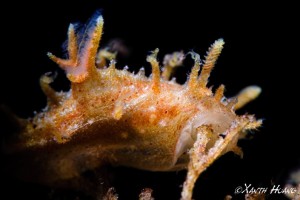
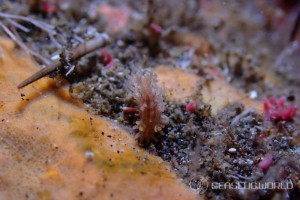
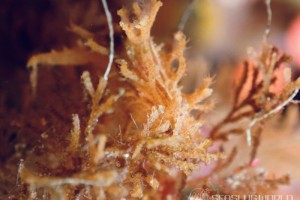
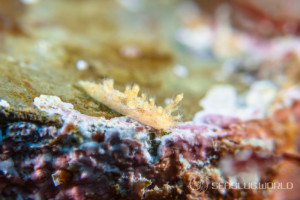
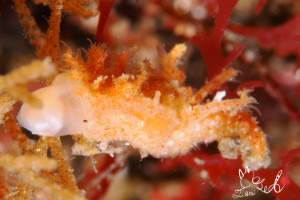
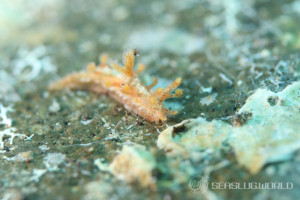
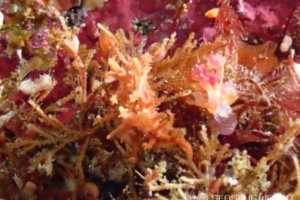
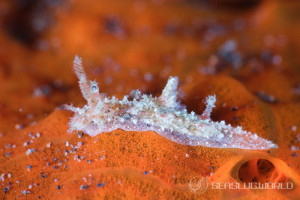
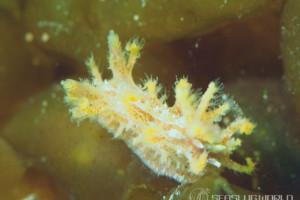
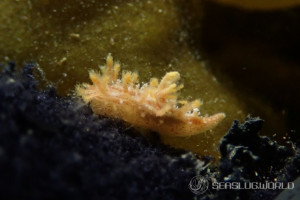
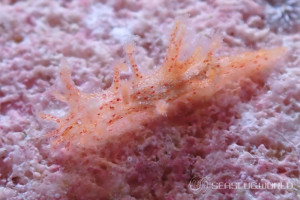
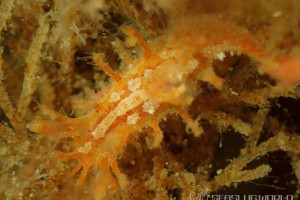
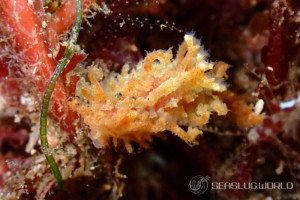
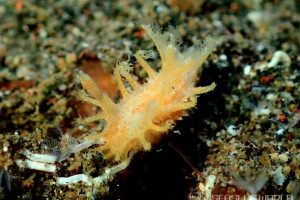
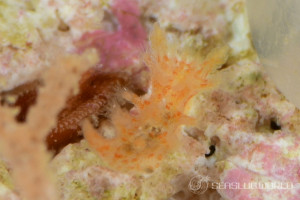
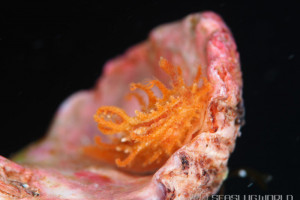
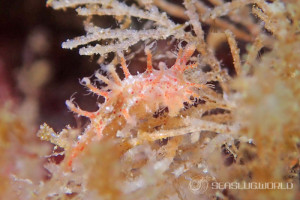
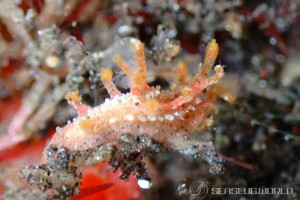
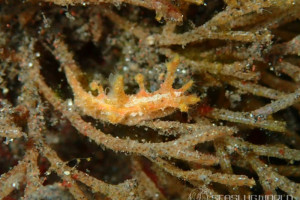
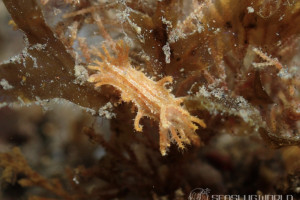
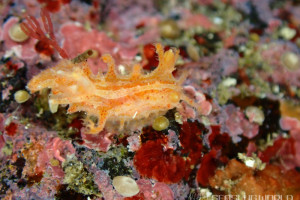
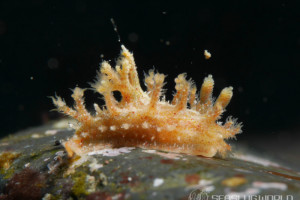
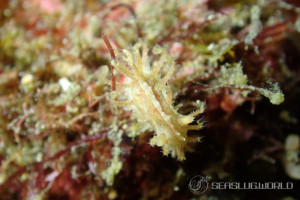
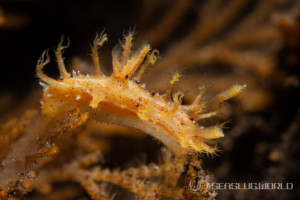
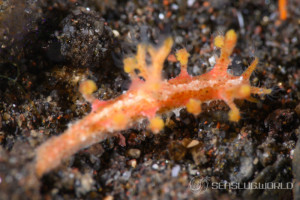
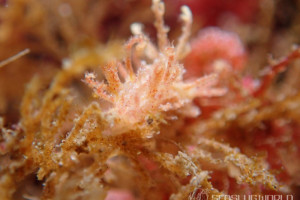
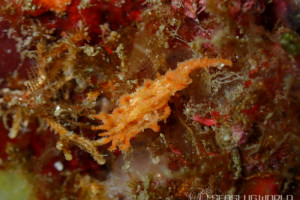
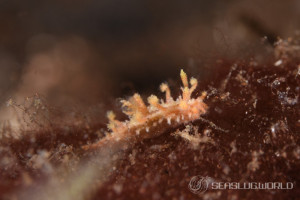
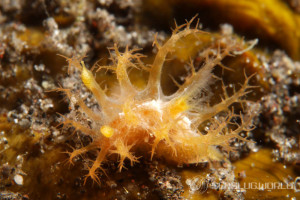
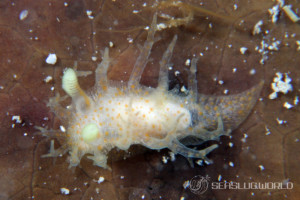
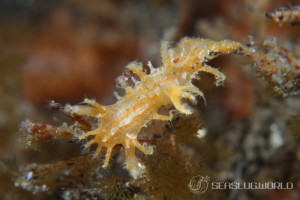
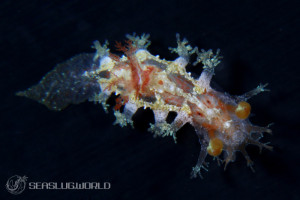
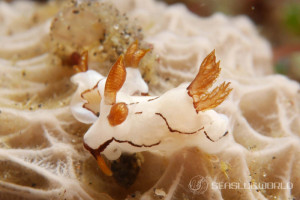
A small polycerid reaching up to 11 mm in preserved length. The living animal has a general orange coloration. The whole dorsum has brown dots except at the apices of the lateral appendages, which are pale yellow. These brown dots are similar in size and regularly distributed. The dorsum has an opaque white, irregularly shaped line running from the front of the head to the posterior end of the notum. This line bifurcates at the level of the branchial leaves, where it surrounds the branchial leaves and remerges again behind the branchial leaves. The posterior end of the foot is thin and acute and has a yellow color similar to that of the lateral appendage apices.Two types of appendages are observed. The first type is the longest and widest, with three pairs situated along the margin of the sides. These appendages have a ramified apex; each ramification has a rounded base and a long, thin and sharp prolongation. The whole length of each is covered by little and acute ramifications. The second type is thin, long, with many small sharp, thin and long simple ramifications, present on the sides of the body, foot, dorsum and oral veil, numbering 15-17 per side with 6 on the oral veil. The rhinophores have a lamellate clavus and a peduncle with little, thin and sharp ramifications. Each rhinophoral sheath edge has three ramifications. The middle one is virtually identical to the lateral appendages.
The radular formula is 11 × (8·3·0·3·8). The three inner lateral teeth have a blunt hook with a secondary cusp (also blunt) developed in a lower position of the tooth. The outermost eight teeth are rectangular in shape and their size decreases from the innermost to the outermost. The papillated rachis is not well separated into different plates being just one whole plate for the radula. No rodlets were observed on the jaws.
Distribution
Type locality: Kirby's Rock, NW side of Maricaban Island, Batangas, Luzon Island, Philippines, at 33 m. The species has a wide distribution across the Indo-Pacific, with records from the Philippines, Papua New Guinea, Palau, the Marshall Islands, Okinawa and Tanzania.Etymology
Verbatim from the original description (Vallès & Gosliner, 2006, p.188):This species is named peludo for the long and thin filaments (hair-like) present on the apex of the lateral appendages. Peludo is a Spanish adjective to indicate that something or someone has a lot of hair.
Remarks
This species is highly distinctive within the genus, characterized by: (1) two kinds of lateral appendages, one bearing long, thin, simple filaments at the apex and another consisting of tubercles; (2) tubercles distributed all over the body; (3) the rhinophoral sheaths shaped like lateral appendages, disguising themselves among the body papillae. The radula bears the typical features of the genus, but the inner lateral teeth have a blunt apex instead of the typical sharp hook shape. The papillated rachis is not transversally divided into rachidian plate rows, the jaws lack rodlets, and the prostate gland is distinctively wider than in other species.References
- イトマキウミウシ(新称), 鈴木敬宇. (2000). ウミウシガイドブック〈2〉. TBSブリタニカ.
- Kaloplocamus peludo n. sp., Vallès Y. & Gosliner T.M. 2006. Shedding light onto the genera (Mollusca: Nudibranchia) Kaloplocamus and Plocamopherus with description of new species belonging to these unique bioluminescent dorids . The Veliger 48(3): 178-205
A Kindle field guide by the site author

Kimoto N. (2026). Sea Slugs of Japan & the Indo-Pacific, 2nd Edition.
Kindle Edition
View on Amazon PR (Amazon Associates)Seasonality
Shooting Locations
Loading shooting locations...
Photos of Kaloplocamus peludo
Tag:

























Same Genus Nudibranchs

Similar Colors Nudibranchs

Academic Database
Sea slug observation data is available in international marine biodiversity databases.