Kaloplocamus albopunctatus J.C. Wei & L.F. Kong, 2023
Description
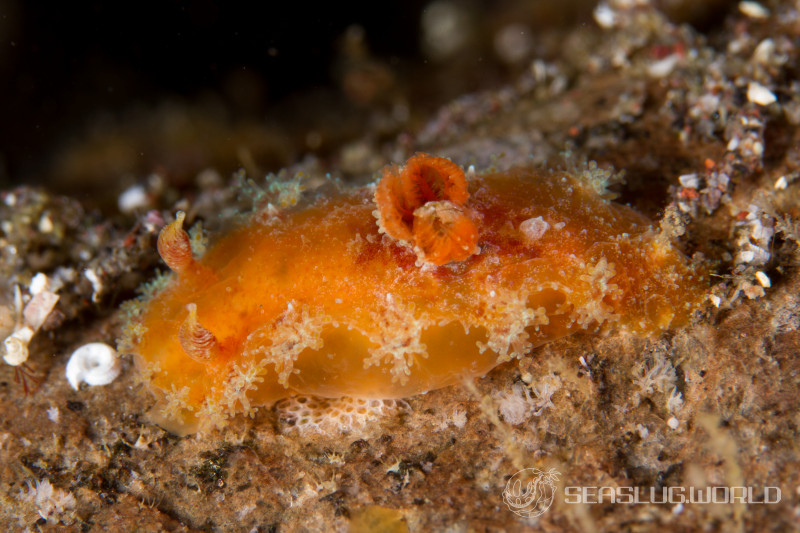
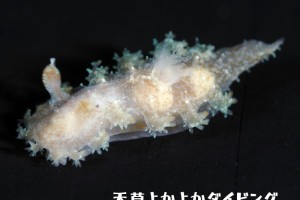
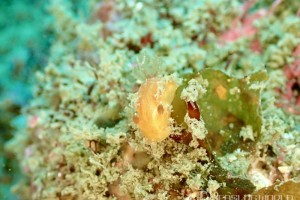
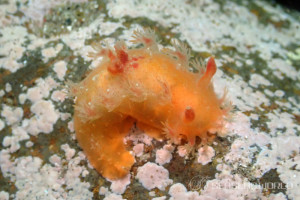
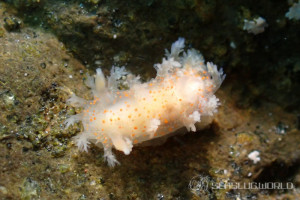
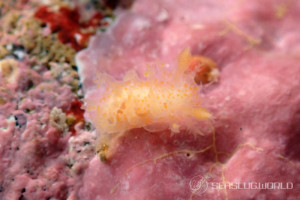
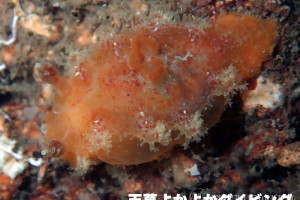
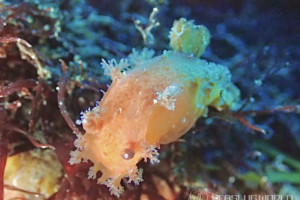
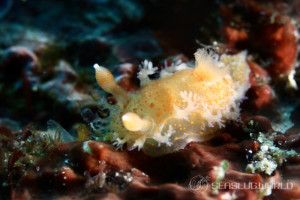
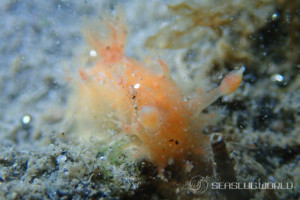
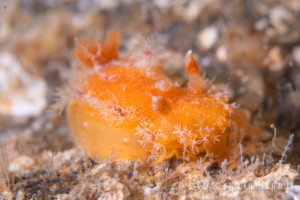
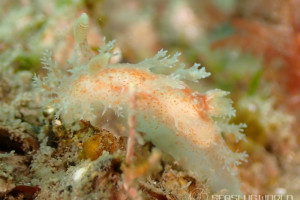
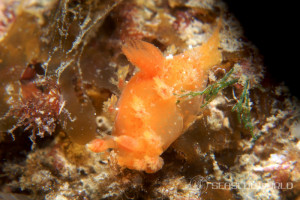
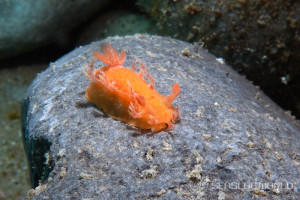
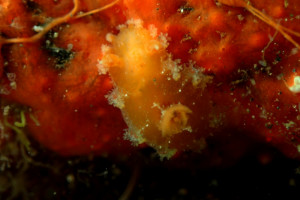
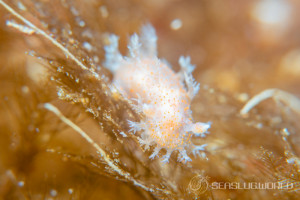
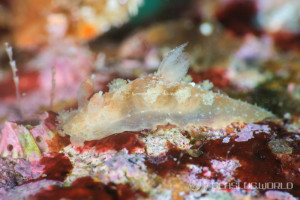
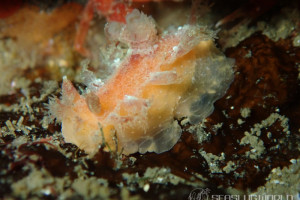
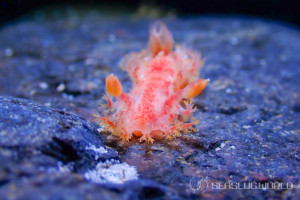
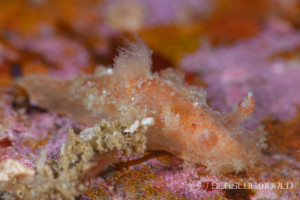
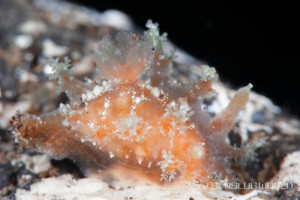
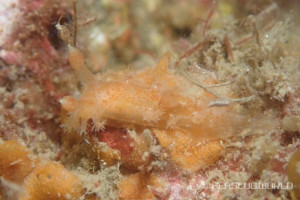
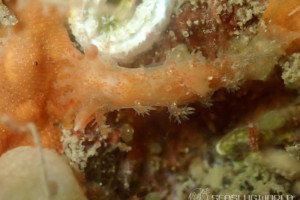
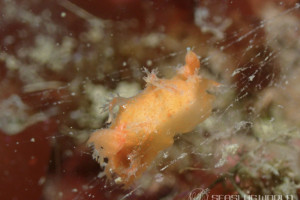
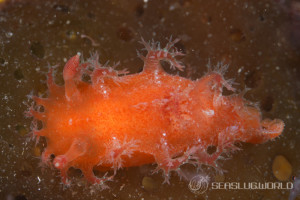
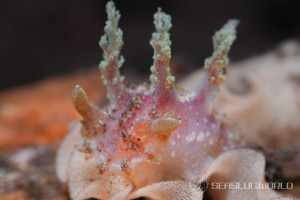
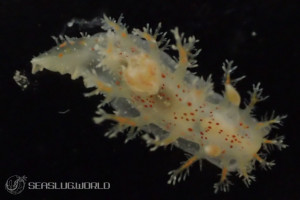
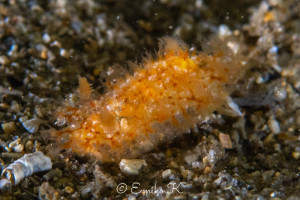
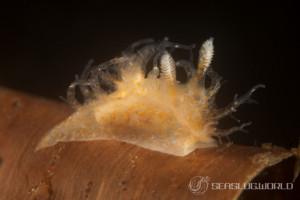
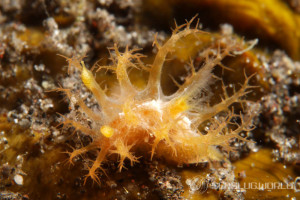
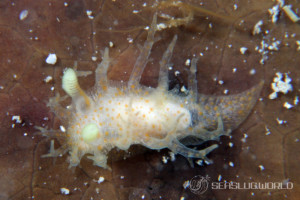
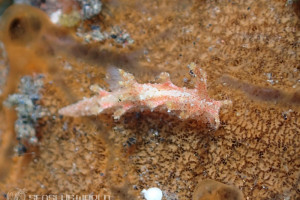
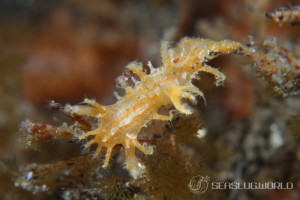
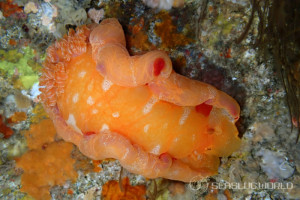
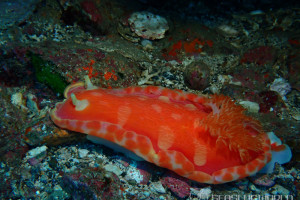
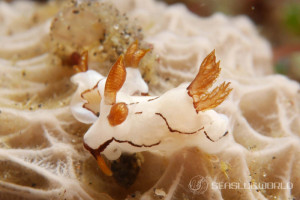
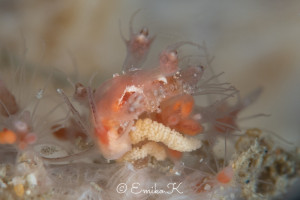
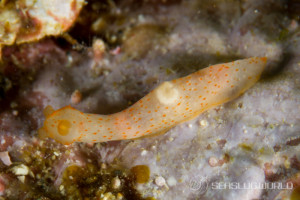
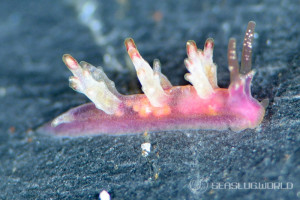
A small bioluminescent dorid reaching up to 25 mm in body length. The body is bright orange, densely sprinkled with reddish dots and clusters of white patches. The tips of the dorsolateral appendages and the rhinophores are tinted orange-red.Eight branched velar appendages line the anterior margin of the head, and four pairs of long, branched lateral appendages arise from the margin of the notum. The appendages bear short cream-coloured ramifications with orange-red tips. The rhinophores are orange and finely spotted. The gill, situated on the posterior dorsum, is composed of three plumes.
The lateral appendages are known to emit light when the animal is disturbed. The species feeds on bryozoans.
Distribution
Type locality: Tianheng Town, Shandong Province, China (Yellow Sea coast, 36°33.7′N, 120°58.6′E). Originally described from the Yellow Sea; morphologically very similar populations have long been recorded from Japanese waters under the names Kaloplocamus croceus or K. ramosus.Etymology
The specific epithet albopunctatus combines Latin albus ("white") and punctatus ("dotted, spotted"), meaning "white-dotted", in reference to the dense white patches scattered over the body.Remarks
Kaloplocamus albopunctatus was described as a new species by a 2023 study based on Yellow Sea specimens. It closely resembles the Mediterranean Kaloplocamus ramosus (which absorbs K. croceus Philippi, 1836 as a junior synonym) in its bright orange-red colour pattern, but differs in the number and structure of the velar and notal appendages and in the reproductive system.In Japan the vernacular name "edaumiushi" ("branched sea slug") has long been applied to this group of bioluminescent dorids, the name alluding to the branched lateral appendages that line the mantle. Baba 1930 described and figured a specimen from Okinoshima in Tateyama Bay (Chiba) as Kaloplocamus croceus (Philippi, 1836) and proposed the Japanese name "edaumiushi" for it. Following the synonymisation of K. croceus under K. ramosus and the recent integrative revisions of the genus, Japanese material previously identified as K. croceus or K. ramosus is now considered to comprise several species, of which K. albopunctatus is one.
References
- エダウミウシ(新称), Baba, K. 1930a. Studies on Japanese nudibranchs (2). A. Polyceridae. B. Okadaia, n.g. (preliminary report). Venus 2(2).
- エダウミウシ, Baba K. (1949). Opisthobranchia of Sagami Bay collected by His Majesty the Emperor of Japan (相模湾産後鰓類図譜). Iwanami Shoten, Tokyo. 4+2+194+7 pp., pls. 1-50.
- エダウミウシ, 小野篤司. (2004). 沖縄のウミウシ. ラトルズ.
- Kaloplocamus ramosus, Vallès Y. & Gosliner T.M. 2006. Shedding light onto the genera (Mollusca: Nudibranchia) Kaloplocamus and Plocamopherus with description of new species belonging to these unique bioluminescent dorids . The Veliger 48(3): 178-205
- Kaloplocamus albopunctatus sp. nov., Wei J. & Kong L. (2023). Taxonomic review of Kaloplocamus from the Yellow Sea, China with the description of a new species (Nudibranchia, Doridina, Polyceridae). ZooKeys. 1168: 107-129. https://doi.org/10.3897/zookeys.1168.101248
A Kindle field guide by the site author

Kimoto N. (2026). Sea Slugs of Japan & the Indo-Pacific, 2nd Edition.
Kindle Edition
View on Amazon PR (Amazon Associates)YouTube: Nobuhiko Kimoto
Seasonality
Shooting Locations
Loading shooting locations...
Photos of Kaloplocamus albopunctatus

















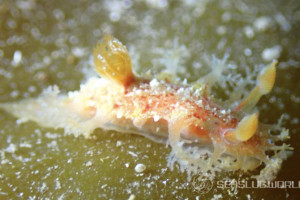

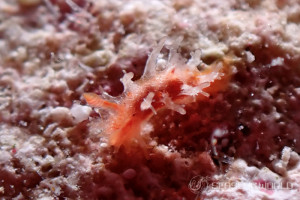

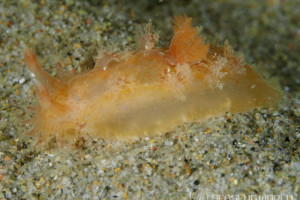

Same Genus Nudibranchs
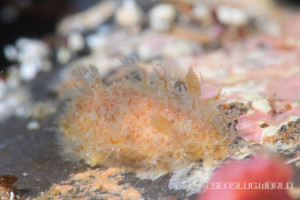

Similar Colors Nudibranchs
Academic Database
Sea slug observation data is available in international marine biodiversity databases.