Kaloplocamus dokte Vallès & Gosliner, 2006
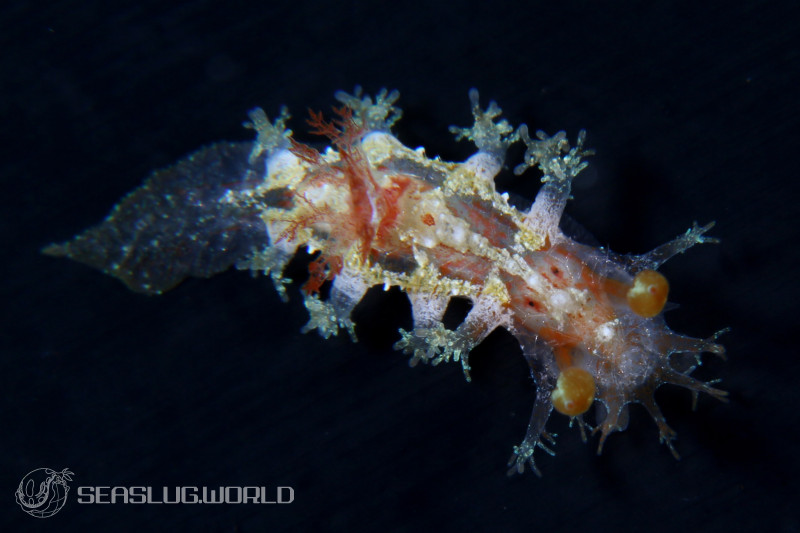
- Location
- Horse Shoes, Okinawa Island (Onna and Yomitan area), Okinawa, Japan
- Date
- 2016/06/01
- Length
- 10mm
- Depth
- 7.0m
- Water temperature
- 26.0℃
Description
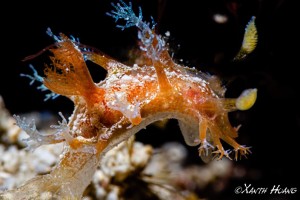
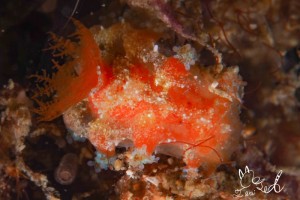
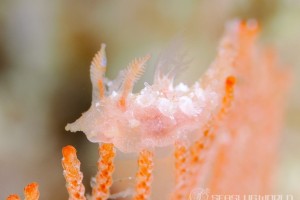
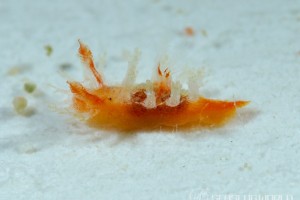
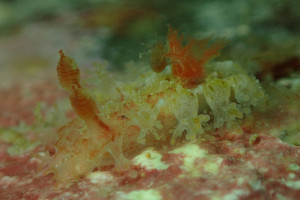
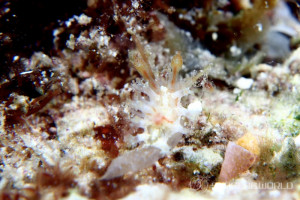
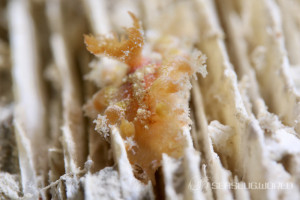
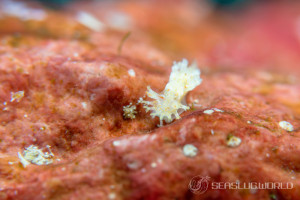
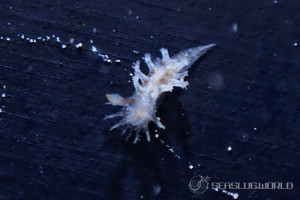
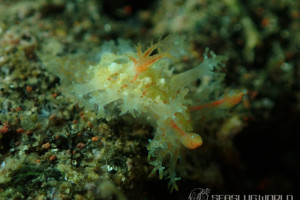
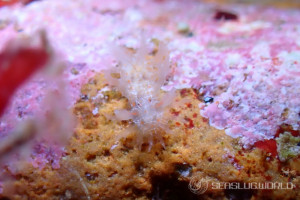
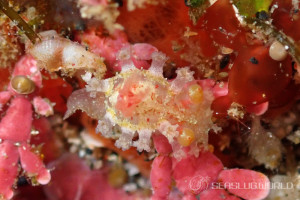
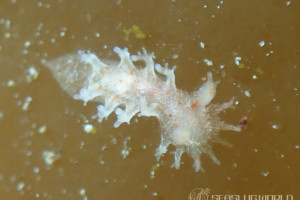
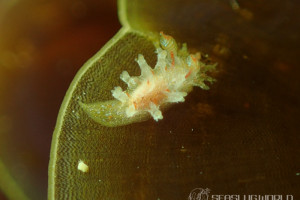
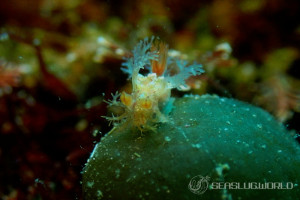
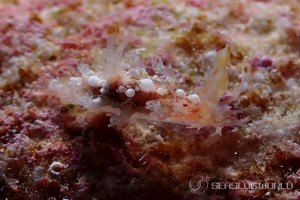
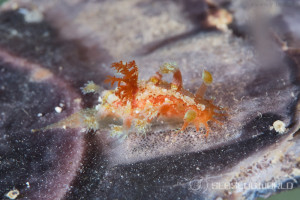
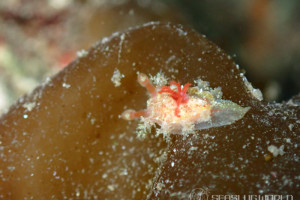
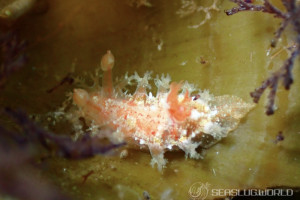
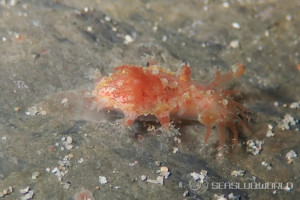
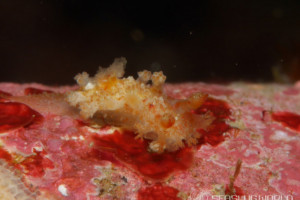
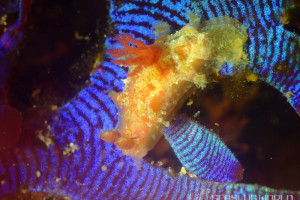
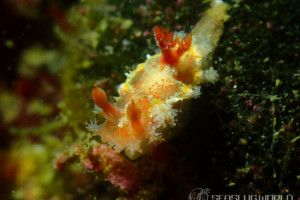
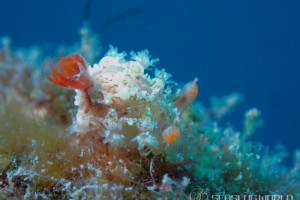
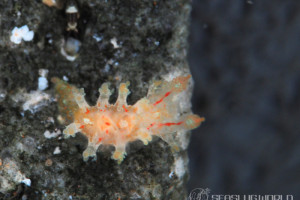
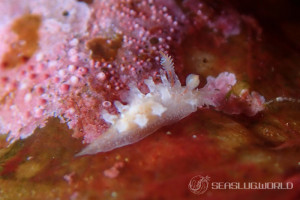
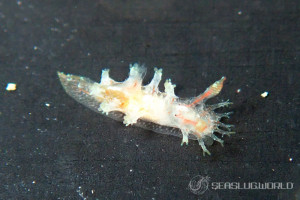
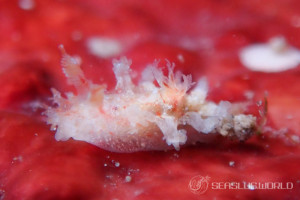
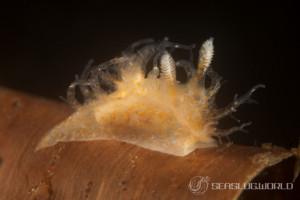
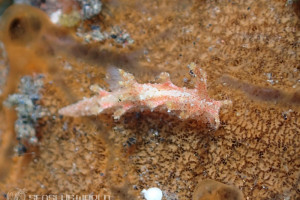
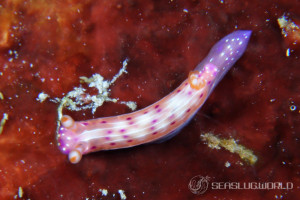
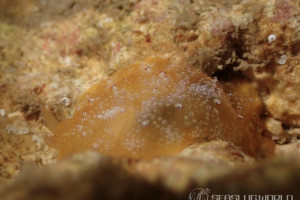
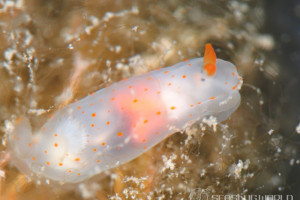
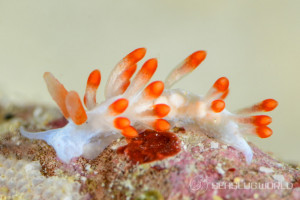
A small polycerid reaching up to 8 mm in preserved length. When alive, the animal appears ovoid in shape, but upon closer view the posterior portion of the foot is elongated. Most of the animal is opaque white except for the posterior end of the foot and the eight velar appendages, which are highly transparent. The dorsal and central portions of the body are translucent and the digestive gland is visible. There are three tripinnate branchial leaves of translucent red-carmine color.The rhinophores are of the same color as the branchial leaves, but more translucent and bearing white dots on the apex. The long, large lateral appendages are totally opaque white except at the apex, where they ramify and become more cream in tone. There are four pairs of lateral appendages, smooth with ramifications at the apex only. Instead of being sharp and long, these ramifications are rounded, almost globular and numerous, resembling a bunch of grapes. These ramifications occur only on the exterior portion of the lateral appendage, with the interior portion being smooth over its entire length.
The radular formula is 10 × (5·3·0·3·5). The three inner lateral teeth are similar in shape, elongated and hook-shaped at the apex. The innermost lateral tooth has a smaller cusp than the two adjacent teeth and a pronounced secondary cusp near the primary one. The five outer lateral teeth are flat and rectangular in shape, decreasing in size from innermost to outermost.
Distribution
Type locality: Barracuda Point, Madang, Papua New Guinea. The species has been recorded from Papua New Guinea, Indonesia (Sulawesi) and the Philippines (Luzon Island).Etymology
Verbatim from the original description (Vallès & Gosliner, 2006, p.186):This species is nameddokte" for the father of the senior author, whose nickname in Haitian kreol is Dokte."
Remarks
This species is distinguished by an opaque white background coloration that has never been reported for other species of Kaloplocamus, which are typically orange-red or orange. The grape-cluster-like rounded ramifications at the apex of the lateral appendages are also unique to this species. As in K. ramosus and K. acutus, four pairs of lateral appendages and eight velar appendages are present, but the velar appendages of K. dokte are shorter and smaller, and the radular tooth count is also lower than in the other two species.References
- エダウミウシ, 小野篤司. (2004). 沖縄のウミウシ. ラトルズ.
- Kaloplocamus dokte n. sp., Vallès Y. & Gosliner T.M. 2006. Shedding light onto the genera (Mollusca: Nudibranchia) Kaloplocamus and Plocamopherus with description of new species belonging to these unique bioluminescent dorids . The Veliger 48(3): 178-205
- Kaloplocamus dokte, Terrence Gosliner, Ángel Valdés and David Behrens. (2015). Nudibranch and Sea Slug Identification Indo-Pacific. New World Pubns Inc.
- シロエダウミウシ(新称), 中野理枝. (2018). 日本のウミウシ. 文一総合出版.
Featured in this book
Terrence Gosliner, Ángel Valdés and David Behrens. (2018). Nudibranch and Sea Slug Identification Indo-Pacific 2nd Edition. New World Pubns Inc.
New World Publications
This species, Kaloplocamus dokte, is included in the book.
View on Amazon PR (Amazon Associates)Seasonality
Shooting Locations
Loading shooting locations...
Photos of Kaloplocamus dokte
Tag:





















Same Genus Nudibranchs

Similar Colors Nudibranchs
Academic Database
Sea slug observation data is available in international marine biodiversity databases.