Phyllodesmium jakobsenae Burghardt & Wagele, 2004
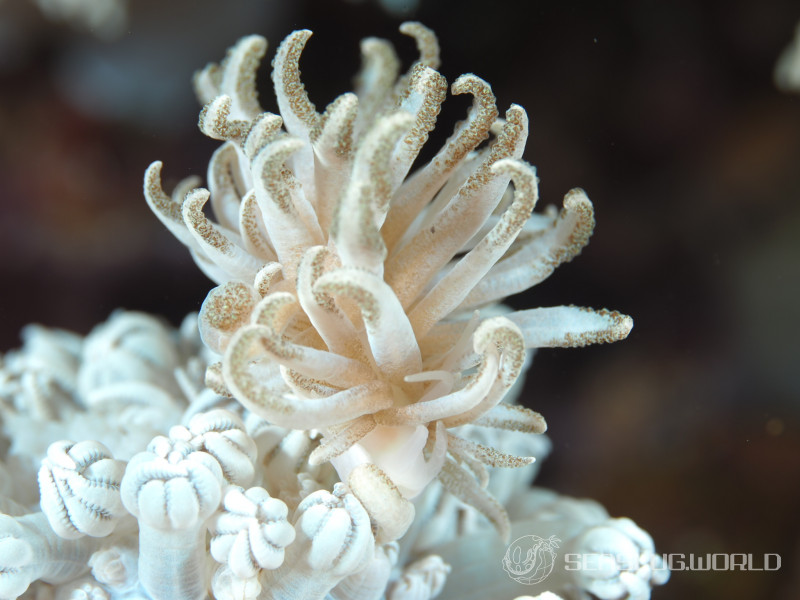
- Location
- Kirby's Rock, Anilao, Philippines
- Date
- 2025/12/08
- Length
- 30mm
- Depth
- 10.0m
- Water temperature
- 28.0℃
Description
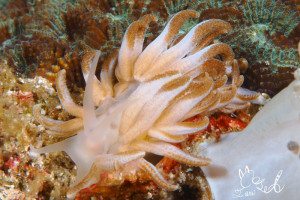
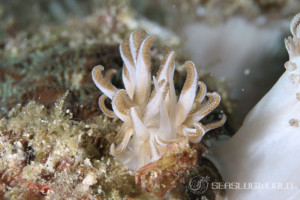
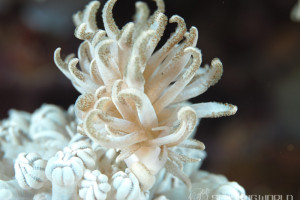
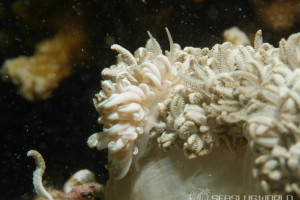
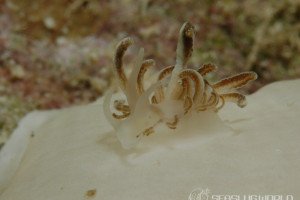
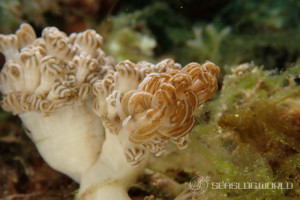
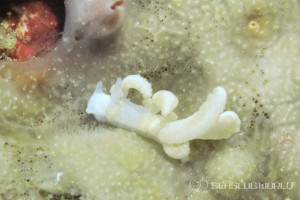
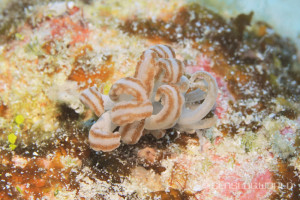
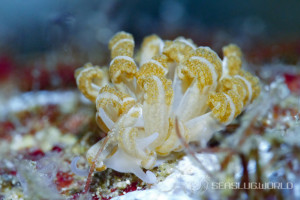
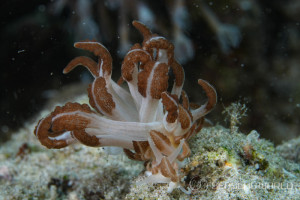
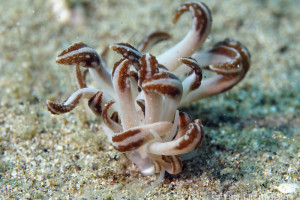
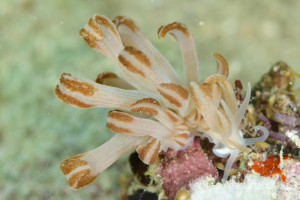
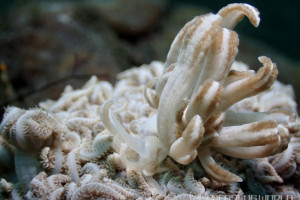
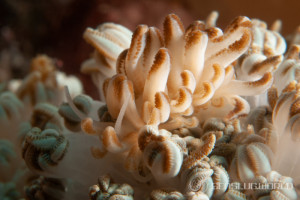
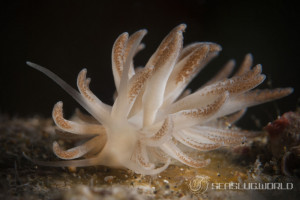
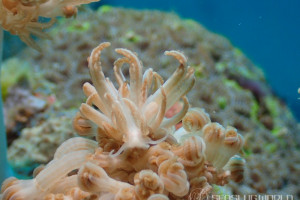
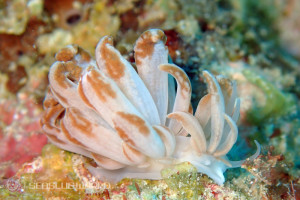
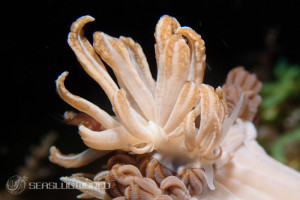
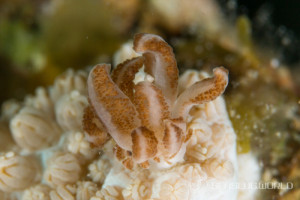
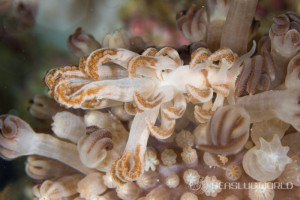
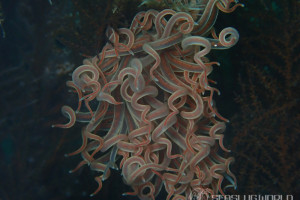
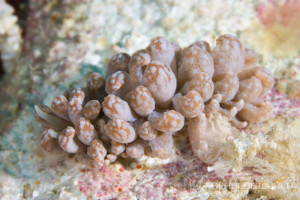
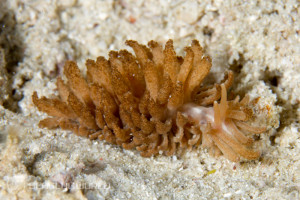
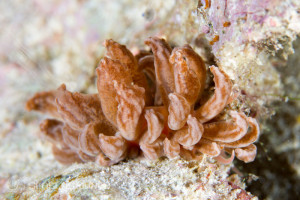
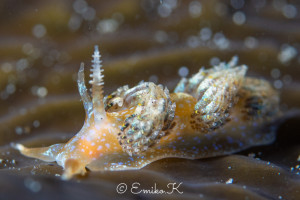
A medium-sized Phyllodesmium, body length up to about 30 mm (excluding cerata). Body translucent white including oral tentacles, rhinophores and foot. Gonads pale yellow show through the epidermis; the buccal bulb is light orange. The cerata occur in four pads per side, up to 7 per pad, 25-35 in total. The apical third of the cerata is spatulate / arrowhead-shaped, dorsoventrally flattened, with a central whitish longitudinal stripe and lateral brownish stripes (clusters of zooxanthellae). Cerata curl distally; the basal portion is smooth and circular in cross-section. Rhinophores smooth, similar in shape and almost equal in length to the oral tentacles, both tapering. Radular formula 39-40 × 0.1.0; the rhachidian bears a 50 µm pointed median cusp and about 38-43 short marginal denticles. Jaw plates with up to 9 elongate clog-shaped denticles along the cutting edge.Distribution
Type locality is the southern side of Bunaken Island, Bunaken Islands National Park, North Sulawesi, Indonesia (lagoon in front of "Papa Boa Bungalows", 1°37′3.1″N 124°45′51.1″E, 0.3-0.5 m depth, 12 July 2003, 7 specimens). One additional specimen from the SW cape of Bunaken Island (20 July 2003, 0.5 m depth). The original description records the species only from the type locality.Etymology
The specific epithet jakobsenae honours Mrs. Wera Jakobsen, a passionate diver, who supported alpha-taxonomy of marine slugs through a donation to BIOPAT (Patrons for Biodiversity), a naming-rights initiative that funds alpha-taxonomy research.Remarks
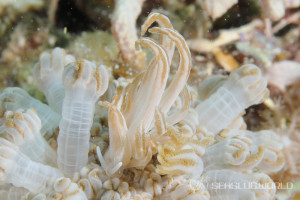
The species lives on and feeds on soft coral Xenia colonies, but unusually burrows deeply inside the colony rather than sitting on top — distinguishing it ecologically from congeners. A solar-powered nudibranch that retains zooxanthellae from its prey for photosynthesis. Differs from Phyllodesmium crypticum by the absence of the median plate, by progressively elongating jaw denticles, and by the position of the anal papilla; from Phyllodesmium pecten and Phyllodesmium crypticum by having rhinophores nearly as long as the oral tentacles (only two-thirds in those species); and from Phyllodesmium hyalinum by ceratal shape details.References
- Phyllodesmium jakobsenae, Terrence Gosliner, Ángel Valdés and David Behrens. (2015). Nudibranch and Sea Slug Identification Indo-Pacific. New World Pubns Inc.
- ヤコブセンミノウミウシ(新称), 中野理枝. (2018). 日本のウミウシ. 文一総合出版.
Featured in this book

Terrence Gosliner, Ángel Valdés and David Behrens. (2018). Nudibranch and Sea Slug Identification Indo-Pacific 2nd Edition. New World Pubns Inc.
New World Publications
This species, Phyllodesmium jakobsenae, is included in the book.
View on Amazon PR (Amazon Associates)Seasonality
Shooting Locations
Loading shooting locations...
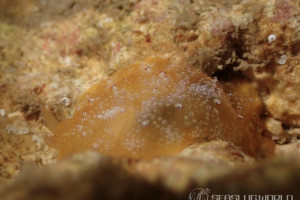
Photos of Phyllodesmium jakobsenae
















Same Genus Nudibranchs

Similar Colors Nudibranchs

Academic Database
Sea slug observation data is available in international marine biodiversity databases.