Phyllodesmium macphersonae (Burn, 1962)
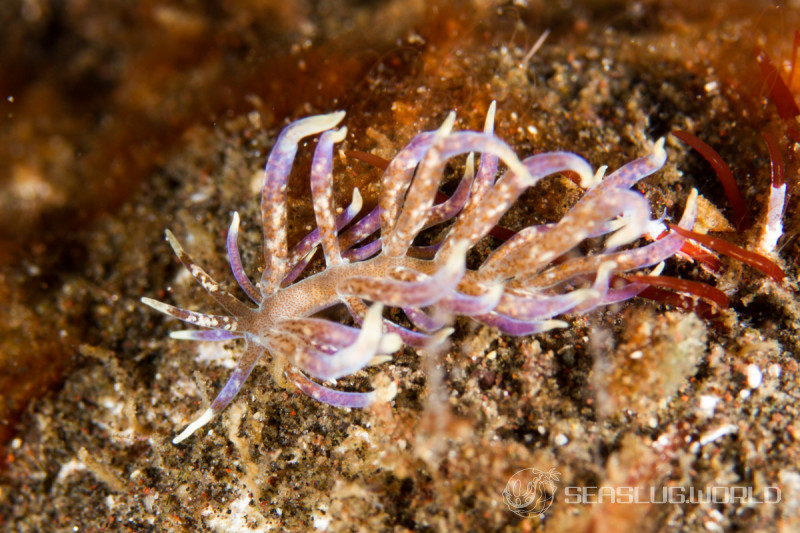
- Location
- USAT Liberty Shipwreck, Tulamben, Pulau Bali, Indonesia
- Date
- 2017/06/20
- Length
- 15mm
- Depth
- 20.0m
- Water temperature
- 29.0℃
Description
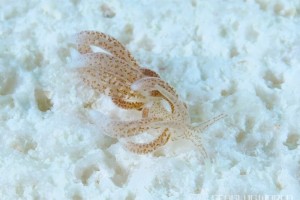
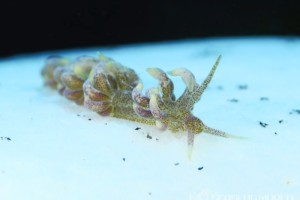
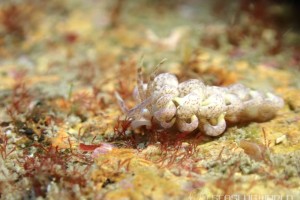
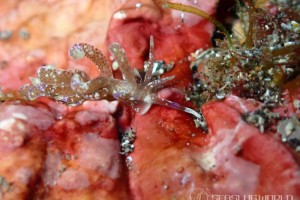
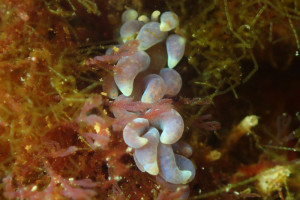
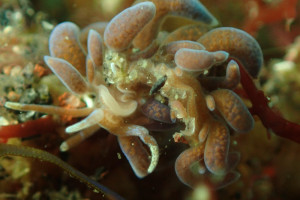
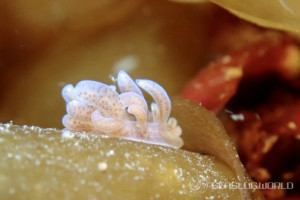
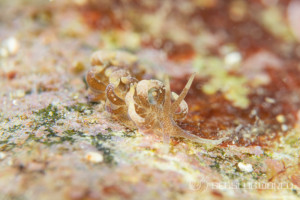
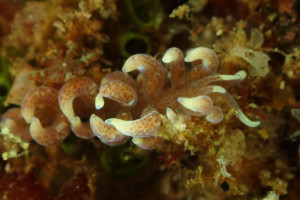
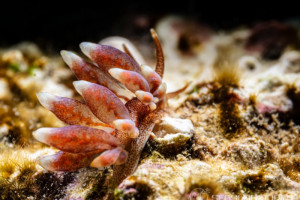
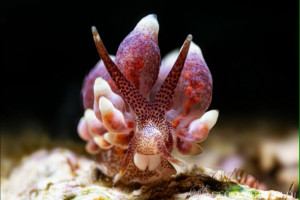
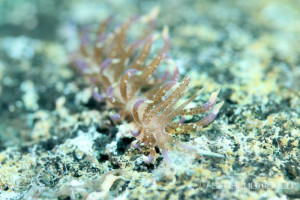
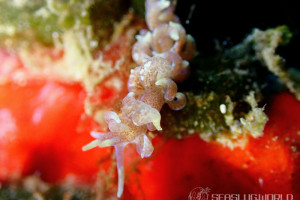
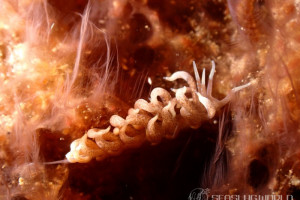
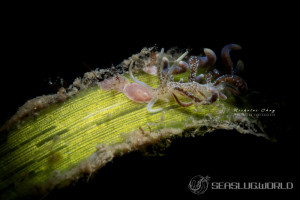
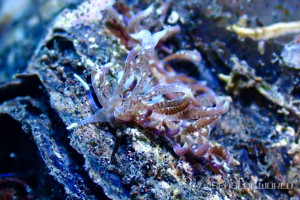
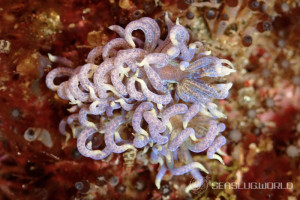
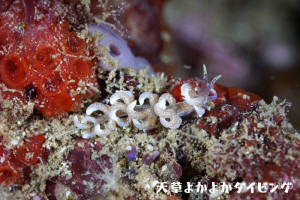
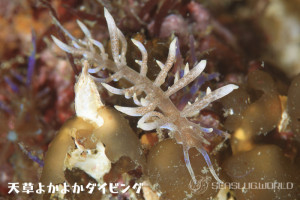
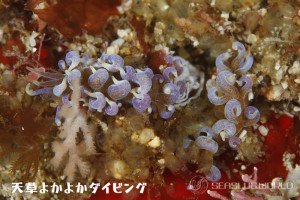
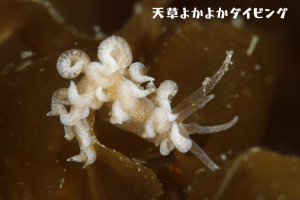
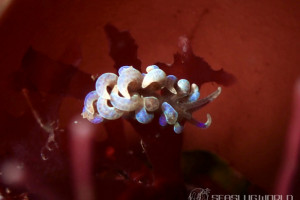
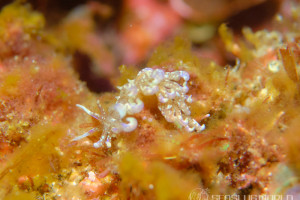
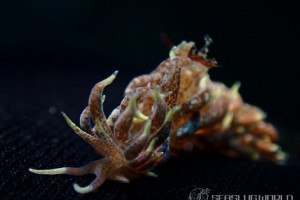
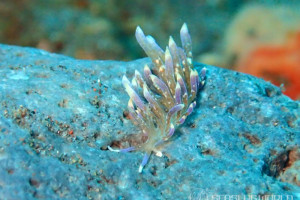
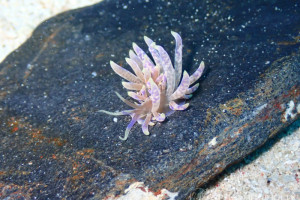
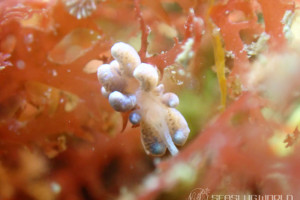
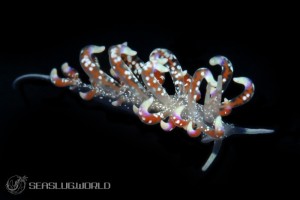
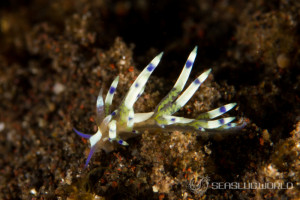
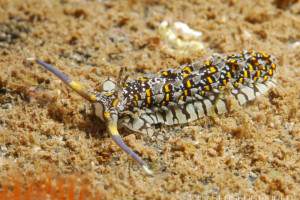
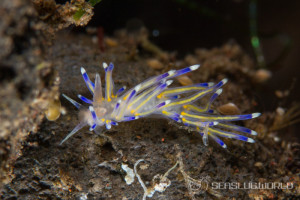
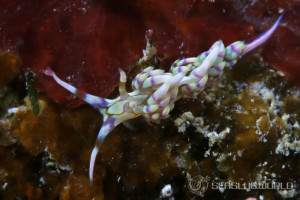
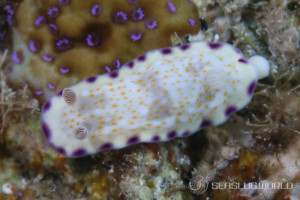
A narrow, elongate aeolid reaching up to 20 mm in length and about 2 mm in breadth. Body very linear with a long narrow tail; foot corners expanded laterally and rounded. Cephalic tentacles long and slender, distally curled upwards and inwards. Rhinophores long and smooth, bases nearly touching. Body colour pale green-tinted cream, with cephalic tentacles and rhinophores yellow-tipped. Cerata dark greenish-blue, each tipped with yellow. Foot with white sole. The first two ceratal arches each carry a single row of cerata; the remaining left liver carries eight simple rows on each side, with about 7-9-6-5-5-4-4-3-2 cerata per group. Holds zooxanthellae in symbiosis (visible as brown speckling in adult animals). Recent specimens range translucent white to blue or violet.Distribution
Western Pacific. Records include Australia, Indonesia, Malaysia, the Philippines and Japan. The type locality is Flinders, Victoria, Australia, on jetty piles (May 1959, coll. J. H. Macpherson).Etymology
The specific epithet macphersonae honours Miss J. Hope Macpherson of the National Museum of Victoria, "to whom the author is indebted for much nudibranch material" (Burn 1962).Remarks
Originally described as Cratena macphersonae Burn (Memoirs of the National Museum of Victoria 25: 118, 1962). Subsequently transferred to Phyllodesmium Ehrenberg, 1831, in line with the discovery of zooxanthellae in the cerata.References
- Cratena macphersonae, Burn R. (1962). Descriptions of Victorian nudibranchiate Mollusca, with a comprehensive review of the Eolidacea. Memoirs of the National Museum of Victoria, 25: 95-128, text figs. 1-26. https://www.biodiversitylibrary.org/item/120188
- Phyllodesmium macphersonae, Rudman W.B. (1981). The anatomy and biology of alcyonarian-feeding aeolid opisthobranch molluscs and their development of symbiosis with zooxanthellae. Zoological Journal of the Linnean Society. 72(3): 219-262. https://doi.org/10.1111/j.1096-3642.1981.tb01571.x
A Kindle field guide by the site author
Kimoto N. (2026). Sea Slugs of Japan & the Indo-Pacific, 2nd Edition.
Kindle Edition
View on Amazon PR (Amazon Associates)Seasonality
Shooting Locations
Loading shooting locations...
Photos of Phyllodesmium macphersonae
Tag:


















Same Genus Nudibranchs

Similar Colors Nudibranchs
Academic Database
Sea slug observation data is available in international marine biodiversity databases.