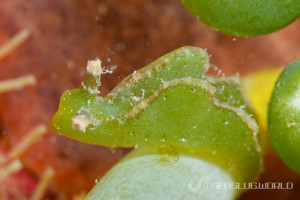
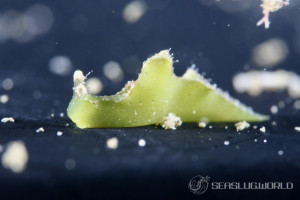
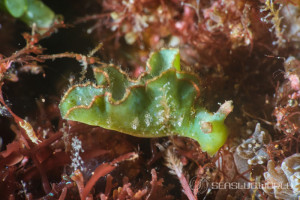
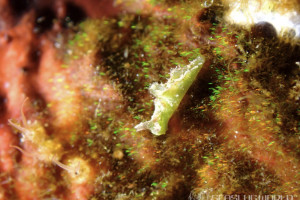
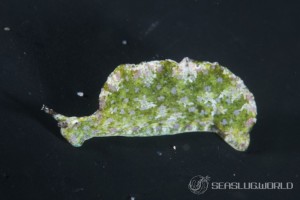
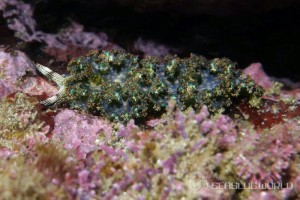
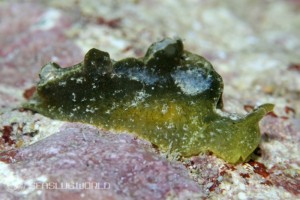
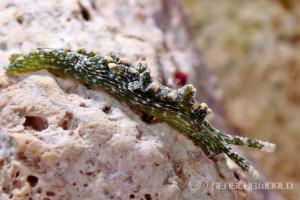
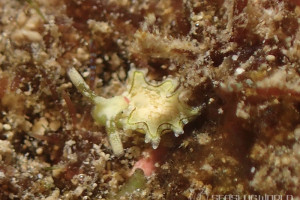
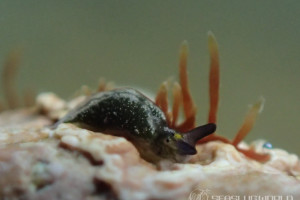
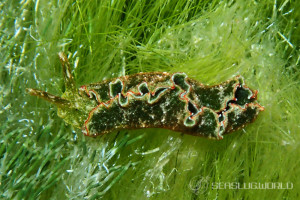
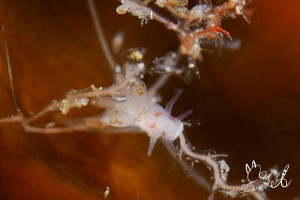
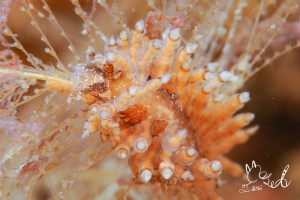
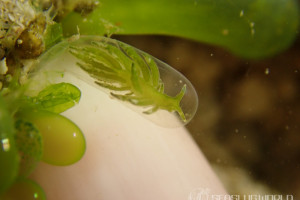
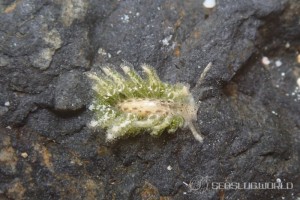
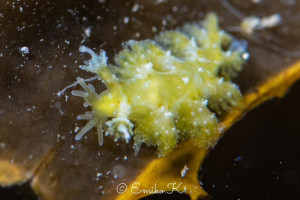
Elysia tomentosa K. R. Jensen, 1997
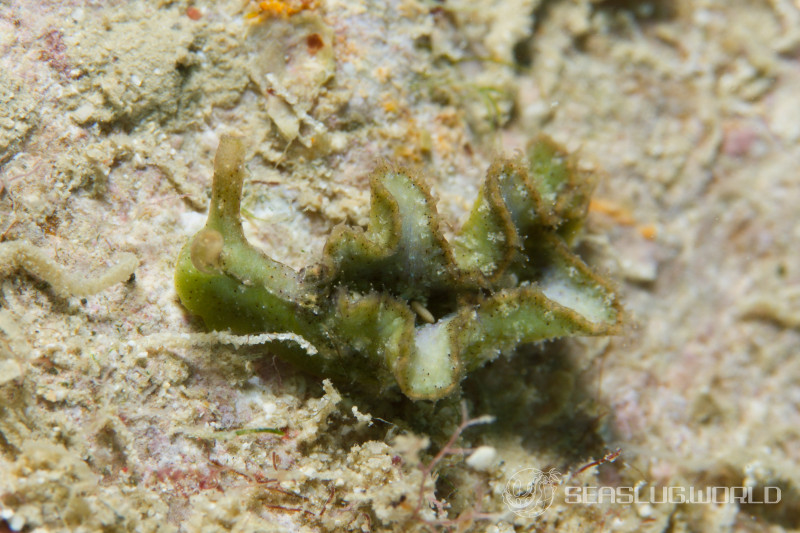
- Location
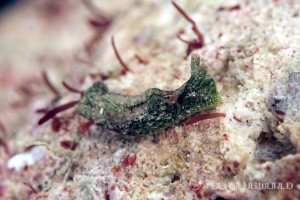
- Sunabe Water Treatment Plants, Okinawa Island (Chatan and Southern area), Okinawa, Japan
- Date
- 2014/04/11
- Length
- 14mm
- Depth
- 6.0m
- Water temperature
- 22.3℃
Description
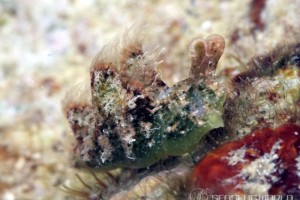
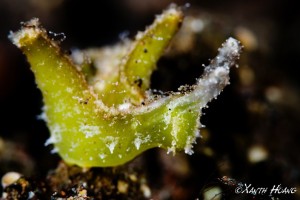
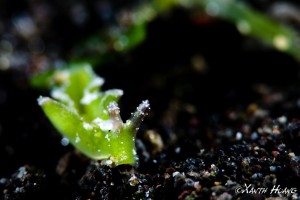
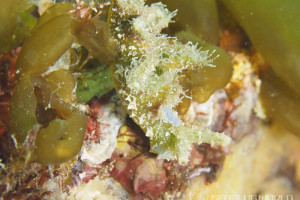
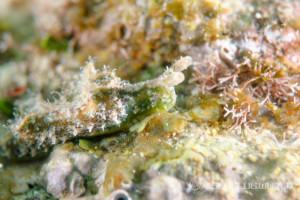
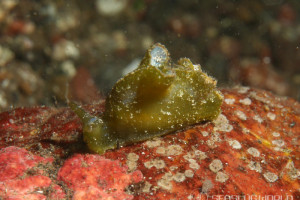
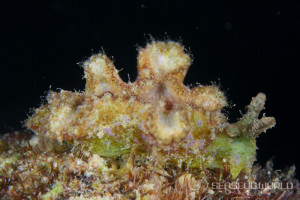
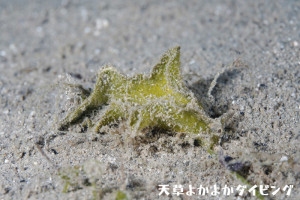
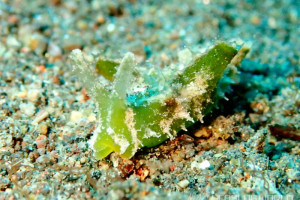
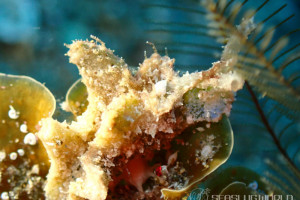
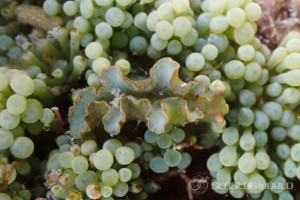
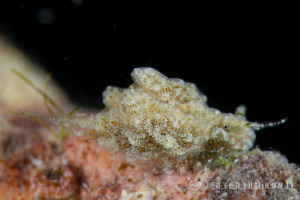
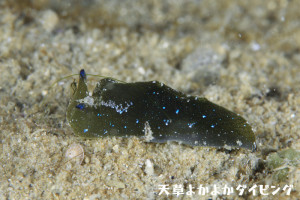
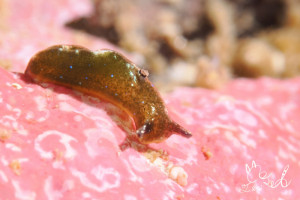
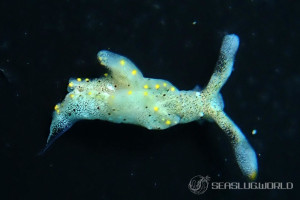
A sacoglossan 6–40 mm in length, with an olive-green ground colour speckled with small white dots, orange-brown spots, and black dots, and with orange to light-red parapodial margins. The body is densely covered with papillae, and the papillae along the parapodial margins and on the outer parapodial surface are branched. The head is broad, with auriculate rhinophores whose bases meet mediodorsally, and the small round eyes lie just behind them. Some specimens show opalescent light-blue dots, a few of the black dots are ocellate, and the rhinophores vary from reddish-brown to olive green. A long renal ridge runs behind the pericardium for about three quarters of the parapodial length and is edged by a pale-yellow band. Most papillae are white; those along the parapodial margins are translucent with a dark central streak. The foot sole is uniformly olive green.The species belongs to a group of sacoglossans that feed on green algae of the genus Caulerpa. Development is planktotrophic.
Distribution
The type locality is Long Island in the Houtman Abrolhos Islands, off the central coast of Western Australia. The species is native to the Indo-West Pacific, with records eastwards to Queensland (Heron Island area) and Japan. It has more recently been reported as a non-native species from the Persian Gulf and the western Mediterranean Sea, suggesting human-mediated dispersal beyond its native range.Etymology
The specific epithet tomentosa is Latin for "covered with fine matted hairs" or "woolly".References
- Elysia tomentosa n.sp., Jensen K.R. (1997). Sacoglossa (Mollusca, Opisthobranchia) from the Houtman Abrolhos Islands and central Western Australia. In: Wells F.E. (ed.), The Marine Flora and Fauna of the Houtman Abrolhos Islands, Western Australia. Proceedings of the Seventh International Marine Biological Workshop. Western Australian Museum, Perth. pp. 305-332.
- Elysia cf. tomentosa, Oladi M., Nasrolahi A., Ahmadzadeh F., Salari M.-A. & Sakhaei N. (2018). Molecular confirmation of the occurrence of Elysia cf. tomentosa (Mollusca, Heterobranchia) in the Persian Gulf. Zoology in the Middle East. 64(2): 124-130.
- Elysia tomentosa, Trainito E., Doneddu M. & Furfaro G. (2022). Aliens in changing seascapes: a newly reported non-native sacoglossan (Mollusca, Heterobranchia) in the western Mediterranean Sea. Check List. 18(3): 545-551.
- Elysia tomentosa Jensen, 1997 (non-native species), Martín-Hervás, M. R., Carmona, L., Jensen, K. R., Krug, P. J., Vitale, F. & Cervera, J. L. (2023). A global phylogeny of Elysia Risso, 1818 (Gastropoda: Heterobranchia): molecular systematic insights focusing on European taxa and description of a new species. Zoological Journal of the Linnean Society 199(4): 1-20. doi:10.1093/zoolinnean/zlad086
A Kindle field guide by the site author
Kimoto N. (2026). Sea Slugs of Japan & the Indo-Pacific, 2nd Edition.
Kindle Edition
View on Amazon PR (Amazon Associates)Seasonality
Shooting Locations
Loading shooting locations...
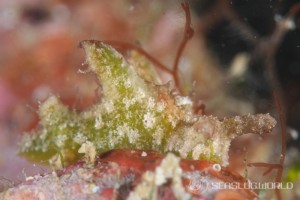
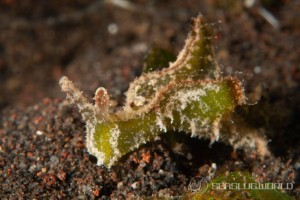
Photos of Elysia tomentosa




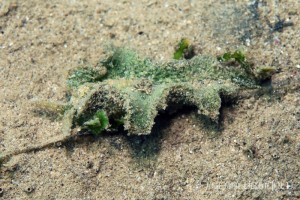

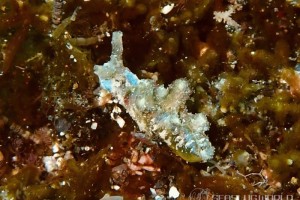

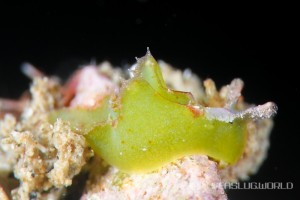
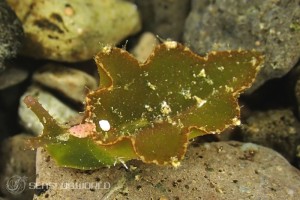

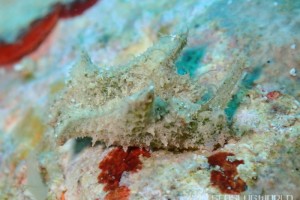

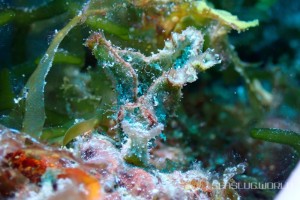

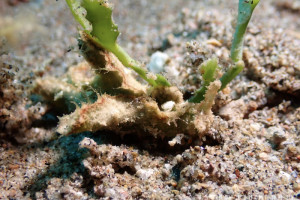

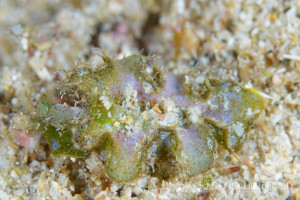





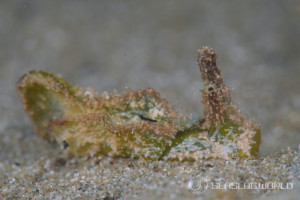
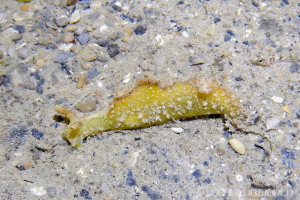

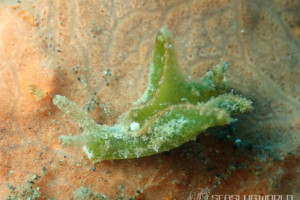

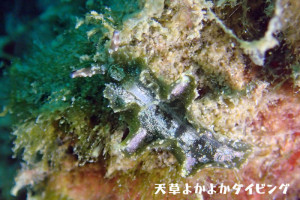



Same Genus Nudibranchs
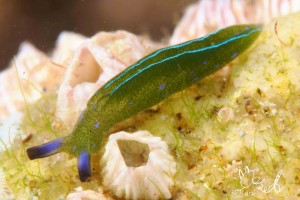
Similar Colors Nudibranchs


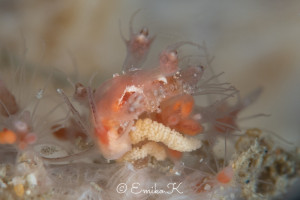
Academic Database
Sea slug observation data is available in international marine biodiversity databases.