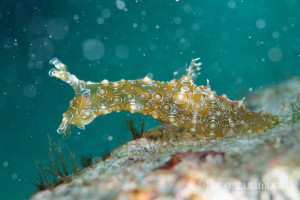
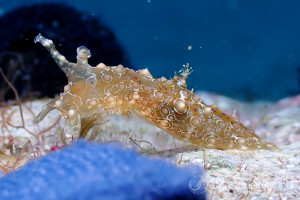
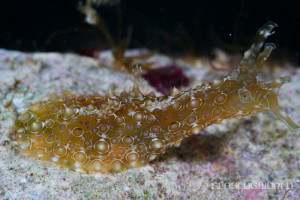
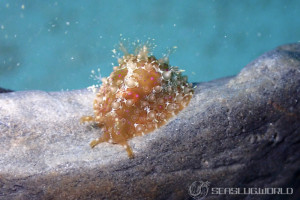
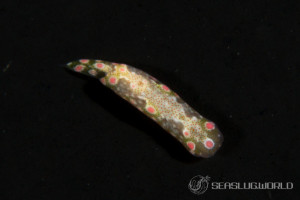
Petalifera ramosa Baba, 1959
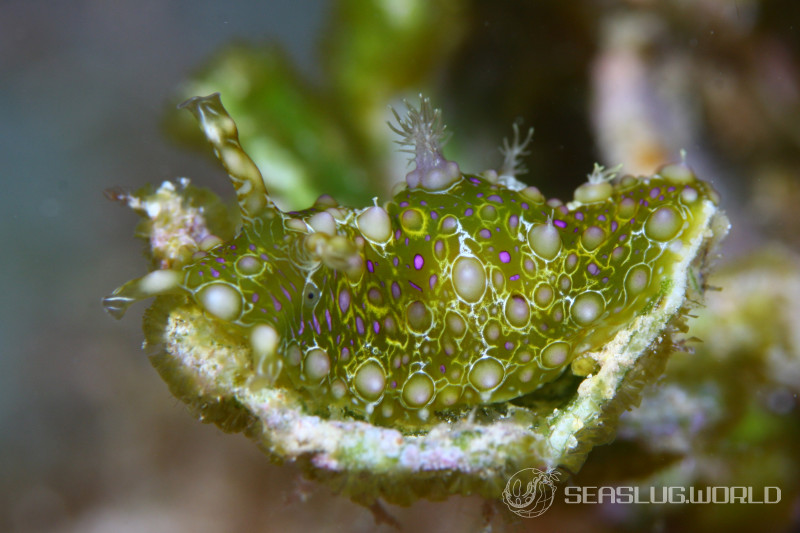
- Location
- Ishikiri(Awa), Okinawa Island (Motobu and Northern area), Okinawa, Japan
- Date
- 2011/03/31
- Length
- 20mm
- Depth
- 10.0m
- Water temperature
- 22.0℃
Description
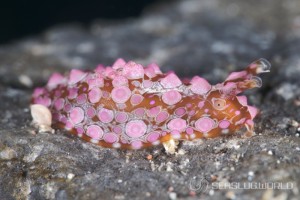
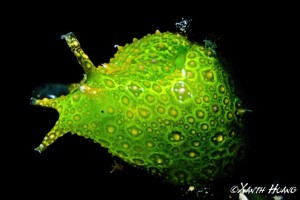
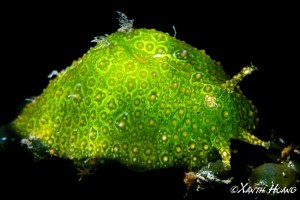
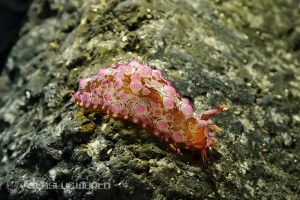
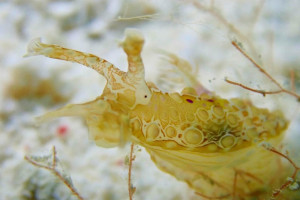
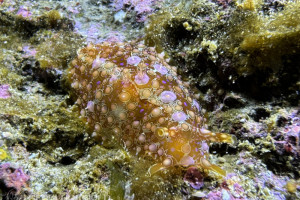
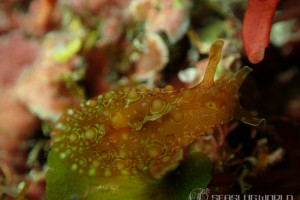
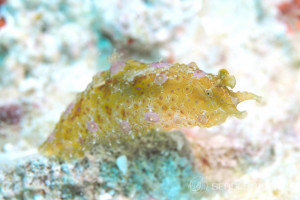
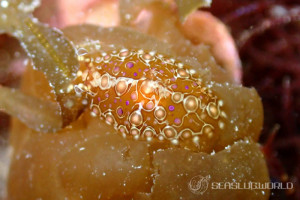
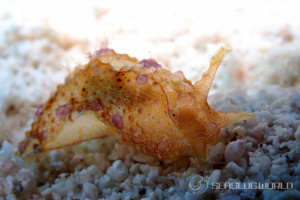
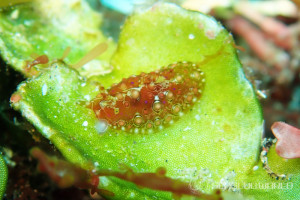
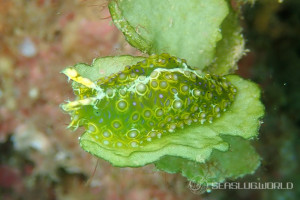
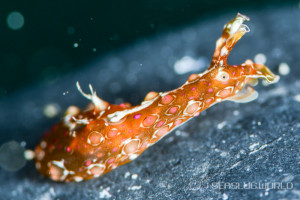
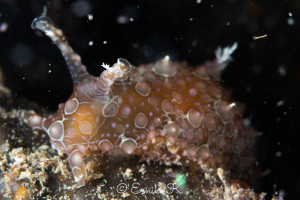
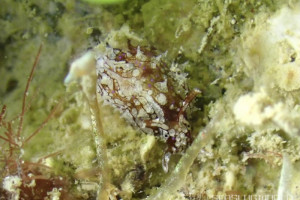
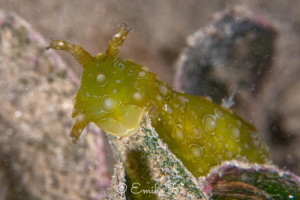
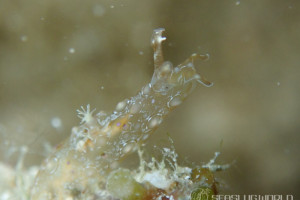
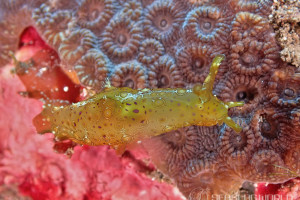
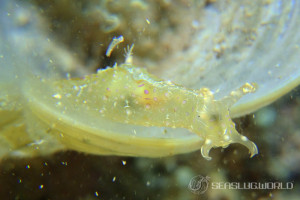
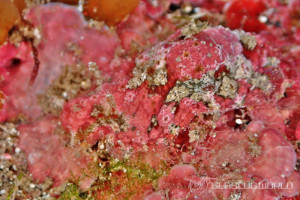
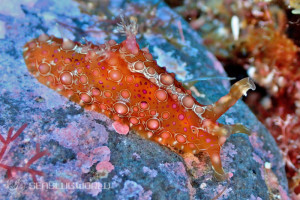
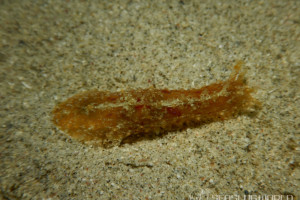
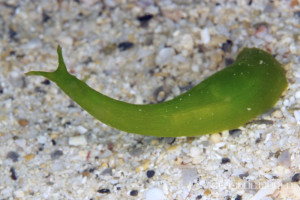
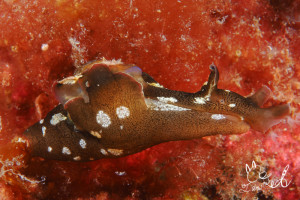
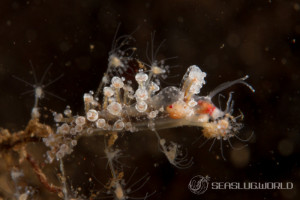
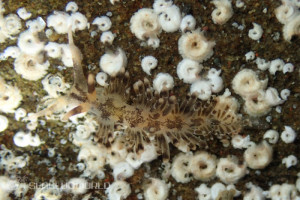
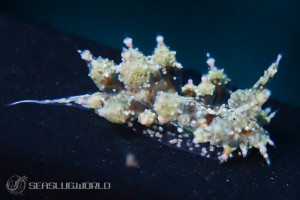
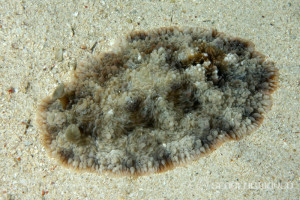
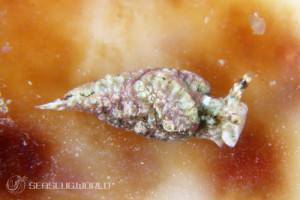
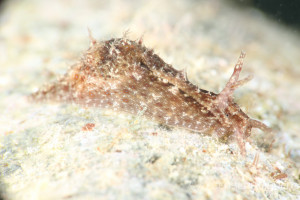
A large species of Petalifera, reaching 5–7 cm in length, with a somewhat plump body. The dorsal surface bears an unusually dense papillation: many of the small, conical papillae aggregate to form compound tubercles, while the largest papillae branch repeatedly and stand out conspicuously among the smaller ones, giving the animal a tufted appearance. The common genital orifice opens within the mid-dorsal slit. The internal shell is broad and circular anteriorly, projecting into a rostrum behind. Body color varies considerably between individuals, ranging from grass-green to dark brown, with the sole bearing pale roundish markings on a green ground.Distribution
Type locality: Tomioka, Amakusa, Kumamoto Prefecture, Japan, in the Zostera zone. Additional type material was collected at Misaki, Sagami Bay. The species is now recorded widely across the Indo–West Pacific and central Pacific, including Tanzania, the Red Sea, Australia, New Caledonia, Papua New Guinea, the Philippines, Japan and Hawaii.Etymology
The specific epithet ramosa derives from Latin ramus ("branch") with the adjectival suffix -osus ("full of"), meaning "much-branched" — a reference to the dorsal papillae of this species, whose tips divide repeatedly into a dendritic, tufted form. The Japanese vernacular name "Fusa-uminamekuji", coined by Kikutaro Baba in the same paper, conveys the same idea ("tufted sea-slug").Remarks
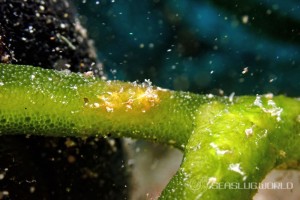
Described by Kikutaro Baba in 1959 based on specimens from Amakusa. The animals graze on macroalgae such as Caulerpa and Padina. Petalifera ramosa is readily distinguished from the smaller, sympatric Petalifera punctulata by (1) its larger size (5–7 cm vs. 2–4 cm), (2) its much thicker, branched dorsal papillation, (3) the position of the genital orifice within the dorsal slit (rather than in front of it), and (4) the broad, anteriorly rounded shell.References
- Petalifera ramosa (= Aplysiella ramosa, genus Aplysiella context), Fischer P. (1872). Sur deux nouveaux types génériques de Mollusques opisthobranches du Bassin d'Arcachon. Journal de Conchyliologie. 20: 5-14.
- Petalifera ramosa BABA, n. sp. Fusa-uminamekuji (n. n.), Baba K. (1959). THE GENUS PETALIFERA AND A NEW SPECIES, P. RAMOSA, FROM JAPAN. Publications of the Seto Marine Biological Laboratory. 7(3): 337-338. https://doi.org/10.5134/174633
- フサウミナメクジ, 小野篤司. (1999). ウミウシガイドブック. TBSブリタニカ.
- フサウミナメクジ, 殿塚孝昌. (2003). ウミウシガイドブック〈3〉. TBSブリタニカ.
- フサウミナメクジ, 小野篤司. (2004). 沖縄のウミウシ. ラトルズ.
- フサウミナメクジ, 中野理枝. (2004). 本州のウミウシ. ラトルズ.
- フサウミナメクジ, 小野篤司 & 加藤昌一. (2009). ウミウシ. 誠文堂新光社.
- Petalifera ramosa, Terrence Gosliner, Ángel Valdés and David Behrens. (2015). Nudibranch and Sea Slug Identification Indo-Pacific. New World Pubns Inc.
Featured in this book

Terrence Gosliner, Ángel Valdés and David Behrens. (2018). Nudibranch and Sea Slug Identification Indo-Pacific 2nd Edition. New World Pubns Inc.
New World Publications
This species, Petalifera ramosa, is included in the book.
View on Amazon PR (Amazon Associates)Seasonality
Shooting Locations
Loading shooting locations...
Photos of Petalifera ramosa



















Same Genus Nudibranchs

Similar Colors Nudibranchs
Academic Database
Sea slug observation data is available in international marine biodiversity databases.