Elysia asbecki Wägele, Stemmer, Burghardt & Händeler, 2010
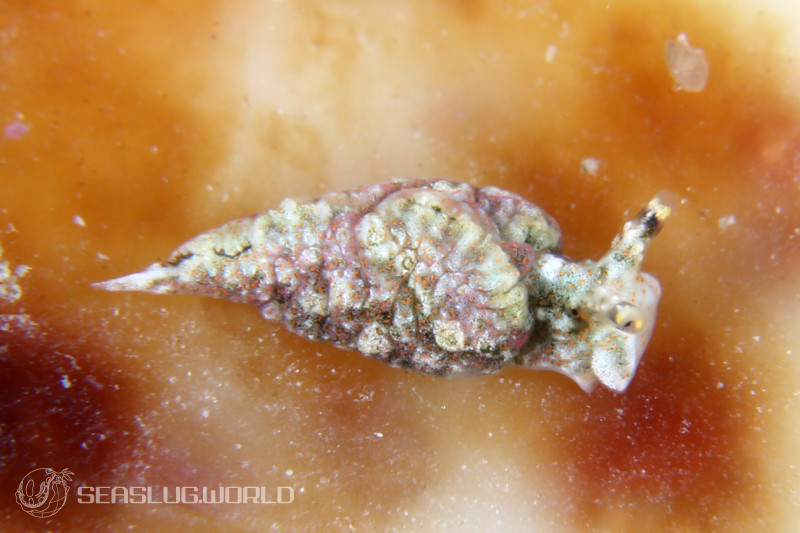
- Location
- Nashiro, Okinawa Island (Chatan and Southern area), Okinawa, Japan
- Date
- 2016/03/25
- Length
- 7mm
- Depth
- 3.0m
- Water temperature
- 19.0℃
Description
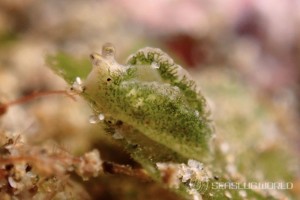
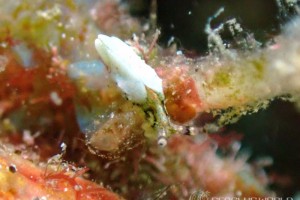
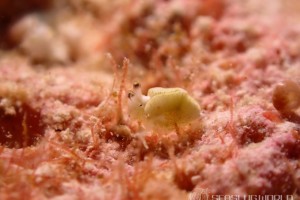
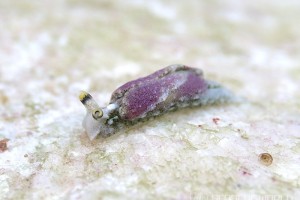
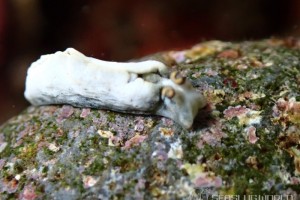
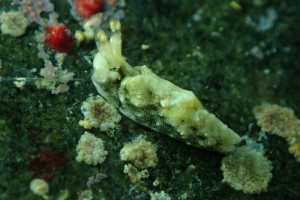
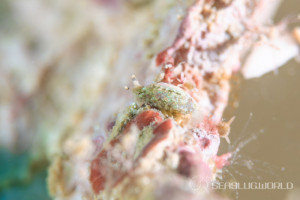
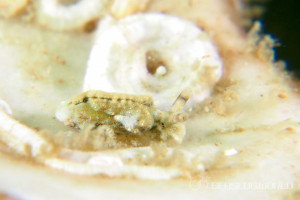
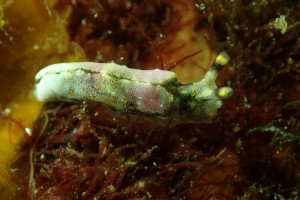
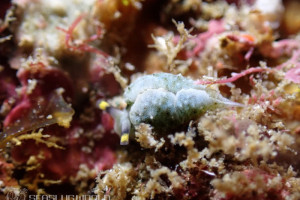
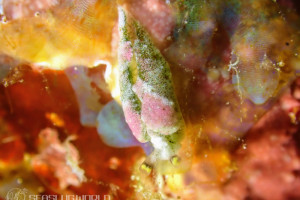
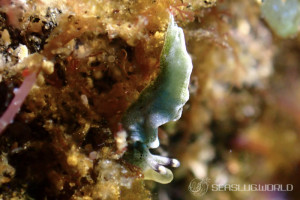
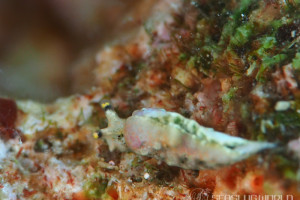
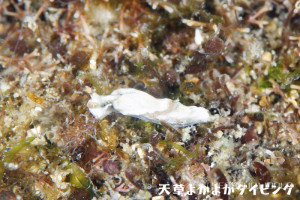
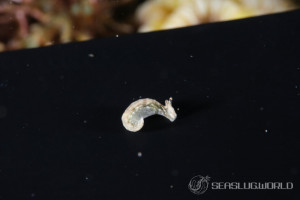
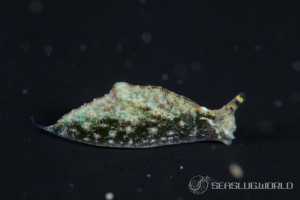
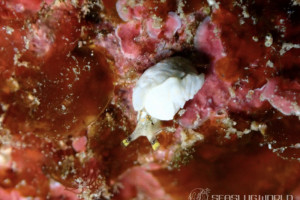
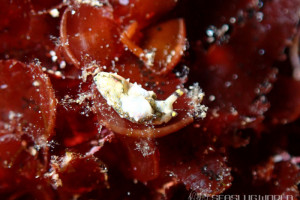
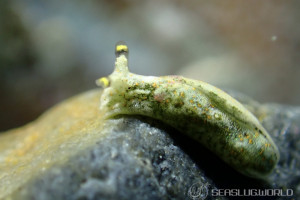
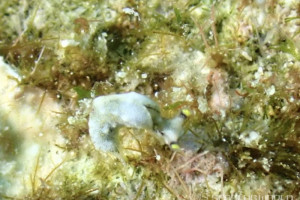
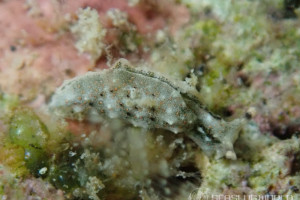
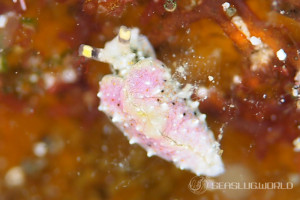
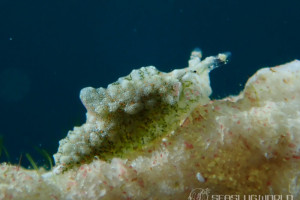
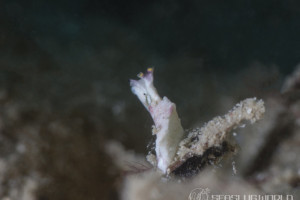
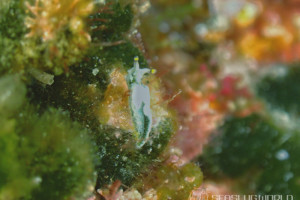
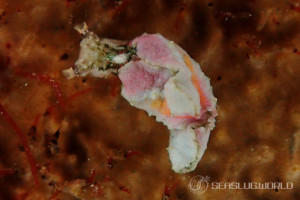
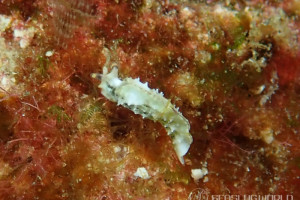
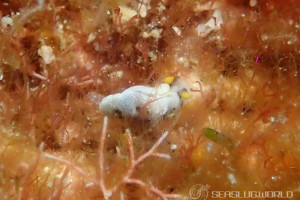
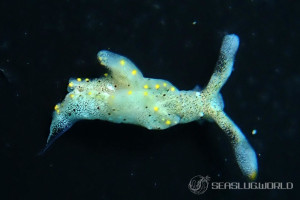
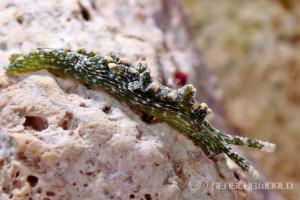
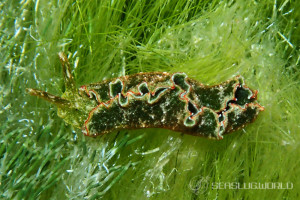
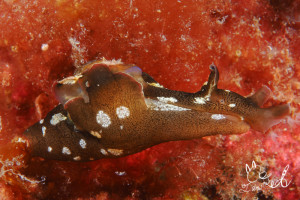
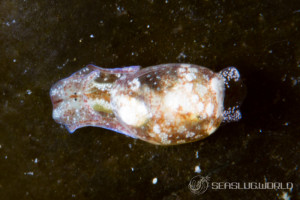
Up to 8 mm in length. Body translucent whitish with many tiny white dots, overlain with abundant yellow to orange spots that are sometimes arranged in stripe-like patterns. Tiny black spots are evenly distributed on the outer surface of the parapodia. The inner parapodial surface and foot-sole are translucent, with the green digestive gland shining through. The head bears a distinct lighter spot in the neck region behind the rhinophores. Rhinophores translucent whitish with a dark ring followed by a yellow ring towards the tip, forming a characteristic two-banded pattern. Distinct pinkish to reddish elongate patches appear at the anterior base of the parapodia (at the junction with the head), along the median part of the parapodial edge, and on both sides of the tail. The parapodial surface is covered with small tubercles whose height varies with the animal's posture.Distribution
Type locality: intertidal reef flat of South Island, Lizard Island, Great Barrier Reef, North Queensland, Australia. At the time of the original description, the species was known from Lizard Island (collected 2004, 2006) and Upolu Island, Samoa (collected 2005). Subsequent identification guides figured it as "Elysia sp. 16" from Papua New Guinea, Indonesia, the Philippines, Japan, Guam and the Hawaiian Islands, indicating a tropical to subtropical Indo-West Pacific distribution. In Japan it is recorded from the Ryukyu Islands.Etymology
The specific epithet asbecki honours Dr. Frank Asbeck, founder of the German solar-power company SolarWorld AG, for his continuous sponsorship of the Zoologisches Forschungsmuseum Alexander Koenig in Bonn — the home institution of the describing authors. The dedication links the patron's solar-energy enterprise with the species' own biology: long-term retention of functional algal chloroplasts and chronic photosynthesis from sequestered plastids.Remarks
A long-term chloroplast-retention sacoglossan: PAM measurements show that maximum quantum yield (Φ-IIe-max) values remain at roughly 0.5 even after nine days of starvation, comparable to Elysia timida and Elysia crispata. In the Pacific, Elysia asbecki is only the second known long-term retention form besides Plakobranchus ocellatus. Sequestered chloroplasts originate from at least three different ulvophycean algal species, but the algal hosts have not been identified to species level. The original description introduced the species together with Ercolania annelyleorum from the same Lizard Island reef flat.References
- ハツユキミドリガイ(仮称), 益田一. (1999). 海洋生物ガイドブック. 東海大学出版会.
- ツノクロミドリガイ, 益田一. (1999). 海洋生物ガイドブック. 第2刷. 東海大学出版会.
- ツノクロミドリガイ(仮称), 小野篤司. (1999). ウミウシガイドブック. TBSブリタニカ.
- ツノクロミドリガイ, 小野篤司. (2000). ウミウシガイドブック. 第2版. TBSブリタニカ.
- ツノクロミドリガイ, 小野篤司. (2004). 沖縄のウミウシ. ラトルズ.
- ツノクロミドリガイ, 中野理枝. (2004). 本州のウミウシ. ラトルズ.
- ツノクロミドリガイ, 小野篤司 & 加藤昌一. (2009). ウミウシ. 誠文堂新光社.
- Elysia asbecki sp. nov., Wägele H., Stemmer K., Burghardt I. & Händeler K. (2010). Two new sacoglossan sea slug species (Opisthobranchia, Gastropoda): Ercolania annelyleorum sp. nov. (Limapontioidea) and Elysia asbecki sp. nov. (Plakobranchoidea), with notes on anatomy, histology and biology. Zootaxa. 2676: 1-28.
- Elysia asbecki, Terrence Gosliner, Ángel Valdés and David Behrens. (2015). Nudibranch and Sea Slug Identification Indo-Pacific. New World Pubns Inc.
Featured in this book
Terrence Gosliner, Ángel Valdés and David Behrens. (2018). Nudibranch and Sea Slug Identification Indo-Pacific 2nd Edition. New World Pubns Inc.
New World Publications
This species, Elysia asbecki, is included in the book.
View on Amazon PR (Amazon Associates)Seasonality
Shooting Locations
Loading shooting locations...
Photos of Elysia asbecki



















Same Genus Nudibranchs
Similar Colors Nudibranchs
Academic Database
Sea slug observation data is available in international marine biodiversity databases.