Philinopsis gigliolii (Tapparone Canefri, 1874)
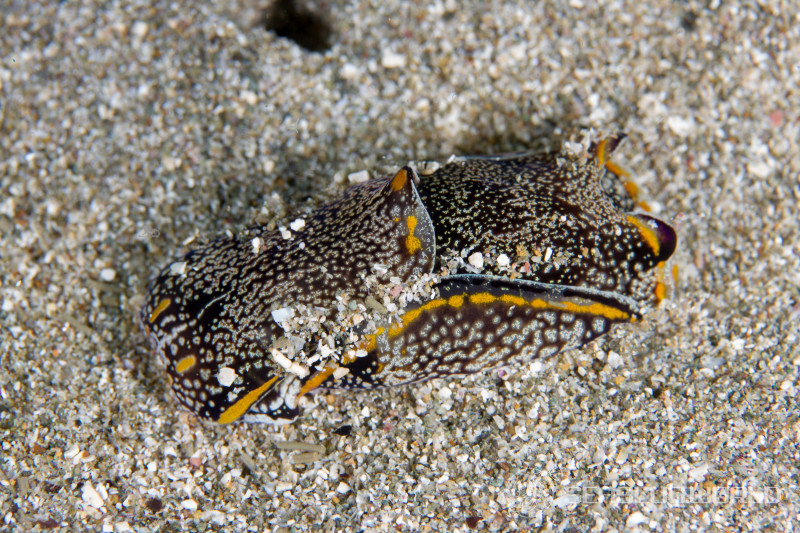
Description
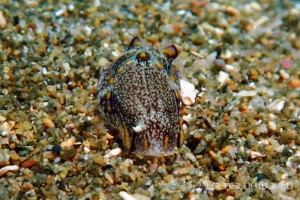
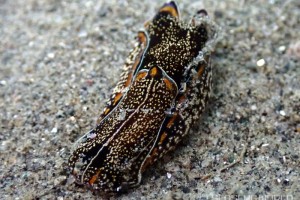
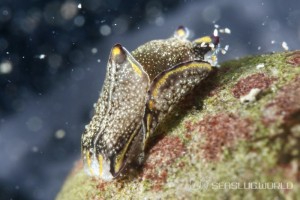
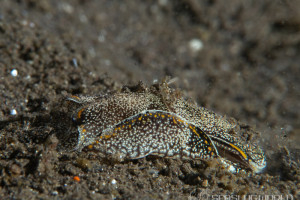
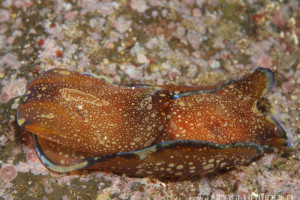
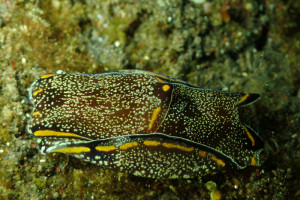
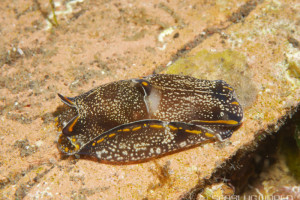
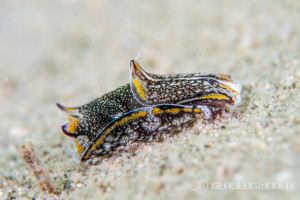
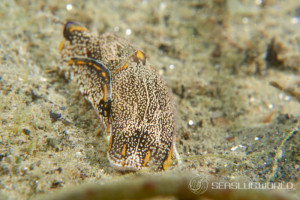
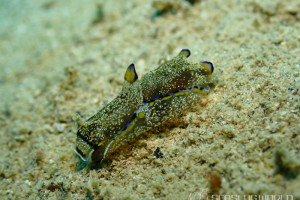
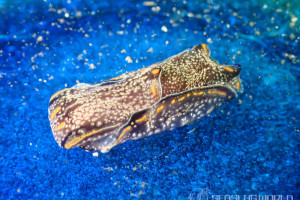
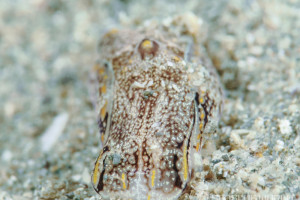
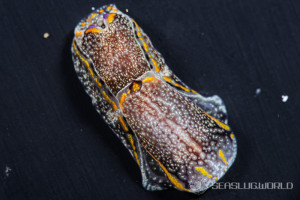
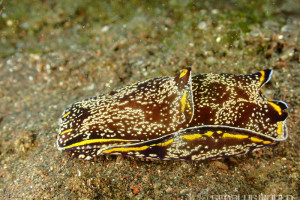
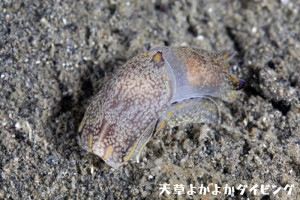
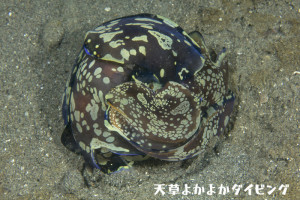
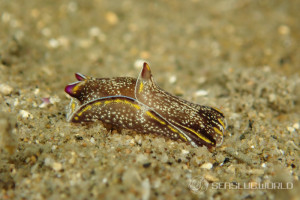
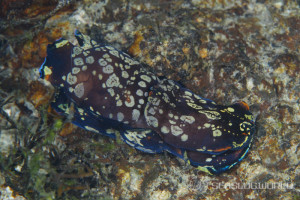
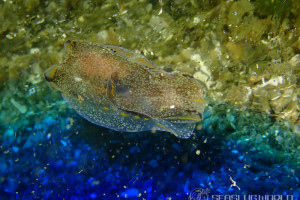
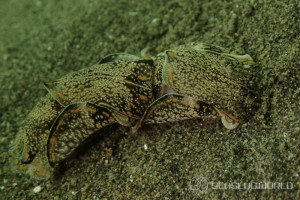
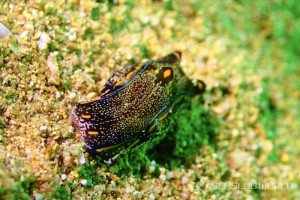
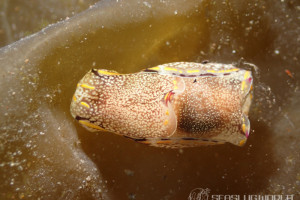
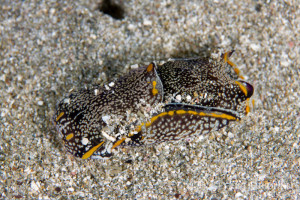
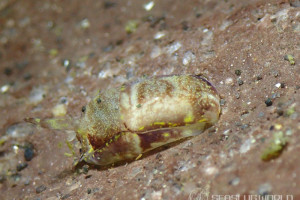
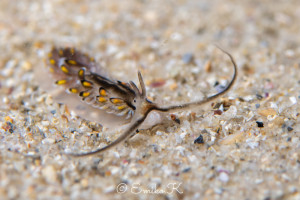
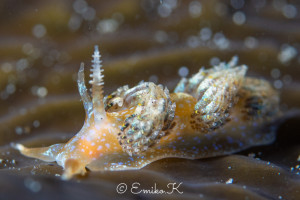
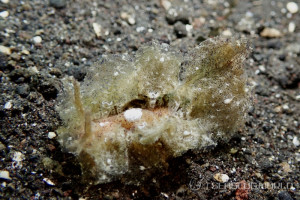
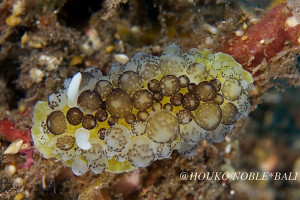
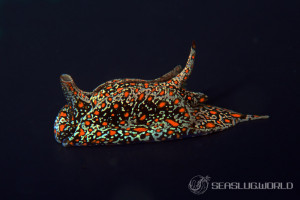
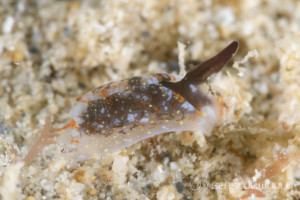
Ground color blackish brown, densely sprinkled all over with minute yellowish-brown to yellowish-white spots. Fine yellow lines run along the midline and margins of the cephalic shield and the parapodia, often accompanied by an interrupted orange-yellow line just inside these margins. The posterior end of the cephalic shield is elongated, bent dorsally, and split into two lobes. The body is semi-cylindrical with well-developed parapodia that cover the dorsum along its entire length, and the thin lamellate shell is enclosed within the body. A sand-burrowing predator that feeds on small cephalaspidean snails such as Cylichna. Adults reach about 30–35 mm in body length.Distribution
Japan (Seto Inland Sea and Pacific coast of Honshu), Sea of Japan, Yellow Sea, Russian Far East (Primorye), south-eastern Australia, and northern New Zealand. The type locality lies along the Japanese coast and is presumed to be near Yokohama. The species shows an antitropical distribution, occurring in temperate waters of both the northern and southern hemispheres.Etymology
Named in honor of Enrico Hillyer Giglioli (1845–1909), the Italian naturalist who served as zoologist aboard the Italian Royal frigate Magenta during her circumnavigation of the globe (1865–1868), on which the type material was collected.Remarks
The Japanese name カノコキセワタ (kanoko-kisewata, "fawn-spotted kisewata") was coined by Taki 1936, who placed the species in the kisewata group based on its sand-burrowing habit and external resemblance to other Aglajidae and likened the spotted pattern to fawn (kanoko) markings. The species was originally described as Aglaja gigliolii and later transferred to Philinopsis. Philinopsis taronga (Allan, 1933) from Australia and Chelidonura aureopunctata Rudman, 1968 from New Zealand are treated as junior synonyms. Chaban, Ekimova & Chernyshev 2024 reconfirmed the validity of P. gigliolii on both morphological and molecular grounds, uniting Sea of Japan, Yellow Sea, and southern-hemisphere populations under this name.References
- カノコキセワタ Aglaja gigliolii Tapparone-Canefri, 瀧巌. (1936). 貝類雜記 (7). ヴヰナス. 6(1): 44-?.
- 高岡生物研究会. (2002). 日本海のウミウシ. 第2版.
- Andrea Zamora-Silva and Manuel António E. Malaquias Molecular phylogeny of the Aglajidae head-shield sea slugs (Heterobranchia: Cephalaspidea): new evolutionary lineages revealed and proposal of a new classification Zoological Journal of the Linnean Society, 2017
- Philinopsis gigliolii, Chaban E.M., Ekimova I.A. & Chernyshev A.V. (2024). Philinopsis gigliolii (Gastropoda: Heterobranchia: Aglajidae) from the Sea of Japan: validity, synonymy and biogeography. Invertebrate Zoology. 21(2): 157-169. https://doi.org/10.15298/invertzool.21.2.04
A Kindle field guide by the site author
Kimoto N. (2026). Sea Slugs of Japan & the Indo-Pacific, 2nd Edition.
Kindle Edition
View on Amazon PR (Amazon Associates)Seasonality
Shooting Locations
Loading shooting locations...
Photos of Philinopsis gigliolii
Tag:





















Same Genus Nudibranchs
Similar Colors Nudibranchs


Academic Database
Sea slug observation data is available in international marine biodiversity databases.