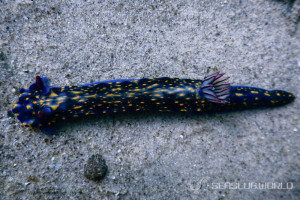
Phyllodesmium longicirrum (Bergh, 1905)
- Location
- Pulau Bali, Indonesia
- Date
- 2009/12/31
- Length
- 100mm
- Depth
- 17.0m
- Water temperature
- 27.0℃
Description
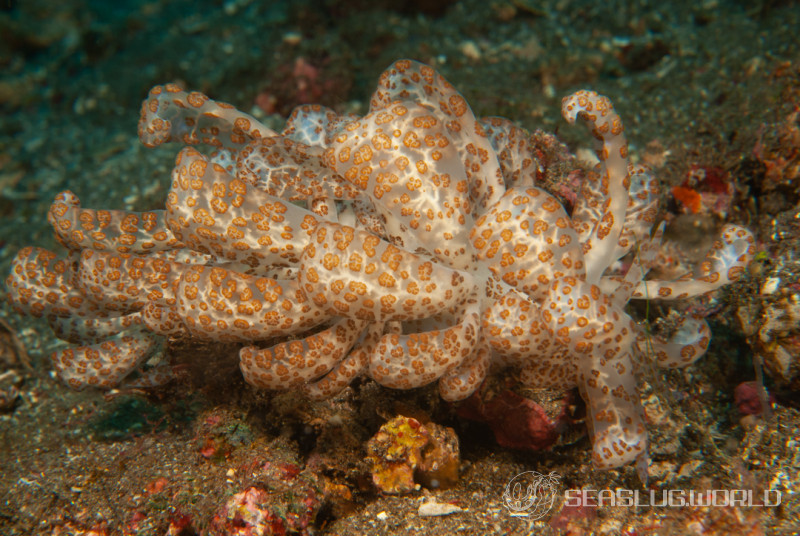
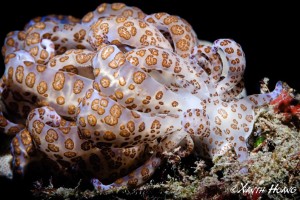
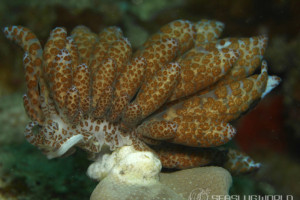
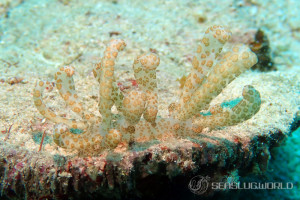
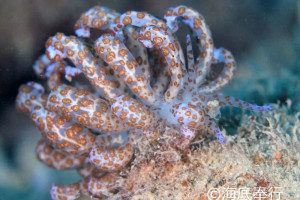
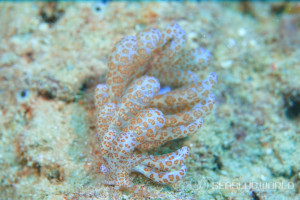
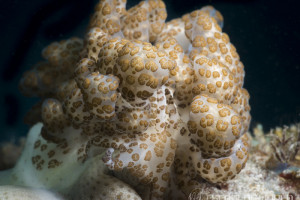
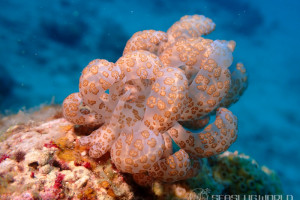
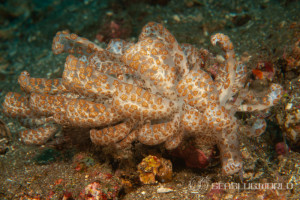
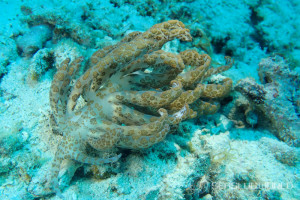
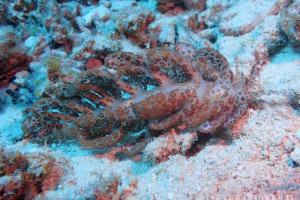
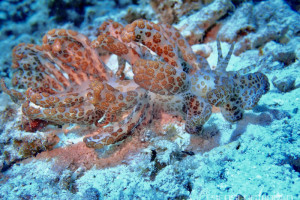
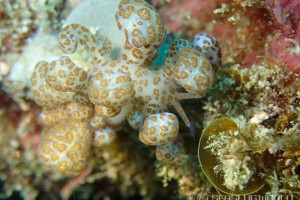
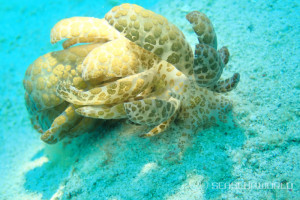
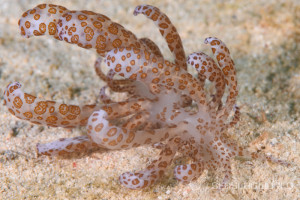
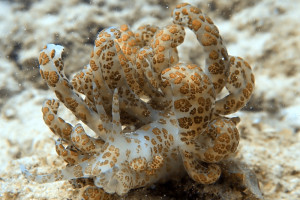
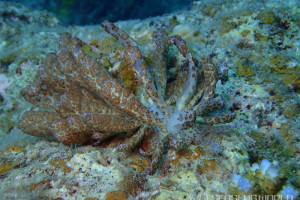
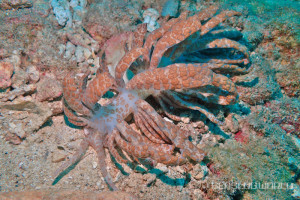
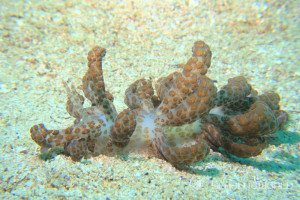
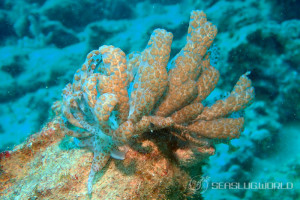
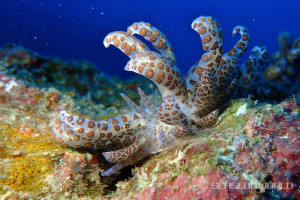
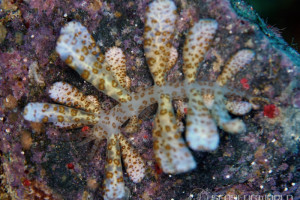
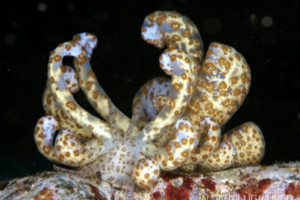
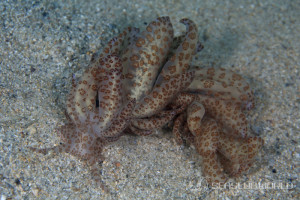
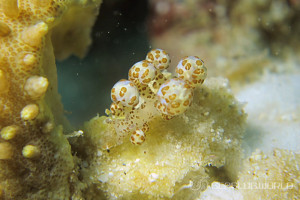
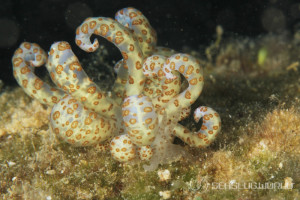
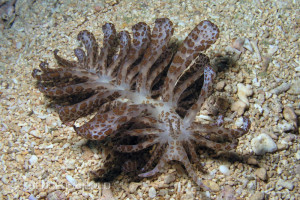
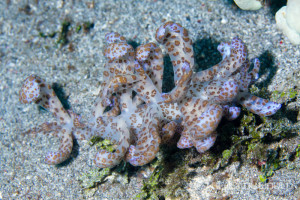
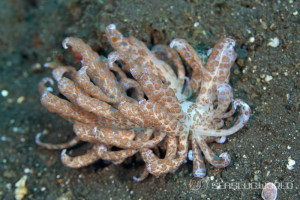
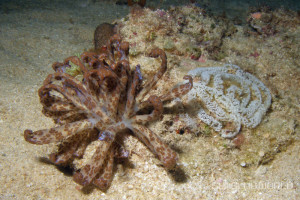
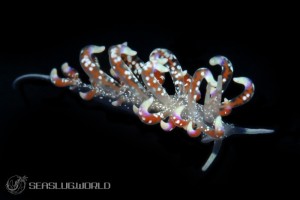
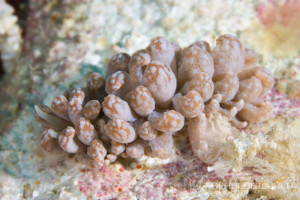
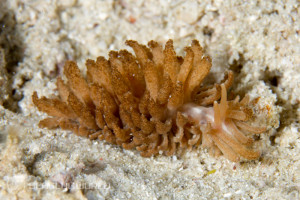
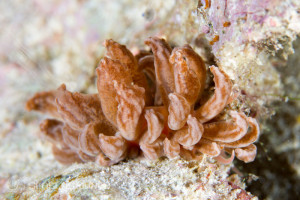
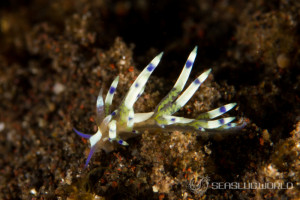
A large aeolid reaching 13 cm in body length alive. The body colour is yellowish, lighter on the back, with brownish rounded patches scattered everywhere; the dorsal papillae bear similar but darker patches, more pronounced at the margins. The dorsal papillae stand symmetrically in 8-9 rather short, weakly curved transverse rows. The papillae are flattened and somewhat leaf-like, constricted at the base and slightly pointed at the tip; the inner face is flat or slightly hollow, the outer face slightly convex; both faces are coarsely knobbly with closely-set liver lobules. The two innermost papillae of each row are colossal, reaching almost half the body length. No cnidosac is present at the tip of the papillae.Distribution
Type locality: a reef off Saleyer Island, Indonesia (Siboga Expedition station 213); secondary station off Elat, west coast of Great Kei Island. The species is widespread in the tropical Indo-West Pacific, with records from Australia (including the Great Barrier Reef), Papua New Guinea, the Philippines and southern Japan.Etymology
The specific epithet longicirra (original spelling) is a compound of Latin longus ("long") and cirrus ("curl, tendril, appendage"), referring to the conspicuously elongated dorsal papillae. When the genus was later subsumed into Phyllodesmium, the epithet was re-spelled longicirrum to agree with the neuter gender of the new genus.Remarks
The species was originally described as Myrrhine longicirra, the only species of the new genus Myrrhine, whose name commemorates a female character in Aristophanes' "Lysistrata". Myrrhine was later sunk into Phyllodesmium, yielding the present combination — the parentheses in the author citation reflect this transfer.References
- Myrrhine longicirra n.sp., Bergh R. (1905). Die Opisthobranchiata der Siboga-expedition. https://doi.org/10.5962/bhl.title.11223
- Phyllodesmium longicirrum, Rudman W.B. (1981). The anatomy and biology of alcyonarian-feeding aeolid opisthobranch molluscs and their development of symbiosis with zooxanthellae. Zoological Journal of the Linnean Society. 72(3): 219-262. https://doi.org/10.1111/j.1096-3642.1981.tb01571.x
- オオコノハミノウミウシ(新称), 益田一ほか. (1996). 海岸動物 (フィールド図鑑). 補訂版第2版. 東海大学出版会.
- Phyllodesmium longicirrum, Moore E.J. & Gosliner T.M. (2009). Three new species of Phyllodesmium Ehrenberg (Gastropoda: Nudibranchia: Aeolidoidea), and a revised phylogenetic analysis. Zootaxa. 2201: 30-48. https://doi.org/10.11646/zootaxa.2201.1.6
A Kindle field guide by the site author
Kimoto N. (2026). Sea Slugs of Japan & the Indo-Pacific, 2nd Edition.
Kindle Edition
View on Amazon PR (Amazon Associates)Seasonality
Shooting Locations
Loading shooting locations...
Photos of Phyllodesmium longicirrum






















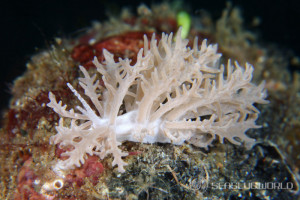
Same Genus Nudibranchs

Similar Colors Nudibranchs

Academic Database
Sea slug observation data is available in international marine biodiversity databases.