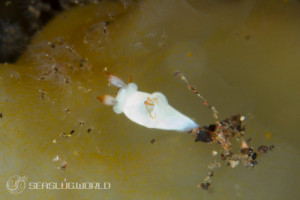
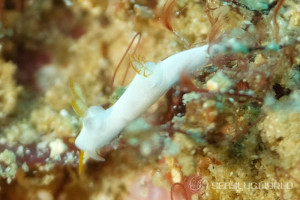
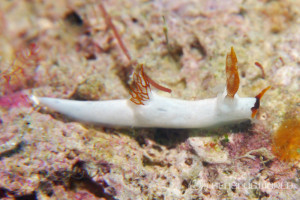
Trapania gibbera Gosliner & Fahey, 2008
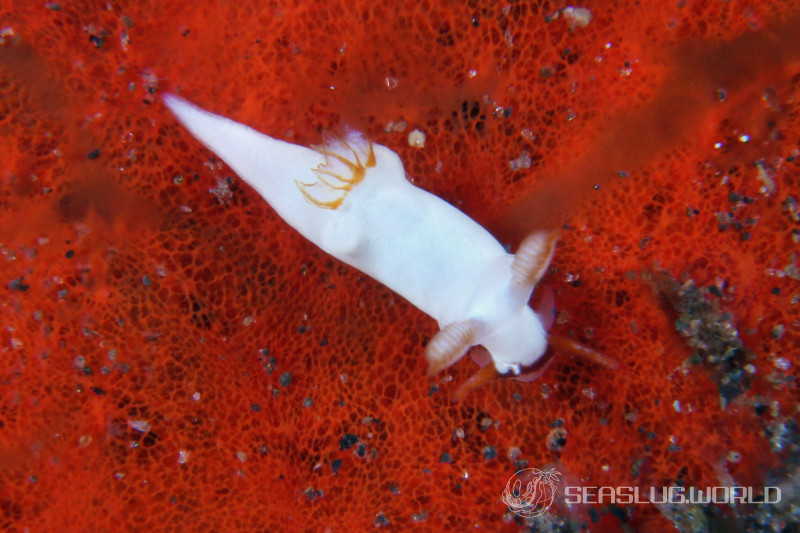
- Location
- USAT Liberty Shipwreck, Tulamben, Pulau Bali, Indonesia
- Date
- 2015/11/15
- Length
- 7mm
- Depth
- 18.0m
- Water temperature
- 30.0℃
Description
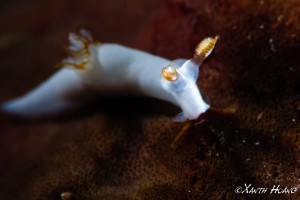
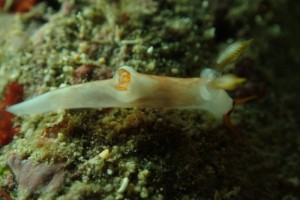
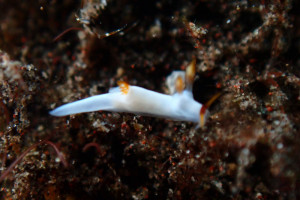
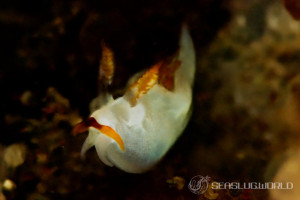
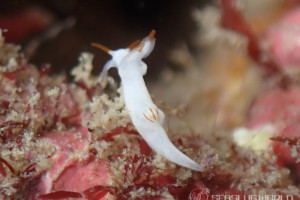
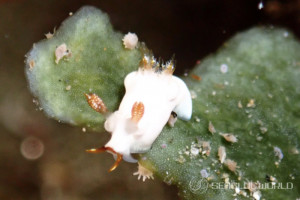
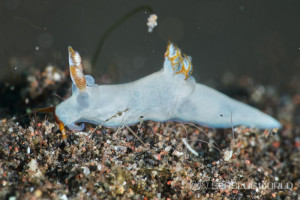
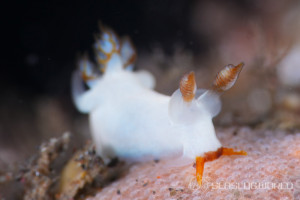
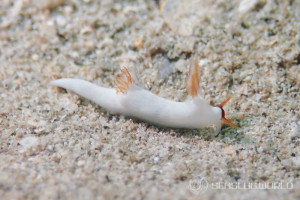
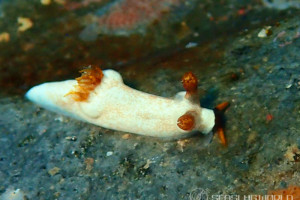
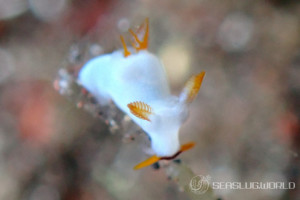
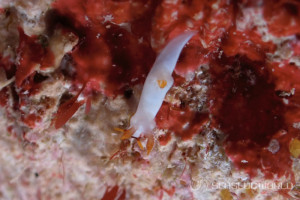
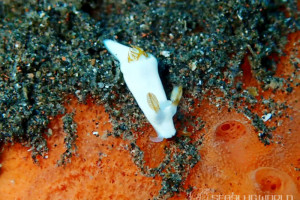
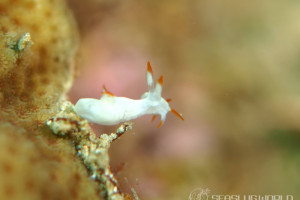
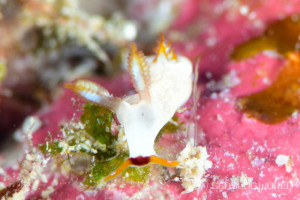
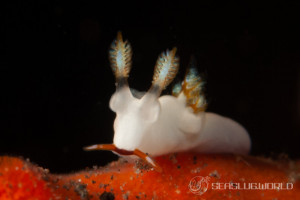
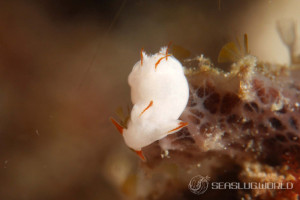
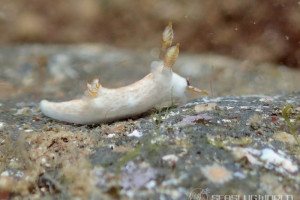
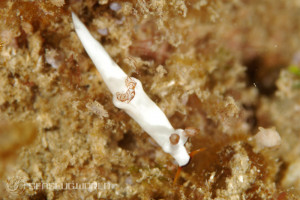
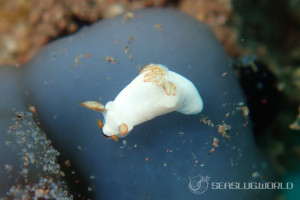
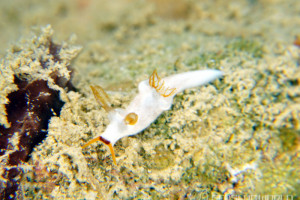
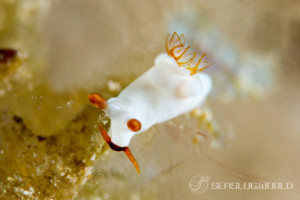
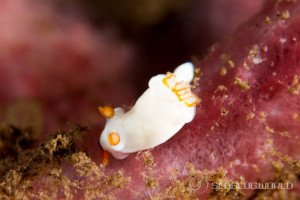
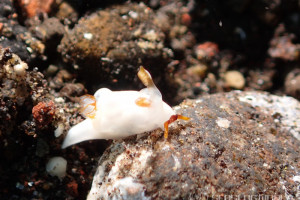
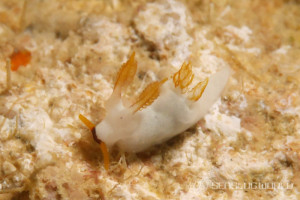
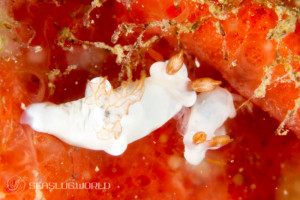
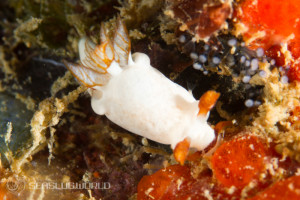
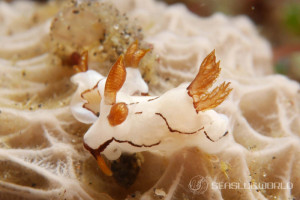
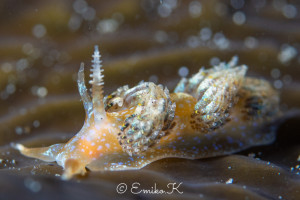
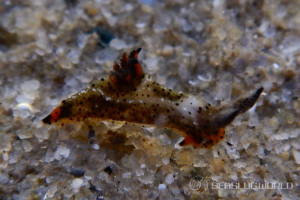
Body 6–10 mm long, elongate and convex, lacking a notal margin. Widest at the branchial region with a distinct dorsal hump in front of the gill — the most characteristic feature of this species. Oral tentacles are long and pointed. Rhinophores are relatively short and stout with 9–10 lamellae; stalk and club are the same thickness. Extra-rhinophoral appendages are relatively short and curved. Extra-branchial appendages are stout and curved, about the same size as the extra-rhinophoral appendages. Gill of three bipinnate branches.The body is entirely white with a black line of pigment on the anterior margin of the head. Oral tentacles are reddish-brown or orange. Extra-rhinophoral and extra-branchial appendages are white. Rhinophores are translucent white but the edges of the lamellae are reddish-brown to orange. Gill rachis and lamellae are reddish-brown to orange. The tip of the foot is light blue.
Distribution
Papua New Guinea (type locality: Nivani Island, Louisiade Archipelago), Indonesia and Okinawa.Etymology
Verbatim from the original description (Gosliner & Fahey, 2008, p.69):The specific name gibbera is taken from the Latin word meaning 'a hump on the back'. This describes the dorsal hump that is found anterior to the gill pocket on this species.
Remarks
Described as one of 16 new Indo-Pacific Trapania species in Gosliner, T.M. & Fahey, S.J. 2008 Zoological Journal of the Linnean Society 152: 53-111. Diagnosed externally by the dorsal hump anterior to the gill pocket and by the reddish-brown to orange rhinophoral lamellae and gill rachis on an otherwise white body. Although the jaw morphology shows similarities with T. nebula, "Trapania gibbera has fewer long inner denticles and many more intermediate denticles between the largest" (p.69).References
- Trapania gibbera sp. nov., Gosliner T.M. & Fahey S.J. (2008). Systematics of Trapania (Mollusca: Nudibranchia: Goniodorididae) with descriptions of 16 new species. Systematics and Biodiversity. 6(1): 53-98. https://doi.org/10.1017/s1477200007002587
- Trapania gibbera, Terrence Gosliner, Ángel Valdés and David Behrens. (2015). Nudibranch and Sea Slug Identification Indo-Pacific. New World Pubns Inc.
- クチヒゲツガルウミウシ(新称), 中野理枝. (2018). 日本のウミウシ. 文一総合出版.
- Paz-Sedano S., Moles J., Smirnoff D., Gosliner T.M. & Pola M. (2024). A combined phylogenetic strategy illuminates the evolution of Goniodorididae nudibranchs (Mollusca, Gastropoda, Heterobranchia). Molecular Phylogenetics and Evolution. 192: 107990. https://doi.org/10.1016/j.ympev.2023.107990
Featured in this book

Terrence Gosliner, Ángel Valdés and David Behrens. (2018). Nudibranch and Sea Slug Identification Indo-Pacific 2nd Edition. New World Pubns Inc.
New World Publications
This species, Trapania gibbera, is included in the book.
View on Amazon PR (Amazon Associates)Seasonality
Shooting Locations
Loading shooting locations...
Photos of Trapania gibbera
Tag:





















Same Genus Nudibranchs
Similar Colors Nudibranchs

Academic Database
Sea slug observation data is available in international marine biodiversity databases.