Limenandra confusa Carmona, Pola, Gosliner & Cervera, 2014
Description
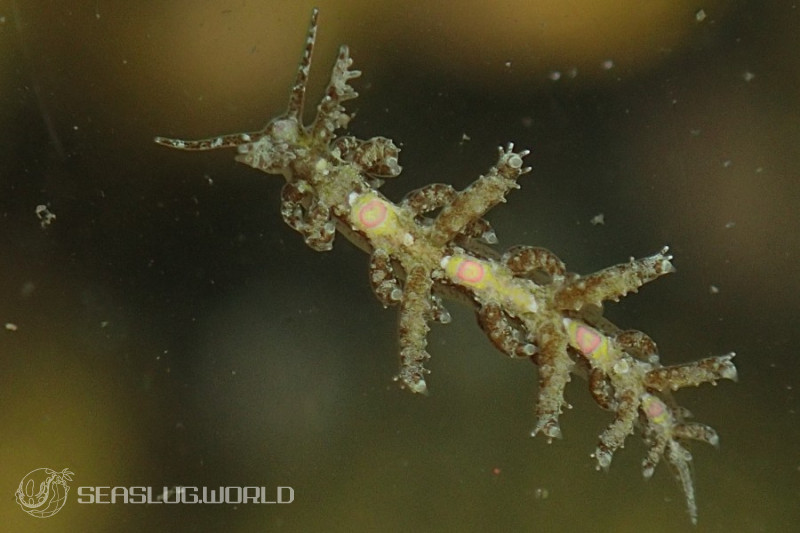
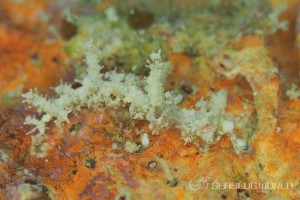
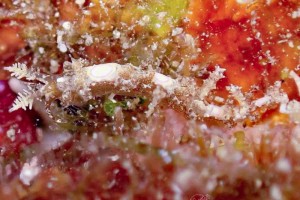
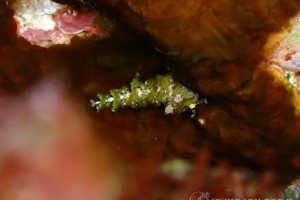
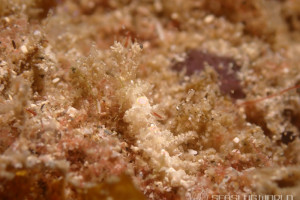
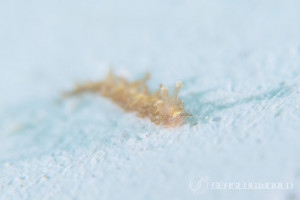
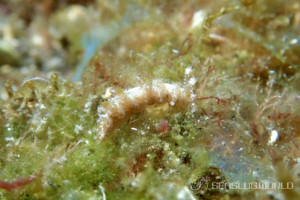
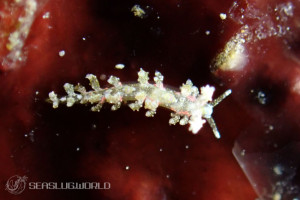
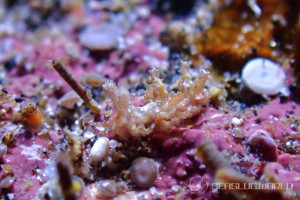
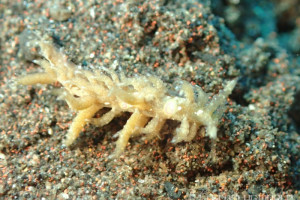
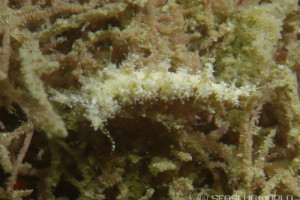
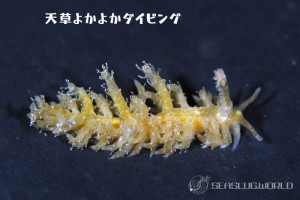
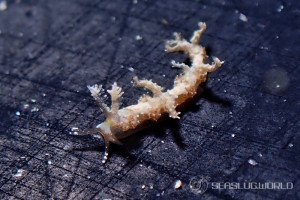
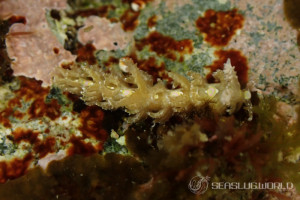
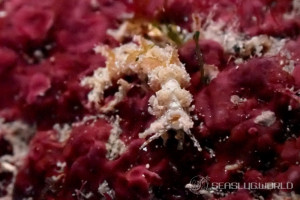
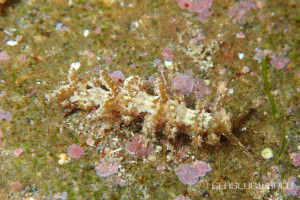
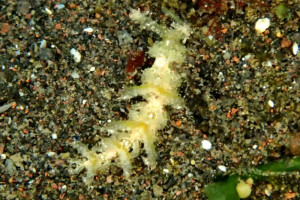
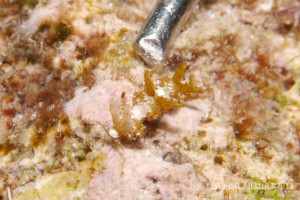
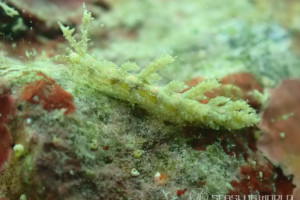
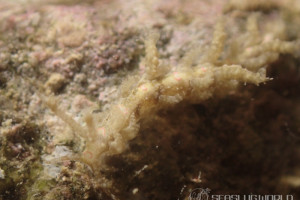
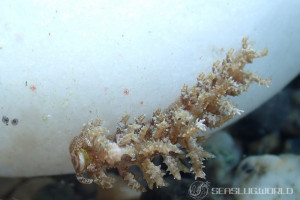
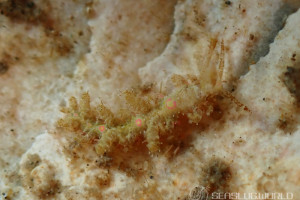
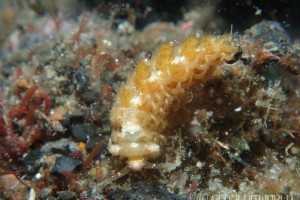
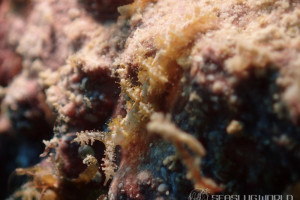
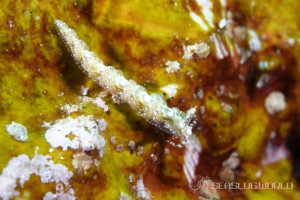
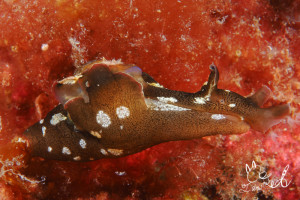
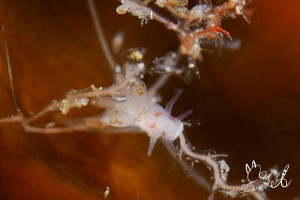
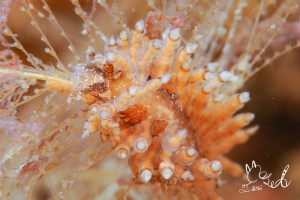
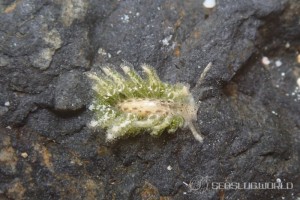
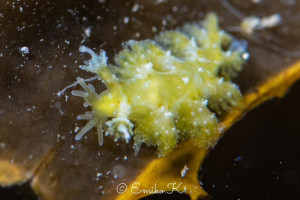
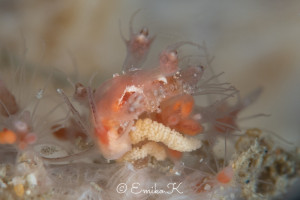
Body slender and elongate, tapering posteriorly. Anterior foot margin rounded with tentaculiform foot corners bearing a deep transverse groove. Ground colour dull olive green with small white and cream spots over the notum. A series of concentric rings runs along the dorsal midline from head to tail, comprising (from outside to inside) yellow, red and white at the centre. The number of circles varies with body size. Rhinophores are dull green with small white and/or cream spots; their posterior side bears sparse, elongate, sometimes bifurcated papillae. Apex white or cream and rounded. Oral tentacles longer than rhinophores; oral tentacles and foot corners dull olive green with opaque white spots. Cerata are dorso-ventrally flattened, some papillate. Cerata are arranged in up to eleven rows from just behind the rhinophores to the end of the foot, with the first two rows very close together. Cerata of rows IV, VI, VIII and X (sometimes absent) are much longer than the rest. Each row contains 1-6 cerata, decreasing in size towards the foot.Distribution
Widely distributed across the Indo-Pacific. Type locality: South side of Sand Island, Midway Islands. Recorded from the Philippines, Hawaii, Mexico (Pacific coast), Gulf of California and Costa Rica.Etymology
Verbatim from the original description (Carmona et al. 2014, Helgol Mar Res 68: 45):The specific name refers to the mistakes previously made in identifying this species due to it close external morphological resemblance to L. nodosa.
Remarks
Described as a new species in Carmona, Lei, Pola, Gosliner, Valdés & a 2014 revision Helgoland Marine Research 68: 37-48. Carmona et al. 2013 demonstrated 7.3% COI uncorrected p-distance between this species and L. nodosa, supporting their treatment as cryptic sibling species. The author noted:Apart from the salivary glands and size of the receptaculum seminis, no morphological differences are found between L. nodosa and L. confusa ... we consider the receptaculum seminis as the main morphological difference between L. nodosa and L. confusa(p.45). The two species have allopatric ranges: L. nodosa is amphi-Atlantic while L. confusa is restricted to the Pacific.
References
- トゲミノウミウシ(新称), 小野篤司. (2004). 沖縄のウミウシ. ラトルズ.
- Limenandra confusa, Carmona L., Pola M., Gosliner T.M. & Cervera J.L. 2014. The end of a long controversy: systematics of the genus Limenandra (Mollusca: Nudibranchia: Aeolidiidae). Helgoland Marine Research, 68: 37-48. [Published online 7 August 2013; Code-compliant paper version published March 2014 page(s): 42, 44-47
A Kindle field guide by the site author

Kimoto N. (2026). Sea Slugs of Japan & the Indo-Pacific, 2nd Edition.
Kindle Edition
View on Amazon PR (Amazon Associates)Seasonality
Shooting Locations
Loading shooting locations...
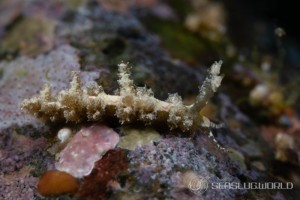
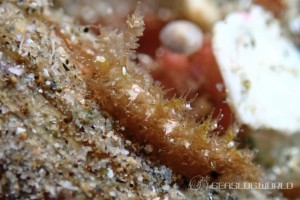
Photos of Limenandra confusa














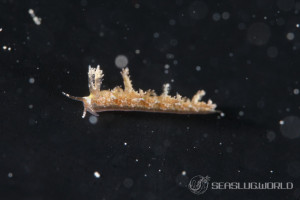

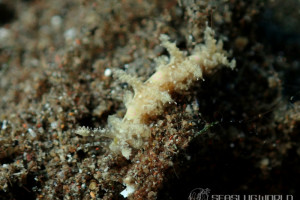
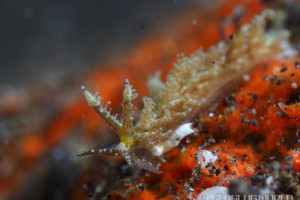

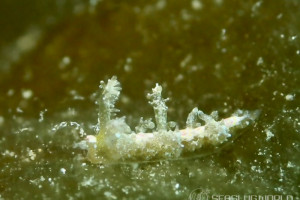









Same Genus Nudibranchs

Similar Colors Nudibranchs


Academic Database
Sea slug observation data is available in international marine biodiversity databases.