Melibe papillosa (de Filippi, 1867)
Description
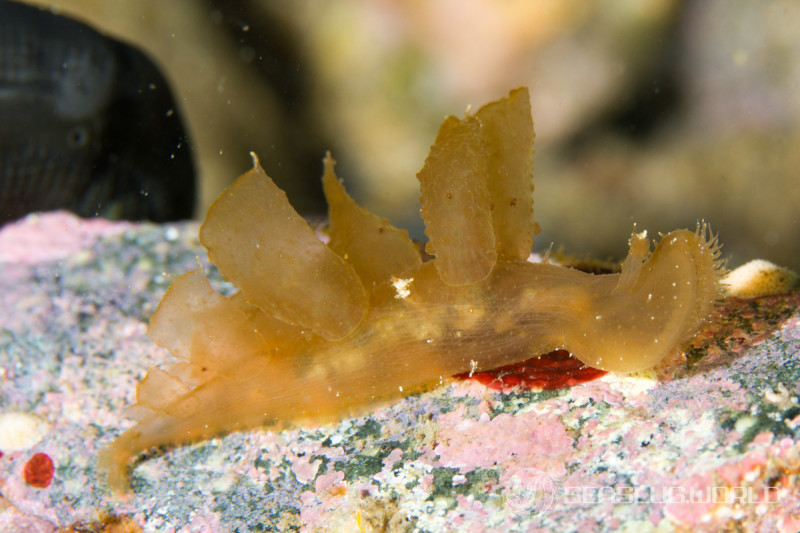
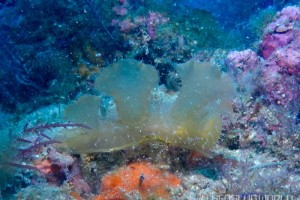
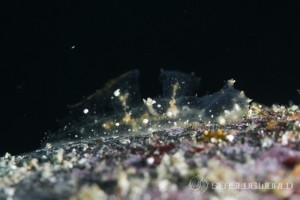
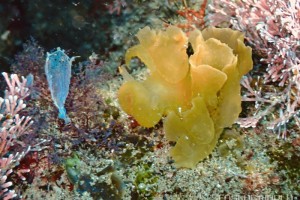
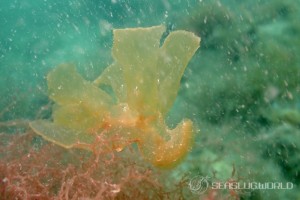
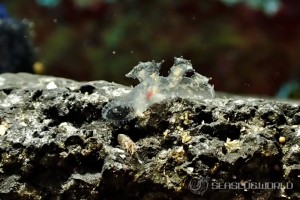
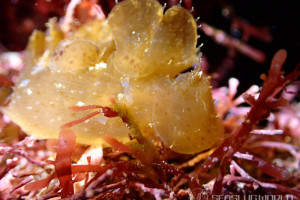
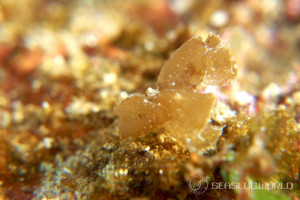
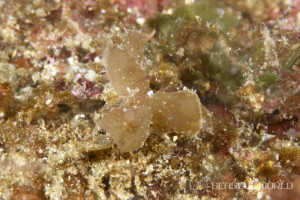
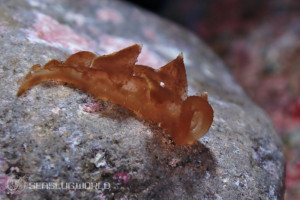
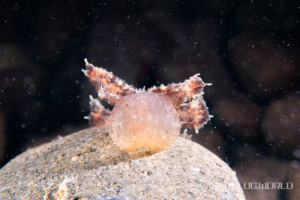
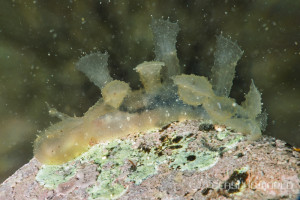
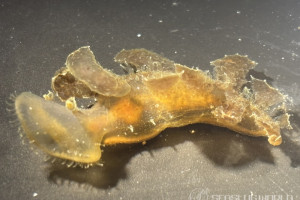
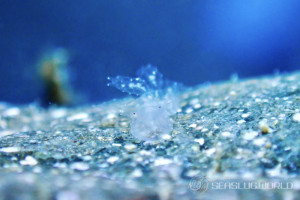
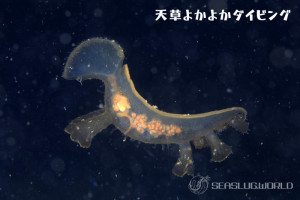
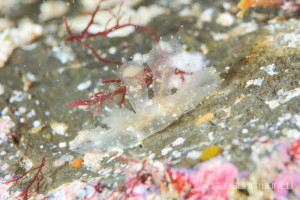
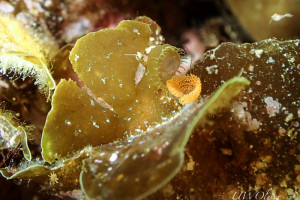
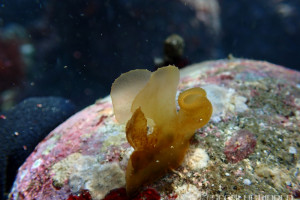
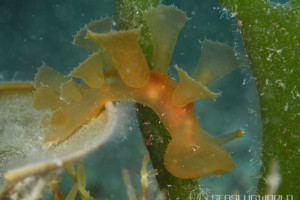
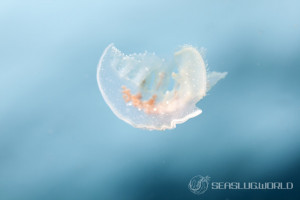
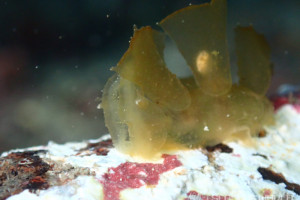
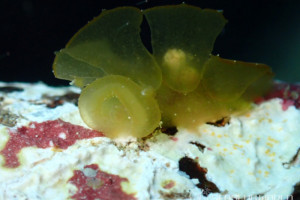
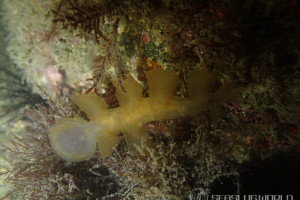
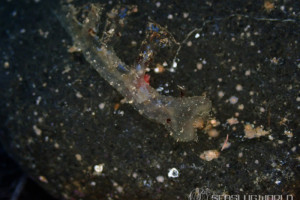
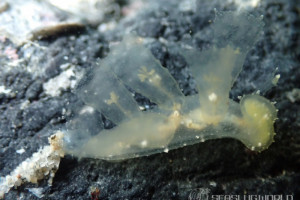
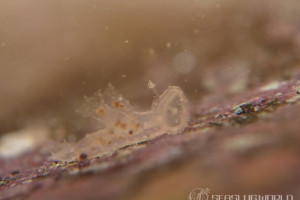
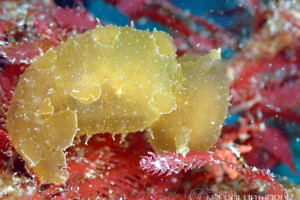
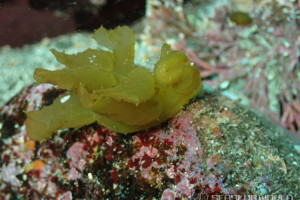
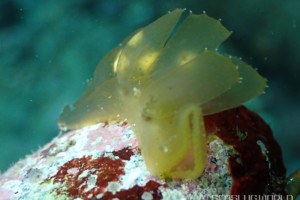
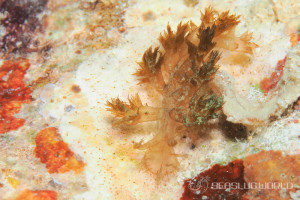
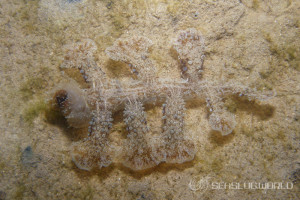
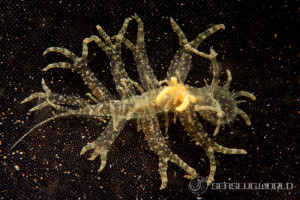
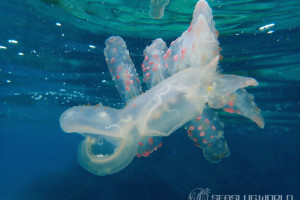
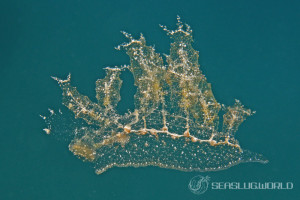
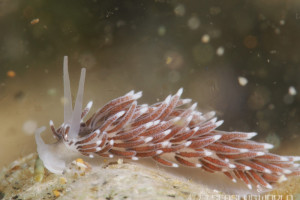
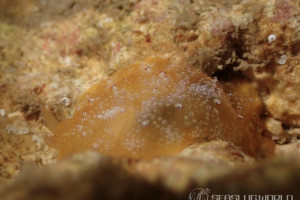
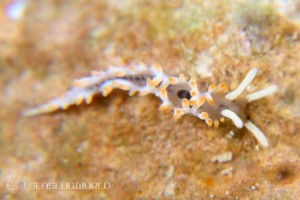
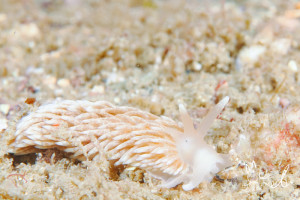
A medium-sized melibid reaching about 50 mm in length. The living animal has a golden brown ground color, with brown and opaque white blotches present on the notum and cerata, along with dispersed patterns of tiny white flecks or glandular dots. The animal is translucent to transparent, and portions of the internal organs and the substratum can be seen through the body.The body is elongate, limaciform, somewhat compressed anterolaterally, with a dorsally elevated hump in the cardiac region tapering gradually to a slender posterior portion of the foot. Thin, elongate papillae are present on the notum and cerata. The foot is opaque, narrow and linear, with a rounded, entire anterior margin.
The large oral hood has a circular, entire margin with two rows of cylindrical papillae, which taper to conical points, with the innermost row being the longer (a key character distinguishing this species). There are scattered papillae on the surface of the oral hood. The well-separated, perfoliate rhinophores have 12 lamellae and arise from cylindrical sheaths bearing a narrow posterior sail with a simple, elongate dorsal projection.
There are three to six pairs of cerata, apically flattened with a regular wedge-shaped margin bearing a few thin papillae. The buccal mass is wide and muscular, devoid of a radula but containing a pair of thin chitinous jaws with a denticulate masticatory border (an important diagnostic character). The posterior stomach contains 23 triangular chitinous plates with thickened, eccentric apices arranged in an alternating manner of large and small plates. The reproductive system has more than 50 compound, spherical, congested ovotestis bodies.
Distribution
Originally described from Japan (de Filippi, 1867). The species is known from mainland Japan, Okinawa and Indonesia (Baba, 1949; Debelius, 1996).Etymology
The specific epithet papillosa is Latin for "bearing papillae", referring to the numerous elongate papillae covering the body and cerata.Remarks
The species was originally described as Jacunia papillosa de Filippi, 1867 and later transferred to Melibe; Jacunia Filippi, 1867 is a junior synonym of Melibe Rang, 1829.M. papillosa has long been confused with Melibe pilosa Pease, 1860 and Melibe vexillifera Bergh, 1880, having been treated as a synonym of M. pilosa by several workers (Eliot 1907; Odhner 1936; Edmunds & Thompson 1972; Gosliner 1987). The anatomical re-examination by a 2003 revision confirmed that M. papillosa, M. pilosa and M. vexillifera are closely related but distinct species. M. vexillifera is now considered a junior synonym of M. viridis.
The sister clade of M. papillosa is the clade containing M. viridis and M. bucephala. M. papillosa is distinguished by having only two rows of papillae on the oral hood (vs. 3–5 in M. bucephala and 2–5 in M. viridis), and a posterior digestive gland that enters only the first post-cardiac cerata (vs. the first two ceratal rows in M. bucephala and M. viridis).
Externally M. papillosa most closely resembles M. pilosa, which has been a source of taxonomic confusion. The two are distinguished by the denticulate jaw masticatory border of M. papillosa (vs. smooth in M. pilosa), stomach plates that alternate in size (vs. all of similar size in M. pilosa), and the posterior branches of the digestive gland entering only the first posterior cerata (vs. the first two in M. pilosa).
References
- ヒメメリベ(新稱), Baba K. (1949). Opisthobranchia of Sagami Bay collected by His Majesty the Emperor of Japan (相模湾産後鰓類図譜). Iwanami Shoten, Tokyo. 4+2+194+7 pp., pls. 1-50.
- メリベウミウシ, Hori S. & Fukuda H. (1996). Opisthobranchia of Yamaguchi Prefecture, western Honshu, Japan — Part 1. The Yuriyagai.
- メリベウミウシ, 益田一. (1999). 海洋生物ガイドブック. 東海大学出版会.
- 高岡生物研究会. (2002). 日本海のウミウシ. 第2版.
- Melibe papillosa (de Filippi, 1867), Gosliner, T. M.; Smith, V. G. (2003). Systematic review and phylogenetic analysis of the nudibranch genus Melibe (Opisthobranchia: Dendronotacea) with descriptions of three new species. Proceedings of the California Academy of Sciences. 4(54): 302-356.
- ヒメメリベ, 小野篤司. (2004). 沖縄のウミウシ. ラトルズ.
A Kindle field guide by the site author
Kimoto N. (2026). Sea Slugs of Japan & the Indo-Pacific, 2nd Edition.
Kindle Edition
View on Amazon PR (Amazon Associates)Seasonality
Shooting Locations
Loading shooting locations...
Photos of Melibe papillosa
Tag:




















Same Genus Nudibranchs

Similar Colors Nudibranchs
Academic Database
Sea slug observation data is available in international marine biodiversity databases.