Melibe engeli Risbec, 1937
- Location
- Gorilla Chop, Okinawa Island (Motobu and Northern area), Okinawa, Japan
- Date
- 2015/04/11
- Length
- 50mm
- Depth
- 10.0m
- Water temperature
- 22.0℃
Description
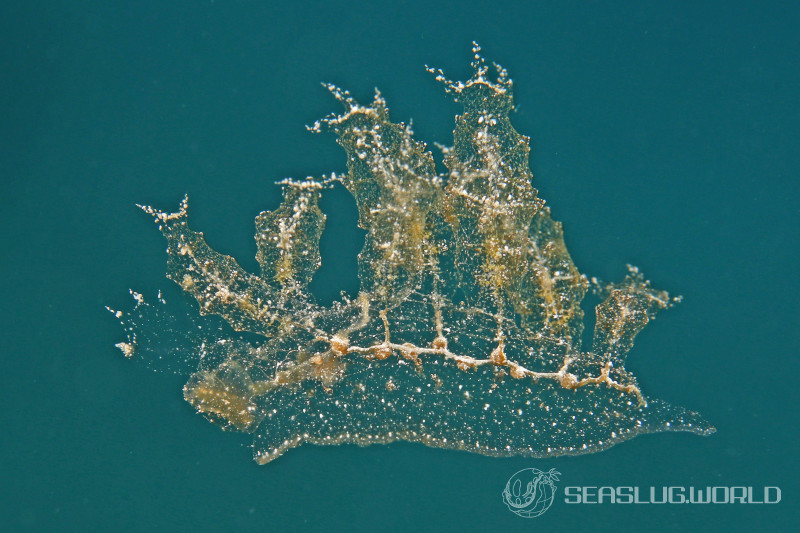
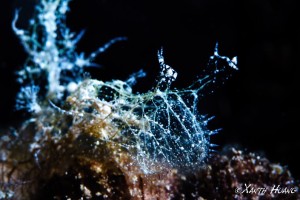
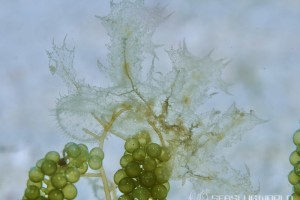
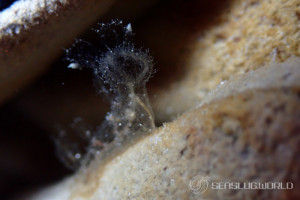
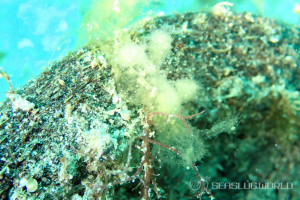
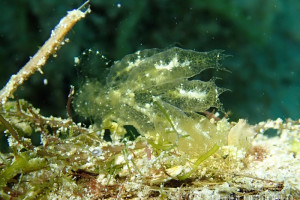
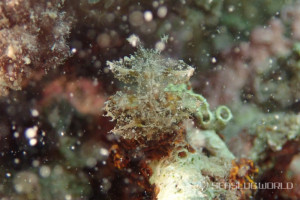
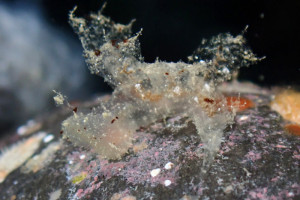
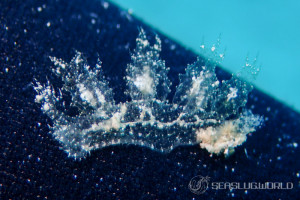
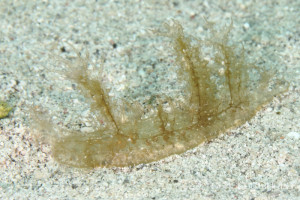
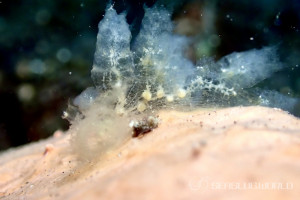
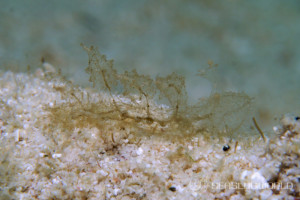
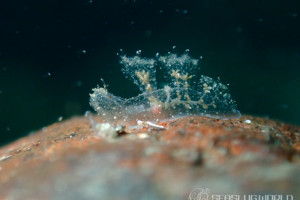
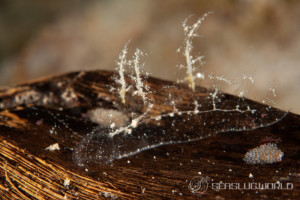
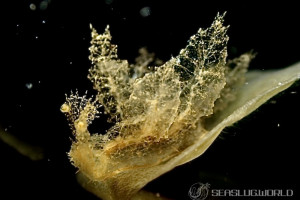
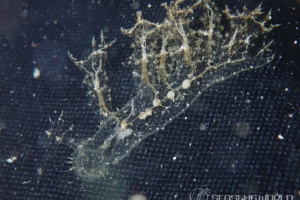
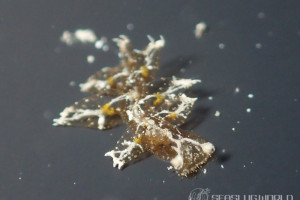
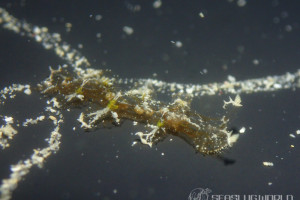
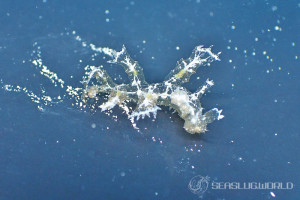
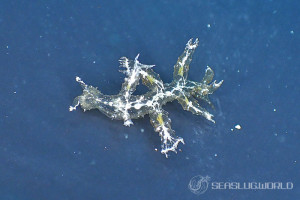
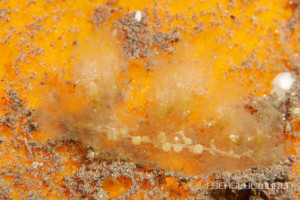
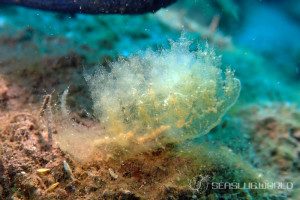
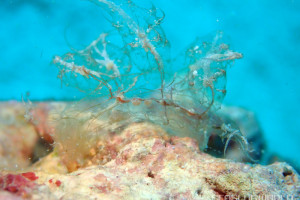
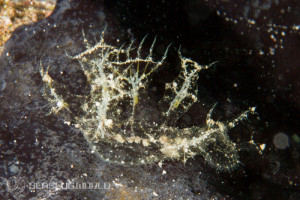
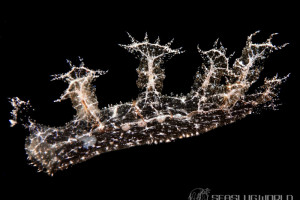
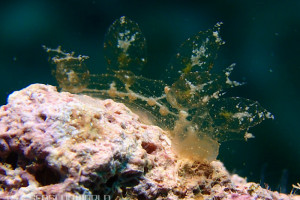
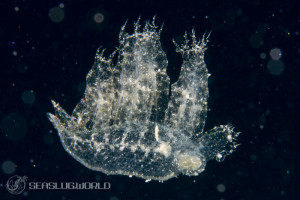
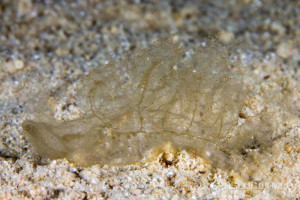
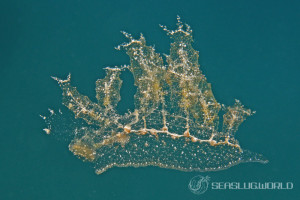
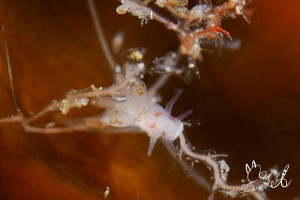
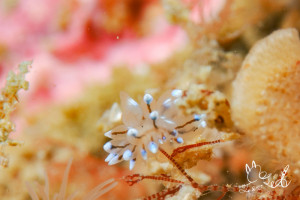
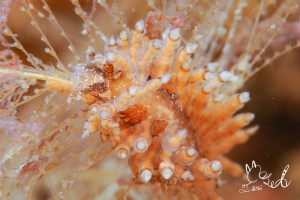
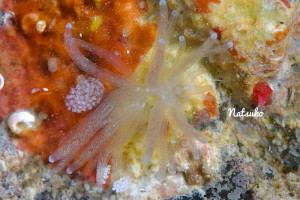
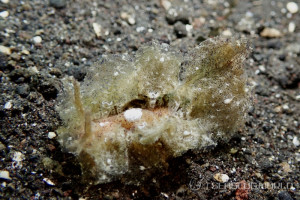
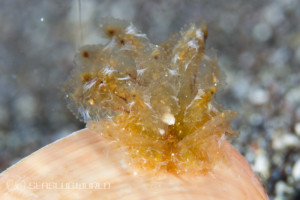
A small melibid reaching about 30 mm in length. The living animal is virtually transparent with a slight greenish yellow coloration; the internal organs and muscle fibers are clearly visible through the body wall. Preserved specimens are white to pale yellow.The body is limaciform, somewhat compressed anterolaterally, tapering posteriorly into a narrow, rounded posterior portion of the foot. The body surface bears few to many conical papillae with acute or acuminate apices. Fine white dots or tubercles are scattered on or near the body surface, more numerous on the papillae. The foot is narrow and linear with a rounded, entire anterior margin, and bears 2–4 small conical papillae proximal to the anterior foot margin.
The circular oral hood is small relative to the rest of the body, with an entire margin in most specimens. There are inner and outer rows of long, tapering, conical, tentacular papillae with recurving tips, most often arranged opposite, and the rows have a visible axial fiber extending from the hood margin. The rhinophoral sheaths bear a characteristic posterior "cockscomb" of 3–5 obtuse to acutely pointed papillations, an effect resembling the outline of a typical ceras.
The cerata are highly variable in outline, ranging from oval, saccate, or pyriform to elongate and cylindrical. There are 3–6 cerata on each side. The surface may be smooth or covered with low tubercles giving a warty or lobed appearance, and may bear flattened distal projections in a "cockscomb" pattern. The cerata appear to autotomize readily, and specimens are often seen with cerata in different stages of regeneration.
The buccal mass is wide and muscular, devoid of a radula but containing a pair of denticulate, chitinous jaws. The posterior stomach contains 15–22 triangular chitinous plates with thickened, eccentric apices arranged in an alternating manner of large and small plates. The reproductive system has 9 well-separated, simple, spherical ovotestis follicles.
Distribution
The type locality is New Caledonia (Risbec, 1937, 1953). The records by a 2003 revision from Hawai‘i (Maui) and the Philippines (Batangas Province), together with a photograph from southern Japan, represent the first records of this species since its original description and indicate a wide Indo-Pacific distribution.Etymology
The specific epithet engeli is a patronym, following the original description by Risbec 1937.Remarks
Specimens have been found under rocks and on clumps of the brown alga Padina sp. as well as on Acanthophora sp. Phylogenetically, M. engeli is the sister species to the clade containing M. digitata and M. tuberculata. These three species share six synapomorphies, including a series of papillae situated immediately dorsal to the anterior end of the foot, oral hood papillae of equal length, and a digestive gland that ramifies only within the cerata.M. engeli is readily distinguished from other members of the genus by its transparent body, the form of the rhinophoral sheaths and cerata, and internally by the alternating sizes of the stomach plates. Specimens studied by a 2003 revision do not differ markedly from those described by Risbec 1937/1953.
References
- Melibe engeli Risbec, 1937, Gosliner, T. M.; Smith, V. G. (2003). Systematic review and phylogenetic analysis of the nudibranch genus Melibe (Opisthobranchia: Dendronotacea) with descriptions of three new species. Proceedings of the California Academy of Sciences. 4(54): 302-356.
- マツゲメリベウミウシ(新称), 小野篤司. (2004). 沖縄のウミウシ. ラトルズ.
A Kindle field guide by the site author
Kimoto N. (2026). Sea Slugs of Japan & the Indo-Pacific, 2nd Edition.
Kindle Edition
View on Amazon PR (Amazon Associates)Seasonality
Shooting Locations
Loading shooting locations...
Photos of Melibe engeli
Tag:






















Same Genus Nudibranchs


Similar Colors Nudibranchs
Academic Database
Sea slug observation data is available in international marine biodiversity databases.